Data Analyst vs Business Analyst in India for Freshers Career
Explore the key differences between Data Analyst and Business Analyst roles in India for freshers. Compare skills, salary trends, job scope, and career growth to choose the right analytics career path in today’s competitive job market.
 Kriti Maurya
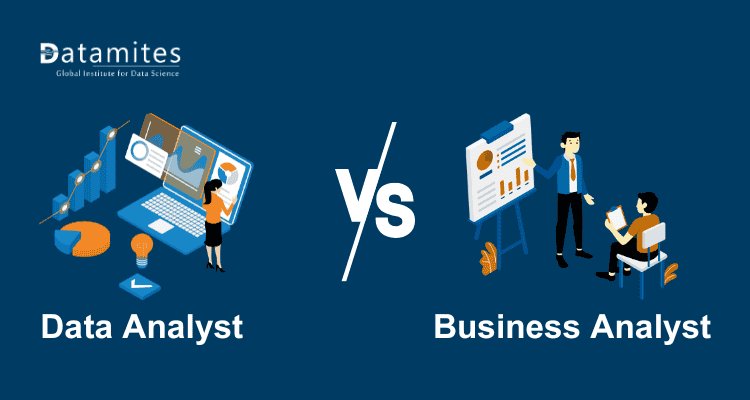
In India’s rapidly growing analytics ecosystem, both Data Analysts and Business Analysts play crucial roles across IT services, fintech, e-commerce, consulting, healthcare, and product-based companies. While the two roles often collaborate, their primary focus differs.
A Data Analyst in India mainly works with structured and unstructured data to identify patterns, trends, and actionable insights using statistical and technical tools. A McKinsey workforce report highlights that remote analytics positions have grown by more than 40% since 2021, creating greater global hiring opportunities and expanding international career access for skilled professionals.
In contrast, a Business Analyst focuses on understanding business requirements, improving processes, and aligning data insights with organizational strategy.
What is Demand for Data Analyst and Business Analyst in India?
India is emerging as a global leader in data analytics demand, with data analytics skills featuring in a significant share of job postings, nearly 17.4% of all listings in recent market reports. Industries such as IT/Software, BFSI, e-commerce, healthcare, retail, and manufacturing are increasingly hiring data analysts to support data-driven decisions
The high-performance data analytics market is projected to increase from USD 125.99 billion in 2025 to USD 152.6 billion in 2026, and is expected to reach USD 398.17 billion by 2031, growing at a CAGR of 21.12% between 2026 and 2031. Cloud-based analytics solutions are expanding at a 30.1% CAGR, creating strong growth opportunities for India’s rapidly growing cloud and AI ecosystem. (Source: Mordor Intelligence Report)
With SMEs gaining access to affordable GPU rentals (as low as USD 3.35/hour), Indian startups and enterprises are accelerating AI and data analytics adoption.
Refer to the articles below:
- SQL vs Python for Data Analytics in 2026
- How Looker, Tableau, and Power BI Are Revolutionizing Data Analytics in 2026
- Is the Data Analyst Market Overcrowded
Key Skills for Data Analysts and Business Analyst in India
In India’s rapidly growing analytics and business intelligence market, both Data Analysts and Business Analysts considerd as Top IT Cousrse in demand require a combination of technical, analytical, and business skills to succeed.
For Data Analysts:
Data Analysts are in high demand in India as companies across IT, finance, e-commerce, healthcare, and startups increasingly rely on data-driven decision-making.
- SQL and Database Querying – SQL is fundamental for extracting, manipulating, and analyzing structured data. Professionals must handle complex queries, joins, subqueries, views, and optimize database performance. This skill is widely used in IT services, fintech, e-commerce, and healthcare sectors.
- Python or R Programming – Python is essential for data cleaning, analysis, automation, and machine learning using libraries like Pandas, NumPy, and Matplotlib. R is valuable for statistical modeling, research, and data analytics in healthcare. Programming knowledge enhances flexibility and career growth.
- Data Visualization (Power BI, Tableau) – Analysts must create interactive dashboards, build data models, and apply DAX formulas to communicate insights clearly to stakeholders.
- Statistical Analysis – Knowledge of regression, probability, hypothesis testing, and forecasting enables analysts to interpret trends and support data-driven decisions.
- Excel and Reporting Tools – Advanced Excel skills, including PivotTables, Power Query, XLOOKUP, and dashboards, are essential for finance, consulting, and operations roles.
For Business Analysts:
Business Analysts require a blend of technical, analytical, and business-oriented skills to effectively bridge the gap between data insights and strategic decision-making.
- Requirement Gathering and Documentation – Clearly define business needs and document them using BRDs and functional specifications.
- SQL Basics – Helps validate data, extract reports, and collaborate with technical teams.
- Communication and Presentation Skills – Crucial for presenting insights and bridging business-technical gaps.
- Process Improvement Techniques – Knowledge of Agile, Lean, or Six Sigma frameworks helps optimize workflows.
- Business Acumen and Domain Knowledge – Understanding industry trends in IT, BFSI, healthcare, retail, and telecom supports strategy-driven recommendations aligned with business goals.
Both Data Analyst and Business Analyst in India complement each other, with Data Analysts providing quantitative insights and Business Analysts translating them into actionable business strategies.
Data Analyst vs Business Analyst in India: What Are The Differences
In the rapidly growing analytics and IT landscape, both Data Analysts and Business Analysts play crucial roles, but their focus, skill sets, and responsibilities differ significantly.
Both roles are crucial in India’s data-driven economy, with Data Analysts focusing on insights from data analyst and Business Analyst translating those insights into strategic business decisions, making each career path valuable for growth and opportunity.
How to Start a Career in Data Analyst vs Business Analyst in India
India’s expanding digital economy has created strong demand for skilled analytics professionals across IT services, fintech, consulting, e-commerce, healthcare, and startups. If you are planning to enter either field, here are practical steps tailored to the Indian job market:
1. Build Strong Data Analysis Foundations
Master core data analysis skills such as SQL, Excel, and statistics, which are highly valued by employers. Focus on hands-on practice with real datasets to strengthen your analytical fundamentals.
Focus on hands-on practice with real datasets to strengthen your fundamentals.
2. Learn Programming Languages
To advance your analytics career, focus on learning Python, widely used in IT and analytics, and R, popular for research and statistical analysis. Python skills are in high demand across major tech hubs in India and abroad with afforadble data analyst course fees in India.
3. Gain Expertise in Data Visualization Tools
Mastering BI tools like Power BI, Tableau, Google Looker Studio, and Amazon QuickSight is essential for converting raw data into actionable business insights. These skills are highly valued in analytics roles across industries.
4. Improve Communication & Presentation Skills
Both roles require clear communication with technical and non-technical stakeholders. Practice presenting insights using dashboards and reports to build confidence.
5. Pursue Industry-Recognized Certifications
Pursuing industry-recognized certifications in India enhances credibility and job readiness for analytics professionals. Popular options include IABAC® Certified Data Analyst, NASSCOM FutureSkills Certified Analytics Professional, Google Data Analytics Professional Certificate, and Tableau or SAS certifications. Structured certification programs provide guided learning and job readiness.
6. Gain Practical Experience & Network
Work on real time projects, internships, or freelance assignments to build a strong portfolio. Attend tech meetups, webinars, and analytics events in your city to connect with professionals and explore job opportunities.
Focusing on continuous skill development, pursuing relevant certifications, and gaining practical, real-world experience can greatly enhance your prospects by choosing a top data analyst course in India and by building a successful career as a Data Analyst vs Business Analyst in India growing the analytics industry.
Refer to the articles below:
DataMites Institute is a globally recognized training provider offering industry-aligned courses in Data Science, Analytics, and AI. With expert mentorship, real-world projects, and a practical curriculum, it equips learners with job-ready skills. The Data Analytics course in Pune provides hands-on training, live projects, and career support to meet industry demands.
With a strong presence across cities like data analyst course in Bangalore, Bangalore, Hyderabad, Chennai, Ahmedabad, Coimbatore, Jaipur, Nagpur, and Kochi, DataMites offers flexible online and classroom training, in affordable fees and premium learning which is helping students and professionals upskill for successful analytics careers.