How AI Is Changing the Future of HR
AI is reshaping the future of HR by automating routine tasks, enhancing hiring with data insights, and enabling smarter workforce planning. It empowers HR teams to focus on strategy, employee experience, and building more agile, people-centric organizations.
 Prerana B A
HR is no longer just about hiring and payroll. It’s becoming a data-driven, tech-powered function that directly shapes business outcomes. At the centre of this shift is AI in HR.
From screening resumes in seconds to predicting employee turnover before it happens, artificial intelligence is changing how organisations attract, manage, and retain talent. What this really means is that HR teams are moving from administrative support to strategic decision-makers.
In this post, we’ll break down exactly how artificial intelligence in human resources is reshaping the workplace, what benefits it brings, the risks to watch for, and where things are headed next.
How AI Is Transforming HR and People Analytics
AI is fundamentally changing how HR teams operate by turning intuition-based decisions into data-backed strategies.
Traditionally, HR relied heavily on experience and manual processes. Now, AI in people analytics allows organisations to:
- Predict employee turnover before it happens
- Identify high-performing candidates more accurately
- Personalize employee experiences at scale
- Optimize workforce planning with real-time insights
What this really means is that HR is shifting from reactive to proactive.
According to a Deloitte report, organisations using people analytics are 2.6 times more likely to outperform their competitors in talent outcomes.
Refer to these articles:
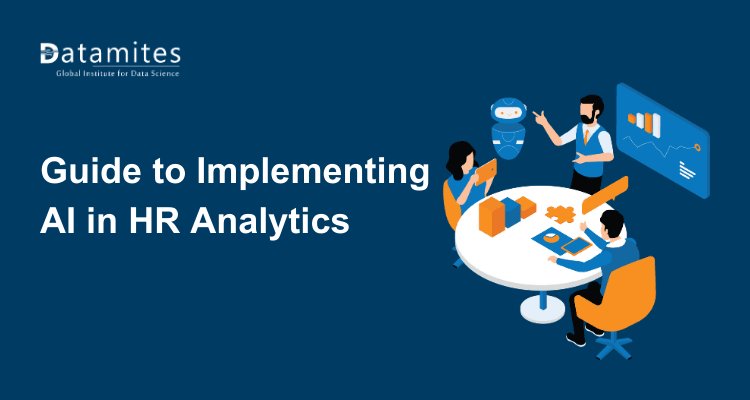
- The 2026 Guide to Implementing AI in HR Analytics
- AI Product Development Life Cycle Explained
- The Rise and Evolution of AI in Healthcare
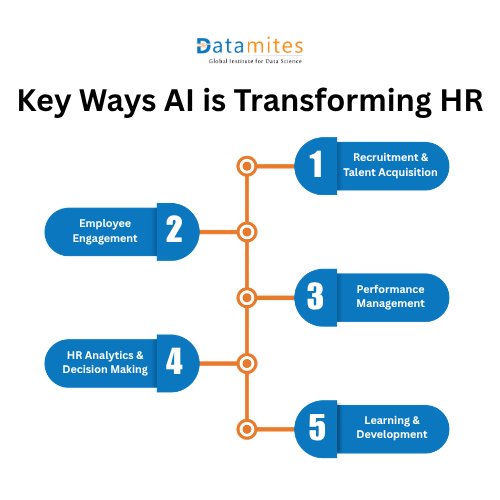
Key Ways AI Is Transforming HR
Here are the key ways AI is transforming HR, helping organizations improve efficiency, enhance decision-making, and drive data-driven human resource management:
Recruitment & Talent Acquisition
Hiring has always been one of HR’s most time-consuming functions. AI is changing that fast.
AI recruitment tools can:
- Screen thousands of resumes in minutes
- Match candidates to job descriptions with high accuracy
- Reduce unconscious bias through standardized evaluation
- Conduct initial chatbot interviews
Example: Tools like AI-powered applicant tracking systems can shortlist candidates based on skills, experience, and even cultural fit.
Impact on the future of HR:
- Faster hiring cycles
- Better quality hires
- Reduced cost per hire
A LinkedIn report found that recruiters using AI save up to 40% of their time on resume screening.
Employee Engagement
Keeping employees engaged is harder than ever, especially in hybrid and remote work environments.
AI helps by turning feedback into actionable insights.
AI employee engagement tools can:
- Analyze employee sentiment through surveys and chats
- Detect early signs of burnout
- Recommend personalized engagement strategies
- Provide real-time feedback loops
Instead of waiting for annual surveys, HR can now respond instantly to employee concerns.
What this means:
- Higher retention rates
- Improved workplace culture
- More proactive HR strategies
Performance Management
Traditional performance reviews are often biased, inconsistent, and outdated.
AI brings objectivity and continuous evaluation into the process.
With AI in human resource management:
- Performance data is tracked in real time
- Feedback becomes continuous, not annual
- Managers get data-backed insights for evaluations
- Goal tracking becomes more transparent
AI can also identify top performers and employees who may need support.
Result:
- Fairer performance assessments
- Better employee development plans
- Increased productivity
HR Analytics & Decision Making
This is where AI truly shines.
HR analytics powered by AI enables organizations to make smarter, faster decisions using data.
AI in people analytics can:
- Predict employee turnover
- Identify hiring trends
- Analyze workforce productivity
- Optimize workforce planning
Example:
A company can use AI to identify patterns that lead to attrition, such as low engagement scores or lack of promotion opportunities.
Why this matters:
- HR moves from reactive to predictive
- Decisions are backed by real data
- Business outcomes improve
The future of people analytics is deeply tied to AI, with predictive and prescriptive analytics becoming standard.
Learning & Development
Upskilling employees is critical in today’s fast-changing job market.
AI personalizes learning like never before.
AI-driven L&D platforms can:
- Recommend courses based on employee roles and goals
- Track learning progress
- Identify skill gaps
- Suggest career development paths
This creates a more tailored and effective learning experience.
Impact on the future of HR with AI:
- Faster skill development
- More engaged employees
- Stronger internal talent pipelines
Benefits of AI in HR
AI is transforming HR by automating tasks, improving decision-making, and enabling data-driven strategies. It helps HR teams work more efficiently while enhancing how they manage and support employees.
- Faster recruitment: AI quickly screens resumes and shortlists the best candidates, saving time and cost.
- Better decision-making: Uses data and analytics to predict trends like employee turnover and performance.
- Automation of tasks: Handles routine work such as payroll, attendance, and scheduling, reducing manual effort.
- Improved employee experience: Chatbots and AI tools provide instant support and personalized onboarding.
- Performancemanagement: Tracks employee performance and suggests training to improve skills.
- Reduced bias: Helps make hiring and evaluation more fair and consistent.
AI in HR boosts efficiency, improves employee experiences, and supports smarter decisions. When combined with human judgment, it creates a more effective and future-ready HR function.
Challenges and Risks of AI in HR
While AI in HR offers many benefits, it also brings challenges like data privacy issues, bias in algorithms, and over-reliance on automation.
- Bias in algorithms: AI systems can reflect existing biases in data, leading to unfair hiring or evaluations
- Data privacy concerns: Handling sensitive employee data increases the risk of breaches or misuse
- Lack of transparency: AI decisions can be difficult to understand or explain (black-box issue)
- Over-reliance on technology: Excessive dependence may reduce human judgment in important decisions
- High implementation cost: Setting up AI tools can be expensive for organizations
- Job displacement fears: Automation may replace certain HR roles or tasks
- Integration issues: Difficulty in combining AI tools with existing HR systems
- Ethical concerns: Questions around fairness, accountability, and consent
- Data quality problems: Poor or incomplete data can lead to inaccurate results
- Compliance risks: AI systems must align with labor laws and regulations
To succeed, organizations must use AI responsibly with proper oversight, ensuring fairness, transparency, and trust in HR processes.
Refer to these articles:
- Explainable AI: Why Black-Box Models Are Losing Trust
- How AI is Transforming Customer Analytics in 2026
- Why Agentic AI Is the Most In-Demand Skill for Data Scientists in 2026
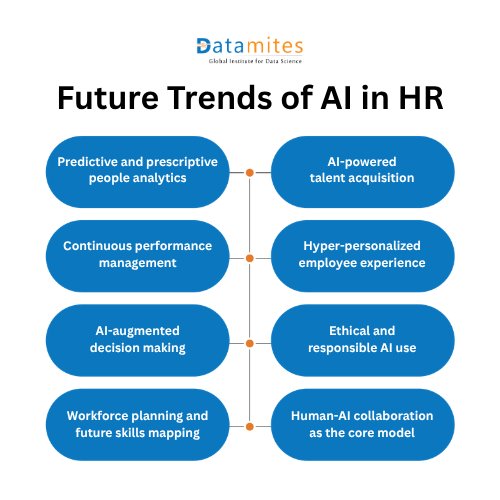
Future Trends of AI in HR
The future of HR is closely tied to AI evolution. Here’s what’s coming next:
Predictive and Prescriptive People Analytics
AI will go beyond reporting what happened to predicting outcomes like employee turnover, performance, and hiring success, and even suggesting actions HR teams should take.
AI-Powered Talent Acquisition
From resume screening to candidate matching and interview insights, AI will make hiring faster, more accurate, and less biased when used responsibly.
Hyper-Personalized Employee Experience
AI will help tailor learning paths, career growth plans, and engagement strategies based on individual employee data, not one-size-fits-all programs.
Continuous Performance Management
Annual reviews are fading. AI will enable real-time feedback, goal tracking, and performance insights that evolve continuously.
Ethical and Responsible AI Use
There will be stronger focus on transparency, fairness, and data privacy, with organizations building clear governance around AI in HR.
AI-Augmented Decision Making
HR leaders will rely on AI as a decision support system, combining data insights with human judgment rather than replacing it.
Workforce Planning and Future Skills Mapping
AI will help organizations identify future skill gaps and plan workforce strategies proactively instead of reacting late.
Human-AI Collaboration as the Core Model
What this really means is HR won’t be automated away, it will be amplified. The future is about humans and AI working together to build smarter, more adaptive workplaces.
AI is not replacing HR, it’s redefining it into a more strategic function that drives business growth. With AI, HR is moving beyond administrative tasks toward smarter hiring, predictive analytics, and better decision-making. Organizations should start small, focusing on high-impact areas like recruitment and analytics, while upskilling teams to work alongside AI. At the same time, ethical and transparent use of AI must remain a priority, with the human element at the core. The future of HR lies in collaboration between humans and technology to build better workplaces and gain a competitive edge.
DataMites provides a comprehensive AI for HR course aimed at helping HR professionals make smarter, data-driven workforce decisions using artificial intelligence. The program covers AI fundamentals, people analytics, and real-world applications across areas such as talent acquisition, employee engagement, workforce planning, and performance management. It is part of a broader portfolio that includes AI programs for product managers, healthcare professionals, risk experts, marketing professionals, business leaders, and other working professionals across industries.
Learners can choose from flexible training formats, including online sessions, classroom training, and real-time, project-based internships to build practical experience. The course also offers globally recognized certifications, including accreditations from IABAC and the Certified AI Professional in People Analytics. With a presence in more than 30 offline centers across India, including Chennai, Bangalore, Hyderabad, Pune, Mumbai, Ahmedabad, Coimbatore, and Delhi, DataMites delivers career-focused training through both in-person and virtual learning options.