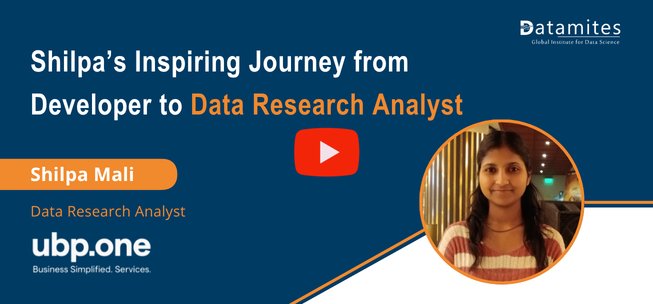
Shilpa’s Inspiring Journey from Developer to Data Research Analyst
Shilpa’s Inspiring Journey from Developer to Data Research Analyst highlights how curiosity, persistence, and continuous learning helped her transition from web development to a data-focused career.
 Kriti Maurya
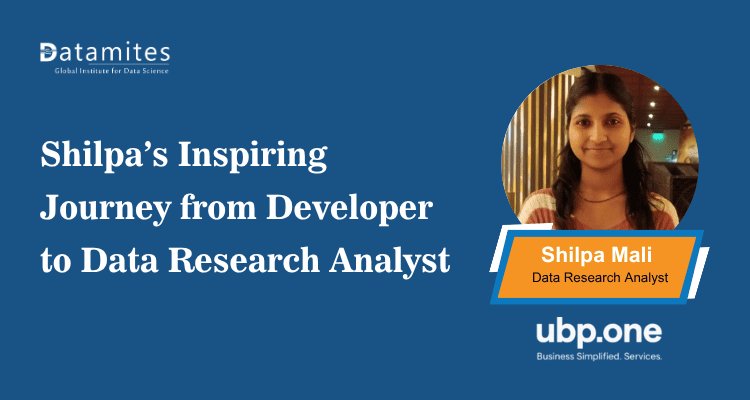
Shilpa's journey into Data Research Analyst is often filled with challenges, learning curves, and moments of discovery. Shilpa’s story reflects how curiosity and persistence can lead to meaningful career growth. Starting with a foundation in web development, she gradually uncovered her interest in data while working on dashboards, which eventually motivated her to explore the world of analytics and artificial intelligence.
Shilpa’s Journey of Professional Upskilling into Data Research Analyst
Shilpa’s Journey of Professional Upskilling into Data Research Analyst showcases how curiosity and practical exposure can lead to a meaningful career shift. Starting her professional path as a web developer, Shilpa worked on dashboards and applications, which gradually sparked her interest in understanding data at a deeper level. This curiosity became the turning point that motivated her to explore the field of data analytics and research.
With no prior background in Python, machine learning, or data tools, she began her upskilling journey through structured learning, consistent practice, and hands-on projects. By building knowledge in data handling, visualization, and analytical thinking, she steadily moved closer to a data research-oriented role. Her journey reflects the importance of persistence, guided learning, and self-initiative in successfully transitioning into the data domain.
Refer to the Articles Below:
- Top AI Tools for Data Analysts in 2026
- SQL vs Python for Data Analytics in 2026: Which Skill Should You Learn First
- How Looker, Tableau, and Power BI Are Revolutionizing Data Analytics in 2026
1. Can you introduce yourself and your educational background?
Shilpa:
My name is Shilpa, and I completed my Bachelor of Science (PCM) from JNV University. After graduation, I started learning coding through platforms like YouTube and Udemy. This helped me begin my career as a web developer, where I worked on web applications and dashboards.
2. What inspired you to transition into data analytics?
Shilpa:
While working on dashboards during my web development role, I became curious about how data works behind the scenes. This sparked my interest in the data field. Around the same time, my brother and I decided to join a structured data science program to explore this domain further.
3. Did you have prior knowledge of data analytics before starting your training?
Shilpa:
I had experience with ReactJS and web development, but I was completely new to Python, machine learning, and deep learning. My training helped me understand core concepts like NumPy, Pandas, and visualization tools like Power BI.
4. Which area of data science interested you the most?
Shilpa:
Deep learning fascinated me the most. I also started preparing for AI concepts alongside my coursework, as I wanted to build a strong foundation in advanced technologies.l
5. Was machine learning difficult initially?
Shilpa :
Yes, it was challenging in the beginning because everything was new. However, with the help of trainers and structured sessions, the concepts became easier to understand over time.
Refer to the Articles Below:
- Why DataMites Institute for Data Analytics Course in Bangalore
- How to Become a Data Analyst in Bangalore
- Is Bangalore the Best Choice for freshers for Data Analyst Career
6. How did you work on your projects and overcome challenges?
Shilpa:
During my capstone project, I initially struggled with structuring the project. With guidance from mentors, I learned how to properly build and present projects. I also practiced regularly and clarified doubts whenever needed.
7. How was your interview experience?
Shilpa:
I attended a couple of interviews. One of them had three rounds: aptitude, managerial, and HR. The questions were basic—covering comprehension, Excel charts, percentages, and project-related discussions. There was no coding involved.
8. Did you accept your first job offer? Why or why not?
Shilpa:
No, I did not accept the first offer because the role involved more manual work. My focus is on data science and AI, so I decided to wait for opportunities that align better with my career goals.
9. What was your daily study routine during your learning phase?
Shilpa:
Initially, it was difficult as everything was new. But I practiced Python daily, worked on machine learning models using datasets from Kaggle, and revised concepts through recorded sessions on the learning platform.
10. Are you continuing to upskill after your training?
Shilpa:
Yes, I am continuously learning AI concepts through YouTube and other resources. My goal is to move into an AI-focused role in the future.
Key Findings from Shilpa’s Journey as a Data Research Analyst
DataMites Success stories of Shilpa’s journey into Data Research Analyst highlights the essential factors that contribute to a successful career transition. From building technical skills to developing the right mindset, her experience offers valuable lessons for aspiring data professionals. These key findings reflect not only the importance of structured learning and hands-on practice but also the role of persistence and continuous improvement in achieving career goals.
- Transitioning from a non-data background is achievable: With consistent effort and the right learning approach, anyone can move into data analytics. Even without prior experience, foundational skills can be built step by step. Persistence and daily practice play a crucial role in making this transition successful.
- Hands-on practice is crucial for success: Working on Python, machine learning models, and real datasets strengthens practical understanding. Platforms like Kaggle help learners apply concepts to real-world problems. Practical exposure makes candidates more confident during interviews and job tasks.
- Structured learning and mentorship help simplify concepts: Guided programs provide a clear roadmap, avoiding confusion from scattered resources. Mentors help resolve doubts quickly and explain complex topics in simple ways. This support system accelerates learning and improves overall confidence.
- Curiosity and self-learning mindset accelerate growth: A strong desire to learn pushes individuals to explore beyond the curriculum. Using additional resources like videos and tutorials enhances understanding.Self-driven learners tend to adapt faster to new tools and technologies.
- Interview preparation should be well-rounded: Basic aptitude, Excel skills, and project explanations are commonly tested. Clear communication about projects can create a strong impression. Preparation across multiple areas increases chances of success.
- Continuous upskilling gives a competitive edge: Learning advanced topics like AI helps professionals stay relevant in the industry. The data field evolves rapidly, requiring ongoing skill development. Upskilling ensures better career opportunities and long-term growth.
Overall, Shilpa’s journey demonstrates that entering the Data Research Analyst field is achievable with dedication, the right guidance, and a proactive learning approach. By focusing on practical experience, staying curious, and continuously upgrading skills, aspiring professionals can position themselves for long-term success. Her story serves as a motivating example for anyone looking to build a rewarding career in data analytics and beyond.
Shilpa’s journey demonstrates how determination and curiosity can lead to a successful transition into a Data Research Analyst role. Through consistent practice, she strengthened her knowledge of data tools and analytical concepts while overcoming early challenges. Her emphasis on practical learning and enrolling in the right Top IT courses in Bangalore helped her make informed career decisions and grow confidently in the data analytics field.
Refer to the Articles Below:
- How to Become a Data Analyst in Delhi
- Why Students in Delhi Should Consider Data Analytics as a Career Path
- Data Analyst Training in Delhi for Strong Career Growth
DataMites Delhi Institute is a premier IT training provider offering industry-focused including comprehensive Data Analyst programs along with advanced training in Data Science, Artificial Intelligence, Machine Learning, Python, and IoT. With a strong emphasis on experiential learning through real-time projects, internships, and structured placement support, the institute equips learners with practical skills required for real-world job roles. Additionally, DataMites provides globally recognized certifications accredited by IABAC and NASSCOM FutureSkills, enhancing career opportunities in the competitive IT industry.
In addition to its Data Analyst course in Bangalore , DataMites conducts flexible, career-focused training across major hubs such as Delhi, Chennai, Pune, Mumbai, and Indore, enabling aspiring professionals to build successful careers in analytics and emerging technologies.