Edge Analytics Explained: Processing Data Where It Matters Most
Discover how edge analytics processes data at the source, enabling real-time insights, faster decision-making, and smarter operations across industries like manufacturing, healthcare, retail, and smart cities.
 Swagatam Sinha
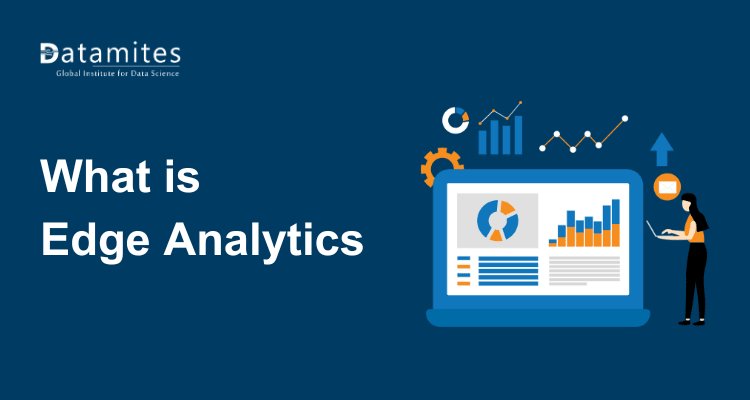
Every day, the world produces record-breaking amounts of data. From manufacturing machines and hospital sensors to retail checkout systems and connected vehicles everything is producing streams of information every second. Traditionally, this data was sent to the cloud for processing. But with growing data volume, latency issues, and increasing demand for real-time decisions, organizations are now shifting to edge analytics.
Edge analytics is changing how businesses operate by analyzing data right where it’s created closer to the physical world and far from the centralized cloud. This shift is improving efficiency, reducing cost, and making systems smarter and faster.
What Is Edge Analytics?
Edge analytics refers to the process of collecting, analyzing, and acting on data at the edge of the network near the source of data generation instead of sending everything to a centralized cloud or server.
Simple Example:
Imagine a smart security camera detecting movement. If every frame had to be uploaded to the cloud before deciding whether someone is trespassing, the delay could make the system useless. With edge analytics, the camera itself processes images, identifies threats, and triggers alerts instantly.
That real-time capability is the power of edge analytics.
According to Grand View Research, the global edge analytics market was estimated at USD 9.78 billion in 2024, and is projected to reach USD 40.71 billion by 2030, growing at a compound annual growth rate (CAGR) of 28.6% between 2025 and 2030.
Refer to these articles:
- How to Learn SQL for Data Analysis
- Why Synthetic Data Is the Future of GDPR Compliance
- Modern Data Stack for Data Scientists: Tools You Must Know
How Edge Analytics Works
Edge analytics systems follow a layered process. Here’s a simple breakdown of how data flows at the edge:
- Sensors and Devices: Collect raw data (temperature, images, sound, location, etc.)
- Edge Nodes / Gateways: Preprocess and filter data
- Edge Processing Units (Local Compute): Run analytics models, detect patterns, and make decisions
- Optional Cloud Layer: Stores long-term data for history, advanced analysis, and training
This architecture helps organizations reduce dependency on constant internet connectivity while still enabling intelligent automation.
Why Edge Analytics Matters
Processing data at the edge brings several important benefits:
Faster Real-Time Decision-Making
No waiting for cloud servers. Decisions happen instantly.
Reduced Latency
Critical systems like autonomous vehicles or medical equipment cannot afford delays edge analytics ensures speed.
Cost Savings
Instead of sending all data to the cloud, only actionable or filtered insights are transmitted, reducing bandwidth and storage expenses.
Better Privacy and Data Security
Sensitive data stays local unless needed, helping organizations follow compliance and data-protection standards.
Higher Reliability
Even if the internet is unavailable, edge devices continue functioning and analyzing data.
Edge Analytics in IoT
Edge analytics plays a major role in the Internet of Things (IoT). Since IoT devices generate massive data every second, cloud processing alone isn't feasible. Edge analytics helps these systems respond quickly and intelligently.
Examples include:
- Smart thermostats adjusting temperature instantly
- Robots navigating factories
- Wearable devices monitoring health conditions
Without analytics at the edge, IoT systems would be slower, more expensive, and less effective.
Refer to these articles:
- Correlation vs Covariance for Analysis
- Data Lakehouse: Transforming Analytics with Unified Data
- Introduction to ETL in Data Analytics
Real-World Edge Analytics Use Cases
Edge analytics is being adopted across industries. Here are some practical examples:
1. Manufacturing
Factories use edge analytics to track:
- Machine health
- Production efficiency
- Equipment vibration and temperature
With real-time machine monitoring, maintenance teams can detect failures before machines break down reducing downtime and operational cost. Edge‑based smart manufacturing solutions have proven capable of reducing energy consumption by ~18%, cutting machine downtime by 22%, and improving resource utilization by 15%. (Source: Mordor Intelligence)
2. Retail
Modern retail stores rely on edge analytics for:
- Customer behavior tracking
- Smart shelves
- Dynamic pricing
- Inventory automation
Edge-based systems help retailers improve shopping experience, reduce queue times, and personalize promotions.
3. Fleet Management and Transportation
Vehicles equipped with edge analytics can:
- Track fuel usage
- Detect unsafe driving
- Optimize routes in real time
This leads to safer operations, reduced fuel consumption, and better logistics planning.
4. Smart Cities
Smart traffic lights, waste management sensors, and public safety systems leverage edge analytics to run efficiently. For example, traffic lights can adjust timing based on live vehicle flow without waiting for cloud approval.
In the energy/utilities domain (which connects to “smart cities” use cases), edge analytics is already a leading application area: as of 2024, the energy & utility segment had the largest revenue share among non‑IT verticals, underlining edge analytics’ value in real‑time monitoring, load balancing, and infrastructure management.
5. Healthcare and Hospitals
Medical devices use edge analytics for:
- Patient monitoring
- Emergency alerts
- Faster diagnosis
The healthcare sector is forecast to be the fastest‑growing adopter of edge analytics through 2030, indicating growing reliance on edge‑based patient‑monitoring, diagnostics and real‑time care systems.
In critical care, every second matters making edge analytics life-saving technology.
Challenges of Edge Analytics and Practical Solutions
While edge analytics is beneficial, it also brings some challenges.
| Challenge | Solution | ||
| Complex integration with existing systems | Use platforms and open standards for compatibility | ||
| Data governance and privacy concerns | Encrypt data and implement local compliance controls | ||
| Limited compute power on edge devices | Use lightweight AI models and optimization techniques | ||
| Large-scale deployment and management | Deploy scalable edge management tools and automation |
Balancing efficiency, scalability, and security is key to successful implementation.
Refer to these articles:
- Essential Tools for Data Analysts
- Data Scientist vs ML Engineer vs AI Engineer
- Data Engineer vs Analytics Engineer vs Data Analyst
Edge Analytics and Data Security
Security is one of the top concerns when processing data at the edge. Since edge environments involve multiple distributed devices, protecting them requires:
- Device-level authentication
- Encrypted data transmission
- Firmware updates and monitoring
- Zero-trust security frameworks
By combining these methods, businesses can ensure safe and compliant data operations.
Top Edge Analytics Tools and Platforms
Some commonly used platforms include:
- AWS IoT Greengrass
- Microsoft Azure IoT Edge
- Google Cloud IoT Edge
- Cisco Edge Intelligence
- NVIDIA Jetson
- IBM Edge Application Manager
These platforms help organizations build, deploy, and manage edge analytics solutions at scale.
Future of Edge Analytics
As 5G networks, AI, and IoT continue to grow, edge analytics will become even more powerful. Future innovation will enable:
- Smarter automation
- Energy-efficient computing
- Fully autonomous systems
- Large-scale real-time intelligence
Edge analytics is shaping the next generation of connected experiences and intelligent technology.
Edge analytics is reshaping how organizations process data, make decisions, and operate smarter systems. By bringing analytics closer to the data source, businesses can respond faster, reduce operational cost, improve security, and unlock real-time intelligence.
As technology evolves and the world becomes more connected, edge analytics will become a core part of modern digital infrastructure empowering industries to work faster, smarter, and more efficiently.
At DataMites, we are dedicated to providing high-quality education and training in the field of data science and analytics. Our programs are carefully designed to combine theoretical knowledge with practical, hands-on experience, enabling learners to acquire skills that are directly applicable in real-world business scenarios. With expert mentorship, industry-relevant projects, and structured learning paths, we aim to equip our students with the competencies required to excel in the evolving analytics landscape.
For professionals and aspirants in Telangana seeking to advance their career, we offer specialized Data Analyst Courses in Hyderabad. These courses include comprehensive training, certification, practical exposure, and placement support, ensuring that learners are fully prepared to meet industry demands and achieve sustainable career growth.