How Yash Desai succeed in career from fresher to data analyst
Discover how Yash Desai transformed his career from a fresher to a successful Data Analyst through skill-based learning, hands-on projects, real-world exposure, and mastering in-demand data analytics tools.
 Kriti Maurya
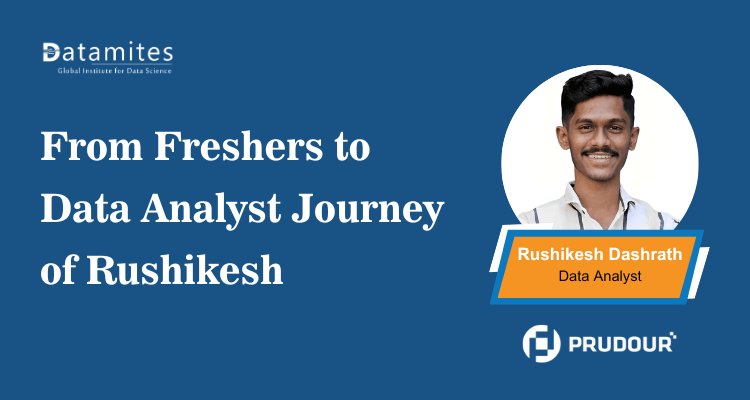
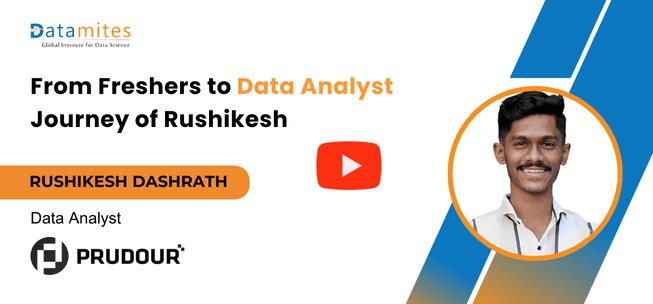
Breaking into the data analytics field as a fresher can feel overwhelming especially with market uncertainty and rising competition. Rushikesh’s journey from a Computer Science graduate to a Certified Data Analyst offers a realistic and motivating roadmap for beginners. Through structured learning, internships, mock interviews, and the right mindset, he successfully transitioned into a professional data analytics role. This highlighting real challenges, practical preparation strategies, and career insights that every aspiring data analyst should know.
Yash Desai career journey from fresher to data analyst
Yash Desai’s journey from a fresher to a Data Analyst reflects the growing impact of IT courses in Mumbai. With focused upskilling in data analytics, industry tools, and real-world projects, he successfully built a strong foundation for a thriving tech career.
Q1. Can you briefly introduce your background?
I completed my B.Tech in Computer Science Engineering. After graduation, I enrolled in the Certified Data Analyst (CDA) program and joined the September batch. Alongside the course, I also completed an internship as a Data Analyst Consultant.
Q2. Why did you choose Data Analytics despite a Computer Science background?
Data Analytics is the foundation for all data roles. Even though I had programming knowledge, starting as a Data Analyst helped me build a strong base. From here, it becomes easier to move into advanced roles like Data Scientist or other specialized data positions.
Q3. Did your programming background help during the course?
Yes, it definitely helped. However, data analytics is not only about coding. Tools like Excel, SQL, Power BI, and data interpretation are equally important. Even non-programmers can succeed by learning step by step.
Q4. What kind of internship experience did you gain?
During my internship, I worked on real-world projects such as Purchase Pattern Analysis and Customer Segmentation Analysis. These projects involved Power BI dashboards, Python-based data visualization, and business insights.
Q5. What projects did you mention in your resume?
I included both client and personal projects:
- Purchase Pattern Analysis (client project)
- Sales Analysis
- HR Analytics
- Personal analytical projects
- Interviewers focused mainly on the projects mentioned in my resume.
Q6. What was the interview process like?
The process included:
- Aptitude test
- Written test (essay-based)
- Technical and HR interview
The interview mainly revolved around my projects, internship work, and understanding of business problems.
Refer to the articles below:
- How to Learn SQL for Data Analysis
- Correlation vs Covariance for Analysis
- Top 5 Marketing Analytics Projects to Try
Q7. Were technical tools like SQL or Excel tested directly?
No direct technical test was conducted. The interviewers focused more on project understanding, problem-solving approach, and willingness to learn. However, strong knowledge of SQL and Excel is expected in real work environments.
Q8. How many mock interviews did you attend, and how did they help?
I attended two mock interviews. I wasn’t selected in the first one due to communication gaps. After focused improvement and preparation, I cleared the second mock interview. Mock interviews helped me build confidence and refine my answers.
Q9. Which tools and technologies are essential for a fresher Data Analyst?
Based on my experience:
- Excel is mandatory
- SQL is extremely important
- Power BI for visualization
- Python for analysis and automation
These tools together prepare you for most entry-level roles.
Q10. How did you prepare for the actual interview?
I researched the company thoroughly, understood its business domain, and practiced common interview questions. I also used AI tools to generate simplified and structured answers, which helped improve clarity and confidence.
Q11. Do you think AI will replace Data Analysts?
No. AI makes work easier, but it still needs human input. Humans are required to ask the right questions, interpret results, and improve AI systems. AI is an opportunity, not a threat.
Q12. Did you use AI during your preparation?
Yes, I regularly used AI for interview preparation, concept clarification, and answer framing. It helped me save time and prepare more efficiently.
Q13. Where do you see yourself in the next five years?
I see myself as a Senior Data Analyst, working on complex business problems and contributing to data-driven decision-making in a growing organization.
Q14. Are you planning to learn AI or Generative AI?
Yes, I’ve already started exploring Generative AI and understanding how it integrates with analytics tools. Learning AI will be essential for future career growth.
Key Highlights from Rushikesh’s Data Analyst Journey from scratch
Datamites success stories highlight how the right skills, mindset, and practical exposure can transform a fresher into a confident Data Analyst. Here are the key takeaways from Rushikesh’s journey, summarized into five powerful insights:
1. Strong Foundations Matter More Than Background
A Computer Science degree is helpful but not mandatory. Data Analytics is the ideal entry point into data roles, allowing freshers from any background to build a solid foundation with the right guidance.
2. Core Tools Define Early Success
Excel and SQL are non-negotiable skills for beginners. Mastery of these tools enables freshers to handle real business data and meet industry expectations from day one.
3. Projects and Internships Drive Job Readiness
Hands-on projects and real-world internships matter more than certifications alone. They demonstrate practical skills and significantly improve job readiness.
4. Communication and Mock Interviews Build Confidence
Mock interviews play a critical role in improving communication skills and interview performance. Clear communication is just as important as technical expertise.
5. AI and Continuous Learning Shape Long-Term Growth
AI supports data professionals rather than replacing them. Continuous learning and adapting to new technologies ensure sustainable career growth in data analytics.
Yash Desai’s success from fresher to Data Analyst highlights the power of focused learning, hands-on projects, and continuous upskilling. By mastering core analytics tools, gaining real-world exposure, and staying adaptable to industry demands, he built a strong and sustainable career in data analytics.
Refer to the articles below:
- Akshay’s Inspiring Journey as a Senior Data Analyst
- Prajwal’s transition from commerce graduate to data analyst
- From System Engineer to Data Analyst: Aishwarya’s Career Transition
DataMites Institute is a premier IT training center offering Data Analyst Courses in Mumbai, along with specialized programs in Data Science, Artificial Intelligence, Machine Learning, Python, and IoT. Through hands-on learning, real-time projects, internships, and strong placement support, DataMites equips learners with job-ready skills and globally recognized certifications from IABAC and NASSCOM FutureSkills.
In addition to its Data Analytics Course in Coimbatore, DataMites delivers industry-aligned and flexible learning pathways across major cities including Bangalore, Pune, Chennai, Hyderabad, Ahmedabad, and Indore, empowering students and professionals to build successful careers in analytics and emerging digital technologies.