A Complete Guide to AI in Healthcare
AI is transforming healthcare by improving diagnostics, personalizing treatment, and streamlining operations. It enhances patient outcomes while reducing costs and supporting faster, data-driven decisions.
 Prerana B A
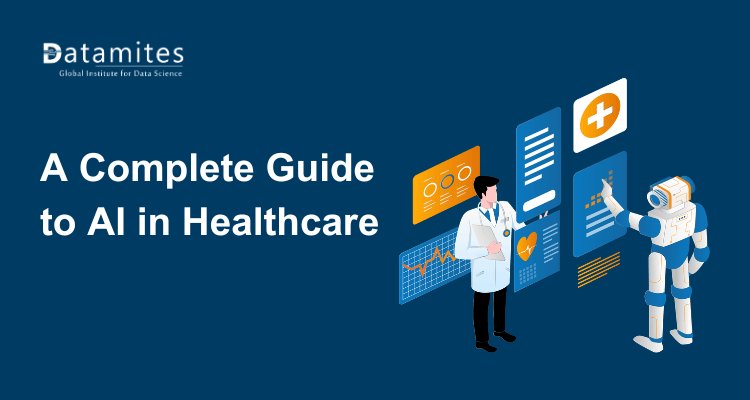
AI is quietly reshaping healthcare in ways that were once hard to imagine. From detecting diseases earlier than ever to helping doctors make faster, more informed decisions, it’s changing how care is delivered at every level. AI in healthcare isn’t just about advanced technology; it’s about better outcomes for patients, reduced workload for professionals, and smarter systems overall. As adoption grows, understanding how it works, where it helps, and where it falls short becomes essential. This guide breaks it all down, giving you a clear, practical view of how AI is transforming modern healthcare and what it means for the future.
How AI is Transforming Healthcare Industry
The integration of AI for healthcare is revolutionizing traditional systems by enhancing decision-making, automating workflows, and improving patient outcomes.
Here’s how Machine Learning in Healthcare is driving transformation:
- Data-driven insights: AI analyzes massive datasets from electronic health records (EHRs), wearables, and clinical trials.
- Predictive analytics: Helps forecast disease outbreaks and patient deterioration.
- Clinical decision support: AI systems assist doctors in making faster and more accurate diagnoses.
- Healthcare automation: Administrative tasks like billing, scheduling, and documentation are streamlined.
According to industry estimates, AI could contribute over $150 billion annually to the healthcare economy by 2026, highlighting the growing importance of AI in healthcare 2026.
Key Applications of AI in Healthcare
The Applications of AI in Healthcare are rapidly expanding, transforming how care is delivered, diagnoses are made, and treatments are developed. From AI in medical diagnosis to healthcare automation, AI is playing a critical role in modern medicine.
Below are the most impactful healthcare AI applications:
AI in Medical Diagnosis
One of the most powerful uses of AI in healthcare is in disease diagnosis.
- Detects diseases such as cancer, diabetes, and heart conditions early
- Analyzes patient data, symptoms, and medical history
- Reduces human diagnostic errors
AI-powered diagnostic systems can often match or even exceed human accuracy in specific cases.
Medical Imaging and Radiology
Medical imaging AI is transforming radiology and diagnostics.
- Interprets X-rays, MRIs, and CT scans with high precision
- Identifies abnormalities such as tumors or fractures
- Speeds up image analysis and reporting
This improves both speed and accuracy in clinical workflows.
Drug Discovery and Development
AI significantly accelerates the drug development process.
- Identifies potential drug compounds faster
- Predicts drug interactions and side effects
- Reduces time and cost of clinical trials
This is a major breakthrough in AI in medicine, especially for rare diseases.
Virtual Health Assistants and Chatbots
AI-powered assistants enhance patient engagement and support.
- Provide 24/7 medical assistance
- Answer health-related queries
- Schedule appointments and send reminders
These tools improve accessibility and reduce the burden on healthcare staff.
Predictive Analytics and Preventive Care
Machine learning in healthcare enables predictive insights.
- Forecasts disease progression
- Identifies high-risk patients
- Prevents hospital readmissions
This shifts healthcare from reactive to proactive care.
Robotic Surgery
AI-assisted surgical systems improve precision and outcomes.
- Enables minimally invasive procedures
- Enhances surgeon accuracy
- Reduces recovery time for patients
Robotics is a growing field within AI for healthcare.
Personalized Treatment and Precision Medicine
AI helps tailor treatments to individual patients.
- Uses genetic and clinical data
- Recommends personalized therapies
- Improves treatment effectiveness
This is a key advancement in Artificial Intelligence in Healthcare.
Administrative Workflow Automation
AI streamlines non-clinical operations.
- Automates billing and claims processing
- Manages patient records
- Optimizes scheduling systems
This reduces costs and improves efficiency across healthcare organizations.
Remote Patient Monitoring
AI-powered devices and wearables track patient health in real-time.
- Monitors vital signs continuously
- Alerts doctors to potential issues
- Supports chronic disease management
This is especially valuable for elderly and remote patients.
Clinical Decision Support Systems
AI assists doctors in making informed decisions.
- Provides evidence-based recommendations
- Analyzes large volumes of medical data
- Supports complex case evaluations
These systems enhance the role of AI in healthcare by augmenting human expertise.
Mental Health Support
AI is increasingly used in mental healthcare.
- Chatbots provide emotional support
- Detect early signs of depression or anxiety
- Offer therapy recommendations
This expands access to mental health services.
Fraud Detection and Cybersecurity
AI helps secure healthcare systems.
- Detects fraudulent insurance claims
- Identifies unusual patterns in billing
- Enhances data protection
This ensures safer and more reliable healthcare operations.
Real-World Examples of AI in Healthcare
Here are a few concise AI healthcare examples showing how AI in Healthcare is used in practice:
- IBM Watson Health: Supports cancer diagnosis and treatment decisions using large medical datasets
- Google DeepMind: Detects diseases through advanced medical imaging AI
- Tempus: Enables personalized treatment with data-driven insights
- PathAI: Improves accuracy in pathology diagnostics
- Zebra Medical Vision: Uses AI to analyze scans and detect diseases
- Aidoc: Flags critical conditions in real time for faster intervention
- Babylon Health: Provides AI-powered virtual consultations and health assessments
These examples highlight the growing impact of Artificial Intelligence in Healthcare, improving both patient care and operational efficiency.
Refer to these articles:
- Key Challenges in Implementing AI in Marketing
- Top Use Cases for AI in Finance
- Top AI Product Manager Tools to Improve Product Decisions
Benefits of AI in Healthcare
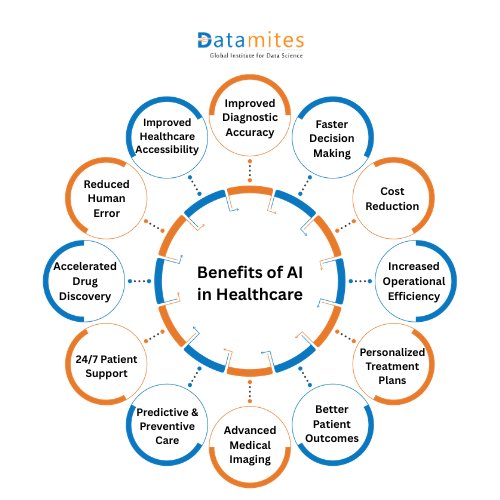
The Benefits of AI in Healthcare extend across patients, providers, and organizations.
AI in healthcare is transforming medical systems by improving accuracy, efficiency, and patient outcomes. Here are the 12 key benefits kept concise and clear:
Improved Diagnostic Accuracy
AI analyzes medical data and imaging to detect diseases early and reduce diagnostic errors, especially in AI in medical diagnosis.
Faster Decision-Making
Artificial Intelligence in Healthcare enables real-time data processing, helping doctors make quicker and more informed decisions.
Cost Reduction
AI lowers costs by automating admin tasks, reducing unnecessary tests, and optimizing hospital resources.
Increased Operational Efficiency
Healthcare automation streamlines workflows like scheduling, documentation, and patient management.
Personalized Treatment Plans
Machine Learning in Healthcare tailors treatments based on patient data, improving effectiveness.
Better Patient Outcomes
Early detection and smarter treatments lead to higher recovery rates and improved overall care.
Advanced Medical Imaging
AI enhances imaging analysis (X-rays, MRIs, CT scans), helping detect abnormalities faster and more accurately.
Predictive and Preventive Care
AI uses predictive analytics to identify risks early and support preventive healthcare strategies.
24/7 Patient Support
AI-powered assistants provide continuous help with symptom checks, reminders, and basic guidance.
Accelerated Drug Discovery
AI speeds up drug research by analyzing data quickly and identifying potential treatments faster.
Reduced Human Error
AI acts as a support system, cross-checking data and minimizing mistakes in diagnosis and treatment.
Improved Healthcare Accessibility
AI enables telemedicine and remote care, making healthcare more accessible in underserved areas.
The benefits of AI in healthcare include better accuracy, efficiency, cost savings, and accessibility making it a powerful force in modern medicine.
Challenges and Risks of AI in Healthcare
Despite its advantages, AI in medicine also presents several challenges:
Data Privacy and Security
Healthcare data is highly sensitive, making cybersecurity a major concern.
Algorithmic Bias
AI systems may produce biased results if trained on non-diverse datasets.
High Implementation Costs
Deploying AI infrastructure requires significant investment.
Ethical Concerns
Questions around accountability and decision-making remain unresolved.
Integration Issues
Integrating AI with existing healthcare systems can be complex.
Refer to these articles:
- LLM Fine-Tuning vs Prompt Engineering: Which Is Better?
- Top AI Trends That Will Shape 2026
- What Are Graph Neural Networks
Future of AI in Healthcare
The Future of AI in Healthcare is incredibly promising, with rapid advancements expected in the coming years.
Key Trends:
- Personalized Medicine: AI will tailor treatments based on genetic profiles
- AI-powered Wearables: Continuous health monitoring in real-time
- Advanced Robotics: Fully autonomous surgeries may become possible
- Natural Language Processing (NLP): Improved clinical documentation
- Digital Twins: Virtual patient models for simulation and prediction
Experts predict that AI in healthcare 2026 will focus heavily on preventive care and early diagnosis, reducing the burden on hospitals.
Pros vs Cons of AI in Healthcare
Understanding the advantages and limitations of AI in Healthcare helps medical professionals, administrators, and technology leaders make informed decisions about its adoption and responsible use. While AI offers transformative benefits, it also comes with challenges that must be addressed for safe and effective implementation.
| Pros | Cons |
| Improved diagnostic accuracy | Data privacy and security concerns |
| Faster decision-making | High implementation and maintenance costs |
| Reduced healthcare costs | Risk of algorithmic bias in clinical decisions |
| Enhanced patient outcomes | Ethical and accountability challenges |
| Increased efficiency and workflow automation | Complexity of integrating AI into existing systems |
By weighing these pros and cons, healthcare organizations can leverage AI in healthcare 2026 to improve patient care, optimize operations, and embrace innovation while mitigating risks.
AI in Healthcare is transforming the medical landscape by improving diagnosis, treatment, and operational efficiency. From AI in Medical Diagnosis to robotic surgeries and predictive analytics, the impact of Artificial Intelligence in Healthcare is both profound and far-reaching.
While challenges like data privacy and ethical concerns remain, the Benefits of AI in Healthcare far outweigh the risks when implemented responsibly. As we move toward a more digital future, the Future of AI in Healthcare promises smarter systems, better patient care, and more accessible medical services.
If you’re part of the healthcare ecosystem, now is the time to explore and adopt AI for healthcare solutions to stay ahead in this rapidly evolving industry.
DataMites Institute offers a comprehensive AI for Healthcare course designed to help medical practitioners apply artificial intelligence in both clinical and operational settings. The course covers essential AI concepts, data-driven healthcare insights, and practical use cases across patient care, hospital management, and medical research. It is part of a broader portfolio that includes specialized AI programs for roles in Product Management, HR and People Analytics, Finance and Risk, Marketing, Business Leadership, and other domains.
The program provides flexible learning options, including online courses, classroom training, and real-time, project-based internships for hands-on experience. Learners receive globally recognized certifications accredited by IABAC and the Certified AI Professional for Healthcare & Clinical Ops program. With over 30+ offline training centers in cities such as Chennai, Bangalore, Hyderabad, Pune, Mumbai, Ahmedabad, Coimbatore, and Delhi, DataMites delivers career-focused training through both in-person and virtual formats.