The 2026 Guide to Implementing AI in HR Analytics
A practical look at how HR teams can use AI in 2026 to analyze workforce data, predict trends, improve hiring decisions, and build smarter, data-driven people strategies.
 Prerana B A
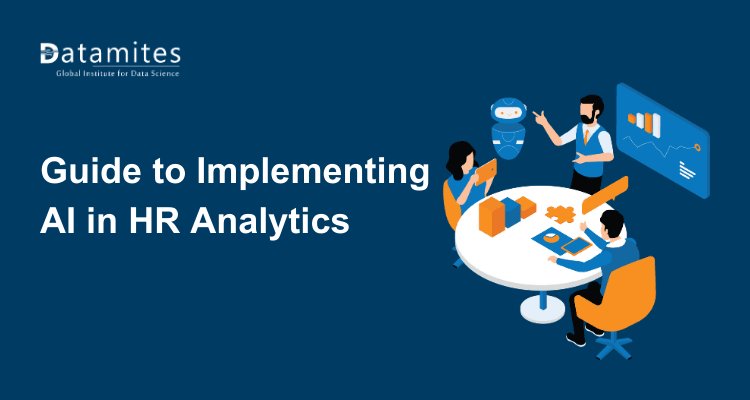
Workplaces generate vast amounts of data from hiring metrics to performance reviews, but many HR teams still rely on reports that only describe the past. AI in HR analytics changes that, turning data into predictive insights so HR leaders can forecast turnover, identify skill gaps, and make smarter hiring decisions in real time. By 2026, over 60% of large enterprises are expected to use AI-powered people analytics platforms, showing how quickly this technology is becoming essential.
This shift reflects a broader transformation in workforce management. By leveraging machine learning, HR automation, and advanced people analytics tools, organizations move from reactive reporting to proactive, data-driven strategy. As this transition accelerates, many HR professionals are also building their expertise through an AI for HR Course to better understand how to apply AI-driven insights in workforce decision-making. In this guide, we’ll explore how to implement AI in HR analytics in 2026, with practical steps, use cases, and insights to help HR teams turn data into a competitive advantage.
What Is AI in HR Analytics?
AI in HR analytics refers to the use of artificial intelligence and machine learning technologies to analyze workforce data, uncover patterns, and generate insights that help organizations make better HR decisions. Instead of relying only on historical reports, AI systems can process large volumes of employee data and identify trends that support smarter hiring, retention, and workforce planning.
Why AI in HR Analytics Matters in 2026
The workforce landscape is more complex than ever. Rapid technological change, hybrid work models, and global talent competition make traditional HR decision-making insufficient. AI in HR analytics gives organizations the ability to move from reacting to past events to anticipating future workforce needs.
A McKinsey report on AI adoption found that companies using AI across business functions see productivity improvements of up to 40% in certain operational processes, including talent management and HR operations. In 2026, over 60% of large enterprises are expected to leverage AI-powered people analytics platforms to guide workforce decisions. This is not just about efficiency it's about building smarter, more resilient organizations that can hire better, retain top talent, and optimize resources in real time.
Key reasons AI matters today include:
- Data-driven hiring: AI recruitment tools predict candidate success and reduce bias. LinkedIn’s Global Talent Trends report shows companies using AI-assisted recruiting tools achieve up to 35% faster hiring cycles and 20% improvement in quality-of-hire metrics.
- Predictive turnover modeling: Employee attrition is costly, with replacing skilled staff estimated at 1.5–2× their annual salary (SHRM). Using predictive analytics, organizations can reduce voluntary turnover by up to 25%, according to a Work Institute retention report.
- Skills gap forecasting: Rapid change is creating skill shortages the World Economic Forum predicts 44% of workers’ core skills will change by 2027. AI helps HR teams proactively identify gaps and plan learning or recruitment strategies.
- Employee engagement analysis: Engagement drives results. Gallup reports that organizations with highly engaged employees see 23% higher profitability and 18% higher productivity, making analytics critical for workforce performance.
- Cost optimization: AI helps allocate HR budgets strategically, from training to compensation. PwC’s workforce analytics study found companies using advanced HR automation and analytics tools can reduce operational costs by 15–20% while improving efficiency.
In short, AI in HR analytics allows HR leaders to transform workforce data into actionable insights, shaping strategies that drive competitive advantage.
Refer to these articles:
Key Use Cases of AI in HR Analytics
Organizations are already applying AI-driven HR strategy across multiple areas of the employee lifecycle.
AI Recruitment Tools
Recruitment is one of the most widely adopted applications of AI for HR. Modern AI recruitment tools analyze candidate data, resumes, and assessments to identify the best-fit applicants.
Modern HR analytics tools can:
- Screen resumes automatically
- Rank candidates by predicted success
- Analyze interview responses
- Detect hiring bias patterns
According to IBM research, AI-driven recruiting solutions can process candidate applications up to 90% faster than traditional manual screening methods.
Performance Prediction
Using machine learning in HR, companies can predict employee performance trends by analyzing:
- Productivity data
- Skill development history
- Manager feedback
- Project outcomes
Organizations that implement performance analytics models report up to 30% improvements in employee productivity, according to a McKinsey HR analytics study.
Workforce Planning
Strategic workforce analytics allows companies to forecast future staffing needs and talent shortages.
- Future hiring needs
- Retirement trends
- Skill shortages
- Organizational restructuring impacts
AI models simulate different workforce scenarios, helping executives make smarter strategic decisions.
Compensation Analysis
AI systems analyze market data and internal compensation structures to ensure fairness and competitiveness.
This supports:
- Pay equity analysis
- Salary benchmarking
- Incentive optimization
A Glassdoor economic research study shows that companies actively addressing pay equity see higher employee satisfaction and up to 13% improved retention rates.
Diversity Analytics
AI also plays a key role in advancing diversity initiatives. Through HR data analytics, organizations can monitor representation trends across hiring, promotions, and leadership pipelines.
AI tools can identify:
- Hiring pipeline bias
- Promotion disparities
- Pay equity gaps
- Representation trends across departments
A Boston Consulting Group (BCG) report found that companies with diverse leadership teams generate 19% higher innovation revenue, reinforcing the value of data-driven diversity initiatives.
Real-World Examples of AI in HR Analytics
Many organizations are already using AI in HR analytics to improve hiring, retention, and workforce planning. These examples show how companies apply AI-driven insights to make smarter HR decisions.
IBM: Predicting Employee Attrition
IBM uses AI through its Watson platform to analyze workforce data and predict which employees may leave the organization. By applying predictive analytics in HR, the system evaluates factors like engagement, compensation, and career progression. IBM reported predicting attrition with over 95% accuracy, helping the company save millions in retention costs.
Google: Advanced People Analytics
Google applies machine learning in HR to analyze workforce data and understand what drives team performance. Its well-known Project Aristotle study found that psychological safety is the most important factor in successful teams.
Unilever: AI-Powered Recruitment
Unilever uses AI recruitment tools to screen candidates through online assessments and AI-analyzed video interviews. This approach reduced hiring time from months to just a few weeks while improving candidate matching and experience.
LinkedIn: Talent Intelligence
LinkedIn uses AI and HR data analytics to analyze trends across its network of more than 900 million professionals, providing insights on skills demand, hiring patterns, and workforce trends.
Key Benefits of AI in HR Analytics
When implemented effectively, AI in HR analytics delivers measurable business value.
- Predictive Hiring: AI-powered HR analytics tools analyze past hiring data to identify candidates most likely to succeed, improving hiring quality and reducing time-to-hire.
- Employee Retention Prediction: Using predictive analytics in HR, organizations can detect early signs of employee disengagement and take proactive steps to reduce turnover.
- Improved Performance Analysis: With machine learning in HR, companies can analyze productivity data, feedback, and performance trends to identify high performers and development opportunities.
- Bias Reduction in Hiring: AI recruitment tools help minimize unconscious bias by focusing on data-driven candidate evaluation rather than subjective judgments.
- Workforce Optimization: Advanced workforce analytics enables HR leaders to forecast talent needs, identify skill gaps, and align workforce strategy with business goals.
- Cost and Time Efficiency: By automating repetitive HR tasks through HR automation, organizations can reduce operational costs and improve overall HR efficiency.
This leads to stronger productivity and improved organizational agility.
Refer to these articles:
- Traditional RAG vs Agentic RAG — What’s the Difference?
- LLMs vs. SLMs: Key Differences and How to Choose the Right Model
- How Knowledge-Augmented Generation (KAG) Is Solving AI Hallucinations
Step-by-Step Framework to Implement AI in HR Analytics
Before organizations begin implementing AI in HR analytics, HR leaders must also invest in building internal expertise. Many professionals strengthen their knowledge through an AI for HR Analytics Course, which helps them understand how AI models work, how to interpret analytics insights, and how to apply them responsibly in workforce decision-making.
Step 1: Define Business Objectives
Start by identifying the specific problems AI should solve. Clear objectives ensure that AI in HR analytics delivers measurable value rather than becoming a technology experiment.
Common objectives include:
- Reducing employee turnover
- Improving hiring accuracy
- Identifying skill gaps
- Optimizing workforce planning
Without clear objectives, AI projects often fail to deliver meaningful impact.
Step 2: Audit HR Data Infrastructure
AI systems depend on accurate and well-structured data. Before implementing AI models, organizations should evaluate their existing HR data analytics environment.
Organizations must evaluate their current HR data analytics environment, including:
- HRIS systems
- Applicant tracking systems
- Learning management platforms
- Performance management data
According to Gartner, poor data quality costs organizations an average of $12.9 million annually, highlighting the importance of strong data foundations.
Step 3: Choose HR Analytics Tools
The next step is selecting platforms that support AI for HR capabilities. Modern HR analytics tools offer features such as predictive modeling, workforce forecasting, and automated reporting.
- Predictive modeling
- Natural language processing
- Workforce forecasting
- Automated reporting
Many modern HR analytics tools now include built-in AI features.
Step 4: Build Cross-Functional AI Teams
Implementing AI in HR analytics requires collaboration across departments. HR professionals must work closely with data scientists, IT teams, and business leaders.
- HR leaders
- Data scientists
- IT teams
- Business executives
This ensures both technical accuracy and business relevance.
Step 5: Pilot and Measure
Before rolling out AI solutions across the organization, start with a pilot project. Testing AI models in a limited environment helps identify potential issues and measure early impact.
Pilot projects might focus on:
- Attrition prediction
- Hiring optimization
- Engagement analysis
Measure results carefully and refine models before scaling.
Step 6: Scale Responsibly
Once pilots prove successful, organizations can expand AI for HR across additional functions.
Key priorities include:
- Governance frameworks
- Ethical AI guidelines
- Continuous model improvement
- Employee transparency
By scaling thoughtfully, organizations can fully integrate AI into their people analytics strategy while maintaining trust and accountability.
HR is entering a new era of intelligence-driven decision making. Organizations adopting AI in HR analytics are moving beyond intuition and static reports toward predictive workforce strategies that improve hiring and retention. This shift is also driving interest in an AI for HR Analytics Course, helping HR professionals gain the skills needed to use AI-powered insights effectively. By strengthening data foundations and setting clear goals, companies can turn workforce data into strategic action.
DataMites offers a comprehensive AI for HR and People Analytics course designed to help HR professionals use artificial intelligence to make smarter, data driven workforce decisions. The program covers AI fundamentals, people analytics, and practical applications across talent acquisition, employee engagement, workforce planning, and performance management. It is part of a broader portfolio that includes AI programs for Product Managers, Healthcare Professionals, Finance and Risk, Marketing, Business Leaders, and working professionals across industries.
Participants can choose flexible learning formats, including online courses, classroom sessions, and real time project based internships for hands on experience. With accreditations from IABAC and the Certified AI Professional in People Analytics credential, the certifications are globally recognized. DataMites operates through 30+ offline centers across India, including Chennai, Bangalore, Hyderabad, Pune, Mumbai, Ahmedabad, Coimbatore, and Delhi, offering career focused training in both classroom and virtual modes.