How to Become a Data Scientist With No Experience
A beginner’s guide to becoming a data scientist with no experience. Learn skills, tools, projects, industry trends, and real success stories.
 Swagatam Sinha
Data science has become one of the most exciting and fastest-growing careers in the world. From tech companies and healthcare organizations to finance and retail businesses, organizations are relying on data scientists to make smarter decisions and predict future trends. Because of this demand, many beginners are now asking an important question: How can I become a data scientist with no experience?
The good news is that it is absolutely possible. Many successful data scientists today started their careers with little or no experience in the field. With the right learning path, practical projects, and continuous practice, beginners can build the skills required to enter the data science industry.
The increasing demand for skilled data professionals is also supported by global market research. Reports indicate that the global data science market is expected to reach around $322.9 billion by 2030, growing rapidly due to the increasing adoption of artificial intelligence, machine learning, and big data technologies.
In this guide, we will explore a clear roadmap for beginners who want to learn data science from scratch and build a successful career.
Why Data Science Is One of the Most In-Demand Careers
Over the past decade, the amount of data generated by businesses and individuals has grown rapidly. Companies collect data from websites, mobile apps, social media, and customer interactions. However, raw data alone is not useful unless it is analyzed properly. This is where data scientists play an important role.
Data scientists help organizations transform raw data into meaningful insights. These insights allow companies to make better business decisions, understand customer behavior, and improve products or services.
Some key reasons why data science is a high-demand career include:
- Increasing reliance on data-driven decision making
- Rapid growth of artificial intelligence and machine learning
- High demand across multiple industries such as healthcare, finance, and e-commerce
- Attractive salary packages and career growth opportunities
Because of these factors, data science continues to be one of the most promising career paths for beginners and professionals alike.
Recent industry reports show just how strong the demand for data scientists is:
- The global data science platform market is expected to reach nearly $470.92 billion by 2030, showing strong industry growth. (Source: Grand view research)
- Another market analysis predicts the data science platform market could grow to over $695 billion by 2030 due to the rising adoption of AI, IoT, and big data technologies.
- Globally, there are about 4.5 million data science-related job openings, highlighting the massive demand for skilled professionals.
- India alone has over 1.2 million open data science roles, making it one of the largest job markets for data professionals.
In addition, the World Economic Forum predicts that big data specialists will be among the fastest-growing jobs globally through 2030, showing the long-term demand for data professionals.
These statistics clearly show that data science is not just a trend—it is a long-term career opportunity.
Refer to these articles:
- Secure Data Science Pipelines: Preventing Data Leakage and Attacks
- Data Science vs Cyber Security: Which Has Better Future?
- Data Analyst vs Data Scientist vs Data Engineer: Choose the Right Data Career
Can You Become a Data Scientist Without Experience?
Yes, it is absolutely possible to become a data scientist with no experience. Many professionals transition into data science from backgrounds such as:
- Engineering
- Business or management
- Mathematics or statistics
- Economics
- Marketing or finance
In fact, studies show that around 50% of data scientists are self-taught or learned through online courses and training programs rather than traditional academic paths.
Employers today focus more on skills, problem-solving ability, and project experience rather than only degrees.
This means beginners can enter the field by building a strong portfolio, gaining hands-on experience, and learning industry tools.
Step-by-Step Roadmap to Become a Data Scientist
For beginners, the journey into data science becomes easier when it is broken down into clear steps. The following roadmap will help you build the necessary knowledge and skills from scratch.
1. Understand What Data Science Really Is
Before starting your journey, it is important to understand what data science involves. Data science is a multidisciplinary field that combines statistics, programming, and domain knowledge to analyze data and generate insights.
A data scientist typically performs tasks such as:
- Collecting and cleaning data
- Analyzing large datasets
- Building predictive models
- Visualizing insights for business decision-making
Understanding the scope of data science helps beginners choose the right skills and tools to learn.
2. Learn the Core Mathematical Foundations
Mathematics and statistics form the backbone of data science. While you do not need to be a math expert, having a strong understanding of fundamental concepts is essential.
Important topics include:
- Probability
- Descriptive statistics
- Linear algebra
- Calculus basics
These concepts help data scientists understand algorithms, evaluate models, and interpret results accurately.
3. Learn Programming Languages
Programming is a crucial skill for data scientists. It allows professionals to manipulate data, build models, and automate processes.
Some commonly used programming languages in data science include:
Python
Python is the most popular language in data science because of its simplicity and powerful libraries such as Pandas, NumPy, and Scikit-learn.
R Programming
R is widely used for statistical analysis and data visualization.
SQL
SQL helps data scientists retrieve and manage data from databases, which is a common task in real-world projects.
Beginners often start with Python because it offers flexibility and a large community for learning.
4. Learn Data Analysis and Visualization Tools
Data analysis tools help transform raw data into meaningful insights. These tools are essential for understanding trends and presenting information clearly.
Popular tools include:
- Pandas for data manipulation
- NumPy for numerical computations
- Matplotlib and Seaborn for visualization
- Power BI or Tableau for interactive dashboards
Learning these tools allows beginners to analyze datasets and communicate insights effectively.
Essential Data Science Skills for Beginners
To become a successful data scientist, beginners need to develop a combination of technical and analytical skills.
Key skills include:
- Data cleaning and preprocessing
- Data visualization
- Machine learning fundamentals
- Feature engineering
- Model evaluation techniques
- Problem-solving and critical thinking
These skills help professionals extract valuable insights from complex datasets and build predictive models.
Build Practical Data Science Projects
One of the most important steps in becoming a data scientist is building real-world projects. Projects demonstrate your ability to apply theoretical knowledge to practical problems.
Some beginner-friendly project ideas include:
- Sales prediction using machine learning
- Customer churn prediction for businesses
- Movie recommendation systems
- Data visualization dashboards for business data
- Stock price prediction models
Working on projects helps you gain hands-on experience and improves your problem-solving skills.
Read these articles:
- Role of Data Science in Smart Cities and Internet of Things (IoT)
- Why Bias, Fairness, and Transparency Are the New Metrics in Data Science
- How LLMs Are Transforming Data Science Careers in 2026
Create a Strong Data Science Portfolio
A portfolio plays a crucial role in landing your first data science job. It allows recruiters to evaluate your skills and practical knowledge.
Your portfolio can include:
- GitHub repositories with project code
- Kaggle notebooks and datasets
- Case studies explaining your approach
- Visual dashboards and reports
Maintaining a well-organized portfolio makes your profile more attractive to employers.
Gain Experience Without a Job
Many beginners struggle with the question of how to gain experience without first getting hired. Fortunately, there are several ways to build experience even before landing your first job.
Some effective options include:
Internships
Internships provide valuable industry exposure and help beginners understand real-world data science applications.
Kaggle Competitions
Participating in Kaggle competitions allows you to work on real datasets and learn from other data science professionals.
Freelance Projects
Freelancing platforms offer opportunities to work on small data analysis projects.
Open-Source Contributions
Collaborating on open-source data science projects can improve your coding and teamwork skills.
These experiences help strengthen your resume and build confidence in your abilities.
The data science platform market was worth $175.15 billion in 2025 and is projected to reach around $762.06 billion by 2035 due to increased adoption of AI, machine learning, and cloud analytics. Source: Precedence Research
Certifications and Professional Training
Structured learning programs and certifications can help beginners gain practical knowledge and industry exposure. Many training programs provide hands-on projects, mentorship, and internship opportunities that help learners transition into data science roles.
Completing a recognized certification program can also improve your credibility and increase your chances of getting hired.
Common Mistakes Beginners Should Avoid
While learning data science, beginners often make mistakes that slow down their progress. Being aware of these mistakes can help you stay on the right track.
Some common mistakes include:
- Trying to learn too many tools at once
- Ignoring mathematics and statistics
- Focusing only on theory without building projects
- Not creating a portfolio
- Giving up too early when concepts become challenging
Consistency and practice are key factors in mastering data science skills.
Refer to these articles:
- Data Mesh vs Data Fabric in 2026: Choosing the Right Data Architecture
- Databricks vs Snowflake: Which Is Better for Data Science
- Top 7 Data Science Job Roles in 2026 You Should Know
Success Stories of People Who Became Data Scientists
Many learners from non-technical or unrelated backgrounds have successfully transitioned into data science through structured learning and hands-on projects. These real journeys highlight that with the right guidance and consistent practice, building a career in data science is possible even without prior experience.
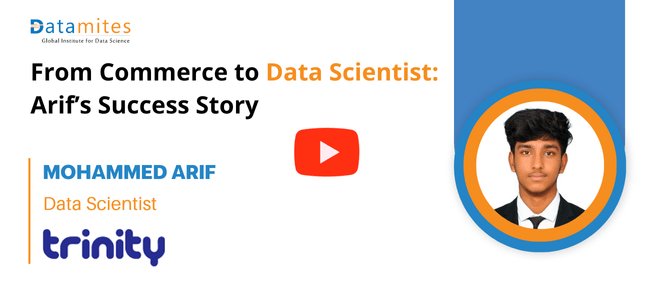
Arif – From Commerce Background to Data Scientist
Arif’s journey proves that a non-technical background is not a barrier to entering the data science industry. Coming from a commerce background, he developed strong skills in Python, statistics, and machine learning through hands-on training and practical projects. With dedicated preparation and mock interview practice, he successfully secured a role as an Associate Data Scientist at Trinity Mobility in his very first interview.
Watch his full journey here:
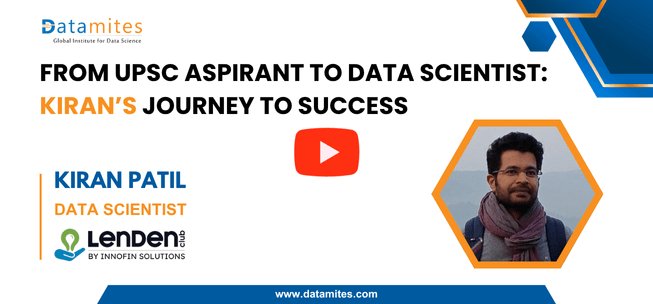
Kiran – From UPSC Aspirant to Data Scientist
Kiran’s story highlights how determination and consistent learning can completely transform a career. After preparing for the UPSC exams and working in the pharmacology field, he decided to switch to data science. By learning Python, machine learning, and working on projects such as flight price prediction, he built strong technical skills and eventually transitioned into a successful data science role.
Watch his success story here:
Gujuri Alekha – From Physics Graduate to Data Scientist
Gujuri Alekha’s journey shows how analytical skills from other fields can be applied in data science. After completing a degree in physics, he explored the rapidly growing field of data science and began learning programming, statistics, and machine learning. Through consistent practice and multiple projects, he successfully secured a position as an Associate Data Scientist at Trinity Mobility.
Watch his inspiring journey here: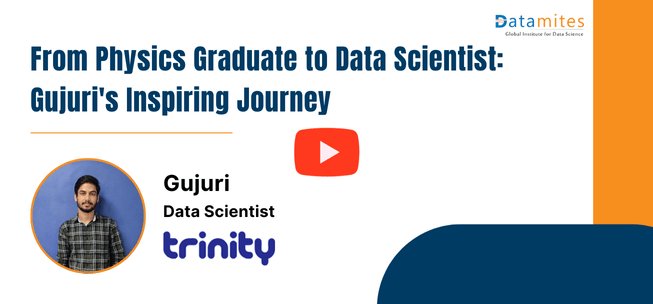
These stories demonstrate an important lesson: your background does not determine your future in data science. With the right learning approach, practical projects, and continuous skill development, anyone can successfully transition into this high-demand field.
Starting a career in data science without experience may seem challenging at first, but it is completely achievable with the right approach. By learning essential skills, building practical projects, and gaining hands-on experience, beginners can successfully enter the data science industry.
The key to success is consistent learning, curiosity, and problem-solving. As the demand for data professionals continues to grow worldwide, this is the perfect time for beginners to start their journey and build a rewarding career in data science.
DataMites is a leading training institute that offers industry-focused programs in data science, artificial intelligence, machine learning, and data analytics. The institute provides hands-on learning with live projects, internships, and expert mentorship to help learners build practical skills. Its Data Science course in Bangalore is designed for beginners and professionals, covering Python, statistics, machine learning, and real-world applications, along with placement assistance and globally recognized certifications.