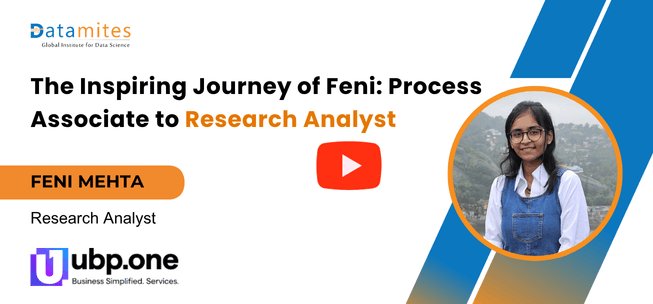
The Inspiring Journey of Feni: Process Associate to Research Analyst
Discover the inspiring journey of Feni, who transitioned from a Process Associate to a Research Analyst through continuous learning, skill development, and determination, showcasing how the right training and dedication can unlock rewarding career growth opportunities.
 Kriti Maurya
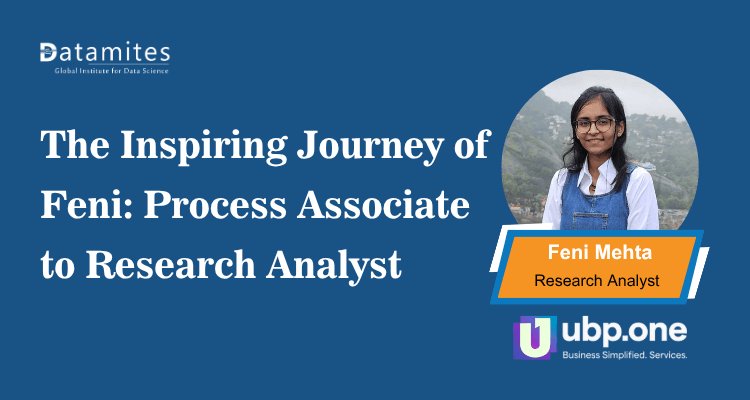
Switching careers is never easy, especially when moving from a non-technical background to a data-driven role. However, with the right mindset, consistent effort, and structured learning, it is absolutely achievable. Feni’s journey from a Process Associate to a Research Analyst is a powerful example of determination, resilience, and smart career planning.
Feni’s Journey from Process Associate to Research Analyst
Feni’s journey from Process Associate to Research Analyst highlights her dedication to learning and career growth. By building strong data analyst skills, mastering coding, and gaining practical experience, she successfully transitioned into analytics, showcasing how consistent effort can lead to rewarding opportunities.
Refer to these Articles:
- Why Data Analytics Career in Hyderabad
- How to Choose Best Institute for Data Analytics in Hyderabad
- Why Hyderabad Is Emerging as India’s Education and Career Hub
Q1. Can you introduce yourself to our audience?
Feni shares that she comes from a microbiology background, having completed both her bachelor’s and postgraduate studies in the field. After her academic journey, she worked in a billing company for over a year and a half before deciding to transition into a research analyst role.
Q2. When did you complete your data science training?
She completed her course in October 2025, which helped her build a foundation in data analytics and prepared her for the transition into a new career path.
Q3. How many mock interviews did you attend, and did they help?
Feni attended two mock interviews. She emphasizes that these sessions significantly boosted her confidence and helped her structure better answers during her actual interview.
Q4. What kind of questions were asked during your interview?
The interview included both general and technical questions. She was asked to introduce herself, explain her career transition, and discuss her future goals. Additionally, the interviewers tested her understanding of her background and her motivation for switching to data analytics.
Q5. How did you explain your career shift from microbiology to analytics?
Feni explained that she wanted to move into a field with better future prospects. She believed data analytics offered strong growth opportunities and decided to pursue it when the right chance came along.
Q6. What technical skills were tested in your interview?
The interview focused on basic knowledge of Python, SQL, and statistics. She was also given a report to analyze and asked to interpret the data. A numerical test was conducted to evaluate her mathematical and analytical skills.
Q7. What was your main focus during interview preparation?
Coming from a non-coding background, Feni focused heavily on improving her programming skills, especially Python. She also had some understanding of machine learning but prioritized strengthening her coding abilities.
Q8. How long did it take you to become comfortable with coding?
She mentions that it took her around six months of consistent practice to become confident in coding, which is quite common for beginners. Learners enrolling in IT courses in Hyderabad can also expect a similar learning curve, especially when transitioning from a non-technical background.
Q9. What is your view on coding in the age of AI?
Feni believes that even though AI is advancing, basic coding knowledge is still essential. Since AI tools are created and guided by humans, understanding coding helps in effectively using and interpreting these tools.
Q10. How did you manage your time while working and studying?
Balancing work and learning was challenging. She worked full-time and dedicated 1–2 hours daily for practice. On weekends, she focused entirely on studying and improving her skills.
Q11. How did you approach building your resume?
Feni created a simple and clear resume using Word. She included both her past experience and newly acquired skills in data analytics, along with details of her projects.
Q.12 Did you secure a job after completing your training, and what role did you get?
Yes, I secured a position as a Research Analyst at UBP1 after completing my training. My consistent effort, focus on improving coding and analytics skills, and practicing mock interviews really helped me gain confidence and perform well during the interview process.
Q13. What are your future career goals?
She aims to continue growing in the data field and plans to learn more about artificial intelligence to stay relevant in the future.
Q14. What kind of projects should freshers focus on?
Feni suggests working on diverse projects such as classification, regression, finance, and sales-based problems. While domain-specific projects can help, versatility is more valuable in the job market.
Q15. How did training support help you in placements?
She highlights that the support team was always available to guide her throughout the process, helping her with doubts, preparation, and overall career guidance.
Q16. What topics should freshers focus on for interviews?
According to Feni, freshers should focus on Python, SQL, statistics, and machine learning basics. Strong coding skills are especially important as they are often tested first.
Key Insights from Feni’s Career Journey
DataMites success stories highlight real career transformations and inspire learners to take the first step into data analytics. These key insights reflect practical lessons gained through dedication, learning, and persistence.
- Career Switch is Possible: Consistent effort and the right learning approach can help anyone move from a non-technical background into data analytics. With dedication and proper guidance, transitioning into a new domain becomes achievable and rewarding.
- Importance of Mock Interviews: Mock interviews help build confidence and improve communication skills. They prepare candidates for real interview scenarios by refining answers, reducing nervousness, and improving overall performance.
- Strong Technical Foundations Matter: Having a solid understanding of Python, SQL, and statistics is essential. These core skills form the backbone of data analytics and are frequently tested during interviews.
- Value of Real-World Projects: Working on practical projects enhances problem-solving abilities and provides hands-on experience. It also helps candidates showcase their skills effectively to potential employers.
- Time Management is Crucial: Balancing work and learning requires discipline and proper time management. Consistent daily practice and focused weekend study sessions can significantly improve learning outcomes.
- Diverse Projects Add Value: Working on different types of projects, such as finance, sales, and classification problems, helps build a versatile skill set and improves job opportunities.
These takeaways highlight that with the right combination of skills, proper guidance, and consistent effort, anyone can successfully build a strong career in data analytics. Exploring opportunities like Data Analytics Pune can further enhance practical exposure. Staying focused on learning, practicing regularly, and adapting to new tools and technologies will support long-term growth and career success in the analytics field.
Refer to these Articles:
- Beginner’s Guide to Data Analytics Course
- Journey from Mechanical Engineering to Data Analyst
- What’s Next for Data Analysts? Predictive and Prescriptive Analytics
DataMites Institute focuses on industry-oriented certifications and practical learning to prepare professionals for data-driven careers. Its programs are aligned with globally recognized organizations such as IABAC and NASSCOM FutureSkills, offering structured pathways in Data Analytics courses in Hyderabad, along with programs in Data Science, Machine Learning, Artificial Intelligence, Python, Tableau, and MLOps. Learners can also pursue advanced certifications such as Certified Data Scientist, AI for Managers, and Computer Vision Expert.
The institute also provides a Data Analyst course in Hyderabad, while maintaining offline training centers across major cities, including Bangalore, Pune, Mumbai, Chennai, Delhi, Kolkata, Coimbatore, Ahmedabad, Chandigarh, and more. These programs emphasize classroom interaction, hands-on practical training, internship opportunities, and career support to help learners build industry-ready expertise.