Why Python for Data Science
Discover why Python is a leading choice for data science, from its simple syntax and powerful libraries to data analysis, machine learning, visualization, automation, and real-world applications.
 Datamites Team
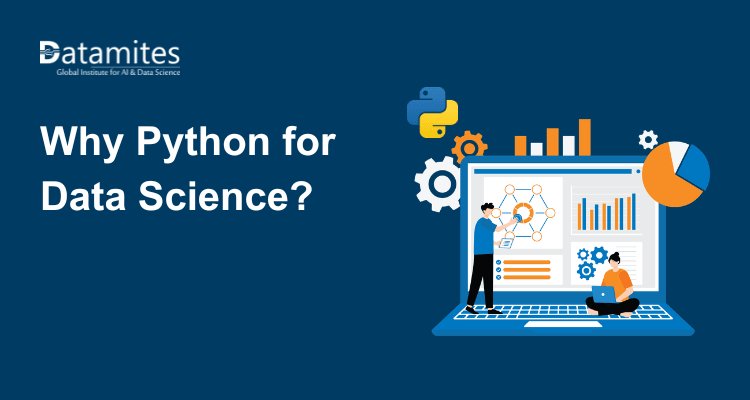
Python has become one of the most widely used programming languages in data science because it combines readable syntax with a broad ecosystem for data analysis, visualization, machine learning, and artificial intelligence. From cleaning datasets to building predictive models, Python for Data Science supports many stages of a modern data workflow.
For beginners, Python is relatively approachable, while professionals can use its extensive libraries and frameworks for complex projects. However, Python is one of several programming languages used in data science, alongside R, SQL, Java, and others.
Why Is Python Used for Data Science?
Python is used for data science because it makes it easier to manipulate data, perform statistical analysis, create visualizations, develop machine learning models, and automate repetitive tasks. Its extensive ecosystem, readable syntax, and integration capabilities make it suitable for both learning and real-world data projects.
Key Benefits of Python for Data Science
Python offers several advantages that make it a preferred choice for data science, including simplicity, powerful libraries, and strong community support.
1. Simple and Readable Syntax
Python programming for data science has a relatively straightforward syntax. This allows beginners to focus more on understanding data structures, statistics, and algorithms instead of dealing with complex language syntax.
2. Extensive Libraries and Frameworks
A major advantage of Python data science is its ecosystem of specialized libraries. These tools reduce the amount of code required for common tasks such as numerical computing, data manipulation, visualization, and machine learning.
3. Data Analysis Capabilities
Python for data analysis supports tasks such as data cleaning, transformation, aggregation, and exploratory data analysis. Libraries such as Pandas make it easier to work with structured datasets.
4. Data Visualization
Python supports data visualization through libraries such as Matplotlib and Seaborn. Data professionals can use these tools to identify patterns, compare variables, and communicate findings through charts and graphs.
5. Machine Learning and AI Support
Python is widely used for machine learning and AI applications. Libraries and frameworks such as Scikit-learn, TensorFlow, and PyTorch support tasks ranging from predictive modeling to deep learning.
6. Large Developer Community
Python has a large global developer community, which means learners can access extensive documentation, tutorials, open-source projects, and community resources when developing their Python skills for data science.
7. Integration and Automation
Python can connect with databases, APIs, cloud platforms, and other technologies. It can also automate repetitive data-processing tasks, making it useful across different stages of a data workflow.
8. Flexibility
Python can support small data analysis projects as well as more advanced machine learning and AI workflows. This flexibility makes data science with Python relevant across industries and use cases.
Popular Python Libraries for Data Science
Several Python data science libraries are commonly used for different tasks:
- NumPy: Numerical computing and array operations.
- Pandas: Data manipulation, cleaning, and analysis.
- Matplotlib: Creating charts and data visualizations.
- Seaborn: Statistical visualization built on Matplotlib.
- Scikit-learn: Machine learning algorithms, preprocessing, and model evaluation.
- TensorFlow and PyTorch: Deep learning and artificial intelligence development.
Tools such as Jupyter Notebook are also widely used for interactive analysis, experimentation, and documenting data workflows.
What Can You Do With Python in Data Science?
Python can be applied throughout a typical data science workflow, including:
- Data cleaning: Handle missing, duplicate, or inconsistent data.
- Exploratory data analysis: Discover patterns and relationships.
- Data visualization: Present insights through meaningful charts.
- Predictive modeling: Use historical data to estimate future outcomes.
- Machine learning: Build classification, regression, and clustering models.
- Automation: Automate repetitive data-processing and reporting tasks.
- AI applications: Develop solutions involving machine learning and deep learning.
Is Python Good for Beginners in Data Science?
Yes. Python can be a good starting point for beginners because its syntax is relatively easy to read and its ecosystem supports many data science tasks. However, learning Python alone is not enough to become a data scientist.
Beginners should also develop knowledge of statistics, data analysis, databases, machine learning, and problem-solving. Starting with Python for beginners and gradually applying these skills to practical datasets can make the learning process more effective.
How to Learn Python for Data Science
A practical learning path is:
- Learn Python programming fundamentals, variables, loops, functions, and data structures.
- Practice working with files, exceptions, and basic programming concepts.
- Learn NumPy and Pandas for numerical computing and data analysis.
- Study Matplotlib and Seaborn for data visualization.
- Build a foundation in statistics and exploratory data analysis.
- Learn machine learning concepts using Scikit-learn.
- Build practical projects using Data Scientists in Python training resources and Jupyter Notebook.
- Explore TensorFlow or PyTorch after developing machine learning fundamentals.
Python is not the only option for data science. Learners can also explore R Programming, particularly for statistical computing and data analysis. Those who want to strengthen their programming foundation can explore Python programming before progressing into specialized data science applications.
A structured Python data science course can also help learners follow this progression through guided exercises and projects.
Python for Data Science is valuable because it brings together accessible programming, data analysis, visualization, machine learning, automation, and AI capabilities within a broad ecosystem. Its libraries and tools make it useful for both beginners and experienced professionals.
If you want to learn Python for data science, focus on programming fundamentals first, then build practical skills in data analysis, visualization, statistics, and machine learning through projects.
DataMites Institute, a leading name among data science institutes, offers a comprehensive range of courses in Artificial Intelligence, Machine Learning, Python Development, Data Analytics, and the Certified Data Scientist Course. Accredited by IABAC and NASSCOM FutureSkills, DataMites provides expert-led training, hands-on projects, internship opportunities, and placement support. For students seeking online learning or DataMites data science courses, the institute offers practical training designed to build industry-relevant skills and real-world experience. With flexible learning options and a growing presence across India, DataMites is a trusted choice for aspiring data scientists and analytics professionals.