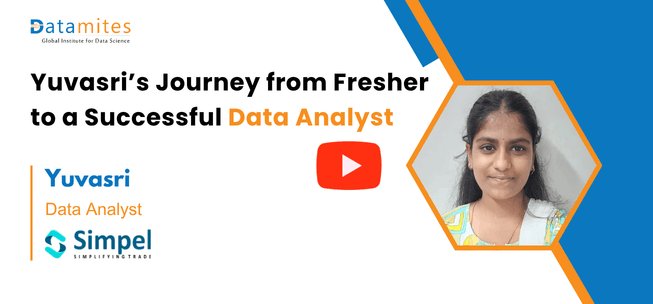
Yuvasri’s Journey from Fresher to a Successful Data Analyst
Explore Yuvasri’s inspiring journey from a fresher to a successful data analyst. Learn how she built key skills, gained practical experience through projects and training, and navigated challenges to achieve career growth in the data analytics field.
 Kriti Maurya
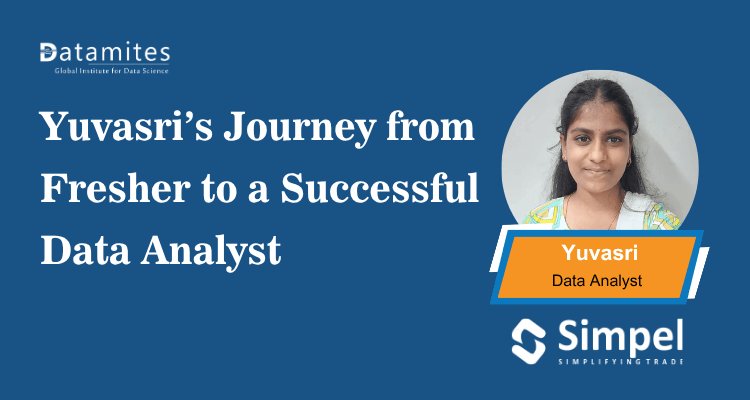
The journey from a fresher to a successful data analyst requires the right combination of skills, training, and determination. Yuvasri’s story is a perfect example of how focused learning, practical exposure, and consistent effort can help graduates break into the analytics industry. This article explores her step-by-step transition, key learnings, and valuable insights for aspiring data analysts.
Yuvasri’s Inspiring Journey from Fresher to Data Analyst
Breaking into the data analytics field as a fresher requires the right mix of skills, guidance, and persistence. Yuvasri’s journey shows how a clear goal, structured training, and hands-on projects can turn a beginner into a job-ready data analyst, opening doors to strong career opportunities.
Starting with a computer science background, she strengthened her data analyst skills in SQL, Excel, Python, and visualization tools through continuous learning and practice. With real-time projects, mock interviews, and confidence, she successfully cleared her first interview and began her professional journey.
Refer to these Articles:
- Data Analytics Careers for Arts and Commerce Graduates
- Star Schema vs Snowflake Schema
- The Role of Data Quality in Digital Transformation
Q1: Can you introduce yourself and your background?
I’m Yuvasri, a Computer Science engineering graduate from Nataraja College, completed in 2025. After graduation, I enrolled in a Certified Data Analyst program and completed it within a few months. My journey included training, team projects, mock interviews, and finally landing my first job opportunity as a data analyst at Simpel Tech Labs.
Q2: What motivated you to choose a career in data analytics?
I have always been interested in working with data, especially SQL and data visualization. I enjoy working with visuals and patterns, which naturally attracted me to analytics. I was also curious about machine learning, which further motivated me to pursue a career in this field.
Q3: How did your learning journey shape your skills?
I already had basic knowledge of Python and SQL from my academic background. While exploring different learning options, including IT courses in Mumbai, I focused on building my core skills. During my training, I strengthened my understanding of Excel, statistics, and advanced analytics concepts. I also explored additional resources online to deepen my knowledge in Python and SQL, which helped me build confidence.
Q4: What tools and skills helped you crack your interview?
SQL and Power BI played a major role in my interview preparation. I focused on intermediate to advanced SQL concepts such as joins and window functions. Python and Excel also supported my performance, helping me solve problems effectively during the interview.
Q5: Can you describe your interview experience?
The interview process included a technical round followed by an HR round and lasted for several hours. I was asked multiple SQL questions, especially on joins and advanced queries. With proper preparation, I was able to clear the interview on my first attempt.
Q6: How did projects and practical exposure help you?
I worked on team-based projects, including capstone and client projects. One of the key projects was based on supply chain management. These real-world experiences helped me understand how data analytics works in practical scenarios and prepared me for interviews.
Q7: Did you receive any support during your job preparation?
Yes, I received strong support in building my resume and preparing for interviews. Guidance from mentors helped me improve my profile and gain confidence. Mock interviews also played an important role in identifying areas for improvement.
Q8: What strategies helped you succeed as a fresher?
I focused on continuous learning by exploring online courses and practicing advanced SQL and Excel. I also participated in workshops and worked on additional projects. Consistency and practice were key factors in my success.
Q9: What advice would you give to aspiring data analysts?
If you want to build a career in data analytics, focus on mastering SQL and Excel at an advanced level. Don’t limit yourself to basics—practice real-world problems, work on projects, and keep upgrading your skills.
Q10: What are your future plans?
I am starting my role with an internship-to-full-time opportunity. I look forward to gaining industry experience and continuing to grow in the data analytics field.
Key Insights and Learnings from Yuvasri’s Data Analyst Journey
Yuvasri’s journey highlights how the right combination of skills, practice, and guidance can help freshers succeed in data analytics. As part of inspiring Datamites Success stories, her experience shows the importance of focusing on practical learning and industry-relevant tools. These key insights can guide aspiring data analysts in building a strong and successful career path.
- Strong Foundation in SQL and Python: Having early knowledge of SQL and Python gives a strong advantage in analytics roles. These tools are essential for handling data and solving real-world problems efficiently.
- Practical Project Experience: Working on real-time and client-based projects improves problem-solving abilities. It helps learners understand how data analytics is applied in real business scenarios.
- Advanced Excel and SQL Skills: Mastering advanced Excel and SQL is crucial for interviews and job roles. Recruiters often test in-depth knowledge of these tools during technical rounds.
- Importance of Mock Interviews: Mock interviews help identify weak areas and improve confidence. They prepare candidates for real interview environments and common questions.
- Resume Building Support: A well-structured resume increases chances of getting shortlisted. Proper guidance helps freshers highlight their skills and projects effectively.
- Continuous Learning Approach: Learning through online resources and practice enhances technical expertise. Staying updated with new tools and concepts is important in analytics.
These insights clearly show that a structured approach, combined with practical exposure and continuous learning, can help freshers successfully build a career in data analytics. Focusing on in-demand tools, working on real-world projects, and staying consistent with practice further strengthen job readiness and open up long-term career growth opportunities in the analytics field.
Refer to these Articles:
- Impact of Data Analytics on Mumbai’s IT and Education Industry
- Tech skills in Mumbai companies hiring students
- How Key Industries Leveraging Data Analytics in Mumbai
DataMites Institute focuses on delivering industry-oriented certifications and practical training to help individuals build successful data-driven careers. Its programs are aligned with globally recognized organizations like IABAC and NASSCOM FutureSkills, offering structured learning paths in Data Analytics Ahmedabad, along with specialized courses in Data Science, Machine Learning, Artificial Intelligence, Python, Tableau, and MLOps. Learners can also pursue advanced certifications such as Certified Data Scientist, AI for Managers, and Computer Vision Expert.
The institute also offers a Data Analyst course in Mumbai and has established offline training centers across major cities, including Bangalore, Pune, Hyderabad, Chennai, Delhi, Kolkata, Coimbatore, Ahmedabad, Chandigarh, and more. These programs focus on classroom-based learning, practical hands-on experience, internship opportunities, and dedicated career support to help learners become industry-ready professionals.