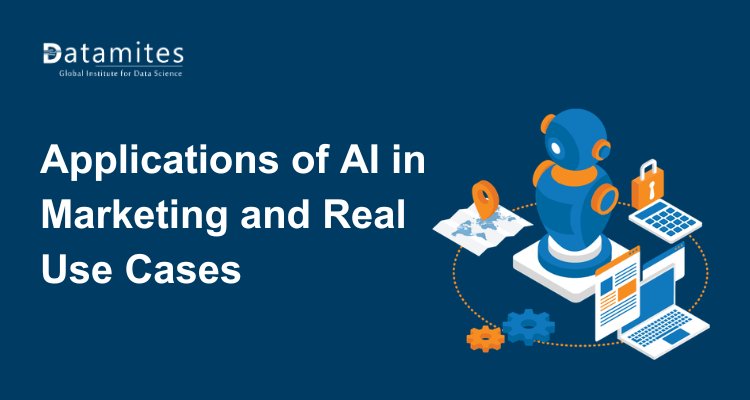
Applications of AI in Marketing and Real Use Cases
Explore the top applications of AI in marketing and real-world use cases, including customer segmentation, predictive analytics, personalization, chatbots, and AI-driven marketing tools transforming modern business strategies.
 Kriti Maurya
Artificial Intelligence has emerged as a transformative force across industries, and marketing is no exception. The Applications of AI in Marketing are redefining how organizations engage customers, optimize campaigns, and drive revenue growth. For business finance leaders, AI offers measurable value through enhanced efficiency, improved decision-making, and higher return on investment.
Marketing has evolved from intent-based strategies to data-driven precision. With advanced ai technologies for marketing, companies now leverage machine learning algorithms and automation to predict customer behavior and deliver personalized experiences. This evolution enables organizations to move beyond traditional approaches and adopt scalable, intelligent systems.
From a financial perspective, AI minimizes wasteful spending and maximizes campaign performance. By integrating AI marketing tools, leaders can monitor ROI in real time, allocate budgets effectively, and gain actionable insights from complex datasets.
What are the Key Technologies Behind AI in Marketing
Understanding the technologies behind AI is essential for leveraging its full potential.
Machine Learning and Predictive Analytics
Machine learning is the backbone of most tools for AI in Marketing. It analyzes historical data to predict future outcomes, enabling marketers to anticipate customer needs and optimize campaigns. These models play a crucial role in Use Cases in Marketing Analytics, such as churn prediction and demand forecasting.
Natural Language Processing (NLP)
NLP allows machines to understand and interpret human language. This technology powers chatbots, sentiment analysis tools, and automated content generation, making communication more efficient and personalized.
Computer Vision and Image Recognition
Computer vision enables AI systems to analyze visual content. Brands use this technology to identify trends, monitor brand presence, and enhance customer engagement through visual platforms.
Big Data and Cloud Computing
AI thrives on data. Big data platforms and cloud infrastructure provide the scalability needed to process vast amounts of information, supporting advanced ai marketing tools and analytics systems.
Refer to the articles below:
- Who is an AI Product Manager? Key Roles and Responsibility
- Essential AI Tools for finance Smarter Analysis
- Top AI Tools in HR Transforming Tech Companies
Core Applications of AI in Marketing
The Applications of AI in Marketing span multiple domains, offering innovative solutions to challenges while implementing marketing strategies.
Customer Segmentation and Personalization
AI enables hyper-personalization by analyzing user behavior and preferences. Marketers can create targeted campaigns that resonate with individual customers, improving engagement and conversion rates.
Predictive Lead Scoring
Using AI models, businesses can prioritize leads based on their likelihood to convert. This improves sales efficiency and aligns marketing efforts with revenue goals.
AI-Powered Content Creation
AI tools can generate content tailored to audience preferences. From email campaigns to social media posts, ai marketing tools streamline content production while maintaining quality and relevance.
Chatbots and Virtual Assistants
Chatbots provide 24/7 customer support, enhancing user experience and reducing operational costs. These systems rely on NLP to deliver accurate and timely responses.
Programmatic Advertising
AI automates ad buying by analyzing user data in real time. This ensures ads are shown to the right audience at the right time, maximizing ROI.
The core applications of AI in marketing empower businesses to deliver smarter, more personalized, and data-driven strategies, ultimately driving better customer engagement and higher ROI.
Real-World Use Cases of AI in Marketing
AI in marketing is transforming how businesses interact with customers by enabling data-driven, personalized, and efficient strategies across industries. From retail to healthcare, AI helps organizations optimize campaigns, improve engagement, and drive measurable results.
- Retail Personalization and Recommendations: Retail businesses use AI to analyze customer purchasing behavior and preferences, enabling personalized product recommendations. This improves customer satisfaction, increases conversion rates, and drives repeat purchases.
- Financial Services Targeting and Segmentation: AI helps financial institutions segment customers based on spending habits, risk profiles, and preferences. This allows for highly targeted marketing campaigns and personalized financial product offerings.
- E-commerce Experience Optimization: E-commerce platforms leverage AI for personalized shopping experiences through product suggestions, dynamic pricing, and tailored promotions. This enhances user engagement and significantly boosts revenue.
- Healthcare Marketing Automation: Healthcare organizations use AI to automate patient communication, appointment reminders, and outreach campaigns. This ensures timely interaction, improves patient experience, and enhances operational efficiency.
- Marketing Analytics and Performance Optimization: AI-driven marketing analytics enable predictive customer behavior analysis, real-time campaign optimization, and accurate ROI forecasting. This helps businesses make data-driven decisions, maximize efficiency, and achieve better marketing outcomes.
AI Marketing Tools Driving Innovation
AI marketing tools are revolutionizing the way businesses plan, execute, and optimize campaigns through automation and data-driven insights.
- Automation Platforms: Tools like HubSpot, Marketo, Mailchimp, and ActiveCampaign streamline repetitive tasks such as email campaigns, lead nurturing, and social media scheduling, improving efficiency and consistency.
- Data Analytics Tools: Platforms such as Google Analytics, Tableau, Power BI, and Mixpanel provide deep insights into customer behavior and campaign performance, enabling businesses to make informed, data-driven decisions.
- Customer Engagement Tools: Tools like Intercom, Drift, Zendesk, and Salesforce Marketing Cloud enhance customer interaction through personalized messaging, chatbots, and real-time communication, significantly improving customer experience and engagement.
AI marketing tools are transforming how businesses plan, execute, and optimize campaigns through automation and data-driven insights.
Top Skills Required to Become an AI Marketing Strategist
Building a successful career as an AI Marketing Strategist requires a blend of analytical, technical, and strategic expertise. Professionals must also understand ethical AI practices to create impactful and responsible marketing strategies.
Data Analysis and Interpretation
AI marketing strategists must be proficient in analyzing large datasets to uncover meaningful patterns and trends. This skill enables professionals to make data-driven decisions and optimize campaigns using real-world marketing analytics use cases.
Technical Proficiency
A strong understanding of AI technologies, machine learning algorithms, and modern marketing tools is essential. This knowledge helps in implementing automation, personalization, and predictive marketing strategies effectively.
Strategic Thinking
Professionals must be able to align AI capabilities with overall business objectives and marketing goals. Strategic thinking ensures that AI-driven initiatives deliver measurable outcomes and long-term value.
Ethical AI Understanding
Awareness of ethical AI practices, including data privacy and responsible AI usage, is critical in today’s digital landscape. This helps organizations build trust with customers while ensuring compliance with regulations.
Challenges and Ethical Considerations
Despite its advantages, AI in marketing comes with challenges such as data privacy concerns, algorithmic bias, and high implementation costs. Organizations must adopt transparent policies, ethical frameworks, and continuous monitoring to minimize risks and ensure responsible AI usage.
Refer to the article below:
- Traditional AI vs Generative AI: Key Differences, Examples, and Use Cases
- What Are Graph Neural Networks
- PyTorch vs TensorFlow: Which is Better in 2026
Future Trends in AI Marketing
The future of AI in marketing is driven by hyper-personalization, where brands deliver highly customized experiences based on user behavior and preferences. This will significantly enhance customer engagement and satisfaction.
Artificial Intelligence (AI) has become a key force shaping modern marketing strategies. The global AI in marketing market is projected to reach $47 billion in 2025 and is expected to exceed $107 billion by 2028, according to Statista.
Additionally, advancements in voice search optimization and real-time decision-making will reshape how businesses interact with their audience. Emerging AI technologies will further improve automation, predictive analytics, and customer journey mapping, making marketing more intelligent and efficient.
DataMites Institute offers a comprehensive AI for Marketing courses tailored for professionals who want to integrate artificial intelligence into product strategy and data-driven business decisions. The course blends foundational knowledge with real-world applications and features specialized tracks such as AI for HR & People Analytics, AI for Finance, AI for Product Managers, AI for Healthcare, and Generative AI for Business Leaders.
Participants can choose from flexible learning modes, including live online sessions, classroom training, and internship opportunities that emphasize hands-on experience through real-world case studies. The program is accredited by International Association of Business Analytics Certification, and awards the globally recognized Certified AI Professional in Marketing Analytics certification, adding strong credibility to learners’ profiles. With training centers in cities like Hyderabad, Ahmedabad, Chennai, Bangalore, Pune, Mumbai, and Coimbatore, DataMites ensures accessible, industry-oriented AI education across India.