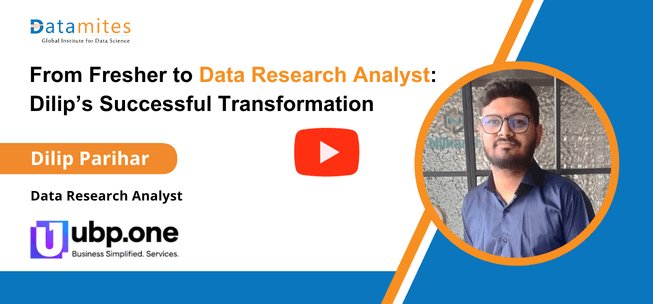
From Fresher to Data Research Analyst: Dilip’s Successful Transformation
Discover how Dilip transformed from a fresher into a successful Data Research Analyst. This story highlights his learning journey, skill development, challenges, and career growth, offering inspiration and practical insights for anyone looking to build a career in data analytics.
 Kriti Maurya
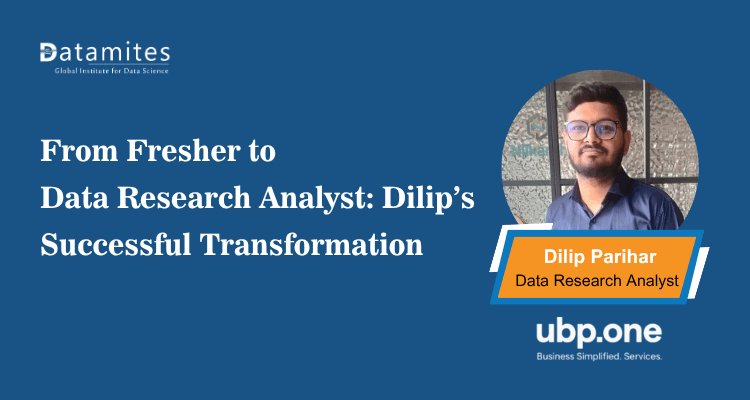
Dilip’s journey from a fresher to an aspiring data research analyst highlights how structured training, hands-on projects, and clarity in career goals can shape a successful transition into the analytics domain. It also reflects the importance of continuous learning, building strong fundamentals in machine learning and statistics, and gaining practical exposure through real-world projects. His experience shows how making the right career choices, staying patient during job searches, and focusing on skill development can open better opportunities. This success story presents his path in a question-and-answer format to help aspiring professionals learn from his experience.
Dilip’s Inspiring Journey from Fresher to Data Research Analyst
Starting a career in data analytics can be challenging for fresh graduates, but with the right data analyst skills and dedication, it becomes achievable. Dilip’s journey from a fresher to a data research analyst highlights how structured learning, practical project experience, and well-defined career goals can create a strong foundation and unlock opportunities in the data-driven industry.
Q1. Can you introduce yourself and your educational background?
Dilip is a recent graduate who completed his Bachelor of Engineering in Information Technology from Mumbai University in 2025. With a technical background, he had basic exposure to programming and machine learning concepts but wanted to gain deeper expertise in data analytics and AI.
Q2. What motivated you to pursue a career in data analytics and research?
Although Dilip had some familiarity with machine learning during his academic studies, he realized that his knowledge was not sufficient to meet industry demands. This motivated him to pursue a structured learning program to gain in-depth knowledge and practical skills required in the data analytics field.
Q3. Which course did you enroll in and why?
Dilip joined a Certified Data Science (CDS) program to deepen his knowledge of data analytics, machine learning, and statistics. The program provided a well-structured curriculum along with hands-on projects and internship opportunities, helping him develop job-ready skills while also giving insight into trends like data analytics course fees in Ahmedabad.
Q4. How did your IT background help during the course?
His IT background provided a basic understanding of Python and technical concepts. However, the course helped him dive deeper into machine learning algorithms, statistical analysis, and data visualization, giving him a more practical and industry-oriented perspective, similar to the hands-on approach offered in IT courses in Ahmedabad.
Q5. What were your key learnings from the program?
Dilip gained strong knowledge of machine learning algorithms, statistical fundamentals, and visualization techniques. He also learned when and how to apply different analytical methods, which is a crucial skill in real-world data analysis.
Q6. Which topic did you find most interesting?
Machine learning was his favorite area. He enjoyed understanding algorithms and exploring how they can be applied to solve real-world problems, making it a key focus in his learning journey.
Q7. Did you work on projects during your training?
Yes, Dilip completed multiple projects independently. Working individually helped him develop problem-solving skills, build confidence, and gain hands-on experience in applying analytics concepts to real datasets.
Q8. Did you attend any interviews after completing your course?
Yes, Dilip attended an interview after completing his training. The first round included an aptitude test with comprehension and mathematical questions. After clearing this round, he was selected for a personal interview.
Q9. What was your interview experience like?
During the interview, Dilip was asked to introduce himself and explain his current activities. He discussed his CDS program, internship experience, and the projects he had completed. The interviewer also explained the company’s role and expectations.
Q10. Why did you not accept the job offer?
Although Dilip was selected, he chose not to accept the offer because the role mainly involved manual work such as analyzing PDFs and creating summary reports. It did not involve the use of advanced tools or machine learning, which did not align with his career goals in AI and data analytics.
Q11. What are your next steps in your career journey?
Dilip has completed all his projects and is currently waiting for the final evaluation of his client project. He plans to attend mock interviews and continue applying for roles that match his career aspirations in data analytics and AI.
Q12. What advice would you give to aspiring data analysts?
Dilip emphasizes consistent practice as the key to success. According to him, the more you practice, the faster you improve and move closer to perfection in data analytics and research.
Refer to these Articles:
- How to Become a Data Analyst in Ahmedabad
- The Rise of Data Analytics Careers in Ahmedabad: What You Need to Know
- Tips for Selecting the Top Data Analytics Institute in Ahmedabad
Key Insights from Dilip’s Transition from Fresher to Data Research Analyst
Dilip’s experience highlights the essential skills, strategies, and learning approaches required to build a successful career in data analytics, making it one of the inspiring Datamites Success stories. His journey reflects the importance of continuous learning, practical exposure, and industry-relevant training.
- Strong Academic Foundation Needs Skill Enhancement: A technical degree helps build basic knowledge, but industry readiness requires additional practical skills, tools, and real-world exposure to meet evolving data analytics demands.
- Importance of Structured Certification Programs: Certification courses provide a clear learning path, covering industry-relevant tools and concepts, helping learners bridge the gap between theoretical knowledge and practical application.
- Value of Hands-On Project Experience: Working on real-world projects allows learners to apply concepts, understand datasets, and build confidence, making them better prepared for real job responsibilities.
- Machine Learning as a Core Skill Area: Machine learning is a key focus for data professionals, enabling them to build predictive models and solve complex business problems using data-driven approaches.
- Independent Work Builds Confidence: Completing projects individually enhances problem-solving abilities, encourages critical thinking, and helps learners develop confidence in handling real-world data challenges.
- Understanding the Interview Process: Data analyst interviews often include aptitude tests, technical questions, and project discussions, requiring candidates to be well-prepared in both theory and practice.
These insights provide a clear roadmap for aspiring professionals to develop the right skills and make informed career decisions in the data analytics field.
Refer to these Articles:
- Future of Data Analytics: What Skills Will Matter by 2030
- 6 Innovative Ways to Leverage AI in Data Analytics
- Understanding the Ethics of Data Analytics
Dilip’s transformation from a fresher to a data research analyst reflects a focused approach to learning and career growth. After completing his IT degree, he enhanced his skills through a structured data science program, gaining expertise in machine learning, statistics, and real-world projects. By prioritizing opportunities aligned with his goals and continuously improving his skills, he built a strong foundation for a successful career in data analytics, showcasing the growing opportunities in Data Analytics Ahmedabad.
DataMites Institute focuses on industry-oriented certifications and practical learning to prepare professionals for data-driven careers. Its programs are aligned with globally recognized organizations such as IABAC and NASSCOM FutureSkills, offering structured pathways in Data Analytics courses in Ahmedabad, along with programs in Data Science, Machine Learning, Artificial Intelligence, Python, Tableau, and MLOps. Learners can also pursue advanced certifications such as Certified Data Scientist, AI for Managers, and Computer Vision Expert.
The institute also provides a data analyst course in Mumbai, while maintaining offline training centers across major cities, including Bangalore, Pune, Hyderabad, Chennai, Delhi, Kolkata, Coimbatore, Ahmedabad, Chandigarh, and more. These programs emphasize classroom interaction, hands-on practical training, internship opportunities, and career support to help learners build industry-ready expertise.