How AI and Data Analytics Integration Leads to Better Decision-Making
Discover how AI and data analytics integration improves business decision-making through predictive insights, automation, real-time analytics, and smarter strategies. Learn how organizations use AI-powered analytics to enhance efficiency, customer experience, and operational performance across industries.
 Kriti Maurya
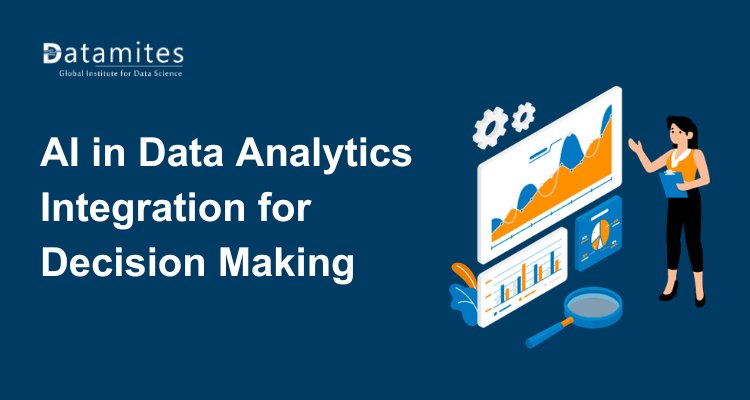
The modern digital economy, businesses generate enormous amounts of data relying on intelligent technologies to improve operational efficiency, customer engagement, and strategic planning. Among the most transformative developments is the integration of AI and Data Analytics, which is reshaping how businesses collect, process, and interpret information. Companies across industries are increasingly adopting AI and Data Analytics Integration to gain real-time insights, predict future trends, and make data-driven decisions with greater accuracy.
The rise of AI in data analytics is not just a technological advancement; it is a strategic necessity. Businesses that successfully implement data analytics with ai are achieving higher productivity, improved forecasting capabilities, and stronger competitive advantages.
Understanding AI and Data Analytics Integration
AI and Data Analytics Integration refers to the process of combining artificial intelligence technologies with data analytics systems to enhance the collection, analysis, interpretation, and application of business data. Traditional analytics methods primarily focused on examining historical data to understand past performance. Through data analytics integration, organizations can improve efficiency, reduce operational costs, and gain more accurate insights.
According to a broader market research forecast, the Business Intelligence (BI) and analytics market is projected to grow from approximately USD 40.7 billion in 2024 to nearly USD 87.86 billion by 2033, registering a CAGR of 8.93% during the forecast period from 2025 to 2033. (Source: Business Research Insights)
Hence, Automating data analysis using artificial intelligence helps businesses eliminate repetitive manual tasks, improve data accuracy, and enhance productivity.
Refer to the articles below:
- Data Management Strategies for Forecasting Accuracy in 2026
- Top 5 Marketing Analytics Projects to Try
- How Data Analysts Solve The Complex Business Challenges
Role of AI in Enhancing Data Analytics Capabilities
Artificial intelligence is transforming traditional analytics by introducing automation, predictive intelligence, and real-time processing capabilities. The integration of AI technologies enables businesses to extract deeper insights and improve data analysis decision making significantly.
Enhanced Accuracy in Decision-Making
One of the major advantages of AI and Data Analytics Integration is improved accuracy in business decisions. AI systems can process large volumes of structured and unstructured data efficiently, reducing human errors and analytical bias. By leveraging data analytics with ai, organizations can identify hidden trends, customer patterns, and operational insights that traditional methods may overlook. This enables businesses to make more reliable and evidence-based decisions.
Faster and Real-Time Decision Processes
AI-powered analytics platforms can analyze complex datasets within seconds, helping organizations make quick decisions in dynamic business environments. Real-time insights allow businesses to respond faster to market changes, customer demands, and operational challenges. This speed improves agility and helps organizations maintain a competitive advantage in rapidly evolving industries.
Improved Strategic Planning
The use of ai in data analytics supports better strategic planning by enabling predictive analysis and demand forecasting. Businesses can anticipate market trends, optimize resource allocation, and identify future growth opportunities more effectively. Predictive intelligence allows organizations to shift from reactive decision-making to proactive business strategies.
Better Collaboration Across Teams
AI-driven dashboards and visualization tools improve communication and collaboration among departments. Teams can access real-time insights and align their goals based on shared data. Through effective data analytics integration, organizations create a more transparent and data-driven work environment that enhances coordination and operational efficiency.
Stronger Risk Management
AI-powered analytics systems help organizations identify risks, detect anomalies, and monitor compliance issues more efficiently. Businesses can prevent fraud, reduce operational disruptions, and improve security measures through intelligent monitoring systems. This proactive approach strengthens business stability and supports long-term success.
How Integration Improves Business Decision-Making
The integration of AI and analytics fundamentally changes how organizations approach decision-making. Traditional decision-making processes often relied on intuition, limited datasets, or delayed reports. However, AI and Data Analytics Integration enables businesses to make evidence-based decisions supported by real-time insights and predictive intelligence.
- Enhances Decision Accuracy: AI and Data Analytics Integration helps organizations analyze large volumes of structured and unstructured data, reducing human errors and improving the accuracy of business decisions.
- Supports Faster Decision-Making: AI-powered analytics platforms process information in real time, enabling businesses to react quickly to market trends, customer behavior, and operational changes.
- Improves Strategic Planning: Using data analytics with ai, companies can forecast future demand, identify growth opportunities, and optimize resources for better business performance.
- Enables Predictive Insights: AI in data analytics helps businesses predict risks, customer preferences, and market fluctuations, allowing proactive decision-making instead of reactive responses.
- Encourages Collaboration: AI-driven dashboards and visualization tools allow teams across departments to access shared insights, improving communication and organizational alignment.
- Strengthens Risk Management: AI-powered analytics identifies potential risks, fraud, and operational issues early, helping businesses implement preventive measures effectively.
Organizations can detect potential risks earlier, monitor compliance requirements, and implement preventive measures before issues escalate. This proactive approach strengthens business resilience and operational stability.
Industry Applications of AI-Driven Analytics
The adoption of AI-powered analytics is growing rapidly across multiple industries. Organizations are leveraging AI and Data Analytics to improve efficiency, enhance customer experiences, and gain competitive advantages.
The data analytics in healthcare sector, AI-driven analytics supports disease prediction, medical imaging analysis, and personalized treatment planning. Hospitals use predictive models to optimize patient care and reduce operational costs.
The demand for data analytics in healthcare is growing rapidly, with the market expected to expand from USD 27.4 billion in 2022 to USD 85.9 billion by 2027, according to MarketsandMarkets. This growth reflects the rising importance of analytics in improving patient care, operational efficiency, and healthcare outcomes.
The financial industry utilizes ai predictive analytics for fraud detection, algorithmic trading, and risk assessment. AI-powered systems can analyze transaction patterns in real time and identify suspicious activities with high accuracy.
Data Analytics in Retail businesses with ai to personalize customer experiences, manage inventory, and optimize pricing strategies. Recommendation engines powered by AI help increase customer engagement and sales conversions.
Manufacturing companies implement automation in analytics to monitor equipment performance, predict maintenance requirements, and improve production efficiency. AI-powered predictive maintenance reduces downtime and enhances operational reliability.
In the marketing sector, businesses leverage ai analytics to analyze customer behavior, optimize campaigns, and improve audience targeting. AI tools for marketing understand consumer preferences and deliver personalized content more effectively.
Transportation and logistics companies use AI-powered analytics to optimize routes, reduce fuel consumption, and improve supply chain management. Real-time tracking systems enhance operational visibility and delivery efficiency.
Challenges in AI and Data Analytics Integration
Despite its numerous advantages, implementing AI and Data Analytics Integration comes with several challenges. One of the primary concerns is data quality. AI systems require accurate and consistent data to generate reliable insights. Poor-quality data can lead to inaccurate predictions and ineffective decision-making.
- Data Quality Issues: AI systems depend on accurate, clean, and consistent data for reliable outputs. Incomplete or poor-quality datasets can negatively impact data analysis decision making and lead to incorrect predictions.
- Data Privacy and Security Risks: Organizations handling large volumes of customer information must ensure strong cybersecurity measures and comply with data protection regulations to maintain trust and transparency.
- Complex Integration Processes: Many companies still use legacy systems that are not fully compatible with modern AI and Data Analytics Integration tools. Upgrading infrastructure often requires significant investment and technical expertise.
- Shortage of Skilled Professionals: Businesses need trained experts in ai in data analytics, machine learning, and automation technologies. The growing demand for professionals highlights the importance of continuous learning and workforce development.
- Ethical and Bias Concerns: AI algorithms must remain transparent, unbiased, and ethically aligned. Responsible implementation of data analytics with ai is essential for fairness, accountability, and trustworthy business operations.
- High Implementation Costs: Deploying advanced ai analytics solutions may involve substantial expenses related to software, infrastructure, training, and maintenance.
From predictive modeling and automation in analytics to real-time intelligence and personalized customer experiences, AI and Data Analytics Integration provides organizations with the tools needed to remain competitive in a rapidly evolving digital landscape. As industries continue to generate massive amounts of data, the importance of intelligent analytics will only increase.
Refer to the articles below:
- MBA vs MCA: Which Career is Better for Data Analytics in Mumbai
- Tech skills in Mumbai companies hiring students
- How Internships Build Data Analyst Careers in Mumbai
Businesses that embrace data analytics with AI can improve efficiency, reduce risks, and unlock new growth opportunities. Ultimately, the future of data analysis decision making lies in intelligent, AI-powered systems capable of transforming raw data into meaningful business value. Organizations that invest in advanced analytics along with data analyst courses in India and AI technologies today will be better positioned to thrive in the data-driven economy of tomorrow.
DataMites Institute is dedicated to empowering learners with industry-oriented training programs designed to build strong analytical and technical skills. The institute offers comprehensive courses in Data Analytics Course in Mumbai, Data Science, Artificial Intelligence, and Machine Learning, along with globally recognized certifications from organizations such as IABAC and NASSCOM FutureSkills. Through hands-on projects, internship opportunities, and placement assistance, DataMites provides practical learning experiences via both online and classroom training modes across major cities in India.
DataMites also has a strong presence in Hyderabad for Data Analytics Courses in Delhi, along with training centers in cities including Chennai, Pune, Mumbai, Kolkata, Coimbatore, Ahmedabad, and Chandigarh, making quality tech education accessible to learners nationwide.