Modern Data Stack for Data Scientists: Tools You Must Know
Discover the Modern Data Stack for Data Scientists, key tools, best practices, and trends to streamline analytics, ML workflows, and real-time insights.
 Swagatam Sinha
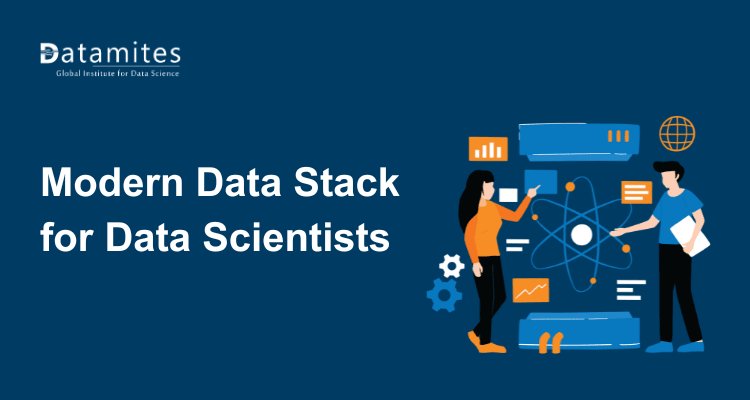
Just a few years ago, most data teams relied on legacy on-prem ETL pipelines, slow batch jobs, and BI dashboards that took hours to refresh. Today, thanks to cloud-native tools, flexible pipelines, and scalable compute, the Modern Data Stack has become the backbone of analytics, machine learning, and real-time decision-making.
A Modern Data Stack for Data Scientists provides faster access to clean, governed, and analysis-ready data. This allows teams to spend less time on data extraction and cleanup, and more time on modeling, experimentation, and AI-driven projects.
According to Gartner, companies using modern cloud data architectures achieved up to 40% faster analytics delivery and 30–50% lower operational costs compared to legacy systems.
Understanding the Modern Data Stack
The modern data stack (MDS) is a modular, cloud-based ecosystem that simplifies data handling. It is structured to support scalable analytics, machine learning, and real-time insights. The key layers include:
- Data Ingestion (ETL / ELT): Tools to extract data from various sources like databases, SaaS platforms, or APIs and load it into a centralized repository.
- Data Storage (Warehouse / Lakehouse): Centralized systems to store raw and processed data efficiently for analysis.
- Data Transformation: Converting raw data into clean, structured formats suitable for analytics and machine learning.
- Workflow Orchestration: Tools to schedule, automate, and monitor data pipelines ensuring reliability.
- Analytics & Visualization: Platforms that enable data exploration, reporting, dashboards, and actionable insights.
- Optional Advanced Layers: Reverse ETL, data governance, observability, and activation tools that enhance data usability, quality, and trust.
This architecture allows teams to pick and integrate the best tools according to their needs, scale efficiently, and maintain flexibility.
The global data analytics market is expected to grow from ≈ USD 82.33 billion in 2025 to around USD 345.30 billion by 2030 a CAGR of ~33.2%. [Source: Mordor Intelligence]
Refer to these articles:
- Will Polars Replace Pandas?
- How to Learn SQL for Data Analysis
- Why Synthetic Data Is the Future of GDPR Compliance
Why the Modern Data Stack Matters
The traditional data stack often relied on manual ETL scripts, on-prem warehouses, and siloed analytics, which caused delays, inconsistencies, and inefficiency. Modern organizations require:
- Faster access to clean data for analytics and machine learning
- Scalable infrastructure that grows with data volume
- Collaboration across teams analysts, data scientists, and business stakeholders
- Real-time insights to make timely decisions
The modern data stack solves these challenges with a flexible, cloud-based approach, enabling organizations to be truly data-driven.
According to recent industry data: about 94% of enterprises globally now use cloud services in some form.
The market for cloud‑based data warehouses / “Data Warehouse as a Service (DWaaS)” is booming. One recent forecast expects the DWaaS market to reach USD 390 billion by 2032, up from its 2024 base. [Source: GlobeNewswire]
Key Tools in the Modern Data Stack
Here’s a breakdown of popular tools in each layer, why they matter, and how data scientists use them:
| Layer | Popular Tools | Purpose & Benefits |
| Data Ingestion (ETL/ELT) | Fivetran, Airbyte, Stitch, Segment | Automatically extract data from multiple sources and load it into a warehouse, saving time and reducing errors. |
| Data Storage / Warehouse | Snowflake, Google BigQuery, Amazon Redshift, Databricks Lakehouse | Provide scalable, centralized storage with optimized query performance for analytics and ML workloads. |
| Data Transformation | dbt (data build tool), SQL pipelines, Apache Spark | Clean, normalize, and structure data, making it analytics-ready. Version-controlled transformations enhance collaboration and reproducibility. |
| Workflow Orchestration | Apache Airflow, Prefect | Automate pipeline execution, manage dependencies, and monitor jobs to ensure smooth data operations. |
| Analytics & BI | Tableau, Power BI, Looker | Enable data exploration, visual storytelling, reporting, and dashboard creation for both analysts and business users. |
| Advanced / Optional Layers | Census (Reverse ETL), Data Catalogs, Observability Tools | Improve data accessibility, governance, lineage tracking, and operational insights for trustable analytics. |
Why these tools matter:
- Automate repetitive tasks, reducing manual ETL work.
- Provide scalable solutions for large datasets.
- Support reproducible, version-controlled data transformations.
- Enable real-time insights and operational decision-making.
Read to these articles:
- Data Engineer vs Analytics Engineer vs Data Analyst
- Data Scientist vs ML Engineer vs AI Engineer
- What Is Correlation in Data Science?
Real-Life Applications for Data Scientists
The modern data stack is not just a technical concept it drives practical results:
Customer Analytics & Insights
Companies often have multiple data sources: CRMs, web logs, marketing platforms, and sales databases. Using ingestion tools like Fivetran, all this data can flow into a central warehouse (e.g., BigQuery). Data transformation tools like dbt clean and structure the data, enabling dashboards and reports that provide a 360-degree view of customers.
Real-Time Monitoring & Decision Making
For industries like fintech, e-commerce, or SaaS, real-time analytics is critical. By combining streaming ingestion, cloud warehouses, and visualization tools, data scientists can detect anomalies, track user behavior, and inform operational decisions instantly.
Machine Learning & Predictive Analytics
Having structured, clean data in a warehouse allows teams to train machine learning models efficiently. Feature engineering, predictive analytics, and model deployment become easier when pipelines are reliable and automated.
Cross-Team Collaboration
A modern data stack enables analysts, data scientists, and business stakeholders to work collaboratively. Shared data models, version-controlled transformations, and self-service dashboards ensure everyone accesses consistent, accurate information.
Best Practices for Implementing a Modern Data Stack
When adopting or building a modern data stack, consider these tips:
- Start Small, Scale Gradually: Focus on high-value data sources first, then expand to additional datasets.
- Use ELT over ETL: Load raw data first into the warehouse, then transform it, leveraging cloud computing power.
- Implement Version Control: Tools like dbt support modular, testable transformations.
- Automate Pipelines: Workflow orchestration ensures consistency, reliability, and timely data delivery.
- Focus on Data Governance: Use cataloging, lineage tracking, and access controls to maintain trustworthiness.
- Monitor & Observe Pipelines: Observability tools help detect failures, monitor performance, and maintain quality.
- Enable Self-Service Analytics: Empower business users to explore dashboards and reports without depending on data engineers.
Read to these articles:
- The Ultimate Guide to Data Science Models
- Cross Entropy in Data Science
- Binomial Distribution: A Beginner’s Guide for Data Science
Future Trends in the Modern Data Stack
The modern data stack continues to evolve, and data scientists should stay ahead of trends:
- Lakehouse Architecture: Combines the flexibility of data lakes with the performance of warehouses.
- Real-Time & Streaming Analytics: Businesses increasingly demand near-instant insights for operational decisions.
- Automation & Observability: Automated testing, monitoring, and governance improve reliability and trust.
- AI & Machine Learning Integration: End-to-end workflows for ML are becoming standard within the modern data stack.
- Data Democratization: Self-service analytics and semantic layers allow non-technical users to leverage data efficiently.
The modern data stack is transforming the way data scientists work. By reducing manual ETL work, ensuring high-quality data, and enabling real-time analytics, it empowers teams to focus on deriving insights and creating business value.
Investing in the right tools, following best practices, and staying updated on trends ensures that organizations can maximize the value of their data while enabling collaboration across teams.
For any data scientist looking to stay competitive in 2025, understanding and leveraging a modern data stack is no longer optional it’s essential.
If you're looking to build the right skills to work confidently with the modern data stack, DataMites offers industry-relevant Data Science courses in Hyderabad aligned with current market needs and real-world applications.
With expert-led training, hands-on projects, globally recognized certifications, flexible learning options, and career mentoring, DataMites helps learners become industry-ready and confident in modern data tools and workflows. Whether you're starting your data career or advancing to the next level, DataMites provides a strong platform to grow and succeed in the fast-evolving data science field.