Popular AI Tools in Healthcare for 2026
Explore the leading AI tools transforming healthcare in 2026, from smarter diagnostics and predictive analytics to virtual care and workflow automation. See how hospitals and startups are using AI to improve outcomes, reduce costs, and personalize treatment.
 Prerana B A
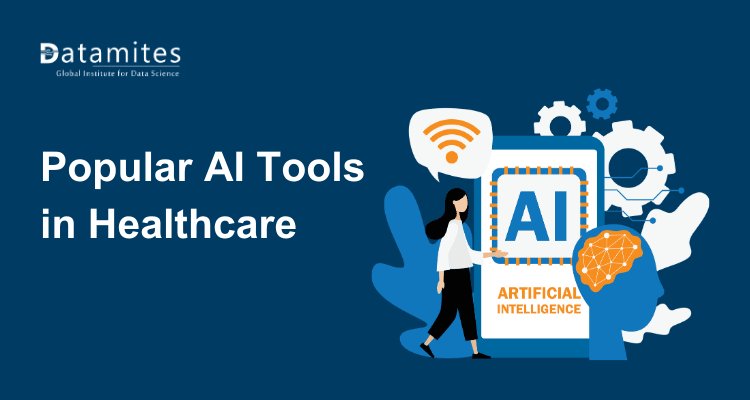
Healthcare is advancing at an unprecedented pace, with artificial intelligence driving much of the change. From accurately diagnosing illnesses to forecasting patient outcomes and optimizing hospital operations, AI is transforming the way medicine works. In 2026, these tools are more intelligent, faster, and seamlessly integrated than ever. For clinicians, researchers, and healthcare innovators, knowing the top AI tools is key to staying ahead in a field where every breakthrough can save lives.
The World Health Organization highlights that health systems worldwide are grappling with workforce shortages, rising costs, and increasing chronic disease burdens. AI is emerging as a solution to bridge these gaps, while the National Institutes of Health continues investing in machine learning research to speed up diagnostics and drug discovery.
Why AI Tools in Healthcare Are Exploding in 2026
AI tools in healthcare are exploding in 2026 because they’ve moved from experimental pilots to core hospital infrastructure. More than half of large health systems worldwide now use AI in at least one department, driven by workforce shortages, rising operational costs, and increasing clinical complexity. According to Fortune Business Insights, the global AI in healthcare market reached approximately $38–39 billion in 2025 and is projected to surge to nearly $56 billion in 2026. That kind of jump in a single year signals more than hype. It reflects rapid acceleration and sustained growth as the industry moves deeper into the decade.
Administrative overhead still consumes up to 30% of hospital budgets. Healthcare AI software is stepping in to streamline scheduling, billing, documentation, and patient flow while easing burnout across care teams. Hospitals aren’t adopting AI because it sounds impressive. They’re doing it because the math now makes sense.
At the same time, the volume of medical data has made artificial intelligence in healthcare indispensable. Electronic health records, imaging scans, genomic datasets, and wearable devices generate more insight than humans alone can process. AI medical diagnosis tools are delivering measurable results, including faster stroke detection, earlier cancer identification, improved ICU triage, and reduced readmissions. In 2026, AI in hospitals isn’t a bonus feature. It’s becoming foundational. For professionals entering this space, an AI for Healthcare course can help bridge the gap between clinical expertise and applied machine learning.
Refer to these articles:
Top 10 AI Tools in Healthcare
Hospitals and research institutions are rapidly adopting AI tools in healthcare to improve diagnostics, automate operations, and personalize treatment. Below are the top AI tools in healthcare this year, explained with clear, practical use cases.
1. IBM Watson Health: Clinical Decision Intelligence
IBM Watson Health delivers advanced clinical analytics designed for large healthcare systems managing complex patient populations. It uses natural language processing and machine learning to extract insights from vast medical datasets.
Primary Use Cases:
- Oncology treatment recommendations
- Population health management
- Clinical decision support using EHR data
Hospitals rely on Watson to analyze both structured and unstructured medical records, including physician notes and research literature. This helps doctors make evidence-based decisions, particularly in complicated cancer cases where treatment pathways require deep comparative analysis of outcomes and guidelines.
2. Google DeepMind Health: AI for Advanced Diagnostics
DeepMind Health applies deep learning models to high-volume diagnostic environments, particularly in radiology and ophthalmology. Its systems are trained on massive imaging datasets to detect subtle patterns often missed by the human eye.
Primary Use Cases:
- Retinal disease detection
- Kidney injury prediction
- Radiology image analysis
Its AI-driven imaging tools improve early detection rates and diagnostic consistency. In busy hospital settings, this means faster reporting, reduced variability between clinicians, and earlier intervention for high-risk patients.
3. Tempus: Precision Oncology & Genomics
Tempus combines artificial intelligence with molecular, genomic, and clinical data to personalize cancer treatment. It builds large-scale data libraries that connect patient outcomes with genetic profiles.
Primary Use Cases:
- Genomic-guided cancer treatment
- Clinical trial matching
- Predictive oncology analytics
By analyzing tumor DNA alongside clinical history, Tempus helps oncologists select targeted therapies rather than relying on generalized treatment protocols. This approach improves precision and increases the likelihood of successful outcomes.
4. Viz.ai: Stroke Detection & Care Coordination
Viz.ai integrates AI into stroke care pathways to automate scan analysis and alert specialists immediately. It improves coordination among care teams, accelerating intervention and improving recovery outcomes.
Primary Use Cases:
- Automated CT scan stroke detection
- Real-time physician alerts
- Care team coordination
When a stroke is detected, the system instantly alerts specialists and coordinates response teams. This reduces treatment delays, which is critical since every minute of stroke progression can lead to irreversible damage.
5. Aidoc: Emergency Radiology Optimization
Aidoc focuses on real-time radiology triage in emergency care settings. It flags critical findings such as strokes and intracranial hemorrhages instantly, reducing treatment delays in life-threatening situations.
Primary Use Cases:
- Intracranial hemorrhage detection
- Stroke identification
- Trauma scan prioritization
Emergency teams use Aidoc to prioritize life-threatening cases within minutes. By shortening time-to-treatment, it directly improves survival rates in acute stroke and trauma scenarios.
6. Butterfly Network: Portable AI Imaging
Butterfly Network brings AI-powered ultrasound imaging directly to the bedside through portable devices. This expands access to diagnostic imaging in rural, emergency, and resource-limited healthcare environments.
Primary Use Cases:
- Point-of-care diagnostics
- Rural healthcare imaging
- Emergency bedside assessments
These portable devices expand access to imaging in underserved regions and remote clinics. Clinicians can perform bedside scans and receive AI-assisted guidance, reducing dependency on large radiology departments.
7. PathAI: AI-Enhanced Pathology
PathAI focuses on improving pathology accuracy through digital slide analysis powered by machine learning. It assists pathologists by identifying microscopic disease patterns with high consistency.
Primary Use Cases:
- Cancer tissue detection
- Biomarker discovery
- Pharmaceutical research support
Its technology reduces diagnostic variability between labs and speeds up case review times. In research and drug development, it supports biomarker identification that guides targeted therapy development.
8. Zebra Medical Vision: Multi-Disease Imaging Analytics
Zebra Medical Vision develops multi-disease imaging algorithms capable of detecting various conditions from a single scan. Its scalable solutions support large healthcare networks in early disease identification and risk assessment.
Primary Use Cases:
- Cardiovascular risk detection
- Liver disease screening
- Pulmonary condition identification
Its platform enables large-scale screening programs by analyzing imaging data in bulk. This supports early disease detection and preventative care strategies across healthcare networks.
9. Olive AI: Hospital Administrative Automation
Olive AI focuses on automating hospital administrative operations using AI-driven process automation. It streamlines billing, claims processing, and data reconciliation to reduce operational costs and staff workload.
Primary Use Cases:
- Revenue cycle automation
- Claims processing
- EHR data reconciliation
By reducing manual paperwork and billing inefficiencies, hospitals cut operational costs and free staff to focus on patient-facing tasks. This also helps reduce burnout among administrative teams.
10. Qventus: Predictive Hospital Operations
Qventus applies predictive analytics to optimize hospital operations and patient flow. By forecasting bottlenecks and resource demands, it helps healthcare systems improve efficiency and patient experience.
Primary Use Cases:
- Patient flow optimization
- Surgical scheduling forecasts
- Capacity and resource management
Instead of reacting to overcrowding or delays, hospitals using Qventus anticipate bottlenecks before they occur. The result is smoother patient flow, improved bed management, and a better overall patient experience.
Refer to these articles:
- How Knowledge-Augmented Generation (KAG) Is Solving AI Hallucinations
- Will AI Agents Replace Your Next Coworker? Exploring the Future of Work
- Explainable AI: Why Black-Box Models Are Losing Trust
How AI is Improving Medical Diagnosis and Patient Care
Modern healthcare runs on data imaging scans, lab results, genomics, wearable devices, clinical notes. No clinician can process all of it instantly. That’s where artificial intelligence in healthcare makes a measurable difference.
AI doesn’t replace doctors. It strengthens their decisions by detecting patterns faster, flagging risks earlier, and reducing blind spots.
- Smarter, Faster Disease Detection: AI detects strokes, cancers, and critical conditions within minutes, accelerating treatment.
- AI for Medical Imaging: AI acts as a second set of eyes for radiologists, improving accuracy and prioritizing urgent scans.
- Predictive Analytics in Healthcare: Machine learning forecasts sepsis, ICU decline, and readmissions, enabling earlier intervention.
- Personalized Treatment Plans: AI combines genomic and clinical data to tailor therapies for more precise outcomes.
- Real-Time Clinical Decision Support: AI flags abnormal labs and drug interactions, helping doctors make faster, safer decisions.
- Automation in Hospitals: AI streamlines documentation, scheduling, and billing, reducing administrative burden and burnout.
- Remote Monitoring & Early Intervention: AI-powered devices track vital signs continuously to prevent emergencies before they escalate.
- Reducing Diagnostic Errors: AI analyzes large datasets to improve differential diagnosis and minimize missed conditions.
- Improving Patient Engagement: AI chatbots support symptom checks, medication reminders, and follow-ups to boost adherence.
- Expanding Access to Care: Portable AI diagnostics bring advanced screening tools to rural and underserved communities.
Healthcare is shifting from reactive treatment to proactive, data-driven care. AI is helping clinicians diagnose earlier, treat more precisely, and manage patients more effectively at scale. As adoption accelerates, demand for structured education is rising as well, making an AI for Healthcare course a practical step for leaders and clinicians who want to stay ahead.
AI tools in healthcare 2026 are transforming how hospitals diagnose, treat, and manage patients. From faster stroke detection to predictive analytics in healthcare that prevents complications, artificial intelligence in healthcare is delivering measurable results. Healthcare AI software is reducing costs, easing burnout, and improving precision in clinical decisions. AI in hospitals is no longer experimental it’s foundational infrastructure. Organizations that embrace this shift now will lead the future of AI in healthcare innovation.
DataMites institute offers a comprehensive AI for Healthcare Professionals course designed to help healthcare practitioners apply artificial intelligence in clinical and operational settings. The program covers AI fundamentals, data-driven medical insights, and practical implementation across patient care, hospital operations, and research. It is part of a broader portfolio that includes AI courses for Product Managers, HR & People Analytics, Finance & Risk, Marketing, Business Leaders, and working professionals across industries.
Participants can choose flexible learning formats, including online courses, classroom sessions, and real-time project-based internships for hands-on experience. With accreditations from IABAC and Certified AI Professional for Healthcare & Clinical Ops, the certifications are globally recognized. DataMites operates through 30+ offline centers across India, including Chennai, Bangalore, Hyderabad, Pune, Mumbai, Ahmedabad, Coimbatore, and Delhi, offering career-focused training in both classroom and virtual modes.