Secure Data Science Pipelines: Preventing Data Leakage and Attacks
Learn how to secure data science pipelines, prevent data leakage, and protect sensitive data with best practices, real-world examples, and expert insights.
 Swagatam Sinha
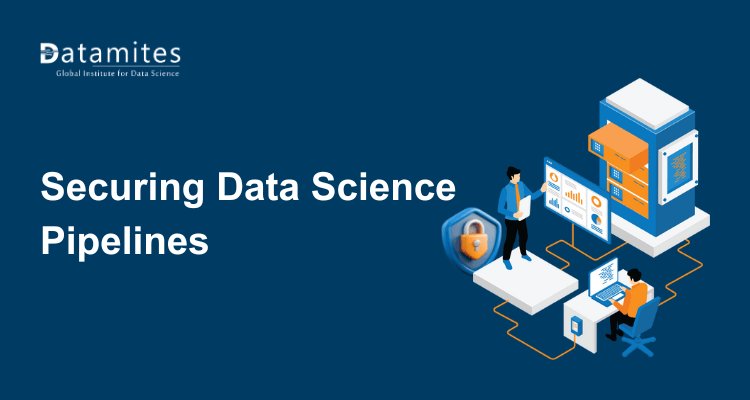
Data science pipelines power analytics and machine learning (ML) systems that drive decisions in banking, healthcare, retail, and many other industries. A data science pipeline moves raw data through a series of stages collection, processing, model training, and deployment to deliver predictions and insights. While these pipelines enable value creation, they also create serious security risks if not designed and protected correctly.
Preventing data leakage and malicious attacks is crucial. Poorly secured pipelines can expose sensitive information, lead to biased or invalid models, and cause financial losses and reputational harm. In this article, we will explain what a secure data science pipeline looks like, the most common threats, and how organizations can protect their systems with effective practices grounded in real-world data and research.
What Is a Secure Data Science Pipeline?
A secure data science pipeline is a workflow where every stage data ingestion, storage, preprocessing, model training, testing, and deployment is protected against unauthorized access, data leakage, corruption, and attacks.
At each step, there are specific security risks:
- Data Collection: Unvalidated or unencrypted sources may introduce malicious or sensitive data.
- Data Storage: Stored data might be accessed by unauthorized users or exposed through misconfigured services.
- Preprocessing: Mixing training and test data inadvertently can cause leaks that bias model outcomes.
- Model Training: Models may learn from sensitive patterns that should remain private.
- Deployment: APIs and model endpoints can be abused to extract information.
To prevent threats at each stage, organizations must embed data leakage prevention practices throughout the pipeline in data science.
Read these articles:
- Will Polars Replace Pandas?
- Data Scientist vs ML Engineer vs AI Engineer
- Data Science vs Cyber Security: Which Has Better Future?
Understanding Data Leakage in Machine Learning
Data leakage in ML occurs when the model training process includes information that wouldn’t be available during actual prediction. This leads to models that look good in testing but fail in real situations because they learned from “future” or inappropriate data. These leaks distort the model’s performance and make it unreliable.
For example, if a credit-risk model accidentally uses a “loan repaid” indicator during training, it could falsely show near-perfect accuracy. Leakage can originate from feature misuse, incorrect splitting of data, or contamination between datasets. Ensuring proper data partitioning and validating preprocessing steps are essential for data leakage prevention.
Leakage is subtle and can originate from feature misuse, incorrect splitting of data, or contamination between datasets. Ensuring proper data partitioning and validating preprocessing steps are essential to reduce leakage risk.
Common Types of Data Leakage
Understanding how leakage happens helps teams avoid mistakes that compromise models and data privacy.
- Training vs Test Data Leakage: One of the most common issues in machine learning is data leakage during model training. This happens when information from the test set unintentionally influences the model training process. If the model learns patterns from the test set, it may appear highly accurate during evaluation but fail in real deployment because it was overfitted with information it should not have seen.
- Target Leakage: Target leakage is when future information is included in training features. For example, a loan prediction model inadvertently uses a feature that is only known after the loan outcome, giving the model unfair insight and inflating performance.
- Feature Leakage: Leakage can occur when features used in training inadvertently include sensitive or indirect identifiers that shouldn’t be part of model input.
Inadequate pipeline in data science controls can let sensitive data slip outside designated boundaries during processing, storage, or logging, making pipelines vulnerable to attacks or leakage.
Major Security Threats in Data Science Pipelines
Secure pipelines in data science must anticipate several potential threats:
- Data Breaches and Unauthorized Access: A data breach is an unplanned exposure of secure information to unauthorized parties. Causes include weak access controls, misconfiguration, insider actions, or breaches in connected systems. Data breaches can have massive financial and legal implications. For instance, global average data breach costs in 2025 were around $4.44 million, with healthcare breaches averaging more than $7.4 million per incident.
- Insider Threats: Insider breaches — whether intentional or negligent — remain a significant risk. A recent industry report found that 45% of IT and security professionals consider insider data leaks their top threat, and 61% experienced unauthorized access in the past two years, with average incident costs reaching $2.7 million.
- Data Poisoning Attacks: Attackers may inject malicious inputs into training data to corrupt model behavior. These stealthy modifications can degrade model performance or cause specific misclassifications without immediate detection.
- Adversarial Attacks: Attackers can craft inputs designed to fool models into making incorrect predictions, posing serious risks in applications like fraud detection or image classification.
- Cloud Misconfigurations: Misconfigured cloud storage or services frequently lead to exposure of data. Without proper access control and encryption, sensitive data can be accessible to unauthorized parties.
- Supply Chain and Third Party Risk: Modern pipelines often integrate services, libraries, and tools from external providers. A breach in a third-party service can ripple across many pipelines. Recent industry surveys indicate that about 30% of data breaches are linked to third-party vendors, and over 70% of organizations have experienced at least one supply chain security incident in the past year.
Refer to these articles:
- Data Analyst vs Data Scientist vs Data Engineer
- Role of Data Science in Smart Cities and Internet of Things (IoT)
- Why Bias, Fairness, and Transparency Are the New Metrics in Data Science
Why Security Matters: The Cost of Data Leakage
Data breaches are costly and widespread. According to recent industry research, the global average cost of a data breach was approximately USD 4.88 million in 2024, an increase from previous years.
Additional insights show:
- The financial cost per compromised data record averages about USD 165.
- Organizations with slower breach detection and response suffer an average of 292 days to identify and contain incidents, increasing the financial toll.
- Nearly 60% of organizations lack formal data loss prevention (DLP) strategies, despite 43% of breaches being caused by malicious attacks and 42% by accidental employee actions.
In India specifically, the average cost of a breach has reached historic highs, with reported costs around INR 195 million in 2024.
These figures underline why pipeline security is not just a technical matter but a financial priority for businesses.
The Data Security as a Service segment alone is forecast to grow from around $24.6 billion in 2024 to over $68.6 billion by 2035, with a projected CAGR of ~9.8% from 2025 to 2035 — reflecting rising demand for managed data security solutions across cloud and enterprise environments. (Source: Market Research Future)
Best Practices to Prevent Data Leakage
Designing secure data pipelines requires both technical controls and process discipline:
- Proper Dataset Splitting: Keep training, validation, and test sets fully isolated. Perform feature engineering only after splitting to avoid inadvertently exposing information.
- Encryption: Protect data by encrypting it while it is stored and during transmission. Tools such as TLS for network communication and AES-256 for storage help prevent unauthorized data access.
- Role-Based Access Control (RBAC): Grant access only to those who need it. Least-privilege principles restrict users and services from unnecessary data access.
- Data Masking and Anonymization: Replace sensitive values with masked or anonymized equivalents when data must be shared for testing or analysis.
- Audit Trails and Monitoring: Log access and actions on sensitive data. Continuous monitoring can detect suspicious patterns that indicate potential breaches.
- Version Control and Pipeline Testing: Use version control systems for data, code, and pipeline definitions. Regular testing validates that changes do not introduce vulnerabilities.
Embedding these practices ensures data leakage prevention throughout the pipeline in data science lifecycle.
How to Secure Each Stage of the Pipeline
Security considerations differ at each pipeline stage:
- Securing Data Ingestion: Security begins with authenticated and encrypted collection. Data from external APIs should be verified and sanitized. Ingestion systems should validate schema and source identity to avoid injection of malicious data.
- Securing Storage: Databases and cloud buckets must enforce strict access policies. Encryption and audit logging give visibility into who accessed what and when. Misconfigured storage has caused many high-profile data breaches.
- Securing Preprocessing: Preprocessing often uses scripts or notebooks. Ensure access control, and avoid storing intermediate files with cleartext sensitive data.
- Securing Model Training: Models should train on a secure compute environment with restricted network access. Tools like differential privacy protect training data from being inferred through models.
- Securing Deployment and APIs: Models deployed as services must use secure authentication, rate limiting, and input validation to prevent misuse or injection attacks.
Refer to these articles:
- How LLMs Are Transforming Data Science Careers in 2026
- Data Mesh vs Data Fabric in 2026
- Databricks vs Snowflake: Which Is Better for Data Science
Future of Secure Data Science Pipelines
As data science becomes central to business operations, the attack surface will continue to expand. Emerging threats, regulatory demands, and the integration of cloud and edge computing will require pipeline security frameworks to evolve. Organizations should invest in automated security workflows, continuous training for engineers, and governance models that prioritize secure design.
Teams that adopt a “security-first” mindset — where security considerations are part of pipeline design from the start — will be better positioned to manage risks without slowing innovation.
Real Data Breaches Showing Need for Secure Data Pipelines
Security incidents across industries prove that weak data handling and misconfigured systems directly lead to large-scale data exposure and financial loss.
1. MOVEit File Transfer Breach (2023)
Attackers exploited a vulnerability in MOVEit Transfer software, affecting 2,700+ organizations and exposing data of around 93 million people worldwide. This shows how insecure data movement in pipelines can cause massive leakage.
2. Snowflake Customer Data Breach (2024)
Weak authentication controls allowed attackers to access Snowflake customer environments, exposing terabytes of sensitive data from telecom and retail companies. This highlights risks in cloud-based ML pipelines when identity management is weak.
3. 23andMe Genetic Data Leak (2023)
Credential-stuffing attacks exposed data of nearly 7 million users, including ancestry and family information. This shows how analytics datasets can be leaked even without system hacking.
4. Cost of Data Breaches in India (IBM Report 2024)
IBM reported that the average data breach cost in India reached about INR 195 million, with many incidents taking over 300 days to contain. Cloud misconfigurations were a major cause.
5. Android App Data Exposure Study (2024)
Security research found 730+ TB of sensitive data and hardcoded secrets exposed in Android apps due to poor coding and storage practices. Analysis revealed that 72% of the apps contained exposed credentials, highlighting how coding and development errors can lead to data leakage.
Secure data science pipelines are essential for trustworthy and reliable analytics and ML systems. The risks of leakage, breaches, and attacks are real and costly. Real-world examples like the MOVEit breach and misconfigured cloud environments show the consequences of inadequate security.
A holistic approach that includes data governance, secure coding practices, encryption, robust MLOps, and compliance with privacy laws significantly reduces risks. With growing investment in security tools and best practices, organizations can build pipelines that protect sensitive data and maintain confidence in their models and analytics.
Security is not a one-time effort but a continuous commitment. By embedding protection into every layer of the data science lifecycle, teams can prevent data leakage and build resilient systems that withstand evolving threats.
DataMites is a leading institute providing high-quality training for professionals and students looking to advance in the field of data science. With a focus on practical learning and industry-aligned curriculum, DataMites ensures that learners gain real-world skills in data analytics, machine learning, and AI applications. Their hands-on approach prepares candidates to handle complex data challenges confidently.
For those looking for a Data Science Course in Pune, DataMites offers comprehensive programs tailored to current market demands. The courses cover everything from foundational concepts to advanced techniques, equipping learners with the knowledge and tools to secure data pipelines, analyze large datasets, and build predictive models effectively.