Understanding Foundation Models in AI: A Beginner’s Guide
Foundation models are large AI systems trained on vast data that can be adapted to many tasks like text, image, and code generation. This guide explains how they work, why they matter, and how they power tools like chatbots and generative AI.
 Prerana B A
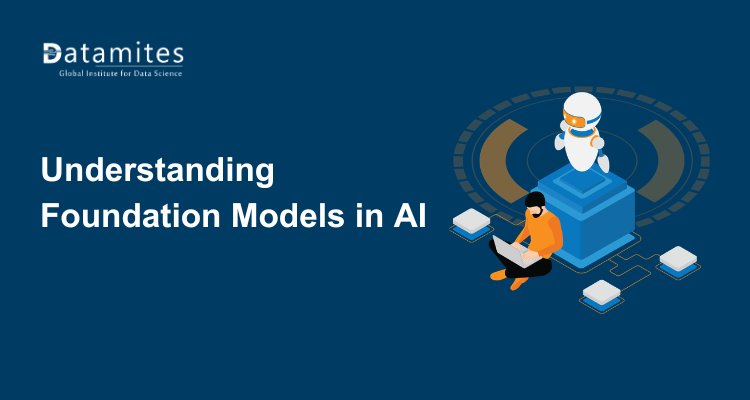
Foundation models in AI are quietly reshaping how modern AI systems think, learn, and generate information. From chat assistants to image tools, they sit at the core of today’s most powerful applications. This guide breaks down what they are, why they matter, and how they work in simple terms. You don’t need a technical background to follow along. By the end, you’ll have a clear picture of how these models are trained, adapted, and used across industries in practical real world settings.
The scale of this shift is already massive. By 2025, about 16.3% of the global population, roughly one in six people, had used generative AI in some form. And the momentum is only accelerating. The generative AI market is expected to grow from around $22 billion in 2025 to more than $324 billion by 2033, expanding at a CAGR of over 40%.
What Are Foundation Models in AI?
Foundation models in AI are large AI systems trained on massive amounts of broad data like text, images, audio, video, and code. Instead of focusing on one specific task, they learn general patterns, language, and relationships from diverse information. Once trained, they can be adapted for many uses such as writing, translation, coding, image generation, search, and customer support with minimal additional training.
Examples like OpenAI’s GPT series and Google’s Gemini show how these models act as a base for building other AI applications. The power of Foundation Models in AI comes from large-scale data, advanced neural networks, and strong computing resources. However, they also raise concerns around bias, privacy, energy use, and misuse. Overall, foundation models are becoming a core part of modern AI systems and digital applications.
How Foundation Models Work in AI
Foundation models in AI work by learning patterns from massive amounts of data such as text, images, audio, and code. They use deep learning AI techniques to understand relationships, context, and meaning instead of simply memorizing information.
The process usually happens in three main stages:
1. Pretraining on Large Datasets
The model is trained on huge volumes of data collected from books, websites, articles, and other digital sources. This step helps the model build a broad understanding of language, visuals, and patterns.
2. Pattern Recognition and Learning
During training, the model predicts missing words, identifies connections, and improves its accuracy over time. This allows foundation models to develop general knowledge and reasoning abilities.
3. Fine-Tuning for Specific Tasks
After pretraining, the model can be customized for specific AI applications such as chatbots, content generation, coding assistance, translation, or image creation. This process is called transfer learning.
In simple terms, foundation models act like a powerful base system that can be adapted to perform many different tasks across modern AI applications.
Key Characteristics of Foundation Models in AI You Should Know
Foundation models in AI are different from traditional machine learning models because they are built to handle multiple tasks and adapt across industries. Here are the main characteristics that make them powerful:
Trained on Massive Data
AI foundation models learn from huge datasets that include text, images, videos, audio, and code. This broad exposure helps them understand patterns and context more effectively.
Multi-Task Capabilities
Unlike traditional models designed for one task, foundation models can perform many functions such as writing, translation, summarization, coding, and image generation.
Transfer Learning
Foundation models use transfer learning, meaning they can be fine-tuned for specific tasks without starting training from scratch. This saves both time and computing resources.
Powered by Deep Learning
Most foundation models rely on advanced neural networks and deep learning AI techniques to process complex information and improve performance over time.
Scalable and Adaptable
These models become more capable as they are trained with larger datasets and more computing power, making them suitable for a wide range of AI applications.
Generative AI Capabilities
Many generative AI models built on foundation architectures can create human-like text, realistic images, music, videos, and even software code.
You have not enough Humanizer words left. Upgrade your Surfer plan.
These traits are what separate AI foundational models from older machine learning systems.
Refer to these articles:
- Traditional RAG vs Agentic RAG — What’s the Difference?
- LLMs vs. SLMs: Key Differences and How to Choose the Right Model
- AI Sovereignty: The New Mandate for Data Governance in the Cloud Era
Why Foundation Models Are Important in Modern AI
Foundation models in AI are important because they completely change how AI systems are built and scaled. Instead of creating separate models for every task, developers can start with one powerful base system and adapt it to many use cases.
They reduce the need to build models from scratch
Before foundation models, every new problem required a new machine learning model. Now, a single pre-trained model can be fine-tuned for many tasks using transfer learning. This saves a huge amount of time and effort.
They power today’s generative AI systems
Most modern generative AI models rely on foundation models. Tools for writing, coding, designing images, or answering questions all sit on top of these large-scale systems.
They improve performance across tasks
Because foundation models are trained on massive and diverse datasets, they often perform well across different domains, not just one narrow area.
They make AI more accessible
Earlier, building advanced AI required large research teams and expensive infrastructure. Now, companies and even small developers can build applications using existing AI foundation models through APIs or open-source versions.
They speed up innovation
Since the base model already understands language, images, or code, developers can focus on building applications instead of training core intelligence from scratch. This accelerates product development across industries.
They are shaping the future of AI systems
Foundation models are becoming the backbone of modern artificial intelligence basics, powering chatbots, search engines, automation tools, and decision-making systems.
Foundation models matter because they turn AI from something you build repeatedly into something you build once and reuse everywhere.
Popular Examples of Foundation Models in AI
Foundation models in AI are behind many tools we use daily, from chatbots to image generators. Here are some key examples:
GPT Models (OpenAI)
These are large language models that can write text, answer questions, summarize content, and help with coding. They’re a core example of generative AI models.
BERT (Google)
BERT is designed to understand language context. It’s widely used in search engines and text analysis rather than content generation.
DALL·E (OpenAI)
A model that creates images from text descriptions, showing how foundation models can work with visuals, not just text.
Stable Diffusion
An open-source image generation model popular for creating high-quality AI-generated visuals.
Gemini (Google DeepMind)
A multimodal model that can process text, images, and other data together for more advanced AI applications.
Claude (Anthropic)
A conversational AI model focused on safe, clear, and helpful responses.
All these models are trained on massive data first, then adapted for different tasks. That’s what makes them foundation models instead of narrow AI tools.
Real-World Applications of Foundation Models in AI
The impact of foundation models AI is already everywhere.
Chatbots and virtual assistants
They power customer support bots and conversational tools that feel human-like.
Content creation
From writing articles to generating marketing copy, generative AI models are transforming creative workflows.
Code generation
Developers now use AI tools to write, debug, and optimize code faster.
Search and recommendation systems
Search engines and streaming platforms use them to improve relevance.
Healthcare
They assist in analyzing medical records and supporting diagnostics.
Education
Personalized tutoring systems adapt explanations based on student needs.
These AI applications show how flexible foundation models really are.
Refer to these articles:
- Learn about the Types of Machine Learning Algorithms
- What is a Confusion Matrix in Machine Learning?
- Supervised vs. Unsupervised Learning: What’s the Difference?
Future of Foundation Models in AI
The future of foundation models in AI is moving toward even greater capability and efficiency. The generative AI and foundation model market is projected to grow from tens of billions of dollars today to well over $1 trillion by the early 2030s (varies across forecasts). Many analysts expect 40%+ annual growth rates through the next decade.
We are likely to see:
- Smaller but more efficient models that run on local devices
- Better multimodal systems that understand text, image, audio, and video together
- More open-source models competing with large proprietary systems
- Improved reasoning abilities beyond pattern recognition
- Stronger safety and alignment techniques
Another big shift will be personalization. Future models may adapt deeply to individual users while maintaining privacy.
What this really means is that foundation models are becoming the infrastructure layer of AI like operating systems for intelligence.
Foundation models have reshaped artificial intelligence by replacing narrow, single-task systems with flexible models that can handle many tasks. In simple terms, Foundation Models in AI are large AI systems trained on massive datasets and then adapted for different uses. They power large language models, image generators, and most modern AI tools we use today. Built on deep learning and transfer learning, they form the backbone of modern generative AI systems. As AI continues to evolve, foundation models will play an even more central role in how intelligent systems are built and used.
As artificial intelligence continues to expand rapidly across major cities in India, the demand for skilled AI professionals is growing at a fast pace. This makes it essential for learners to focus on practical, industry-oriented training that goes beyond theory and builds real-world expertise.
To address this need, DataMites Training Institute offers a structured 9-month Artificial Intelligence course with a strong focus on hands-on learning. The course includes real-time projects, capstone assignments, and cloud-based lab access. Learners gain job-ready skills in Python, machine learning, TensorFlow, and cloud computing, with career paths such as AI Engineer, AI Expert, and NLP Expert. Accredited by IABAC® and NASSCOM FutureSkills, the program also provides flexible learning options, internships, and placement support.
DataMites also provides artificial intelligence course in Bangalore, Chennai, Pune, Mumbai, Delhi, Coimbatore, Hyderabad, Ahmedabad, and several other locations across India. This ensures learners nationwide can access consistent, industry-focused AI training with the same hands-on approach and strong placement support, helping them build practical, career-ready AI skills regardless of location.