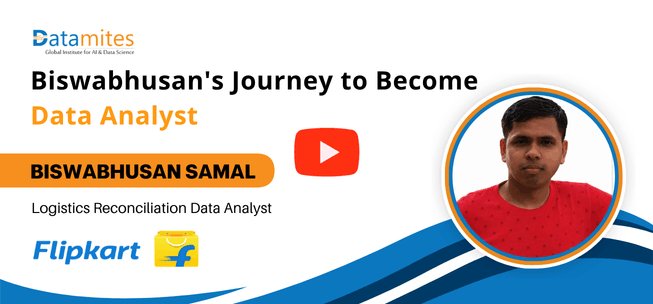
Biswabhusan's Journey: Transition from Non-IT Background to Data Analytics
Discover Biswabhusan's journey from a non-IT background to data analytics. Learn how practical skills, structured learning, and career-focused training helped build a pathway into the growing field of data analytics.
 Kriti Maurya
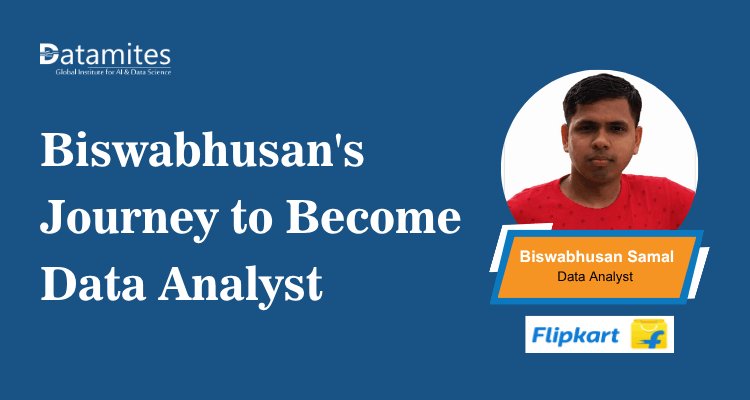
Today's businesses rely heavily on data to make smarter decisions, improve operational efficiency, and drive growth, creating strong demand for skilled data analytics professionals across industries. As a result, data analytics has become an exciting career path for individuals looking to transition into the tech domain. Biswabhusan is one such encouraging example, having successfully transitioned from a non-IT experience in customer assistance and operations to a Reconciliation Analyst position at Flipkart. His trajectory proves that, with the correct supervision, hands-on learning, and constant effort, anybody, regardless of experience level, can develop a successful career in data analytics.
From a Non-IT Career to Data Analytics: Biswabhusan's Transition
Biswabhusan's transition into data analytics began with a desire to move beyond his non-IT roles in customer support, operations, and logistics. While working full-time, he became interested in how businesses use data to solve problems and improve decision-making. Instead of limiting himself to his existing career path, he chose to upskill through IT courses in Chennai , focusing on Python, SQL, Excel, Power BI, and data analytics. His commitment to continuous learning and practical application ultimately helped him successfully transition into a Data Analyst role at Flipkart.
1. Can you introduce yourself and share your career journey?
My name is Biswa Bhushan, and I currently work at Flipkart as a Reconciliation Analyst. Before entering data analytics, I worked in operations, customer support, logistics, and seller support roles with organizations including HGS, Wells Fargo, Udaan Logistics, Startek, and Flipkart.
While working full-time, I developed an interest in data analytics and enrolled in the DataMites Data Analytics program. After completing the course, practical projects, and interview preparation, I successfully transitioned into a data analytics role at Flipkart.
2. What inspired you to switch from operations to data analytics?
Working in operations exposed me to large volumes of business data every day. I became curious about how companies analyze this information to improve decision-making and business performance. This growing interest motivated me to pursue professional learning in data analytics while continuing my full-time job.
3. How did you manage a full-time job while studying data analytics?
It was definitely challenging. My daily schedule involved:
- Attending offline classes from 9:00 AM to 11:00 AM
- Going directly to my office afterward
- Revising recorded sessions after work
- Joining doubt-clearing sessions during office breaks whenever possible
Consistency was the biggest factor behind my success.
4. Which skills learned during the course are helping you in your current role?
Several skills are part of my everyday work, including:
- Python
- SQL
- Microsoft Excel
- Power BI
- Statistics
- Data Cleaning
- Automation
- Data Visualization
Among these, Python automation has become especially valuable in handling repetitive business tasks.
5. What exactly do you do at Flipkart?
I work with Flipkart's logistics partners to analyze shipment-related data. Our responsibilities include:
- Monitoring shipment movement
- Identifying operational bottlenecks
- Tracking pending reconciliations
- Reducing partner losses
- Creating reports for stakeholders
- Coordinating with logistics partners across India
Every shipment generates a significant amount of operational data, which needs continuous monitoring and analysis.
6. How do you use Python in your daily work?
Python is extensively used for automation. Some examples include:
- Google Sheets automation
- Automated reconciliation reports
- Automatic email generation
- Data cleaning
- Validation of datasets
- Eliminating repetitive manual work
Automation saves considerable time and improves operational efficiency.
7. How did practical projects improve your confidence?
Working on multiple real-world projects made a significant difference. Projects helped me:
- Apply classroom concepts
- Solve business problems
- Gain interview confidence
- Understand practical implementation
- Prepare for technical discussions
These experiences made interview questions much easier to answer.
8. How useful were the mentors and doubt-clearing sessions?
The mentor support was one of the strongest aspects of my learning experience. Whenever I encountered challenges while working on projects, I could immediately attend doubt-clearing sessions and receive guidance. This personalized support accelerated my learning considerably.
9. Did recorded sessions help while balancing work and learning?
Absolutely. Since I was working full-time, it wasn't always possible to revise everything immediately. The recorded sessions allowed me to:
- Review difficult topics
- Strengthen Python concepts
- Revisit Power BI lessons
- Prepare for interviews at my own pace
This flexibility was extremely valuable.
10. How did you prepare for interviews?
My preparation combined multiple resources:
- Real-world projects
- Mock interviews
- Sample interview questions
- Self-study
- ChatGPT
- YouTube learning
- Continuous practice
Rather than focusing only on getting a job, I concentrated on improving my data analytics skills every day. That mindset ultimately helped me succeed.
11. How did you get your Flipkart interview opportunity?
I maintained an updated profile on Naukri.com while continuously applying for relevant opportunities. My internship experience, projects, and previous logistics background helped my profile stand out. The placement support team also guided me throughout the application process.
12. What technical questions were asked during your interview?
The Flipkart interview focused on practical skills that are commonly used in data analytics and logistics. Biswa Bhushan was asked questions on Python, including data cleaning, automation, data validation, and file handling. The interviewers also tested his understanding of SQL by asking him to write simple queries using the WHERE clause.
In Excel, he was asked to demonstrate functions such as XLOOKUP, VLOOKUP, Pivot Tables, and IFERROR, along with removing duplicate records and analyzing large datasets. One practical task involved merging multiple Excel files into a single file using Python and the command prompt. According to Biswa Bhushan, his hands-on project experience helped him confidently answer these technical questions during the interview.
13. Is Artificial Intelligence being used in your current role?
Yes. Our organization provides access to Google Gemini, which assists in:
- Understanding Python scripts
- Debugging automation code
- Improving programming efficiency
AI tools have become helpful productivity assistants in day-to-day work.
14. What advice would you give to students interested in logistics analytics?
Before applying for logistics analyst roles, understand how the logistics ecosystem works. Learn about:
- Shipment lifecycle
- Warehouses
- Parent hubs
- Child hubs
- Delivery process
- Operational bottlenecks
- KPI tracking
- Loss analysis
Domain knowledge combined with technical skills creates strong candidates.
15. Which technical skills should logistics analysts prioritize?
The most important technical skills include:
- Python
- SQL
- Excel
- Data Cleaning
- Automation
- Reporting
- Data Visualization
For large-scale logistics operations, Python plays a particularly important role because of the massive volume of data generated daily.
16. How important are communication skills in a data analyst role?
Communication is just as important as technical knowledge. Data analysts frequently:
- Present reports
- Conduct stakeholder meetings
- Explain KPIs
- Discuss operational issues
- Recommend improvements
Being able to clearly explain insights is essential for business success.
17. What message would you like to give aspiring data analysts?
Stay consistent. Balancing work and learning is not easy, but persistence pays off. Keep practicing, continue learning, work on real projects, strengthen your technical fundamentals, and never stop improving. Skills develop over time, and every interview becomes a learning opportunity.
Key Insights from Biswabhusan's Data Analytics Journey
Biswabhusan's inspiring journey is one of the many DataMites Success Stories, demonstrating how dedication, practical learning, and continuous skill development can help professionals successfully transition from a non-IT background into the field of data analytics.
1. Continuous Learning Leads to Career Growth
Despite working full-time, Biswabhusan remained committed to learning every day. His consistent efforts helped him build the technical knowledge and confidence required to switch careers.
2. Hands-on Projects Build Real Confidence
Working on real-world projects allowed him to apply theoretical concepts in practical scenarios. This experience strengthened his problem-solving skills and made technical interviews easier to handle.
3. Python Automation is a Valuable Industry Skill
Learning Python enabled him to automate repetitive business tasks such as report generation, Google Sheets automation, and data validation, making him more productive in his current role.
4. Domain Knowledge Matters Along with Technical Skills
His previous experience in logistics and customer support became an advantage. Understanding business processes alongside data analytics helped him transition smoothly into a logistics analytics role.
5. Interview Preparation Requires Practice
Mock interviews, technical assessments, project discussions, and continuous self-study played a crucial role in helping him crack interviews. Regular practice improved both his technical and communication skills.
6. Strong Communication Enhances Career Success
A data analyst's responsibility goes beyond analyzing data. Presenting insights, collaborating with stakeholders, and explaining business recommendations clearly are equally important for professional growth.
Biswabhusan's journey proves that a successful career transition does not require an IT background. With determination, continuous learning, practical project experience, and persistence, professionals from any field can build a rewarding career in data analytics. His inspiring story encourages aspiring data analysts to invest in developing the right skills, stay committed to their learning journey, and confidently pursue new career opportunities.
DataMites is a globally recognized data science and analytics training provider that helps aspiring professionals build industry-relevant skills through practical, career-focused learning. DataMites data analyst course in Chennai covers essential tools and technologies such as Python, SQL, Excel, Power BI, Tableau, Statistics, and Machine Learning fundamentals, along with hands-on projects, internship opportunities, and mentor support. Accredited by IABAC and NASSCOM FutureSkills, DataMites offers both online and offline learning modes, flexible schedules, mock interviews, placement assistance, and lifetime access to learning resources. Through numerous offline centres in India DataMites Chennai, and operates offline training centers in major cities such as Mumbai, Pune, Hyderabad, Chennai, Delhi, Kolkata, Coimbatore, Ahmedabad, Chandigarh, and several others, enabling learners to gain valuable practical experience.