AI Trends That Will Transform Banking and Finance by 2030
Discover the top ai trends in banking that will redefine the financial industry by 2030. Learn how AI-Powered Financial Services are improving fraud detection, customer engagement, compliance, analytics, and operational efficiency.
 Kriti Maurya
The banking and financial services industry is rapidly transforming through artificial intelligence. From advanced fraud prevention to predictive analytics and personalized customer experiences, AI is reshaping how financial institutions operate and deliver value. Growing digital expectations are driving organizations to adopt intelligent technologies that improve efficiency, strengthen compliance, and support data-driven decision-making.
Understanding emerging ai trends in banking has become essential for business and product leaders seeking long-term growth and innovation. By 2030, the financial ecosystem is expected to become more automated, secure, and customer-centric. The rise of AI-Powered Financial Services will continue to redefine banking operations, customer engagement, and competitive advantage across the global financial industry.
Why AI Is Becoming Essential in Banking and Finance
Artificial intelligence has become a critical driver of innovation in modern banking and finance. Growing customer expectations, cybersecurity risks, and regulatory demands are accelerating the adoption of ai trends in banking across global financial institutions.
According to the KPMG Global Report, 71% of organizations have already integrated AI into their finance operations, while 41% are implementing it at a moderate to large scale, demonstrating the rapid adoption of AI across enterprises.
The rise of digital banking has also increased the need for personalized services, instant support, and smarter financial decision-making. In addition, AI-Based Financial Analytics and intelligent compliance systems are helping organizations detect fraud, manage risks, and ensure regulatory transparency.
As the industry evolves, AI-Powered Financial Services and artificial intelligence for finance are becoming essential for delivering scalable, secure, and customer-centric banking experiences in the future.
Visit the below articles for more info:
- Roadmap to Become an AI Product Manager
- Top AI Tools for Marketing
- Top AI Tools in HR Transforming Tech Companies
How Banking and Finance May Look Like in 2030?
By 2030, banking and finance are expected to become deeply integrated with intelligent automation, predictive technologies, and data-driven personalization. Financial institutions will move beyond traditional digital transformation and operate through highly adaptive AI ecosystems.
Banks may no longer function primarily as physical institutions. Instead, AI-driven digital platforms will provide customers with predictive financial guidance, automated investment planning, intelligent credit management, and contextual banking experiences in real time.
The Future of AI in Banking will likely include autonomous financial systems capable of making low-risk operational decisions without human intervention. AI agents may continuously monitor financial health, optimize savings, detect fraud instantly, and recommend tailored investment strategies based on behavioral insights.
In this future landscape, AI will not simply improve efficiency it will become central to product innovation, customer engagement, and strategic growth.
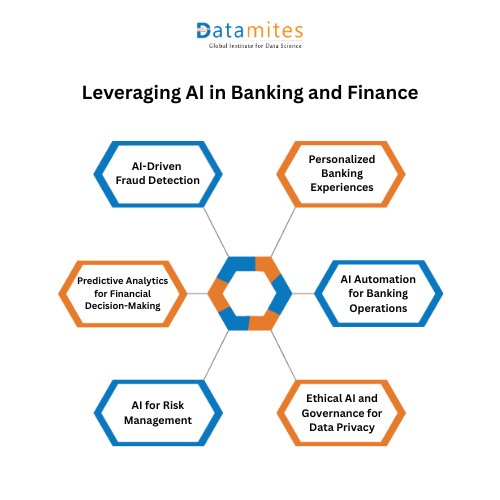
1. AI-Driven Fraud Detection Will Become More Advanced
Financial fraud continues to evolve in complexity, making traditional rule-based security systems increasingly ineffective. By 2030, advanced AI systems will become the backbone of fraud prevention strategies across the financial sector.
Modern ai for fraud detection technologies already use machine learning algorithms to identify suspicious transaction patterns and behavioral anomalies. However, future AI systems will become far more predictive and adaptive.
Instead of reacting after fraud occurs, AI models will proactively identify emerging threats before they impact customers or institutions. These systems will continuously learn from global transaction data, customer behaviors, cyberattack patterns, and network activity to detect fraud with greater precision.
Real-time fraud detection will become standard in digital banking environments. AI systems will instantly analyze factors such as device identity, location, transaction history, typing behavior, and spending patterns to assess risk levels during transactions.
Biometric authentication powered by AI including voice recognition, facial verification, and behavioral biometrics will further strengthen digital banking security.
2. Personalized Banking Experiences Transforming Customer Engagement
Customer expectations in financial services are rapidly evolving. Generic banking experiences are no longer sufficient in an era where consumers expect highly personalized digital interactions.
By 2030, AI will enable banks to provide hyper-personalized services tailored to each customer’s financial behavior, preferences, goals, and risk profile.
AI-powered recommendation engines will analyze spending habits, investment patterns, savings behavior, and life events to deliver contextual financial advice in real time. Customers may receive proactive recommendations for budgeting, loans, insurance, wealth management, or retirement planning based on predictive insights.
Conversational AI assistants will also become more sophisticated. Unlike current chatbots, future AI systems will understand emotional context, customer intent, and long-term financial objectives.
The rise of AI-Powered Financial Services will also improve omnichannel banking experiences. AI systems will ensure consistency across mobile apps, websites, customer support channels, and branch interactions.
3. Predictive Analytics Will Improve Financial Decision-Making
One of the most impactful applications of AI in finance is predictive analytics along with real world use cases in finance. By leveraging historical and real-time data, AI models can generate highly accurate forecasts that support strategic and operational decision-making.
By 2030, AI-Based Financial Analytics will become central to credit risk assessment, investment forecasting, customer acquisition strategies, and market analysis.
Financial institutions will increasingly use predictive AI to evaluate customer creditworthiness beyond traditional credit scores. AI systems will analyze broader datasets, including spending behavior, transaction history, digital activity, and financial patterns to make more accurate lending decisions.
Investment firms will also rely heavily on predictive AI to identify market trends, optimize portfolios, and manage risks more effectively. AI tools for finance for data forcasting can analyze global economic indicators, geopolitical developments, and market sentiment in real time.
Moreover, predictive AI will improve customer financial wellness by offering early warnings about cash flow issues, debt risks, or investment opportunities. This will strengthen the role of banks as proactive financial advisors rather than reactive service providers.
4. AI Automation Will Transform Banking Operations
Operational efficiency remains a major challenge for banks and financial institutions. Many processes still involve manual workflows, repetitive tasks, and fragmented systems that increase operational costs and reduce agility.
Robotic Process Automation (RPA) combined with AI will streamline tasks such as document verification, loan processing, customer onboarding, transaction reconciliation, and claims management. Intelligent automation systems will handle repetitive operations with greater speed and accuracy than human teams.
Back-office transformation will become a major priority within the Future of AI in Banking. AI systems will reduce human intervention in routine administrative processes, allowing employees to focus on strategic initiatives and customer relationships.
Furthermore, AI-powered workflow optimization will improve internal productivity and reduce processing errors. This can lead to faster service delivery, enhanced compliance accuracy, and stronger operational resilience.
5. AI for Regulatory Compliance and Risk Management
The global financial industry operates within a highly regulated environment. Compliance failures can result in severe financial penalties, reputational damage, and legal consequences.
AI systems can analyze vast volumes of transactional and regulatory data much faster than traditional compliance teams. These technologies can identify suspicious activities, monitor anti-money laundering (AML) risks, and detect compliance violations in real time.
By 2030, AI-powered compliance platforms may automate large portions of regulatory reporting and audit preparation. This will reduce administrative burdens while improving accuracy and transparency.
Risk management will also become more predictive through AI integration. Financial institutions will use intelligent models to simulate economic scenarios, assess market volatility, and evaluate portfolio exposure under different conditions.
The role of artificial intelligence in finance in compliance management is particularly important as global regulations continue evolving alongside digital banking innovations.
6. Ethical AI and Governance for Data Privacy
As AI adoption expands across financial services, concerns around ethics, transparency, and data privacy are becoming increasingly important.
Banks will need to ensure that AI systems are transparent, explainable, and free from harmful bias. Customers and regulators will demand greater visibility into how AI-driven decisions are made, especially in areas such as lending approvals, insurance assessments, and fraud investigations.
According to a MarketsandMarkets report, the AI market in banking and finance is projected to reach USD 190.33 billion by 2030, growing at a CAGR of 30.6%. Major applications driving this growth include fraud detection, risk assessment, automated trading, regulatory compliance, and intelligent process automation, all of which are accelerating digital transformation across the financial industry.
Refer to the blogs for AI related info:
- What is Artificial Narrow Intelligence
- Traditional AI vs Generative AI: Key Differences, Examples, and Use Cases
- Top AI Trends That Will Shape 2026
AI is reshaping the future of finance by improving security, compliance, and customer experiences. As trends in banking continue evolving, financial institutions must prioritize ethical AI governance, cybersecurity, and transparent data practices. From predictive analytics to intelligent automation, AI is helping banks enhance operational efficiency and decision-making.
DataMites Institute offers a comprehensive AI for Finance Courses designed to help finance professionals leverage artificial intelligence for smarter decision-making. The program covers financial analytics, fraud detection, risk management, investment analysis, and forecasting. Learners also gain exposure to specialized domains such as AI for Product Managers, HR Analytics, Marketing, Healthcare, and Business Leadership.
With flexible online and classroom training, real-time internships, and globally recognized IABAC certifications, DataMites delivers industry-focused education across major Indian cities, including Bangalore, Hyderabad, Pune, Chennai, Mumbai, Delhi, Kochi, Ahmedabad, Coimbatore, and Nagpur.