How AI is Transforming Cybersecurity in 2026
AI is reshaping cybersecurity by detecting threats faster, analyzing large data patterns, and automating responses to attacks. It strengthens defense systems, predicts vulnerabilities, and helps organizations respond in real time to evolving risks.
 Prerana B A
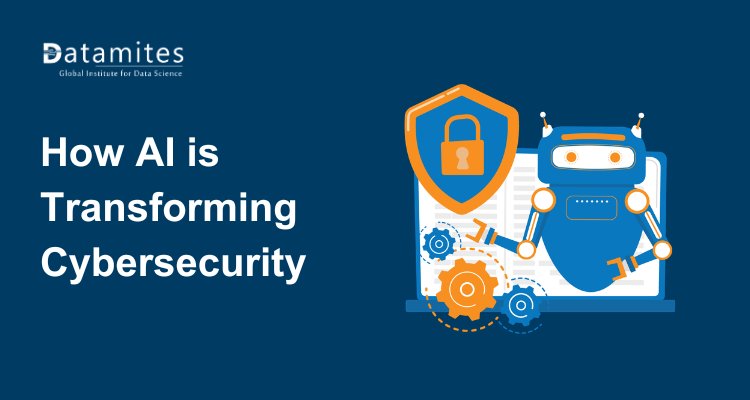
Artificial intelligence is now a core part of modern cybersecurity, not just an add-on tool. In 2026, AI has moved beyond basic automation into adaptive systems that can detect, predict, and respond to cyber threats in real time. As cybercriminals also use AI for advanced attacks like phishing, ransomware, and deepfakes, organizations are relying on machine learning, behavioral analytics, and autonomous security systems to stay protected.
Industry reports from sources like IBM, Gartner, and Statista estimate that global cybercrime damages could reach trillions of dollars annually by 2026, while AI-driven cybersecurity spending continues to grow at double-digit rates. This shift shows a clear move away from traditional security tools toward intelligent, self-learning defense systems that can keep up with evolving threats.
How AI Is Powering Cybersecurity in 2026
Cyber threats in 2026 are faster, smarter, and more automated than ever before. Traditional security tools and human-led operations alone can no longer keep up with the scale and complexity of modern attacks. This is why AI has become a critical part of cybersecurity.
1. Rise of AI-Driven Cyber Attacks
Cybercriminals now use AI to create advanced phishing scams, deepfake impersonations, automated malware, and social engineering attacks. AI-powered security systems can detect unusual behavior and identify threats in real time, even when attacks are new and constantly evolving.
2. Real-Time Threat Detection
Modern ransomware attacks can spread within minutes. AI helps organizations instantly detect suspicious activity, isolate infected systems, and respond faster before major damage occurs.
3. Growing Cloud and Remote Infrastructure
Businesses now operate across hybrid cloud systems, remote networks, IoT devices, and SaaS platforms. AI provides continuous monitoring and visibility across these complex environments.
4. Cybersecurity Talent Shortage
Many organizations face a shortage of skilled cybersecurity professionals. AI helps by automating repetitive tasks such as alert analysis, threat prioritization, compliance reporting, and incident investigation.
5. Reduced False Positives
Traditional security systems often generate too many unnecessary alerts. AI improves accuracy by analyzing user behavior and contextual patterns, helping security teams focus on real threats.
6. Predictive Cybersecurity
AI can analyze historical attack data and emerging threat patterns to predict potential cyber risks before they happen. This allows organizations to strengthen defenses proactively.
AI is now essential for modern cybersecurity because it enables faster threat detection, smarter automation, continuous monitoring, and stronger protection against evolving cyber threats. As attacks become more sophisticated, AI-driven security systems are becoming the foundation of digital defense in 2026.
Refer to these articles:
- What Are Graph Neural Networks? Simple Guide for Beginners
- Traditional AI vs Generative AI: Key Differences, Examples, and Use Cases
- What is Artificial Narrow Intelligence?
Top AI Cybersecurity Trends in 2026
AI is reshaping cybersecurity at an unprecedented pace in 2026. Organizations are adopting intelligent security systems not just to defend against attacks, but to predict, automate, and respond to threats in real time. At the same time, cybercriminals are using AI to launch more advanced and scalable attacks, creating a rapidly evolving cybersecurity arms race.
Generative AI in Security Operations
Generative AI has become a core part of modern Security Operations Centers (SOCs). AI-powered security assistants now help analysts investigate incidents, summarize threat intelligence, automate reports, and generate remediation workflows faster than ever before.
AI-Driven Threat Detection
Traditional signature-based detection methods are becoming less effective against modern threats. AI-powered systems now analyze behavioral patterns, network anomalies, and real-time activity to detect zero-day attacks, insider threats, and advanced malware.
Autonomous SOC Automation
AI is increasingly automating repetitive cybersecurity tasks such as:
- Alert triage
- Incident prioritization
- Threat correlation
- Automated remediation
This reduces alert fatigue and allows security teams to focus on high-priority threats. Gartner identifies AI-driven SOC transformation as one of the biggest cybersecurity shifts in 2026.
AI-Powered Phishing and Deepfake Defense
Cybercriminals are using generative AI to create highly realistic phishing emails, fake identities, and deepfake voice scams. In response, organizations are deploying AI systems capable of detecting linguistic anomalies, suspicious behavior, and synthetic media manipulation.
Predictive Cybersecurity Analytics
Predictive AI models now help organizations anticipate cyber risks before attacks occur. These systems analyze historical attack patterns, vulnerabilities, and threat intelligence to identify likely attack paths and emerging ransomware campaigns.
AI for Zero Trust Security
Zero Trust security models are increasingly powered by AI. Instead of granting permanent trust after login, AI continuously validates:
- User identity
- Device health
- Behavioral activity
- Access risk levels
This enables real-time adaptive security across enterprise networks.
Cloud Security AI
As businesses expand across hybrid and multi-cloud environments, AI-driven cloud security platforms are becoming essential. These systems monitor APIs, container environments, SaaS applications, and identity misuse in real time.
Agentic AI Security Risks
One of the biggest emerging concerns in 2026 is the rise of autonomous AI agents. Security experts warn that unmanaged AI agents can introduce new vulnerabilities, unauthorized access risks, and compliance challenges. Gartner highlights AI agent governance as a major cybersecurity priority for enterprises.
AI vs AI Cyber Warfare
Cybersecurity is evolving into an AI-versus-AI battlefield. Attackers are using AI for automated reconnaissance, malware development, and exploit discovery, while defenders use AI for detection and rapid response. Industry experts warn that AI-powered hacking is now scaling at industrial levels.
Post-Quantum Security Preparation
Organizations are beginning to prepare for future quantum computing threats. AI is helping security teams identify weak encryption methods and accelerate migration toward post-quantum cryptography strategies.
The biggest cybersecurity trends in 2026 revolve around automation, predictive intelligence, Zero Trust architecture, and AI-driven defense systems. As attackers increasingly weaponize AI, organizations must adopt intelligent security platforms capable of detecting and responding to threats faster than human teams alone.
The future of cybersecurity will depend on how effectively businesses combine AI-powered automation with human expertise and strategic oversight.
Benefits of AI in Cybersecurity
Artificial intelligence is transforming cybersecurity by helping organizations detect, prevent, and respond to threats faster and more efficiently. As cyberattacks become more advanced, AI-powered security systems provide smarter and more proactive protection.
Key Benefits of AI in Cybersecurity
Artificial intelligence is transforming cybersecurity by helping organizations detect, prevent, and respond to threats faster and more efficiently. As cyberattacks become more advanced, AI-powered security systems provide smarter and more proactive protection. Key Benefits of AI in Cybersecurity are:
- Faster Threat Detection: AI can analyze huge amounts of data in real time and quickly identify suspicious activity.
- Real-Time Incident Response: AI systems can automatically block threats, isolate infected devices, and reduce damage during attacks.
- Reduced False Positives: Machine learning improves accuracy by identifying real threats and minimizing unnecessary security alerts.
- 24/7 Security Monitoring: AI provides continuous monitoring without downtime, ensuring constant protection.
- Better Ransomware Prevention: AI detects unusual behavior and stops ransomware attacks before files are encrypted.
- Improved Phishing Detection: AI can recognize phishing emails, malicious links, and deepfake scams more effectively.
- SOC Automation: AI automates repetitive tasks like alert analysis, threat prioritization, and reporting, improving security team efficiency.
- Predictive Cybersecurity: AI helps organizations identify vulnerabilities and predict potential cyber threats before attacks happen.
AI has become essential in cybersecurity because it enables faster detection, smarter automation, and stronger protection against evolving cyber threats. Businesses using AI-powered security solutions are better prepared to defend their systems and data in 2026.
Real-world Use Cases of AI in Cybersecurity
AI is already being used across industries to detect threats, prevent attacks, and automate security operations. In 2026, it plays a practical role in protecting real systems, not just theory.
Banking and Financial Fraud Detection
Banks use AI to monitor transactions in real time and flag suspicious activity like unusual spending patterns, account takeovers, or identity fraud. AI can stop fraudulent transactions within seconds before money is lost.
Healthcare Data Protection
Hospitals and healthcare systems use AI to protect sensitive patient data and connected medical devices. It helps detect ransomware attacks early and prevents unauthorized access to electronic health records.
Enterprise Cloud Security
Companies running cloud infrastructure rely on AI to monitor user activity, detect API misuse, and secure hybrid cloud environments. It helps manage complex systems that are difficult to monitor manually.
E-Commerce Fraud Prevention
Online retailers use AI to detect fake accounts, payment fraud, and bot activity. It also helps verify customer identities and secure digital transactions.
Government and Critical Infrastructure Protection
Governments use AI for national security, monitoring cyber threats targeting power grids, communication systems, and defense networks. It supports early detection of advanced persistent threats.
SOC Automation in Enterprises
Security Operations Centers use AI to automatically analyze alerts, prioritize threats, and assist in incident response. This reduces workload and speeds up decision-making.
Phishing and Email Security
Organizations use AI to scan emails for phishing attempts by analyzing language patterns, sender behavior, and malicious links. It helps block scams before they reach users.
AI is actively used in cybersecurity across finance, healthcare, government, cloud systems, and e-commerce. Its main role is to detect threats faster, reduce human workload, and prevent attacks before they cause damage.
Refer to these articles:
- Reinforcement Learning: Basics and Applications
- What is the Difference Between AI Engineer and AI Expert Course?
- What is an AI Agent? Guide to Intelligent Agents in AI
Best AI Cybersecurity Tools in 2026
AI cybersecurity tools in 2026 are designed to do more than detect threats. They now analyze behavior, predict attacks, and automate responses across endpoints, cloud systems, and enterprise networks. Most modern platforms combine machine learning, threat intelligence, and automation into one unified security layer.
Here are some of the most widely used tools today:
CrowdStrike Falcon (with AI capabilities)
A leading endpoint protection platform that uses AI to detect and respond to threats in real time.
It is known for:
- Behavioral-based threat detection
- Fast identification of ransomware and malware
- Cloud-scale threat intelligence
- Automated incident response
It’s commonly used in large enterprises for endpoint and workload security.
Microsoft Security Copilot
An AI assistant integrated into Microsoft’s security ecosystem.
Key functions include:
- Summarizing security incidents
- Helping analysts investigate alerts faster
- Automating reporting and response workflows
- Working with Microsoft Defender and Sentinel
It is widely adopted by organizations already using Microsoft cloud services.
SentinelOne Singularity AI
A cybersecurity platform focused on autonomous protection.
Key capabilities:
- AI-based malware and ransomware detection
- Automatic threat containment
- Endpoint and cloud security coverage
- Real-time behavioral analysis
It is often chosen for its strong automation features.
Darktrace
A self-learning AI platform that focuses on identifying unusual behavior in networks.
It helps by:
- Learning normal system behavior
- Detecting unknown or zero-day threats
- Identifying insider threats
- Responding automatically to anomalies
It is commonly used in complex enterprise environments.
Palo Alto Networks Cortex XSIAM
A security operations platform powered by AI and automation.
It provides:
- Centralized security operations
- Automated alert analysis and prioritization
- Threat correlation across systems
- Reduced manual workload for SOC teams
It is designed for large-scale security operations.
Wiz (Cloud Security Platform)
A cloud-focused AI security tool used to protect modern cloud environments.
It offers:
- Visibility across multi-cloud systems
- Detection of configuration risks
- API and workload security monitoring
- Risk prioritization using AI
It is popular among cloud-first organizations.
AI cybersecurity tools in 2026 are focused on speed, automation, and predictive defense. Instead of reacting to attacks after they happen, these systems continuously monitor environments, detect unusual behavior early, and respond automatically. This makes them essential for organizations dealing with complex digital infrastructure and evolving cyber threats.
The rise of AI in Cybersecurity 2026 marks one of the most significant transformations in the history of digital security. As cyber threats grow more advanced, organizations are increasingly relying on artificial intelligence, machine learning security solutions, and predictive cybersecurity technologies to stay protected.
From AI threat detection and ransomware prevention to SOC automation and intelligent threat monitoring, AI-powered security systems are helping businesses defend against attacks faster and more efficiently than ever before.
However, AI also introduces new risks, including AI-driven cyber attacks and ethical concerns around automation and privacy. The future of cybersecurity will depend on how effectively organizations combine human expertise with intelligent AI systems.
Businesses that invest early in AI cybersecurity strategies will be better positioned to secure their infrastructure, protect sensitive data, and maintain customer trust in the rapidly evolving digital economy.
As artificial intelligence continues to grow rapidly across major cities in India, the demand for skilled AI professionals is rising quickly. This shift makes it important for learners to focus on practical, industry-relevant training that goes beyond theory and prepares them for real-world challenges.
To meet this need, DataMites Training Institute offers a structured 9-month Artificial Intelligence Course with a strong emphasis on hands-on learning, including real-time projects, capstone assignments, and cloud-based lab access. The program helps learners build job-ready skills in Python, machine learning, TensorFlow, and cloud computing, with pathways like AI Engineer, AI Expert, and NLP Expert. Accredited by IABAC® and NASSCOM FutureSkills, it also includes flexible learning options, internships, and placement support.
DataMites also offers artificial intelligence courses in Chennai, Bangalore, Pune, Mumbai, Delhi, Coimbatore, Hyderabad, Ahmedabad, and several other locations, ensuring learners nationwide can access industry-focused AI training. The program maintains the same practical, project-based approach with strong placement support to help learners build career-ready AI skills regardless of location.