Data Analyst vs Data Scientist vs Data Engineer: Choose the Right Data Career
Explore the differences between data analyst, data scientist, and data engineer. Learn skills, salaries, and career growth to choose the right path.
 Swagatam Sinha
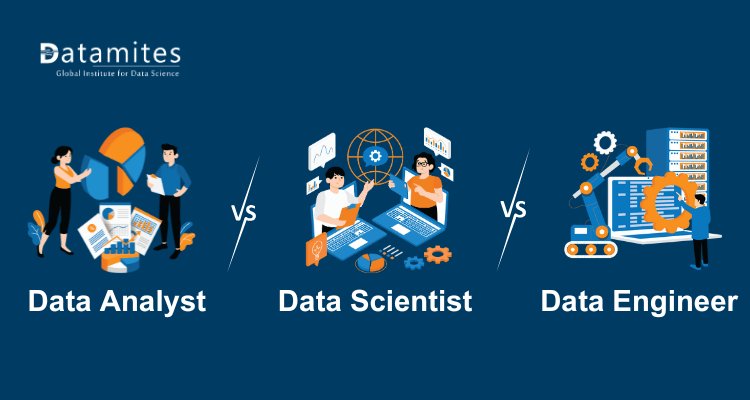
Every digital activity online shopping, social media, GPS usage creates data. Organizations rely on this data to make decisions, leading to the rise of three major roles: Data Analyst, Data Scientist, and Data Engineer.
Although these roles work with data, their responsibilities differ. Think of it like a restaurant:
- The Data Engineer builds the kitchen and supplies ingredients.
- The Data Scientist experiments with recipes to predict customer preferences.
- The Data Analyst explains why certain dishes sold better than others.
This guide explains each role so you can choose the one that fits your skills and career goals.
Why Data Careers Are in High Demand
Data careers are among the fastest-growing jobs globally. According to the U.S. Bureau of Labor Statistics, roles in data and analytics are expected to grow over 30% between 2022 and 2032.
Key Drivers of Growth:
- Businesses want real-time insights to stay competitive.
- Marketing and e-commerce rely on customer behavior analytics.
- Finance and healthcare use predictive models for risk management and patient outcomes.
- Supply chain and logistics leverage data for optimization.
Industry Insights
- LinkedIn Workforce Report 2024: Data analyst, data scientist, and data engineer rank among the top emerging jobs globally
- McKinsey Report 2023: Data-driven companies are 23× more likely to acquire customers than competitors
Clearly, choosing the right data role can provide long-term career stability and high earning potential.
Refer to these articles:
- Will Polars Replace Pandas? The Truth About Python’s New Data Library
- Why Synthetic Data Is the Future of GDPR Compliance
- Modern Data Stack for Data Scientists: Tools You Must Know
Data Engineer: The Architect Behind Every Data System
Before any data analysis or data science work can begin, raw data must be collected, cleaned, transformed, and stored. This critical responsibility belongs to the Data Engineer. Often described as the architect of the data ecosystem, Data Engineers design and maintain the infrastructure that powers analytics and machine learning.
Without Data Engineers, Data Analysts and Data Scientists would have no reliable data to work with.
What Does a Data Engineer Actually Do?
A Data Engineer focuses on building and managing the data “plumbing.” Their role involves creating scalable data pipelines that move raw data from multiple sources such as mobile applications, websites, IoT devices, and transactional systems into a centralized Data Warehouse or Data Lake.
This process is commonly known as ETL (Extract, Transform, Load) or ELT, depending on the architecture.
Key responsibilities include:
- Designing and maintaining data pipelines
- Ensuring data quality, reliability, and performance
- Optimizing data storage for analytics and reporting
- Supporting real-time and batch data processing
Core Data Engineer Skills and Tools
To succeed as a Data Engineer, you need strong technical expertise across multiple areas:
- Programming: Python, Java, Scala
- Databases: SQL, NoSQL (MongoDB, Cassandra)
- Data warehouses: Snowflake, BigQuery, Redshift
- Big data: Spark, Kafka, Airflow
- Cloud: AWS, Azure, GCP
These tools enable Data Engineers to process millions or even billions of rows of data efficiently.
Is Data Engineering the Right Career for You?
Data Engineering is ideal if you enjoy:
- Building scalable systems
- Software development and automation
- Working with backend infrastructure
- Solving problems like “How do we move and process this data efficiently?” rather than “What insights does this data show?”
If you have a strong interest in system architecture, performance optimization, and cloud-based data platforms, Data Engineering is a highly rewarding and in-demand career path in 2026.
The Data Analyst: The Business Storyteller
A Data Analyst acts as the crucial link between raw data and business decisions. Their primary role is to analyze historical and current datasets to answer key business questions such as: “What happened?” and “Why did it happen?” By transforming numbers into insights, data analysts help organizations improve performance, reduce costs, and identify growth opportunities.
What Does a Data Analyst Actually Do?
A data analyst works with structured data prepared by data engineers and looks for trends, patterns, and anomalies. They build dashboards and reports that support strategic decision-making across marketing, sales, finance, and operations.
Example:
A data analyst may examine last year’s holiday sales data to identify which marketing campaign generated the highest customer conversions and revenue.
Core Data Analyst Skills and Tools
To succeed in a data analyst role, professionals must master the following data analyst skills and tools:
- Spreadsheets: Advanced Excel skills such as Pivot Tables, VLOOKUP/XLOOKUP, and formulas for data cleaning and analysis.
- Data Visualization: Tools like Tableau and Power BI to create interactive dashboards and business intelligence reports.
- SQL (Structured Query Language): Strong querying skills to extract, filter, and join data from relational databases.
- Communication Skills: Ability to present insights clearly to non-technical stakeholders and business teams.
Is a Data Analyst Career Right for You?
A data analyst career is ideal if you enjoy working with numbers and people equally. If you like solving business problems, uncovering hidden trends in data, and presenting actionable insights, this role is a strong fit.
It is also one of the best entry-level data roles for career switchers because it emphasizes:
- Business understanding
- Logical thinking
- Data interpretation
- Minimal heavy programming compared to data science or data engineering
Refer to these articles:
- Data Scientist vs ML Engineer vs AI Engineer
- Data Engineer vs Analytics Engineer vs Data Analyst
- Top 7 Data Science Job Roles in 2026 You Should Know
Data Scientist: The Fortune Teller of the Data World
A Data Scientist takes data analysis to the next level by transforming historical data into predictive insights. Instead of only explaining what happened in the past, a Data Scientist focuses on forecasting future outcomes for example, predicting how many units a company will sell next week or identifying customers most likely to churn.
This role sits at the intersection of data analytics, machine learning, statistics, and artificial intelligence, making it one of the most advanced and in-demand careers in the data industry.
What Does a Data Scientist Actually Do?
The core responsibility of a Data Scientist is building machine learning models that enable computers to learn from data and make intelligent decisions. Typical use cases include:
- Predictive analytics for sales, demand, and customer behavior
- Recommendation systems (e.g., Netflix or Amazon suggestions)
- Fraud detection and risk modeling in banking and finance
- Customer segmentation and personalization
Data Scientists rely heavily on statistical modeling to validate assumptions and uncover relationships between variables. For example, techniques like linear regression:
y = mx + b
help identify how one variable influences another, forming the foundation for more complex machine learning algorithms.
Core Skills and Tools for a Data Scientist
To succeed as a Data Scientist, strong technical and analytical skills are essential:
- Advanced Mathematics: Statistics, Probability, Calculus, and Linear Algebra
- Programming Languages: Python or R for data analysis and model building
- Machine Learning Frameworks: Scikit-learn, TensorFlow, PyTorch
- Data Handling & Visualization: Pandas, NumPy, Matplotlib, Seaborn
- Experimentation & Testing: Designing and analyzing A/B tests to measure product performance
Is Data Science the Right Career for You?
A career in Data Science is ideal for professionals with a strong analytical and scientific mindset. If you enjoy solving complex problems, working with mathematical models, running experiments, and building AI-driven solutions, this role represents the peak of the data career ladder.
Because Data Scientists build advanced predictive models and AI systems, this role demands a high level of technical skill and problem-solving ability compared to other data careers.
Data Analyst vs Data Scientist vs Data Engineer: Key Differences
With businesses generating massive amounts of data every day, careers in data analytics, data science, and data engineering are in high demand. But what’s the difference between a Data Analyst, Data Scientist, and Data Engineer, and which role is the best fit for your skills and career goals?
Here’s a practical, easy-to-understand comparison of the three roles for aspiring data professionals.
| Aspect | Data Analyst | Data Scientist | Data Engineer |
| Focus | Business insights | Predictive models | Data infrastructure |
| Key Question | What happened? Why? | What will happen? | How to process data? |
| Daily Work | Reports, dashboards | ML models, statistics | Pipelines, databases |
| Data Type | Structured | Structured & unstructured | Raw & processed data |
| Business Impact | Tactical decisions | Strategic decisions | Enables all analytics |
Global Salary Insights for Data Analysts, Data Scientists & Data Engineers
Salary trends for data professionals vary by geography, experience level, and industry. The following salary ranges are compiled based on data from Glassdoor, one of the most widely trusted global salary reporting platforms.
Salaries in India
According to Glassdoor, the Data Analyst salary in India typically ranges between ₹6 LPA and ₹10 LPA, with higher compensation in metro cities like Bangalore and Hyderabad. The Data Scientist salary in India usually falls between ₹10 LPA and ₹18 LPA, especially for professionals with machine learning expertise. The Data Engineer salary in India is among the highest in the data domain, ranging from ₹12 LPA to ₹20 LPA, driven by strong demand for cloud and big data skills.
Salaries in the United States (USA)
As per Glassdoor, the Data Analyst salary in the USA ranges from $70,000 to $95,000 per year. The Data Scientist salary in the USA typically ranges between $100,000 and $145,000 annually, reflecting strong demand for AI and predictive analytics skills. Meanwhile, Data Engineer salaries in the USA range from $105,000 to $150,000 per year, due to the critical role data engineers play in modern data infrastructure.
Salaries in the United Kingdom (UK)
According to Glassdoor UK, the Data Analyst salary in the UK ranges between £30,000 and £55,000 per year, with London offering premium pay. The Data Scientist salary in the UK typically falls between £60,000 and £80,000 annually, particularly in finance and healthcare. The Data Engineer salary in the UK ranges from £40,000 to £68,000 per year, reflecting growing demand for data platform specialists.
Salaries in South Africa
Based on Glassdoor data, the Data Analyst salary in South Africa ranges from R329,000 to R650,000 per year. The Data Scientist salary in South Africa typically falls between R574,000 and R850,000 annually, especially in banking and telecom sectors. The Data Engineer salary in South Africa ranges from R450,000 to R900,000 per year, depending on experience and location.
Salaries in Dubai (UAE)
According to Glassdoor UAE, the Data Analyst salary in Dubai ranges from AED 120,000 to AED 200,000 per year. The Data Scientist salary in Dubai typically falls between AED 130,000 and AED 220,000 annually, driven by government-led AI initiatives. The Data Engineer salary in Dubai ranges from AED 150,000 to AED 250,000 per year, often tax-free, making Dubai a highly attractive destination for data professionals.
Salaries in Australia
As per Glassdoor Australia, the Data Analyst salary in Australia ranges between AUD 100,000 and AUD 145,000 per year, particularly in Sydney and Melbourne. The Data Scientist salary in Australia falls between AUD 80,000 and AUD 140,000 annually. Meanwhile, the Data Engineer salary in Australia typically ranges from AUD 110,000 to AUD 160,000 per year, reflecting strong demand for cloud data engineers.
Salaries in Singapore
According to Glassdoor Singapore, the Data Analyst salary in Singapore ranges from SGD 75,000 to SGD 140,000 per year. The Data Scientist salary in Singapore typically falls between SGD 120,000 and SGD 200,000 annually, especially in fintech and AI-driven organizations. The Data Engineer salary in Singapore ranges from SGD 100,000 to SGD 180,000 per year, driven by demand for scalable data infrastructure.
Refer to these articles:
- Databricks vs Snowflake: Which Is Better for Data Science
- Role of Data Science in Smart Cities and Internet of Things (IoT)
- Why Bias, Fairness, and Transparency Are the New Metrics in Data Science
Career Growth Paths for Data Analyst, Data Scientist, and Data Engineer
Understanding the long-term career path for data professionals helps aspirants make informed decisions about skill development and specialization.
Data Analyst Career Path
Start as a Junior Data Analyst, focusing on data cleaning, reporting, and dashboards. Progress to Data Analyst → Senior Data Analyst → Analytics Manager → Head of Business Intelligence → Chief Data Officer (CDO). This path is ideal for those who enjoy analyzing trends, creating reports, and supporting business decisions.
Data Scientist Career Path
Begin as a Junior Data Scientist, working on basic data analysis and machine learning models. Advance to Data Scientist → Senior Data Scientist → Machine Learning Engineer → Lead Data Scientist → Director of Data Science → AI Architect. This path suits professionals interested in predictive analytics, AI, and advanced data modeling.
Data Engineer Career Path
Start as a Junior Data Engineer, building and maintaining data pipelines. Progress to Data Engineer → Senior Data Engineer → Data Architect → Cloud/Data Platform Lead → Data Engineering Manager → Director of Data Engineering. This path fits those passionate about coding, system architecture, and cloud-based data infrastructure.
The global Big Data and Data Engineering Services market reached approximately USD 72.3 billion in 2024 and is projected to grow to over USD 324 billion by 2033, with a strong compound annual growth rate (CAGR) of ~18% through 2033. (Source: Global Growth Insights)
Choosing between Data Analyst, Data Scientist, and Data Engineer depends on your interests, strengths, and long-term goals not just salary trends.
- If you enjoy business problem-solving and clear communication, Data Analyst is a strong entry-level choice with steady growth.
- If you are passionate about mathematics, statistics, and machine learning, Data Science is ideal for building predictive and AI-driven solutions.
- If you prefer coding, system architecture, and cloud platforms, Data Engineering suits those who enjoy building large-scale data systems.
There is no “best” role only the right fit for you. With high demand and global opportunities, all three roles offer future-proof careers in 2026 and beyond.
At DataMites Institute, we provide comprehensive programs to help aspirants excel in the data industry. Our Data Science course in Hyderabad is designed to equip learners with practical skills in data analytics, machine learning, and AI, ensuring they are industry-ready from day one.
With over 20 physical locations across India, DataMites offers both offline classroom training and flexible online training options. Our structured curriculum, hands-on projects, and expert faculty ensure students gain the confidence and experience needed to succeed in data-driven careers.