Data Science vs Decision Science: What’s the Real Difference?
A career in AI for healthcare offers the chance to combine technology and medicine to improve patient outcomes, enhance diagnostics, streamline operations, and drive innovation. It provides strong growth opportunities while making a meaningful impact on global healthcare.
 Prerana B A
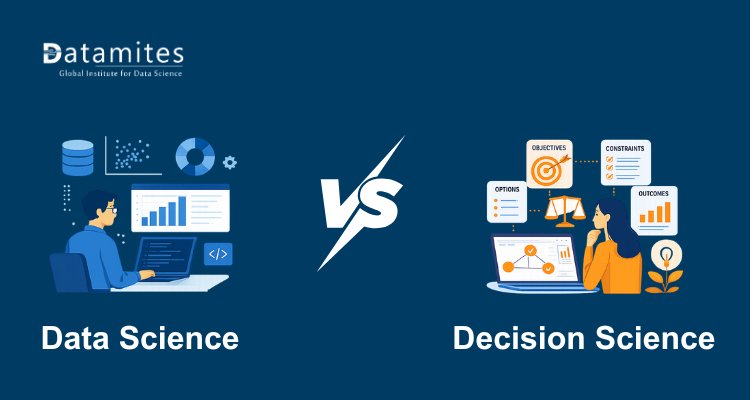
Every click, purchase, and online interaction generates valuable data but data alone doesn’t drive success. The real impact comes from turning information into smarter decisions. This is where Data Science and Decision Science play a crucial role. While often used interchangeably, these fields serve different purposes. Data Science focuses on analyzing data, identifying patterns, and building predictive models, whereas Decision Science uses those insights to improve strategic and business decisions. As organizations increasingly rely on AI, analytics, and data-driven decision making, understanding the difference between Data Science and Decision Science has become essential for students, professionals, and businesses alike.
What is Data Science?
Data Science is an interdisciplinary field that uses data, algorithms, statistical modeling, and machine learning to extract meaningful insights from structured and unstructured data.
The goal of Data Science is to discover patterns, predict outcomes, automate processes, and support data-driven business strategies.
A Data Scientist works with large datasets to answer questions such as:
- Which customers are likely to churn?
- What products should be recommended?
- How can fraud be detected?
- What trends will impact future sales?
Key Components of Data Science
Data Science combines multiple disciplines, including:
- Statistics
- Mathematics
- Machine Learning
- Programming
- Data Engineering
- Data Visualization
- Artificial Intelligence
How the Data Science Process Works
A typical Data Science workflow includes:
- Data collection
- Data cleaning
- Exploratory analysis
- Feature engineering
- Model building
- Model evaluation
- Deployment and monitoring
The focus is heavily technical and model-driven.
Real-World Applications of Data Science
Data Science powers many modern digital experiences.
Netflix Recommendation Engine
Netflix uses machine learning algorithms to recommend movies and shows based on user behavior, viewing history, and preferences.
This improves user engagement and retention.
Amazon Product Recommendations
Amazon uses predictive analytics and customer data to suggest products users are likely to buy.
This directly impacts revenue growth.
Banking Fraud Detection
Banks use Data Science models to identify suspicious transactions in real time.
Machine learning systems analyze patterns and flag unusual activity instantly.
Healthcare Diagnostics
Hospitals and healthcare platforms use AI models to detect diseases, predict patient risks, and optimize treatment planning.
Retail Demand Forecasting
Retail chains use Data Science to predict inventory demand, seasonal trends, and customer buying behavior.
Refer to these articles:
- Data Analyst vs Data Scientist vs Data Engineer: Choose the Right Data Career
- Data Mesh vs Data Fabric in 2026: Choosing the Right Data Architecture
- Data Science vs Cyber Security: Which Has Better Future?
Key Skills Required for Data Science
A successful Data Scientist requires both technical and analytical capabilities.
Essential Technical Skills for Data Science
- Python or R programming
- SQL
- Machine learning
- Statistical modeling
- Data mining
- Big data technologies
- Data visualization
Important Analytical Skills for Data Professionals
- Problem-solving
- Critical thinking
- Pattern recognition
- Predictive analytics
- Experimental design
Business Skills Required for Data Science Careers
Modern Data Scientists also need business understanding because technical insights must support organizational goals.
Tools and Technologies Used for Data Science
Here are some commonly used Data Science tools:
| Category | Tools |
| Programming | Python, R |
| Databases | SQL, PostgreSQL, MongoDB |
| Machine Learning | Scikit-learn, TensorFlow, PyTorch |
| Visualization | Tableau, Power BI, Matplotlib |
| Big Data | Hadoop, Spark |
| Cloud Platforms | AWS, Azure, Google Cloud |
These tools help professionals manage, analyze, and model large-scale datasets efficiently.
What is Decision Science?
Decision Science is the discipline of using data, analytics, behavioral science, and business intelligence to improve strategic and operational decision-making.
Unlike Data Science, which focuses heavily on extracting insights, Decision Science focuses on determining the best course of action based on those insights.
In simple terms:
- Data Science predicts outcomes.
- Decision Science recommends actions.
Decision Science combines:
- Analytics
- Optimization
- Forecasting
- Operations research
- Business strategy
- AI and Decision Science techniques
The ultimate goal is to enable better, faster, and more efficient decisions.
Real-World Applications of Decision Science
Decision Science applications are becoming increasingly important across industries.
Supply Chain Optimization
Companies use Decision Science to:
- Reduce logistics costs
- Optimize delivery routes
- Improve warehouse operations
- Manage inventory efficiently
Financial Decision-Making
Banks and financial firms apply Decision Science for:
- Investment optimization
- Risk management
- Loan approval strategies
- Portfolio balancing
Healthcare Operations
Hospitals use Decision Science to:
- Allocate resources effectively
- Optimize staffing
- Improve emergency response planning
- Reduce operational costs
Marketing Strategy
Decision Science helps marketers:
- Optimize advertising budgets
- Improve customer targeting
- Increase campaign ROI
- Personalize customer experiences
Business Strategy
Organizations use Decision Science for:
- Strategic planning
- Scenario analysis
- Forecasting
- Competitive analysis
This supports data-driven decision making at every level.
Key Skills Required for Decision Science
A Decision Science career requires both analytical and strategic business skills.
Key Skills Required for Decision Science
A career in Decision Science requires a mix of analytical, business, and technical skills to support effective data-driven decision making.
Analytical Thinking
Decision Scientists must analyze data, identify patterns, and evaluate outcomes to solve business problems efficiently.
Business Strategy
Understanding business goals and market trends is essential for making strategic and operational decisions.
Predictive Analytics and Forecasting
Knowledge of statistics and predictive analytics helps professionals forecast trends and improve decision-making.
Data Visualization and Communication
The ability to present insights clearly through dashboards, reports, and charts is highly important.
Optimization Skills
Decision Science focuses on improving efficiency, reducing costs, and optimizing business performance.
Technical Skills
Familiarity with tools like SQL, Python, Tableau, Power BI, and Excel is valuable for analyzing and interpreting data.
AI and Machine Learning Awareness
Understanding AI-driven insights and machine learning in business is becoming increasingly important in modern Decision Science.
Refer to these articles:
- How Data Scientists Can Build AI Agents Using Python
- Top 10 Best IDEs for Data Science in 2026
- Best Python Web Frameworks for Beginners and Professionals in 2026
Tools and Technologies Used for Decision Science
Decision Science uses technologies focused on analytics, optimization, and strategic planning.
| Category | Popular Tools |
| Business Intelligence | Tableau, Power BI |
| Optimization Tools | Gurobi, CPLEX |
| Analytics Platforms | SAS, IBM SPSS |
| Forecasting Tools | Alteryx |
| Simulation Software | AnyLogic |
| Database Tools | SQL |
These technologies support predictive analytics, decision intelligence, and business optimization.
Data Science or Decision Science: Which to Choose?
Choosing between Decision Science vs Data Science depends on your interests, strengths, and career goals.
Both fields offer excellent career opportunities, high salaries, and strong future demand.
However, they differ significantly in focus and work style.
How Data Science and Decision Science Differ
Data Science and Decision Science both work with data, but their goals are different. Data Science focuses on analyzing data, finding patterns, and building predictive models using machine learning and statistics. It mainly answers the question, “What will happen?”
Decision Science, however, focuses on using those insights to make better business decisions. It emphasizes strategy, optimization, and problem-solving to answer, “What should we do?”
In simple terms, Data Science helps generate insights, while Decision Science helps businesses take the right actions based on those insights.
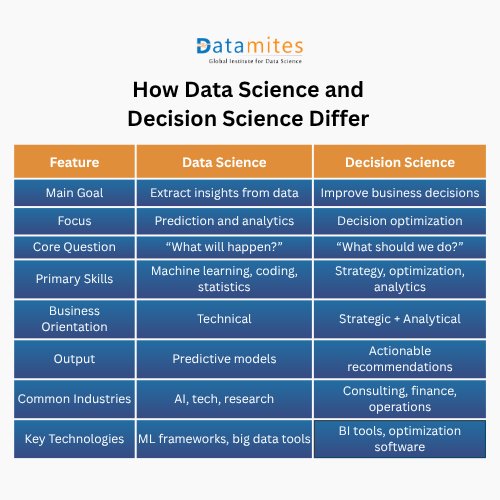
The debate around Decision Science vs Data Science is not about which field is better, but about understanding their distinct roles in business. While Data Science focuses on analyzing data, identifying patterns, and building predictive models, Decision Science uses those insights to improve business strategies and decision-making. In simple terms, Data Science uncovers insights, whereas Decision Science transforms those insights into actionable business decisions.
This is an excellent time to start a career in AI and data science. Joining a data science course in Hyderabad, Bangalore, Chennai, Pune, Coimbatore, Ahmedabad, or Mumbai can help learners develop practical skills in machine learning, AI tools, data analytics, and prompt engineering through hands-on projects and real-world case studies. As industries increasingly adopt intelligent automation and AI-powered decision-making, data science is becoming an essential skill for modern data professionals.
DataMites Institute is one of the institutes gaining strong recognition for its industry-oriented training approach. Its curriculum focuses on experiential learning through live projects, internships, and exposure to emerging AI technologies. The institute’s Certified Data Scientist programs, accredited by IABAC and NASSCOM FutureSkills, cover key areas such as machine learning, analytics, AI workflows, and data science concepts that are highly valued in today’s job market.
For learners interested in offline classroom training, DataMites offers data science courses in Chennai, Mumbai, Bangalore, Pune, Hyderabad, Ahmedabad, and Coimbatore. The institute also provides flexible online training programs, enabling aspiring data scientists from across the world to access industry-relevant learning and practical skill development.