How AI is Transforming Customer Analytics in 2026
Discover how AI is transforming customer analytics in 2026 with real-time insights, personalization, and smarter marketing strategies for businesses.
 Swagatam Sinha
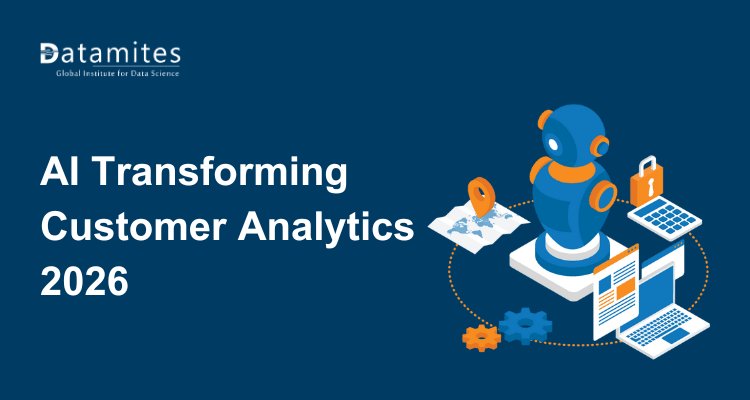
Customer analytics has become one of the most important business tools in 2026. Companies no longer depend only on reports that explain what happened in the past. They now focus on understanding customer behavior as it happens and predicting what will happen next. How AI is Transforming Customer Analytics in 2026 reflects a shift from slow analysis to fast, data-based decisions that drive strategy and performance.
Today, every customer interaction creates data. Website visits, app usage, online purchases, and customer service chats all generate valuable information. When this data is studied correctly, it shows what customers like, what they avoid, and what they need. With the help of AI driven analytics, businesses translate raw data into actions that improve customer experience and increase revenue.
According to Modor Intelligence research, the global customer analytics market size is expected to reach approximately USD 17.58 billion in 2026, growing rapidly as more companies adopt advanced analytics tools to engage customers and optimize experiences.
Introduction to Customer Analytics in 2026
Customer analytics in 2026 is focused on understanding real people, not just numbers. Instead of grouping customers only by age or location, companies now group them by behavior, habits, and engagement levels. This helps businesses design better products, services, and messages that resonate.
Modern organizations use customer data platforms that collect information from different channels. These platforms give a unified view of each customer’s journey, from first contact to repeat purchase. With this approach, teams can make data-driven choices that support revenue growth and customer loyalty.
Evolution of Customer Analytics in the Digital Era
Earlier, customer analytics depended on monthly or quarterly reports. By the time results were reviewed, customer needs had often changed. Today, systems process data in real time, allowing teams to respond quickly to trends and opportunities.
Market research indicates that cloud-based analytics solutions account for over 61% of customer analytics deployments, highlighting a strong shift toward scalable, accessible platforms. (Source: Mordor Intelligence)
The growing demand for real-time feedback and decision support has made customer analytics essential across industries such as retail, finance, healthcare, and telecommunications.
Read to these articles:
- The Future of Coding: Can AI Replace Software Engineers?
- Green AI Guide: Quantization and FinOps to Reduce LLM Costs
- Traditional RAG vs Agentic RAG
Role of AI in Understanding Customer Behavior
Understanding customer behavior means recognizing patterns that predict future actions. These patterns show what customers prefer and how they make decisions. For example, if a customer regularly buys certain products, the system can suggest related items before the customer even searches.
This is where AI driven customer insights play a key role. These insights help businesses:
- Identify customers at risk of leaving
- Predict what products a customer might need next
- Understand preferences hidden in vast data sets
Market research also finds that over 70% of enterprises report stronger customer retention after adopting advanced analytics solutions, signaling that data-based understanding directly impacts long-term loyalty.
With this knowledge, companies improve customer satisfaction and reduce churn. Instead of guessing, they make decisions based on evidence and trends.
How AI Driven Analytics Improves Business Decisions
AI driven analytics allows companies to analyze customer data quickly and accurately. It helps teams focus on actions rather than manual data tasks. Decision-makers use dashboards that show live trends such as:
- Most viewed products
- Popular customer support topics
- Shifts in buying behavior
These insights help businesses adjust marketing campaigns, manage inventory, and improve service quality. Decisions that once took weeks can now be made in hours or even minutes.
Studies show that enterprises integrating analytics into core functions see measurable improvements, such as 34% increase in marketing ROI and 29% reduction in customer churn when real-time data is applied to engagement strategies.
Importance of AI Driven Customer Insights for Personalization
Personalization is a major expectation of customers in 2026. Customers want content and offers that match their individual preferences. Generic messages no longer attract attention.
With AI driven customer insights, companies can:
- Display personalized product suggestions
- Send emails based on past behavior
- Modify website content for each visitor
For example, an online clothing store can display sneakers to sports fans and formal wear to office workers. This improves user experience and increases the likelihood of purchase.
Consumer research also shows that predictive analytics tools with AI-powered sentiment and behavior insights are increasingly adopted in customer experience platforms, driving higher engagement and satisfaction. (Source: Market Growth Reports)
Refer to these articles:
- AI Sovereignty: The New Mandate for Data Governance in the Cloud Era
- How Knowledge-Augmented Generation (KAG) Is Solving AI Hallucinations
- CrewAI vs. AutoGen vs. LangGraph
Impact of AI Powered Marketing Strategies on Customer Engagement
Ai powered marketing strategies help businesses connect with customers more effectively. Instead of sending the same message to everyone, marketing teams can send targeted content based on behavior and preferences.
These strategies support:
- Smarter advertising
- Better email timing
- Improved campaign performance
For example, if a customer views a product repeatedly but does not buy, the system may send a personalized reminder with a relevant offer. This approach not only increases engagement but also builds trust.
Market analysis indicates that AI growth in marketing technologies is strong, with tools improving productivity and adoption rising year after year across industries.
Benefits of AI in Modern Customer Analytics
The use of advanced customer analytics brings many advantages:
1. Improved Customer Retention
Businesses identify unhappy customers early and take action to keep them.
2. Higher Sales
Relevant offers increase the chances of purchase.
3. Lower Marketing Costs
Targeted campaigns reduce wasted spend.
4. Better Customer Support
Support teams understand issues faster by using customer history.
5. Faster Decision Making
Live analytics help managers act on trends immediately.
With AI driven analytics, companies can focus on customer needs instead of manual data tasks and outdated reports.
Industry Use Cases of AI in Customer Analytics
AI‑driven customer analytics is reshaping how industries understand behavior, personalize experiences, and make data‑backed decisions. Across sectors like retail, banking, and healthcare, organizations are increasingly using advanced tools not just to collect information, but to transform it into actionable AI driven customer insights that fuel growth, efficiency, and loyalty.
Retail
Retailers use behavior data to recommend products, manage stock, and tailor marketing. Over 70% of retailers are deploying predictive analytics to personalize engagement, and many dedicate substantial portions of their tech budget to these systems. These tools help retailers forecast demand with greater precision and deliver interactive experiences, while customers increasingly expect personalized interactions.
In fact, nearly 78% of consumers say AI‑driven recommendations influence purchase decisions, and 40% of global retailers have integrated AI into demand forecasting to improve accuracy and sales outcomes. Additionally, AI solutions can reduce operational inefficiencies by automating resolution and inventory tasks, ultimately driving both engagement and business performance.
Banking
Banks leverage customer analytics to tailor financial products and detect fraud more effectively. The majority of financial institutions now use AI tools to enhance customer experience, with AI conversational systems increasing engagement by up to 40% and reducing onboarding time by 70%. Many banks find that AI‑enabled segmentation improves marketing targeting by about 40%, while customer preferences show that 63% of banking customers are willing to share personal data for better personalized services.
Retail banks are also reducing risk and verifying transactions with high accuracy as analytics models improve compliance and customer support responsiveness.
Healthcare
Hospitals and health systems apply analytics to improve patient engagement and outcomes. By analyzing patient history and behavior, providers can send targeted reminders, health tips, and follow‑ups that improve adherence to treatment plans. AI tools are expanding quickly, with an annual growth rate of around 37%, enabling healthcare organizations to enhance patient outcomes, lower operational costs, and make data-driven decisions for critical care. This application of AI driven analytics helps improve overall care experiences and system efficiency, making personalized healthcare more accurate and accessible.
Across all these sectors, AI driven customer insights enable organizations to move beyond generic interactions, designing targeted experiences that build loyalty, reduce churn, and foster long‑term customer relationships.
Data Privacy and Trust in AI Based Customer Analytics
With more data collection comes greater responsibility. Customers want to know how their information is used. In 2026, companies focus on clear communication and secure protection of customer data.
Businesses explain:
- What data is collected
- Why it is needed
- How it benefits the customer
This transparency strengthens trust. Ethical data use and responsible governance are now core parts of analytics strategies, especially as privacy regulations grow stricter around global markets.
Read to these articles:
- Will AI Agents Replace Your Next Coworker? Exploring the Future of Work
- Explainable AI: Why Black-Box Models Are Losing Trust
- Generative AI and Predictive AI: Key Differences Explained
Challenges of Using AI for Customer Data Analysis
Even with advanced tools, challenges remain:
Data Quality
Incomplete or incorrect data leads to poor insights.
Bias in Data
Historical patterns may reflect unfair practices that need correction.
Skill Shortage
Teams need training to understand and use analytics tools effectively.
Implementation Gap
Some organizations struggle to move beyond early pilots and see real business impact, a trend reflected in broader adoption concerns across technology initiatives.
Addressing these issues helps companies maintain accuracy, fairness, and long-term value from analytics investments.
Future of Customer Analytics Beyond 2026
Customer analytics will continue to grow smarter and more connected. Future systems will:
- Predict needs before customers express them
- Connect online and offline behavior data
- Support voice and smart device interactions
This means businesses will move from selling products to creating coordinated experiences. AI powered marketing strategies will adapt campaigns automatically based on real-time reactions, improving efficiency and results.
The customer analytics market itself is projected to expand significantly beyond 2026, with forecasts showing continued strong growth through the next decade as digital transformation accelerates across all industries.
Customer analytics in 2026 is centered on understanding and serving customers better. Businesses that use data wisely gain stronger relationships and better results in retention and revenue. Ethical data use, skilled teams, and advanced analytics tools are key to long-term success.
By using AI driven customer insights, companies can predict needs, reduce risks, and increase satisfaction. At the same time, AI powered marketing strategies help brands communicate clearly and personally. As analytics evolves, it will continue to shape how businesses connect with people around the world.
DataMites Institute is a professional training institute committed to providing industry-ready learning with highly experienced trainers. Our Artificial Intelligence Course in Hyderabad offers practical, hands-on training, real-time projects, and industry-aligned curriculum to help learners gain strong expertise.
We focus on building your skills for real-world applications. With placement support, expert guidance, and interactive sessions, our Artificial Intelligence Course ensures you are fully prepared to excel in the growing AI industry.