Artificial Intelligence in the Finance and Banking Sector?
Artificial Intelligence is revolutionizing the finance and banking sector by enhancing fraud detection, risk management, and customer service. AI-driven automation and predictive analytics are transforming decision-making and operational efficiency.
 Thushara C.P
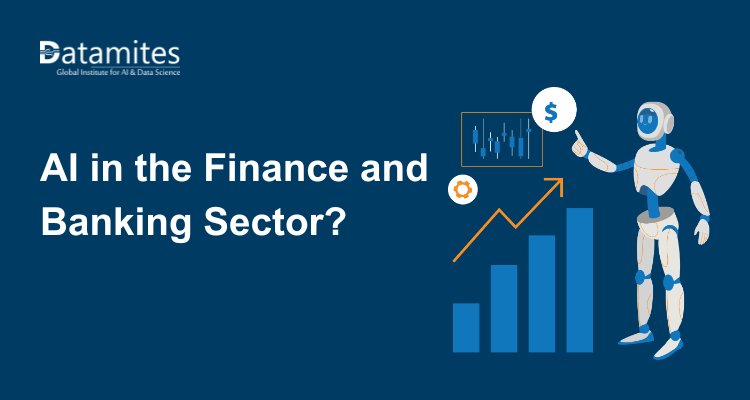
AI is fantabulous and in demand in the banking and finance sector. And that too for a good reason. The technological furtherance in AI – machine learning, computer vision and natural language processing has downright remodelled the business world. Furthermore, the technological developments piloted positive outcomes in the banking sector by upgrading back-office operations, enhancing the customer experiences and instilling employee satisfaction.
According to Fortune Business Insights, the global artificial intelligence market was valued at USD 294.16 billion in 2025 and is projected to grow from USD 375.93 billion in 2026 to USD 2,480.05 billion by 2034, registering a CAGR of 26.60% during the forecast period. North America dominated the global AI market in 2025, accounting for a 31.80% market share.
How is AI applicable in finance and banking?
AI is transforming finance and banking through smarter automation, personalised services, fraud detection, and data-driven decision-making. Its applications help financial institutions improve efficiency, security, and customer experiences.
Chatbots
The application of conversational assistants or chatbots is one of the substantial benefits of AI in the banking and finance sector. As opposed to an employee, a chatbot is at one’s disposal 24 hours a day, and clients are more complacent using this software programme to answer inquiries and complete many typical banking procedures that traditionally called for face-to-face interaction. Banks are developing their use of chatbots to apprise clients about additional services and opportunities.
Robot Advice
One of the important applications of AI in the financial services industry is automated investment guidance. By evaluating customer information, financial history, risk preferences, and investment goals, a robo-advisor can assess a customer’s financial profile and provide suitable investment recommendations based on their objectives and the prevailing market conditions. Such AI-driven recommendations should operate with appropriate risk controls and human oversight.
Mobile banking
Artificial intelligence (AI) is becoming increasingly proactive, personalised, and advanced in mobile banking apps. AI banking apps have the potential to improve client experiences and service quality. AI and Machine Learning are being used in banking to help organisations track user behaviour and provide highly tailored services to customers.
Workplace automation
One of the best AI use cases in the finance and banking sector is automation. In the banking industry, AI offers a lot of potential. AI software assists banks in streamlining and automating repetitive tasks and workflows, helping employees minimise their workload while improving operational efficiency and the quality of their work. As a result, AI technologies can help bankers minimise their workload while also improving the quality of their work. Users can seek help at any time and receive accurate responses from AI virtual financial assistants through tailored AI banking apps and AI Chatbot services.
Refer to these articles:
- What Are Graph Neural Networks? A Simple Guide for Beginners
- Traditional AI vs Generative AI: Key Differences, Examples, and Use Cases
- What is Artificial Narrow Intelligence?
Generative AI and AI Agents
Generative AI and AI agents are expanding the use of artificial intelligence in finance and banking beyond traditional automation. Financial institutions can use these technologies to assist with tasks such as document analysis, customer support, financial research, knowledge retrieval, and workflow automation. With appropriate governance, security controls, and human oversight, generative AI can help banks improve productivity while supporting more personalised and efficient financial services.
Operational costs and hazards are reduced
Despite the fact that the banking industry is mostly digital, it still involves human-based activities that can be time-consuming and sometimes paper-intensive. Due to the possibility of human error, banks may face considerable operational expenses and risks in these procedures.
Robotic process automation (RPA) is used in banking to automate time-consuming and error-prone tasks such as entering and transferring client data from contracts, forms, and other sources. RPA uses software bots to simulate human-driven, rule-based digital operations and can complement newer AI-powered automation technologies.
Cyber security
By analysing data from previous threats and identifying suspicious patterns and anomalies, AI can improve the effectiveness of cybersecurity systems by helping financial institutions detect and prevent potential attacks. AI can also help identify internal threats or security breaches and support timely corrective actions to reduce the risk of data theft or misuse.
Detection of fraud and regulatory compliance have both improved.
This is one zone where artificial intelligence outplays humans. Large volumes of data are analysed by AI, which identifies questionable transactions. Manually evaluating these transactions results in errors. It’s a field day for criminals to launder money or finance illegal operations without an AI fraud detection system in place.
Banking regulation compliance entails considerable expenditures and, if not followed, even greater responsibility. As a result, banks are increasingly using artificial intelligence (AI) to monitor transactions, identify suspicious activity, analyse relevant customer data, and support compliance and regulatory processes.
Collection and analysis of data
Every day, financial institutions record millions of commercial transactions. Because banks generate such a large amount of data, collecting and registering it becomes a daunting undertaking for workers. Data is collected and analysed using AI-based apps. The user experience is improved as a result of this. The data can be utilised to make lending decisions or detect fraud.
In the banking industry, artificial intelligence can execute data collecting and analysis operations more efficiently. For AI systems to interpret data reliably, financial institutions need high-quality, well-governed, secure, and appropriately managed datasets. Mobile banking apps with AI collect data and develop a suitable learning mechanism to improve the overall user experience. The user experience might become more tailored after a thorough study of the data.
Data Protection
AI-based systems can help financial institutions detect suspicious activity and potential fraud. By analysing relevant transaction patterns, consumer behaviour, and other financial signals, these systems can identify unusual activity and trigger appropriate security measures while supporting data privacy and protection.
Management of Risk
One of the major benefits of AI-enabled smart financial services is this. For example, risk-related actions for bankers include monitoring financial conditions, document verification, and loan release. In banking, the application of AI and machine learning can effectively address this. It could aid bankers in identifying the dangers associated with lending to them. Furthermore, bankers may examine the borrower’s activity utilising the AI-driven risk assessment process, reducing the chance of fraudulent conduct.
Analysis of Sentiments
The possibilities for AI in banking are endless. In banking, artificial intelligence models are used to analyse the mood of a variety of financial markets. AI models can anticipate market conditions and provide insights into industry trends using machine learning techniques. Artificial intelligence models are increasingly used in hedge fund management duties as a result of this. Investors can make beneficial financial decisions rapidly by using market trends anticipated by AI technologies.
Refer to these articles:
- Artificial Intelligence Certification Course Fee in 2026
- What is the Salary of an AI Expert in the Asia Pacific Region?
- How AI Engineer Programs Develop Practical Skills for Career Advancement
Artificial Intelligence’s key goal in the banking industry is to assist consumers by prioritising their preferences. Furthermore, Artificial Intelligence plays a critical part in ensuring that consumers are satisfied with the bank’s services. Furthermore, AI (artificial intelligence) or machine intelligence aids the bank in comprehending the demands of its consumers.
AI-powered solutions are becoming an increasingly important aspect of business development strategies, allowing organisations to stay competitive in the market. This technology reduces operating costs while also improving customer service and automating operations.
DataMites provides a globally accredited Artificial Intelligence course with industry-recognized certification. Competing with esteemed institutions like IIT and IIM, it offers top-tier AI training, covering advanced concepts, practical projects, and expert mentorship. With a strong reputation, DataMites empowers professionals with the skills needed to excel in AI-driven industries.
According to Statista, the global Artificial Intelligence market is projected to reach US$617.62 billion in 2026 and grow at a CAGR of 14.82% to reach US$1.42 trillion by 2032, with the United States expected to generate the highest market revenue of US$414.89 billion in 2026, while countries worldwide continue to increase investments in AI research and development to strengthen their competitive position. The field of artificial intelligence is expanding and showing no signs of slowing down. Do you want to know more about Artificial Intelligence? DataMites is the greatest training centre for AI, Data Science, Machine Learning, Python and more! DataMites has received global recognition from the International Association of Business Analytics Certification – IABAC and NASSCOM FutureSkills.
DataMites AI Courses are designed to provide practical, industry-focused learning for students, professionals, and aspiring AI practitioners. With 40+ offline training centres and a learning community of more than 2 lakh learners, DataMites offers accessible training across major cities including Pune, Bangalore, Hyderabad, Chennai, Mumbai, Coimbatore, and Ahmedabad, along with online learning options. Through hands-on projects, expert guidance, and career-focused learning, DataMites AI Courses help learners build relevant skills and prepare for opportunities in the growing Artificial Intelligence industry.