How much is Artificial Intelligence altering the Retail and E-commerce Industries?
Artificial Intelligence is revolutionizing the retail and e-commerce industries by enhancing customer experiences, optimizing supply chains, and enabling personalized shopping. From AI-driven chatbots to predictive analytics, businesses are leveraging AI to boost efficiency and sales.
 Thushara C.P
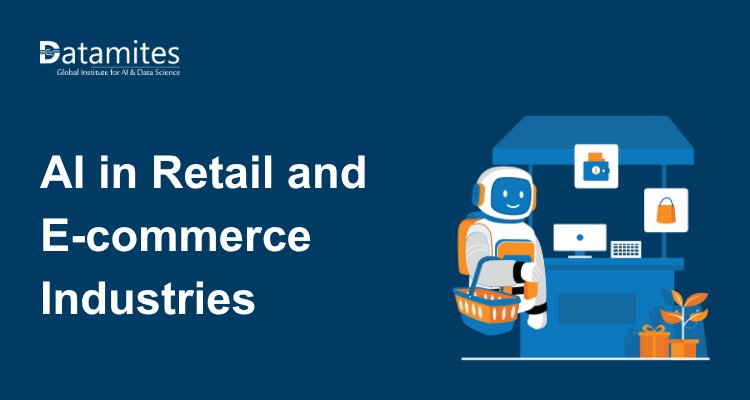
Artificial Intelligence is significantly transforming the retail and e-commerce industries by changing how businesses understand customers, manage operations, and deliver personalized shopping experiences. AI technologies are being used for product recommendations, intelligent search, demand forecasting, dynamic pricing, customer service automation, product classification, and customer journey analysis. With generative AI and AI-powered shopping assistants becoming increasingly relevant, retailers can now provide more responsive and context-aware interactions across digital channels. As e-commerce continues to evolve, AI is becoming an important tool for improving customer engagement, operational efficiency, and data-driven decision-making.
Global e-commerce continues to expand, while Gartner reports that AI is increasingly transforming customer service through conversational AI, AI assistants, and other automated customer interactions.
With the exception of specific suggestions, online retailers are using artificial intelligence in the e-commerce market to provide chatbot services, analyze consumer feedback, and provide personalized services to online shoppers.
Consequently, how is artificial intelligence (AI) in e-commerce reshaping customer experiences in 2026?
Today, artificial intelligence is transforming the e-commerce industry at a rapid pace. Artificial intelligence is being used alongside digital and mobile shopping platforms to improve product discovery, personalization, customer service, and purchasing experiences. While chatbots and AI shopping assistants are already supporting shoppers, newer AI solutions are helping online retailers improve customer engagement, streamline operations, and make more informed business decisions.
How AI in retail and AI in E-commerce
AI is transforming retail and e-commerce by enabling businesses to deliver personalized experiences, optimize operations, and make smarter decisions throughout the customer journey.
1. Product recommendations tailored to you
Advances in AI and machine learning have enabled deep personalization techniques to customize content by the user. You can zoom in on what your consumers actually want and deliver the message that will resonate the most by evaluating massive data from purchase histories and other customer interactions.
There are AI-powered recommender engines capable of making decisions based on hundreds of thousands of data points. From previous purchases and preferences, AI may detect trends in client behavior. This enables merchants to personalise consumer interactions and deliver more relevant experiences, resulting in higher conversion rates, average order values, and customer loyalty.
2. Optimization of the impressive array
AI models are perfect for assortment optimization since they consider a variety of factors including inventory capacity, previous sales, local patterns, and internet behaviour. Machine learning-based assortment optimization will assist increase revenue by determining the best products to provide to specific consumer groups.
3. Modification of the price
Dynamic pricing with AI is a strategy for altering the price of your product based on supply and demand. Today’s solutions can forecast when and what to discount with the correct data, dynamically determining the minimal discount required for the sale.
This optimization of pricing can benefit both the retailers and the consumers, the former in increasing the demand for specific products and maximizing profits wherever it is possible for them to do so. And the latter is getting hold of the products that they love at cheaper prices!
4. Customer service enhancement
Support personnel might be put under a lot of strain if they don’t respond to customers quickly enough. Support personnel can be put under a lot of pressure at any point during the day, from addressing pre-purchase queries to handling returns and exchanges. Fortunately, there are a number of AI-powered interactive solutions available on the market that can assist with scaling customer care.
Managing the volume of client contacts just through staffing isn’t a viable option. Artificial intelligence (AI) can be used to automate some portions of customer service while also identifying and fostering highly valuable interactions with human employees.
Refer to these articles:
- Demand for Data Science and AI Professionals in 2026?
- What is the Salary of an AI Expert in the Asia Pacific Region?
- How to Become an Artificial Intelligence Engineer in 2026?
5. Product lookup
It’s vital for successful conversion that potential buyers have access to a product search option on your e-commerce website. When product search results are irrelevant, customers exit a website and go elsewhere right away. You must first understand consumer behavior and search intent in order to deliver relevant results.
On the market, there are a variety of AI solutions meant to improve and elevate product search experiences on e-commerce websites. Artificial intelligence and machine learning can recognize the demands of website visitors and tailor the results to their preferences. Integrating an artificial intelligence (AI)-powered search engine into your e-commerce store can help you create more seamless shopping experiences.
6. Assist with sales flow
An intelligent sales flow assistant can predict consumer behavior by combining propensity modelling with conversational AI, chatbots, and other customer-facing channels. Based on these findings, the sales flow assistant can proactively provide necessary information to potential buyers in order to keep things moving forward and enhance conversions.
7. Product classification
Artificial intelligence (AI) can automate product categorization and batching based on attributes or natural language descriptions. With the help of natural language processing, an AI-powered product categorization system will improve not only productivity but also the accuracy of the task. New clients may find it easier to find products if product categorization is improved.
8. Identifying the customer’s trip path
Analyzing a customer’s path during the purchasing process is crucial since it can provide useful information to a retailer. By linking the visitor’s activities and qualities across channels and devices, AI makes it easier than ever to identify them. Device ID, call records, app activity, locations, check-ins, transactions, and reviews are just some of the data pieces that AI will collect. The same visitor will be traced many times.
9. Model of Probability
AI can forecast client behaviour by studying data from numerous sources. For example, an AI model may be used to predict whether someone will register, open an email, make a purchase, or churn. Artificial intelligence can use this data to create a propensity model that can identify customers who are more likely to respond to marketing initiatives like loyalty programs.
10. Forecasting demand
Demand forecasting can be used for inventory management as well as supply chain management in a retail setting. Companies can increase supply chain, manufacturing, and operations efficiency by forecasting demand. Demand forecasting is usually done using statistical models. AI-powered technologies will be able to evaluate greater pools of data as technology advances.
11. Bringing things to a close…
In the latest days, customer behaviour in the retail industry has shifted dramatically. Prospective purchasers are getting more aware, and they are making purchasing decisions based on considerations other than the product’s price. Breaking new territory in the retail sector requires unlocking customer insights using artificial intelligence and machine learning. The retail business is beginning to recognize AI’s promise!
According to Grand View Research, the global artificial intelligence in retail market was valued at USD 11.61 billion in 2024 and is projected to reach USD 40.74 billion by 2030, growing at a CAGR of 23.0%. This growth is driven by increasing internet and smart device usage, rising demand for in store surveillance and monitoring, and government initiatives supporting retail digitization. DataMites is paving the way to becoming India’s most prestigious training institute. Our popular courses such as data science, machine learning, python and tableau are accredited by IABAC and NASSCOM FutureSKills which holds global recognition. Acquire the best certification training in AI by enrolling in for DataMites AI Courses and level up your career in AI.
DataMites Training Institute provides a globally accredited Artificial Intelligence course designed for industry recognition. Covering machine learning, deep learning, and AI tools, the program includes hands-on projects and expert mentorship. With flexible learning options, including online and classroom training, DataMites equips both beginners and professionals with the skills needed for AI-driven careers.
Having successfully trained over 200,000+ learners, DataMites delivers structured career support and practical exposure across 50+ offline centers. Whether you choose online, offline, or blended learning modes, DataMites artificial intelligence courses provide hands-on experience in key metro hubs across India, including Bangalore, Chennai, Pune, Hyderabad, Coimbatore, Delhi, Ahmedabad, Mumbai, and Kolkata.
Check out the video – Artificial Intelligence Course Introduction.