From Graduate to Data Analyst: Niteesh’s Career Journey
Read Niteesh’s journey from graduation to becoming a Data Analyst, highlighting his learning experience, practical skills, career transition, and professional growth.
 Kriti Maurya
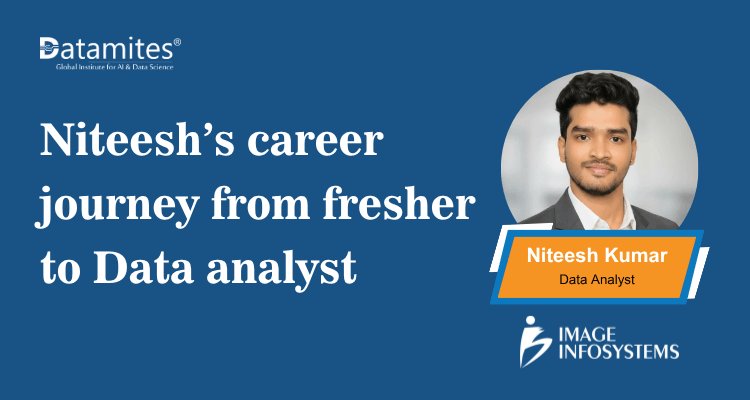
Starting a career after graduation can be challenging, especially when transitioning from academic learning to industry expectations. Niteesh, a B.Tech graduate, developed an interest in data analytics and strengthened his practical skills through the DataMites training program. His journey highlights how hands-on projects, technical learning, interview preparation, mock interviews, and continuous practice can help freshers build confidence and prepare for real-world opportunities in data analytics.
Niteesh’s Journey from a Graduate to a Data Analyst
Niteesh completed his B.Tech in 2025. After graduation, he explored different career options, including IT courses in Hyderabad and technology-focused career paths, and developed an interest in data analytics because he wanted to work with data and solve business problems. He also wanted to strengthen his practical knowledge beyond the theoretical concepts he had learned during his degree.
Through the DataMites training program, he gained practical exposure to Python, SQL, Power BI, Microsoft Excel, Advanced Excel, and basic machine learning. The combination of hands-on exercises, assignments, projects, assessments, mock interviews, resume-building sessions, and placement guidance helped him improve his technical skills and confidence during his career preparation.
1. Who is Niteesh and what did he study?
Niteesh completed his B.Tech in 2025. After graduation, he began exploring different career paths because he was initially unsure about which domain would provide the right opportunity for him.
While researching career options, he became interested in data analytics and began exploring a data analytics Career. The combination of working with data and solving business problems appealed to him, which encouraged him to pursue the field professionally.
2. What made Niteesh interested in data analytics?
After completing his B.Tech, Niteesh wanted to understand which career domain would be suitable for him. During his research, he learned more about data analytics and became interested in the way data can be used to understand and solve business problems.
This interest motivated him to explore the field further and develop the technical skills needed to pursue data analytics professionally.
3. Why did Niteesh decide to pursue training after graduation?
Although Niteesh had gained theoretical knowledge during his B.Tech, he wanted more practical exposure to industry requirements and workplace expectations.
Therefore, he decided to undergo training that could help him develop practical, industry-oriented data analytics skills through exercises, assignments, projects, and assessments.
Refer to these Articles:
- How Data Analytics is Shaping the Future of E-commerce
- How to Use Statistical Methods in Data Analytics
- Essential Tools for Data Analysts: Excel, SQL, Python, and More
4. What technologies and tools did Niteesh learn?
During his training, Niteesh developed knowledge of several important data-related technologies and tools, including:
- Python
- SQL
- Power BI
- Microsoft Excel
- Advanced Excel
- Basic machine learning
Learning these technologies helped Niteesh build essential Data Analyst skills, gain a broader understanding of data analytics, and prepare for different types of technical questions during interviews.
5. How did DataMites help Niteesh move from theory to practical learning?
Niteesh already had basic theoretical knowledge from his B.Tech. However, his training experience helped him apply those concepts practically.
Through exercises, assignments, assessments, and projects, he gained hands-on experience. This industry-oriented approach helped him understand how data analytics is applied in the industry.
6. How many projects did Niteesh complete during his preparation?
Niteesh completed around two to three POC projects during his learning journey. These projects gave him opportunities to practice the technical concepts he had learned.
The projects also became valuable during interviews because interviewers asked him about his work, how he developed the projects, and the technologies he used.
7. How did the projects help Niteesh during interviews?
The projects gave Niteesh practical experience that he could discuss during interviews. He could explain how he approached his projects, how he built them, and the technologies he used.
This practical experience helped him become more comfortable when answering questions about his technical work.
8. How much time did Niteesh spend on daily preparation?
Niteesh maintained a regular preparation routine and practiced for around two to three hours each day, focusing on consistent learning and skill development.
During this time, he regularly revised important topics, practiced technical concepts, and strengthened his overall knowledge through continuous hands-on preparation.
9. What challenges did Niteesh experience during his job search?
Niteesh’s job-search journey was lengthy and lasted around one and a half years. During this period, he attended several interviews and assessments.
The extended search was challenging, but the different interview experiences helped him understand his weaknesses and identify the areas where he needed to improve.
10. How did multiple interviews help Niteesh improve?
Every interview provided Niteesh with a different learning experience. Through repeated assessments and interviews, he understood which areas of his preparation needed more attention and improvement.
These experiences helped him identify his weaknesses, improve his communication skills, and develop a better approach toward answering questions. Each interview also helped him become more confident and better prepared.
11. What role did mock interviews play in his preparation?
Mock interviews gave Niteesh an opportunity to practice answering questions and experience a simulated interview environment before facing actual interviews.
During a mock interview, he received feedback on his technical answers, communication skills, and areas that needed improvement. This helped him understand how he could make his responses clearer and improve his overall interview performance.
12. How did Niteesh improve his communication skills?
Communication was an important area of development for Niteesh. He initially felt nervous while speaking and answering questions, particularly in interview situations.
Practice sessions and mock interviews gave him opportunities to speak more frequently and explain his thoughts. With repeated practice, he became more comfortable communicating his knowledge and experiences.
13. What questions did Niteesh face during the technical interview?
The technical interview began with his self-introduction before moving into questions about his internship and projects.
The interviewer asked him how he had built his projects and what technologies he had used. The discussion also included technical areas such as SQL, Power BI, and Python. His project experience helped him explain his practical knowledge during the interview.
Key Findings from Niteesh’s Career Journey
Niteesh’s journey, featured as a DataMites Success Story, highlights how structured learning, practical exposure, continuous practice, and interview preparation can help fresh graduates move toward their career goals. His experience also shows that the job-search process may take time, but every assessment and interview can provide valuable lessons.
- Practical learning strengthens theoretical knowledge: Niteesh used hands-on exercises, assignments, and projects to apply concepts beyond his B.Tech learning.
- Technical skills are essential: Python, SQL, Power BI, Excel, Advanced Excel, and basic machine learning formed important parts of his preparation.
- Projects provide interview-ready experience: His two to three POC projects helped him discuss practical work during technical interviews.
- Daily practice builds consistency: Spending around two to three hours practicing helped Niteesh continue developing his skills.
- Mock interviews reveal improvement areas: Feedback from mock interviews helped him work on technical answers and communication.
- Communication matters: Niteesh's practice sessions helped him become more comfortable speaking and explaining his knowledge.
- Interview experiences can become learning opportunities: Multiple interviews helped him identify weaknesses and improve his preparation.
- Placement support can guide job searches: Resume assistance, suitable job openings, interview tips, and guidance on company requirements supported his job-search process.
- Hands-on skills matter beyond theory: Practical experience helped Niteesh answer questions about projects, Python, SQL, Power BI, and other technical areas.
Niteesh’s journey from a B.Tech graduate who was uncertain about his career direction to securing a job at Image Info System demonstrates the importance of practical learning and persistence. His experience with Python, SQL, Power BI, Excel, projects, assessments, mock interviews, and communication practice helped him prepare for the recruitment process.
His story is an example for fresh graduates who may feel uncertain after completing their education. Building practical skills, working consistently, accepting feedback, and learning from every interview can help candidates become better prepared for professional opportunities in the data field.
Refer to these Articles:
- Gouthami’s Inspiring Journey from Quality Analyst to Business Analyst
- Yuvasri’s Journey from Fresher to a Successful Data Analyst
- From Beginner to Data Analyst: Nikita’s Career Transformation
DataMites Hyderabad focuses on industry-oriented certifications and practical learning to prepare professionals for data-driven careers. Its programs are aligned with globally recognized organizations such as IABAC and NASSCOM FutureSkills, offering structured learning pathways in Data Analytics in Ahmedabad, along with programs in Data Science, Machine Learning, Artificial Intelligence, Python, Tableau, and MLOps. Learners can also pursue advanced certifications such as Certified Data Scientist, AI for Managers, and Computer Vision Expert. DataMites has also received the Best Skill Development EdTech award from BW Businessworld for its contribution to skill development and career-focused learning.
The institute also provides data analyst courses in Mumbai, while maintaining offline training centers across major cities, including Pune, Hyderabad, Chennai, Delhi, Kolkata, Coimbatore, Ahmedabad, Chandigarh, and more. These programs emphasize classroom interaction, hands-on practical training, internship opportunities, and career support to help learners build industry-ready expertise.