What Skills Are Required for AI in HR Professionals?
AI in HR demands data literacy, analytical thinking, tech familiarity, and ethical judgment. Professionals must blend human insight with AI tools to improve hiring, engagement, and decision-making.
 Prerana B A
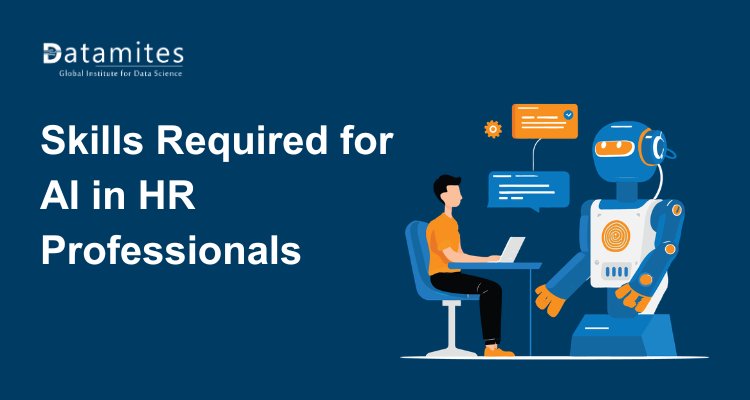
Artificial Intelligence is no longer a futuristic concept in Human Resources. It is rapidly reshaping how organizations attract, manage, and retain talent. From predictive hiring to employee sentiment analysis, AI is transforming HR into a more strategic and data driven function. As technology evolves, so must the professionals behind it. What does it take to flourish in this changing landscape? The answer goes beyond technical knowledge. Today’s HR professionals need a balance of analytical thinking, digital fluency, and human centered judgment to use AI effectively. In this blog, we explore the essential skills HR professionals must develop to stay relevant, competitive, and impactful in an AI powered workplace.
Why AI is Transforming HR
AI is changing HR for one simple reason: it handles scale and complexity better than humans alone.
Think about recruitment. A single job posting can attract thousands of applications. AI can scan resumes, identify patterns, and shortlist candidates in minutes. But that’s just the start.
Here’s where AI is making a real impact:
- Recruitment automation: Faster candidate screening and matching
- Predictive analytics: Identifying employee turnover risks
- Employee experience: Chatbots handling HR queries 24/7
- Performance insights: Data-driven evaluation instead of subjective reviews
What this really means is HR professionals are moving from administrative roles to strategic decision-makers. And that shift demands a new skill set.
Refer to these articles:
- How AI Is Changing the Future of Product Development Strategy
- Top AI Tools for Marketing
- Essential AI Skills for Healthcare Professionals
Top Skills Required for HR Professionals in the Age of AI
HR is evolving fast, and the role now sits right at the intersection of people, data, and technology. To stay relevant, professionals need a mix of human judgment and digital fluency. The most effective HR leaders today are not just people-focused, they are also comfortable working with data and AI tools.
1. Data Literacy
You don’t need to become a data scientist, but you do need to be comfortable working with data.
Data literacy means:
- Understanding basic metrics like retention rates, time-to-hire, and engagement scores
- Interpreting dashboards and reports
- Asking the right questions based on data insights
For example, if AI flags a high attrition risk in a department, you should be able to dig deeper and understand why.
Why it matters: AI tools generate insights, but humans still interpret and act on them.
2. AI Tools & Technology Understanding
AI in HR often shows up as tools and platforms. Knowing how they work—even at a basic level—is critical.
Common AI-powered HR tools include:
- Applicant tracking systems (ATS) with AI screening
- Chatbots for employee queries
- Predictive analytics platforms
- Learning management systems with personalization
You don’t need to build these tools, but you should know:
- What they do
- When to use them
- Their limitations
Real-world example: An HR manager using AI-driven recruitment software to filter candidates based on skills rather than just keywords.
3. Prompt Engineering
This is one of the newer but rapidly growing skills.
Prompt engineering is the ability to ask AI tools the right questions to get useful outputs. Whether you’re using generative AI for job descriptions or policy drafts, the quality of your input determines the output.
Good prompts are:
- Clear
- Specific
- Context-rich
For example, instead of asking “Write a job description,” you might say:
- “Write a job description for a mid-level HR analyst with experience in data analytics, employee engagement, and AI tools.”
- Why it matters: AI is only as smart as the instructions it receives.
4. Ethical AI Awareness
AI isn’t perfect. It can reflect biases present in data, and that can lead to unfair decisions—especially in hiring.
HR professionals must understand:
- Bias in algorithms
- Data privacy concerns
- Ethical use of employee data
- Compliance with regulations
Example: If an AI tool consistently filters out candidates from certain backgrounds, you need to identify and correct that bias.
Why it matters: HR is the guardian of fairness in organizations. That responsibility doesn’t go away with AI—it becomes even more important.
5. Analytical Thinking
AI provides insights, but it doesn’t replace human judgment.
Analytical thinking helps you:
- Connect data points
- Identify trends
- Make informed decisions
- Challenge AI outputs when needed
For instance, if AI suggests a candidate is a “low fit,” you should still evaluate whether that conclusion makes sense.
What this really means: Don’t blindly trust AI—use it as a tool, not a decision-maker.
6. Change Management
AI adoption often meets resistance. Employees may worry about job security or struggle to adapt to new systems.
HR professionals must lead this transition.
Key aspects of change management include:
- Communicating the benefits of AI
- Training employees on new tools
- Addressing concerns transparently
- Creating a culture of learning
Example: Introducing an AI chatbot for HR queries and ensuring employees understand it’s there to help, not replace human interaction.
7. Digital Mindset
This isn’t a technical skill—it’s a mindset shift.
A digital mindset means:
- Being open to new technologies
- Continuously learning
- Experimenting with tools
- Adapting quickly to change
HR professionals who flourish in the AI era are the ones who stay curious and proactive.
What this really means is that the future HR professional is both people-centric and data-driven, someone who can combine human insight with intelligent technology.
Real-World Use Cases of AI in HR
AI in HR isn’t just theory anymore. It’s already changing how companies hire, manage, and retain people. Let’s break down where it’s actually making a difference in the real world:
- Talent Acquisition: AI screens resumes, matches candidates to roles, and automates interview scheduling, improving speed and quality of hiring.
- Employee Engagement: Analyzes feedback and communication to detect sentiment and address issues like burnout early.
- Learning & Development: Recommends personalized training programs based on individual skills, roles, and career goals.
- Workforce Planning: Predicts hiring needs, skill gaps, and attrition trends for better decision-making.
- Performance Management: Enables continuous, data-driven evaluation instead of relying only on annual reviews.
- HR Automation: Chatbots and AI tools handle routine queries, payroll, and administrative tasks efficiently.
- Diversity & Inclusion: Reduces bias in hiring by focusing on skills and qualifications.
- Employee Retention: Identifies employees at risk of leaving and supports proactive retention strategies.
HR is shifting from a support function to a strategic role. AI handles the repetitive work, while HR professionals focus more on decision-making, culture, and long-term planning.
Refer to these articles:
- LLM Fine-Tuning vs Prompt Engineering: Which Is Better?
- Top AI Trends That Will Shape 2026
- PyTorch vs TensorFlow: Which is Better?
Benefits of AI Skills in HR Careers
As AI becomes a core part of modern workplaces, HR professionals who understand it gain a clear edge. Developing AI skills is not just about staying updated, it is about becoming more effective, strategic, and impactful in your role.
Here’s what you gain:
1. Career Growth Opportunities
HR professionals with AI skills are in high demand. Roles like HR analytics specialist or people data strategist are growing fast.
2. Better Decision-Making
Data-backed decisions are more accurate and impactful than intuition alone.
3. Increased Efficiency
Automation frees up time for strategic work like employee engagement and leadership development.
4. Competitive Advantage
Organizations prefer HR professionals who can bridge the gap between people and technology.
Incorporating AI skills into HR careers leads to smarter decisions, better outcomes, and stronger career growth. Those who embrace this shift position themselves as forward thinking professionals in an increasingly data driven world.
AI in HR isn’t about replacing human judgment, it’s about strengthening it with the right mix of skills. Professionals who combine HR expertise with data literacy, analytical thinking, and a working understanding of AI tools are the ones who will stand out. Add to that strong communication, ethical awareness, and adaptability, and you have a profile that’s built for the future of work. The real advantage comes from knowing how to turn insights into meaningful people strategies. As organizations continue to rely on data-driven decisions, HR professionals who invest in these skills won’t just keep up, they’ll lead the shift toward smarter, more human-centric workplaces.
DataMites Institute offers a well-rounded AI for HR course designed to help HR professionals make sharper, data-backed decisions using artificial intelligence. The course blends core AI concepts with people analytics and focuses on practical use cases across key HR functions like talent acquisition, employee engagement, workforce planning, and performance management. It’s part of a wider suite of AI programs tailored for product managers, healthcare professionals, risk specialists, marketers, business leaders, and other industry professionals.
Learners can pick a format that fits their schedule, whether that’s online learning, classroom sessions, or hands-on internships with real-time projects. The program also includes globally recognized certifications such as IABAC accreditation and the Certified AI Professional in People Analytics. With a network of over 30+ offline centers across major Indian cities like Chennai, Bangalore, Hyderabad, Pune, Mumbai, Ahmedabad, Coimbatore, and Delhi, DataMites offers both offline and virtual training designed with career growth in mind.