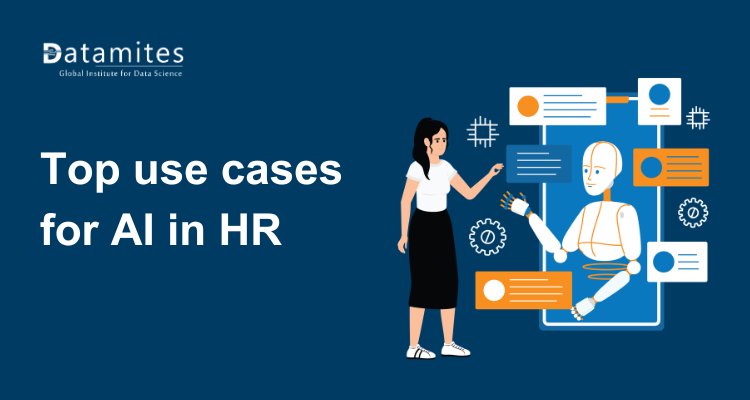
Top use cases for AI in HR
AI is transforming HR by automating hiring, improving employee engagement, streamlining payroll, and enabling smarter workforce decisions. From recruitment to retention, discover the top AI use cases helping HR teams save time and boost productivity.
 Prerana B A
AI in HR is no longer a futuristic concept. It is already reshaping how organizations hire, manage, and retain talent. From automating repetitive tasks to delivering deeper workforce insights, artificial intelligence in human resources is becoming a core part of modern HR strategy. According to recent SHRM research, 39% of organizations have already adopted AI in HR functions, while AI adoption in HR reached 43% in 2025, nearly double the previous year.
HR has always been about people, but the processes behind it have not always been efficient. Recruiters spend hours screening resumes, managers struggle to track employee engagement, and HR teams handle repetitive administrative work daily. This is where AI in HR creates real value by improving efficiency, supporting better decision-making, and allowing HR professionals to focus more on strategy and employee experience. In this article, we will explore the key use cases of AI in HR and why they matter for modern organizations.
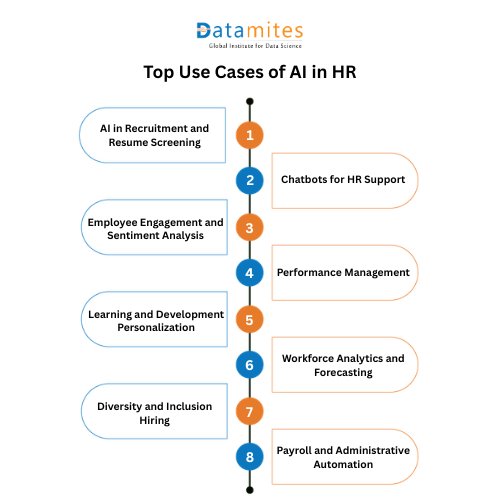
Top Use Cases of AI in HR You Should Know
AI in HR isn’t about replacing people, it’s about removing the repetitive drag so humans can focus on judgment, relationships, and strategy. Here’s where it’s actually making a difference right now:
AI in Recruitment and Resume Screening
Recruitment involves sourcing, evaluating, and selecting candidates, often at high volume. AI in HR enhances this process by quickly analyzing resumes and identifying top matches, reducing manual effort and improving hiring efficiency.
How AI improves recruitment and resume screening
AI recruitment tools scan resumes, match candidate profiles to job descriptions, and rank applicants based on relevance. Some tools even analyze language patterns to predict candidate success.
Benefits and impact
- Reduces time-to-hire significantly
- Eliminates manual resume screening
- Improves candidate matching accuracy
For example, instead of reviewing 500 resumes manually, AI can narrow it down to the top 20 in minutes. That frees recruiters to focus on interviews and relationship-building where human judgment matters most.
Chatbots for HR Support
HR teams handle frequent employee queries on policies, payroll, and benefits. AI chatbots act as virtual assistants, delivering instant responses and support, making HR services faster and more accessible while reducing repetitive workload.
How AI powers HR chatbots and support
These bots answer common questions about policies, leave balances, payroll, and benefits. They can also guide candidates through application processes.
Benefits and impact
- 24/7 employee support
- Reduced HR workload
- Faster response times
Think of it as a help desk that never sleeps. Employees get instant answers, and HR teams spend less time responding to repetitive queries.
Employee Engagement and Sentiment Analysis
Employee engagement reflects how motivated and connected employees feel. Using artificial intelligence in human resources, organizations can continuously analyze feedback and communication data to understand sentiment and respond proactively.
How AI tracks employee engagement and sentiment
AI for employee engagement analyzes feedback from surveys, emails, and internal platforms to detect patterns in employee mood and satisfaction.
Benefits and impact
- Identifies disengagement early
- Provides real-time insights
- Helps improve retention
Instead of waiting for annual surveys, HR leaders can track engagement continuously and intervene before issues escalate.
Performance Management
Performance management tracks and evaluates employee contributions over time. With HR analytics AI, organizations move from infrequent reviews to continuous, data-driven assessments that improve fairness and alignment with goals.
How AI enhances performance management
AI systems track performance metrics, analyze productivity trends, and provide data-backed evaluations.
Benefits and impact
- More objective performance reviews
- Continuous feedback loops
- Better alignment with business goals
Managers can rely on real-time insights instead of relying solely on memory or bias during annual reviews.
Learning and Development Personalization
Learning and development helps employees build skills and grow. AI enables personalized training by analyzing individual needs, ensuring employees receive relevant content aligned with their roles and long-term career paths.
How AI personalizes learning and development
AI recommends training programs based on employee roles, skills gaps, and career goals.
Benefits and impact
- Personalized learning paths
- Faster skill development
- Increased employee satisfaction
This is where the future of HR technology gets interesting, learning becomes dynamic, adaptive, and aligned with both employee ambitions and organizational needs.
Refer to these articles:
- Roadmap to Become an AI Product Manager
- AI in Healthcare: Key Applications and Real-World Use Cases
- Applications of AI in Marketing and Real Use Cases
Workforce Analytics and Forecasting
Workforce planning focuses on aligning talent with future business needs. AI uses historical and real-time data to predict hiring demand, turnover trends, and skill gaps, enabling more proactive and strategic decision-making.
How AI supports workforce analytics and forecasting
HR analytics AI analyzes historical data to forecast hiring needs, turnover rates, and workforce trends.
Benefits and impact
- Data-driven decision-making
- Better resource allocation
- Improved long-term planning
For example, AI can predict which departments are at risk of high attrition, allowing proactive hiring or retention strategies.
Diversity and Inclusion Hiring
Diversity hiring aims to create a more inclusive workforce. AI supports this by focusing on skills and qualifications while reducing bias in screening, helping organizations build fairer and more balanced hiring processes.
How AI enables fair and inclusive hiring
AI tools anonymize resumes and focus on skills and experience rather than demographic factors.
Benefits and impact
- More diverse candidate pools
- Reduced unconscious bias
- Fairer hiring processes
This use of AI in talent acquisition supports organizations in building more inclusive workplaces—something that’s increasingly critical for both ethics and performance.
Payroll and Administrative Automation
HR administration includes payroll, attendance, and compliance tasks. AI automates these processes, reducing errors and manual effort while ensuring consistency, accuracy, and efficiency across routine HR operations.
How AI automates payroll and HR operations
HR automation tools handle payroll processing, attendance tracking, compliance checks, and documentation.
Benefits and impact
- Fewer errors in payroll
- Time savings for HR teams
- Improved compliance
What used to take hours can now be completed in minutes, with greater accuracy and consistency.
Benefits of AI in HR
AI in HR is changing how teams operate by reducing manual effort, improving accuracy, and enabling more strategic decision-making. Instead of spending time on repetitive tasks, HR professionals can focus on people, culture, and long-term growth.
- Faster recruitment and reduced time-to-hire
- Improved candidate matching and hiring accuracy
- Data-driven decision-making
- Reduced bias in hiring processes
- Better employee support through AI chatbots
- Continuous performance tracking and feedback
- Personalized learning and development
- Smarter workforce planning and forecasting
- Automation of payroll and administrative tasks
- Increased efficiency and productivity in HR teams
At its core, AI allows HR teams to shift focus from administrative work to strategic initiatives that drive business growth.
Refer to these articles:
- What Are Graph Neural Networks? Simple Guide for Beginners
- Traditional AI vs Generative AI: Key Differences, Examples, and Use Cases
- What is Artificial Narrow Intelligence
AI in HR is no longer just a trend. It represents a fundamental shift in how organizations manage their most valuable asset, people. From recruitment and employee engagement to workforce analytics and automation, the use of artificial intelligence in human resources is transforming every stage of the employee lifecycle. Rather than replacing HR professionals, AI enhances their role by removing repetitive tasks, improving decision-making with data-driven insights, and creating more space for meaningful human interaction.
As more organizations adopt AI in human resources, those who use it strategically will gain a clear competitive advantage. The real opportunity is not just about working faster, but about building smarter systems and better workplaces. Now is the time to explore the use cases and benefits of AI in HR and understand how it fits into your strategy, because the future of work is already taking shape and AI is at the center of it.
DataMites Institute offers a comprehensive AI for HR course designed to help HR professionals make smarter, data-driven decisions using artificial intelligence. The course blends core AI concepts with people analytics and focuses on practical applications across key HR functions such as talent acquisition, employee engagement, workforce planning, and performance management. It’s part of a broader portfolio of AI programs tailored for professionals including product managers, healthcare specialists, risk analysts, marketers, and business leaders.
Learners can choose a format that fits their schedule, whether online, classroom-based, or through hands-on internships with real-time projects. The program also includes globally recognized certifications like IABAC accreditation and the Certified AI Professional in People Analytics. With over 30+ offline centers across major cities such as Chennai, Bangalore, Hyderabad, Pune, Mumbai, Ahmedabad, Coimbatore, and Delhi, DataMites offers flexible learning options that support both virtual and in-person training, with a clear focus on career growth.