How Data Science Is Transforming Digital Marketing in 2026
Data science is reshaping digital marketing in 2026 through predictive analytics, hyper-personalization, automation, and real-time insights, helping brands target audiences better and improve ROI.
 Prerana B A
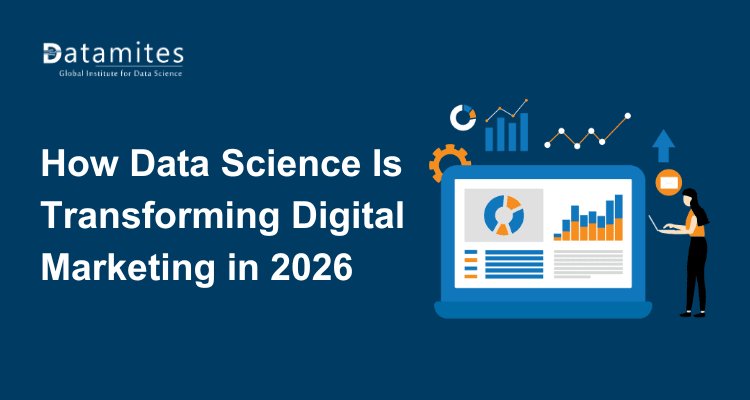
Data science in digital marketing has become a game-changer for businesses seeking to understand customers, optimise campaigns, and maximise marketing ROI. In 2026, marketers are leveraging vast amounts of customer data, advanced analytics, artificial intelligence (AI), and machine learning (ML) to make smarter decisions and deliver personalised experiences.
The shift toward data-driven marketing is driven by growing customer expectations, increasing competition, and the availability of real-time data. Organisations that use marketing analytics effectively can identify customer preferences, predict future behaviours, and create highly targeted campaigns that drive engagement and conversions.
Understanding the Role of Data Science in Modern Digital Marketing
Data science involves collecting, processing, and analyzing data to uncover valuable insights. In digital marketing, it helps businesses understand customer behavior, measure campaign performance, and make data-driven decisions. Unlike traditional marketing, which often relied on assumptions and broad targeting, modern marketing uses customer analytics to create personalized and effective strategies across websites, social media, email, and mobile platforms.
The growing importance of data-driven marketing is evident in the industry's rapid growth. According to IMARC Group, the global digital marketing market was valued at USD 456.7 billion in 2025 and is expected to reach USD 1,200.3 billion by 2034, growing at a CAGR of 10.99%. As organizations increasingly invest in AI, marketing analytics, and automation, data science has become a key driver of successful digital marketing strategies.
Key Ways Data Science Is Transforming Digital Marketing in 2026
Data science is helping businesses make smarter marketing decisions by analyzing customer data, predicting trends, and improving campaign performance. In 2026, it is transforming digital marketing through:
Predictive Analytics for Better Decision-Making
Data science enables marketers to analyze historical and real-time data to predict customer behavior, market trends, and campaign outcomes. This helps businesses make informed decisions, optimize budgets, and improve marketing effectiveness.
Hyper-Personalized Customer Experiences
By leveraging customer data, businesses can deliver personalized content, product recommendations, and offers tailored to individual preferences. This improves customer engagement, satisfaction, and conversion rates.
AI-Powered Customer Segmentation
Advanced machine learning algorithms help marketers group customers based on demographics, behavior, interests, and purchasing patterns. These insights enable more targeted and effective marketing campaigns.
Real-Time Marketing Analytics
Data science provides instant access to campaign performance metrics, customer interactions, and engagement trends. Real-time insights allow marketers to quickly adjust strategies and maximize results.
Marketing Automation and Optimization
AI-powered automation tools streamline repetitive tasks such as email marketing, ad targeting, lead nurturing, and campaign management. This improves efficiency while enhancing overall marketing performance.
Enhanced Customer Journey Mapping
Data science helps businesses track customer interactions across multiple touchpoints, providing a complete view of the customer journey. These insights help optimize experiences and increase conversion opportunities.
Improved ROI Measurement
Advanced analytics enables marketers to accurately measure campaign performance, identify high-performing channels, and allocate resources more effectively. This leads to better return on investment and smarter marketing decisions.
These capabilities enable businesses to enhance customer engagement, increase conversions, and maximize marketing ROI.
Refer to these articles:
- Your Roadmap to Becoming a Data Science Architect
- The Ultimate Guide to Data Science Models
- Top 10 Data Mining Tools Every Data Scientist Should Know
Applications of Data Science Across Digital Marketing Channels
Data science enhances digital marketing by helping businesses understand customer behavior, optimize campaigns, and improve targeting across multiple channels.
- Search Engine Optimization (SEO): Data science supports keyword research, search trend analysis, and content optimization. Marketers can identify user intent, improve rankings, and attract more organic traffic through data-driven SEO strategies.
- Content Marketing: Analytics helps businesses understand audience preferences, measure content performance, and create more engaging content. Data-driven insights improve content relevance and audience engagement.
- Social Media Marketing: Through sentiment analysis and social listening, marketers can track customer opinions, identify trends, and measure campaign effectiveness. Data science also helps brands find the right influencers for their target audience.
- Email Marketing: Data science enables personalized email campaigns through customer segmentation and predictive analytics. This improves open rates, engagement, and conversions.
- Paid Advertising: Machine learning and analytics optimize audience targeting, ad placements, and budget allocation. Data-driven advertising helps businesses improve campaign performance and maximize ROI.
Data science helps businesses optimize SEO, content marketing, social media, email campaigns, and paid advertising through data-driven insights. This leads to better targeting, improved campaign performance, and stronger business growth.
Top Data Science Technologies Powering Digital Marketing in 2026
Several technologies are driving innovation in marketing analytics and digital marketing.
- Artificial Intelligence (AI) supports automation, personalization, and intelligent decision-making.
- Machine Learning (ML) enables predictive analytics, customer segmentation, and performance forecasting.
- Generative AI assists with content creation, customer communication, and campaign development.
- Big Data Analytics helps businesses process and analyze large volumes of customer information.
- Natural Language Processing (NLP) powers sentiment analysis, chatbots, and customer feedback evaluation.
- Customer Data Platforms (CDPs) unify customer information from multiple channels to create a complete customer view and improve personalization efforts.
Data Science is revolutionizing digital marketing by helping businesses make data-driven decisions, personalize customer experiences, and improve marketing performance. As AI and analytics continue to evolve, their role in driving marketing success will only grow.
Real-World Examples of Data Science in Digital Marketing
Data science is transforming digital marketing by helping businesses analyze customer behavior, optimize campaigns, and improve customer experiences. Here are some real-world examples of how organizations use data science in digital marketing:
Personalized Product Recommendations
Companies like Amazon use data science and machine learning algorithms to analyze browsing history, purchase patterns, and customer preferences. This enables highly personalized product recommendations that increase sales and customer engagement.
Content Recommendations
Netflix leverages data science to recommend movies and TV shows based on viewing habits, ratings, and user behavior. Similar recommendation engines are widely used in content marketing to deliver personalized experiences.
Targeted Advertising
Google and Meta use advanced analytics to help advertisers target users based on demographics, interests, online behavior, and purchasing intent, improving ad performance and ROI.
Customer Segmentation
Retail brands use data science to segment customers into groups based on behavior, preferences, location, and spending patterns. This allows marketers to create highly targeted campaigns that resonate with specific audience segments.
Predictive Analytics for Customer Retention
Subscription-based businesses analyze customer engagement data to predict which users are likely to churn. Marketers can then launch personalized retention campaigns, special offers, or loyalty programs to keep customers engaged.
Dynamic Pricing Strategies
Companies in e-commerce and travel industries use data science to adjust prices in real time based on demand, competition, customer behavior, and market trends, maximizing revenue and conversion rates.
Social Media Sentiment Analysis
Brands analyze social media conversations, reviews, and comments using natural language processing (NLP) to understand customer sentiment. This helps marketers monitor brand reputation and respond quickly to customer concerns.
Email Marketing Optimization
Data science helps marketers determine the best time to send emails, personalize subject lines, and recommend relevant content. These insights improve open rates, click-through rates, and overall campaign effectiveness.
Marketing Attribution Modeling
Businesses use data science to identify which marketing channels contribute most to conversions. By analyzing customer journeys across multiple touchpoints, marketers can allocate budgets more effectively.
Chatbots and Customer Support Automation
AI-powered chatbots use data science to provide instant responses, answer customer queries, and offer personalized recommendations, enhancing customer experience while reducing support costs.
From personalized recommendations and predictive analytics to targeted advertising and sentiment analysis, data science is revolutionizing digital marketing. Organizations that leverage data-driven insights can make smarter decisions, improve customer engagement, and achieve better marketing outcomes in an increasingly competitive digital landscape.
Refer to these articles:
- What Is Regression Analysis in Data Science? A Beginner’s Guide
- Binomial Distribution: A Beginner’s Guide for Data Science
- Cross Entropy in Data Science: Concepts and Applications
Future Trends Shaping Data Science and Digital Marketing Beyond 2026
As technology advances, data science will continue to transform digital marketing by enabling smarter, faster, and more personalized customer experiences. Businesses that adopt emerging data-driven technologies will gain a significant competitive advantage.
Emerging Trends Shaping the Future of Digital Marketing:
- AI-Powered Personalization: Delivering highly customized content, recommendations, and marketing messages based on real-time customer behavior.
- Predictive and Prescriptive Analytics: Helping marketers anticipate customer needs and make data-backed decisions.
- Privacy-First Marketing: Increasing reliance on first-party data and ethical data practices as privacy regulations evolve.
- Generative AI: Automating content creation for blogs, emails, advertisements, and social media campaigns.
- Real-Time Marketing Intelligence: Using live customer data to optimize campaigns and engagement instantly.
- Voice and Conversational Marketing: Growing importance of voice search, AI assistants, and chatbots in customer interactions.
- Advanced Marketing Automation: AI-driven platforms managing audience targeting, campaign optimization, and budget allocation with minimal manual effort.
Data science is revolutionizing digital marketing by enabling businesses to make data-driven decisions, deliver personalized customer experiences, and optimize marketing performance. As AI, predictive analytics, and automation continue to advance, organizations that embrace data science will be better positioned to improve customer engagement, maximize ROI, and stay competitive in the evolving digital landscape.
As organizations increasingly rely on artificial intelligence, machine learning, and data-driven decision-making, the demand for skilled data science professionals continues to grow. This makes it an excellent time to pursue a career in data science and develop expertise in technologies that are transforming industries worldwide. Enrolling in a data science course in Hyderabad, Bangalore, Chennai, Pune, Coimbatore, Ahmedabad, or Mumbai can help learners gain practical knowledge in data analytics, AI tools, machine learning, and prompt engineering through hands-on projects and real-world case studies.
DataMites Institute has emerged as a recognized training provider known for its industry-focused curriculum and experiential learning approach. Datamites Certified Data Scientist courses, accredited by IABAC and NASSCOM FutureSkills, are designed to equip learners with job-ready skills in machine learning, analytics, AI workflows, and other essential data science concepts. The programs emphasize practical learning through live projects, internships, and exposure to emerging AI technologies.
For learners seeking classroom-based training, DataMites offers data science institute in Chennai, Mumbai, Bangalore, Pune, Hyderabad, Ahmedabad, and Coimbatore. In addition, the institute provides flexible online training programs, enabling aspiring data scientists from across the world to access industry-relevant education and build the practical skills needed to thrive in today's evolving data and AI landscape.