Key AI Trends Every HR Professional Should Know
AI is reshaping HR through smarter recruitment, predictive workforce analytics, personalized employee experiences, automation, and ethical AI practices. Understanding these trends helps HR professionals improve efficiency, decision-making, and talent management.
 Prerana B A
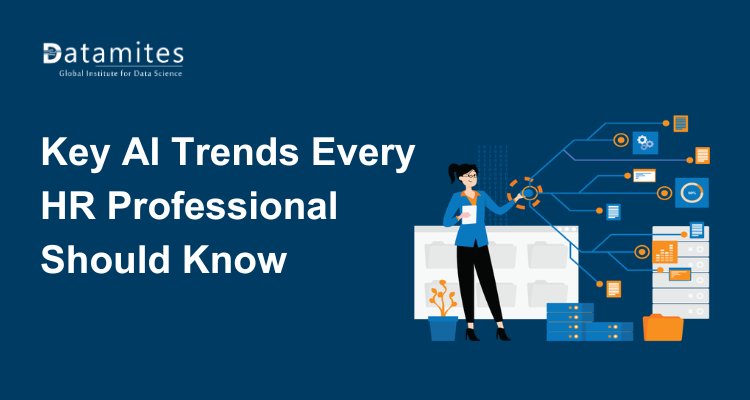
Artificial intelligence is rapidly transforming the HR landscape, helping organizations attract top talent, enhance employee experiences, and improve workforce management. From automating routine tasks to providing predictive insights, Artificial Intelligence in HR is enabling HR teams to work more efficiently and make smarter, data-driven decisions.
As AI adoption continues to grow in 2026, HR professionals must stay updated on the latest AI Trends in HR to remain competitive. Technologies such as AI-powered recruitment, workforce analytics, employee engagement tools, and personalized learning platforms are reshaping how organizations hire, develop, and retain talent. Understanding these trends can help HR leaders build agile, future-ready workforces and drive long-term business success.
The Evolution of Artificial Intelligence in HR
The role of Artificial Intelligence in HR has evolved from automating routine administrative tasks to becoming a strategic driver of workforce management and talent development. Traditional HR processes relied heavily on manual efforts for recruitment, employee management, and performance evaluations. Today, AI in Human Resources helps organizations streamline hiring, enhance employee experiences, leverage workforce analytics, and make data-driven decisions that improve overall business performance.
The adoption of AI in HR continues to grow rapidly. According to the 2026 SHRM State of AI in HR Report, 39% of organizations already use AI in HR, while many others are planning implementation. AI is most commonly used in recruitment, candidate screening, and talent acquisition, helping HR teams improve efficiency and hiring outcomes. As technologies such as Generative AI in HR, predictive analytics, and intelligent talent management continue to advance, AI is transforming HR into a more agile, strategic, and future-focused function.
Refer to these articles:
- Best AI Platform for Finance Data Analysis in 2026
- The Role of AI in Personalized Medicine
- How an AI Marketing Course helps you stay competitive
Why Organizations Are Investing in AI-Powered HR Solutions
Organizations worldwide are investing heavily in HR Automation and AI-driven technologies because they offer measurable business benefits, including:
- Faster recruitment processes
- Improved hiring quality
- Enhanced employee experiences
- Reduced operational costs
- Better workforce planning
- Increased employee retention
- Data-driven decision-making
As competition for skilled talent intensifies, businesses are recognizing that AI can significantly improve HR effectiveness while supporting long-term organizational objectives.
Current Market Growth and Adoption Trends
Industry analysts predict continued growth in AI adoption across HR functions throughout 2026 and beyond. Organizations across industries are implementing AI-powered recruitment systems, workforce analytics tools, and employee engagement platforms to remain competitive.
The rise of Generative AI in HR is further accelerating adoption by enabling HR teams to automate content creation, personalize employee communications, and streamline administrative workflows.
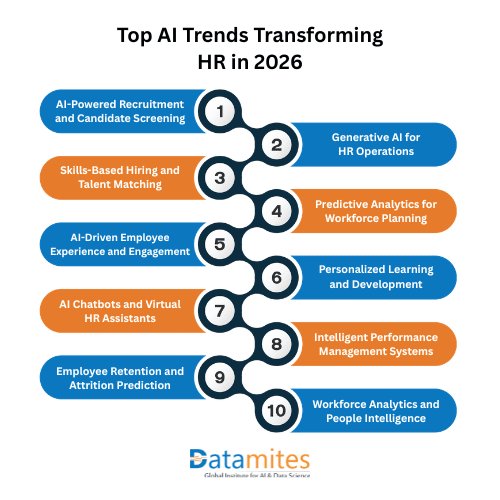
Top AI Trends Transforming HR in 2026
Artificial intelligence is reshaping how HR teams recruit, engage, develop, and retain talent. As organizations continue investing in digital transformation, AI-powered tools are becoming essential for improving efficiency, enhancing employee experiences, and enabling data-driven decision-making. The following AI trends are expected to have the greatest impact on human resources in 2026.
AI-Powered Recruitment and Candidate Screening
One of the most significant HR Technology Trends is the widespread use of AI for Recruitment.
AI recruitment tools can:
- Screen thousands of resumes in minutes
- Identify qualified candidates faster
- Match applicants with job requirements
- Reduce time-to-hire
- Improve recruiter productivity
Modern AI-Powered Hiring platforms use machine learning algorithms to evaluate candidate qualifications, experience, skills, and potential fit based on predefined criteria.
Real-World Application
Large enterprises are increasingly using AI resume screening systems to shortlist candidates, allowing recruiters to focus on interviewing and relationship-building rather than manual resume reviews.
Generative AI for HR Operations
The rise of Generative AI in HR is transforming administrative and communication-intensive tasks.
HR teams now use generative AI to:
- Create job descriptions
- Draft employee communications
- Generate onboarding materials
- Develop HR policies
- Produce training content
- Summarize employee feedback
By automating content creation, HR professionals can improve efficiency while maintaining consistency across organizational communications.
Benefits
- Reduced administrative workload
- Faster document creation
- Improved communication quality
- Enhanced employee support
Skills-Based Hiring and Talent Matching
Organizations are shifting away from traditional degree-based hiring toward Skills-Based Hiring.
AI-powered talent matching platforms analyze candidate skills, certifications, project experience, and competencies to identify suitable candidates regardless of educational background.
This approach helps organizations:
- Expand talent pools
- Improve workforce diversity
- Fill skills gaps more effectively
- Support internal mobility initiatives
As labor markets evolve rapidly, skills-based hiring is becoming a key component of modern AI Talent Acquisition strategies.
Predictive Analytics for Workforce Planning
Predictive analytics is revolutionizing workforce planning by helping organizations anticipate future talent needs.
Using historical workforce data, AI systems can forecast:
- Hiring requirements
- Workforce shortages
- Skills gaps
- Employee turnover risks
- Succession planning needs
Example
Organizations can use predictive hiring models to identify future staffing demands months in advance, enabling proactive recruitment strategies rather than reactive hiring.
This trend is strengthening AI Workforce Management and helping businesses align workforce planning with strategic goals.
AI-Driven Employee Experience and Engagement
Employee expectations continue to evolve, making personalized experiences a top HR priority.
AI-powered employee engagement platforms analyze workforce sentiment through surveys, feedback systems, and communication channels to identify areas for improvement.
These tools help organizations:
- Measure employee satisfaction
- Monitor workplace sentiment
- Identify engagement risks
- Deliver personalized recommendations
Improving the Employee Experience has become a critical focus area for organizations seeking to attract and retain top talent.
Personalized Learning and Development
Traditional training programs often follow a one-size-fits-all approach. AI is enabling highly personalized learning experiences.
Learning and Development AI platforms can:
- Assess employee skill levels
- Recommend customized learning paths
- Identify knowledge gaps
- Track progress in real time
- Practical Application
An employee seeking leadership development may receive personalized training recommendations based on their role, performance, career goals, and competency assessments.
This trend is accelerating the adoption of AI Employee Training programs across organizations.
AI Chatbots and Virtual HR Assistants
AI-powered chatbots are becoming a standard component of digital HR ecosystems.
These virtual assistants can provide instant support for:
- Leave policies
- Benefits inquiries
- Payroll questions
- Onboarding support
- Internal HR requests
By offering 24/7 assistance, AI chatbots improve employee satisfaction while reducing administrative workloads for HR teams.
Intelligent Performance Management Systems
Performance management is becoming increasingly data-driven.
AI-enabled systems can analyze performance metrics, employee goals, manager feedback, and development progress to provide continuous insights.
Benefits include:
- More objective evaluations
- Reduced performance bias
- Real-time feedback
- Improved career development planning
These systems support HR Innovation by moving beyond annual reviews toward continuous performance management models.
AI-Powered Employee Retention and Attrition Prediction
Employee turnover remains a major challenge for organizations worldwide.
AI-powered retention tools can identify employees who may be at risk of leaving by analyzing factors such as:
- Engagement levels
- Career progression
- Compensation trends
- Work patterns
- Internal mobility opportunities
Predictive models enable HR teams to take proactive measures before valuable employees decide to leave.
Business Impact
Reducing turnover improves workforce stability, lowers hiring costs, and preserves organizational knowledge.
Workforce Analytics and People Intelligence
The growing importance of People Analytics is transforming HR decision-making.
AI-powered workforce analytics platforms help organizations understand:
- Employee productivity
- Hiring effectiveness
- Diversity metrics
- Skills distribution
- Workforce trends
Through advanced analytics, HR leaders can make informed decisions supported by data rather than assumptions.
As organizations continue their HR Digital Transformation journeys, workforce analytics is becoming a cornerstone of strategic HR management.
Future of AI in Human Resources
The future of AI in Human Resources will be driven by intelligent automation, predictive analytics, and personalized employee experiences. Technologies such as Generative AI, AI-powered talent management systems, workforce analytics, and virtual HR assistants will help organizations make faster, data-driven decisions across recruitment, employee development, performance management, and workforce planning. As AI capabilities continue to evolve, HR leaders will increasingly focus on strategic initiatives rather than administrative tasks.
Industry research highlights the growing impact of AI on HR. According to SHRM's 2026 State of AI in HR Report, 46% of organizations are expected to use AI in HR in 2026, while 87% of CHROs anticipate greater AI adoption in HR processes. Gartner also predicts that by 2030, 50% of current HR activities will be automated or performed by AI, fundamentally transforming HR operations and workflows. Organizations that successfully combine AI innovation with human judgment, ethics, and empathy will be best positioned to build agile, future-ready workforces and maintain a competitive advantage
Refer to these articles:
- Supervised vs. Unsupervised Learning: What’s the Difference?
- Generative AI and Predictive AI: Key Differences Explained
- Guide to Artificial Intelligence Career
The rapid advancement of Artificial Intelligence in HR is transforming every aspect of human resources, from recruitment and workforce planning to employee engagement and learning and development. Key AI Trends in HR for 2026, including AI-powered hiring, generative AI, skills-based hiring, predictive analytics, and workforce intelligence platforms, are helping organizations improve efficiency, enhance employee experiences, and make more informed decisions.
While AI offers significant opportunities, its success depends on balancing technology with human judgment, empathy, and ethical practices. HR professionals who embrace AI-driven innovation while maintaining a people-centric approach will be better positioned to lead organizational transformation, build future-ready workforces, and remain competitive in the evolving world of work.
For professionals seeking to develop expertise in AI-driven human resource management, DataMites Institute offers a specialized AI in HR course designed to integrate artificial intelligence into modern HR functions. The program covers essential topics such as people analytics, talent acquisition, employee engagement, workforce planning, and performance management, enabling HR professionals to make informed, data-driven decisions using advanced AI technologies.
The AI for HR course provides flexible learning formats, including online training, classroom sessions, and internship opportunities with hands-on industry projects. Participants also earn globally recognized certifications, including IABAC accreditation and the Certified AI Professional in People Analytics credential. With more than 30 training centers located across major Indian cities such as Bangalore, Chennai, Hyderabad, Pune, Mumbai, Ahmedabad, Coimbatore, and Delhi, DataMites offers convenient access to quality training for professionals looking to advance their careers in AI-powered HR and workforce analytics.