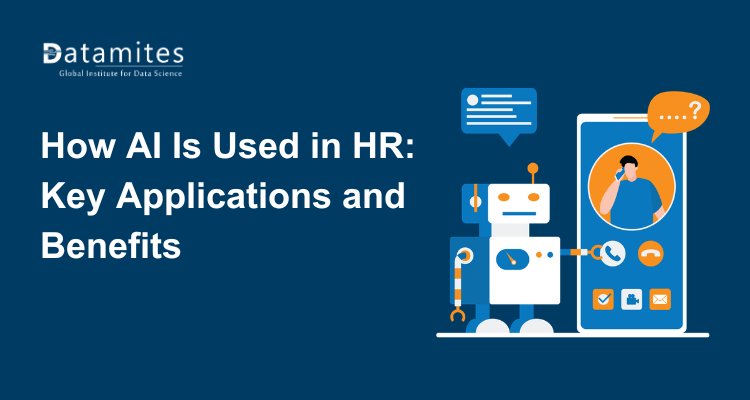
How AI Is Used in HR: Key Applications and Benefits
Artificial Intelligence is transforming HR by automating recruitment, employee onboarding, performance management, and workforce analytics. AI helps HR teams save time, improve decision-making, enhance employee experiences, and drive organizational efficiency.
 Prerana B A
AI in HR is no longer a future concept, it’s already transforming how companies hire, manage, and retain employees. More than 70% of organizations are using or exploring AI in HR, while AI recruitment tools can reduce hiring time by up to 40%. From resume screening to employee engagement analysis, AI applications in HR are making HR faster, smarter, and more data-driven.
But AI in HR is not just about automation. It helps HR teams focus more on strategy, employee experience, and better decision-making. In this article, we’ll explore the key applications, benefits, and growing impact of artificial intelligence in human resources.
How AI in HR is Transforming the Future of Human Resources
AI is transforming HR by automating routine tasks and improving hiring efficiency. Studies show that AI tools can reduce hiring time by 30–50% through automated resume screening and smarter candidate matching. Many organizations also report lower administrative workload with the help of HR automation tools and AI chatbots that handle everyday employee queries. This allows HR teams to focus more on strategy, employee experience, and decision-making.
AI is also improving workforce insights through HR analytics and machine learning. Companies using AI in HR can better predict employee turnover, track engagement trends, and make more data-driven decisions. Overall, AI is making HR faster, smarter, and more strategic.
Key AI Applications in HR
There are several practical ways companies are using AI today, and these applications of AI in HR are creating new HR career opportunities in AI.
Recruitment and Talent Acquisition
AI improves recruitment by automating resume screening, matching candidates to job roles, and conducting initial assessments using chatbots or video tools. It reduces hiring time, lowers costs, and supports more accurate, data-driven selection of suitable candidates.
Employee Onboarding
AI streamlines onboarding by automating documentation, answering new employee queries through chatbots, and offering personalized training guidance. It helps employees quickly understand company policies and roles, ensuring a smooth and efficient transition into the organization.
Learning and Development (L&D)
AI enhances learning by identifying skill gaps and recommending personalized training programs based on employee performance and career goals. Adaptive learning platforms adjust content difficulty, helping employees continuously improve skills and stay relevant in their roles.
Performance Management
AI supports performance management by continuously tracking employee productivity, goals, and feedback. It enables real-time insights and more objective evaluations, helping managers identify strengths, address weaknesses, and make fair, data-driven performance decisions.
Employee Engagement and Experience
AI improves employee engagement by analyzing feedback, surveys, and communication patterns to understand satisfaction levels. It also uses chatbots to provide quick HR support, enhancing employee experience and helping organizations maintain a positive work environment.
Workforce Planning and Analytics
AI helps HR teams forecast workforce needs by analyzing employee data, turnover trends, and business requirements. It supports strategic planning by identifying skill gaps, optimizing staffing levels, and improving long-term workforce decision-making.
Payroll and HR Administration
AI automates administrative HR tasks such as payroll processing, attendance tracking, and leave management. It reduces manual errors, ensures timely processing, improves compliance, and allows HR professionals to focus on more strategic responsibilities.
HR Chatbots and Virtual Assistants
AI-powered chatbots assist employees by answering HR-related queries, managing leave requests, and providing policy information. Available 24/7, they improve communication efficiency and reduce the workload on HR departments by handling repetitive tasks.
Diversity, Equity, and Inclusion (DEI)
AI supports DEI initiatives by reducing bias in recruitment and analyzing job descriptions for inclusive language. It also tracks diversity metrics, helping organizations build fair hiring practices and create a more inclusive workplace environment.
Employee Retention and Predictive Analytics
AI predicts employee turnover by analyzing engagement, performance, and behavioral data. It helps HR teams identify at-risk employees early and take proactive measures like training, career development, or incentives to improve retention rates.
These advancements are part of broader HR technology trends that are redefining how organizations manage talent.
Refer to these articles:
- Why Choose a Career in AI for Healthcare?
- Top AI Career Opportunities in Finance for Future Professionals
- AI Trends That Will Transform Marketing and Advertising
Skills Required for a Career in AI for HR
AI in HR is reshaping how HR teams work by combining technology with people management, creating smarter and more efficient processes.
- Strong HR fundamentals are essential, including recruitment, employee relations, performance management, and workforce planning.
- Understanding of AI in HR helps professionals work effectively with automated systems and smart HR platforms.
- Data analytics skills are important for interpreting employee data, performance trends, and HR analytics reports.
- Familiarity with AI HR tools such as applicant tracking systems, chatbots, and recruitment platforms improves job efficiency.
- Knowledge of machine learning in HR helps in understanding predictive models used for hiring and employee retention.
- Communication skills are crucial for explaining data insights and collaborating with teams across departments.
- Problem-solving ability supports better decision-making in complex HR situations using AI-driven insights.
- Adaptability to HR technology trends ensures professionals stay updated with evolving digital HR transformation tools and systems.
- Basic technical literacy helps in working with modern HR software and automation platforms.
- Emotional intelligence remains key for managing people effectively alongside AI-powered HR processes.
Building skills in AI in HR prepares you for future-ready HR roles with strong growth and career opportunities.
Benefits of Choosing AI in HR as a Career
There are several reasons why pursuing a career in AI in HR can be a smart move, as the benefits of AI in HR include improved efficiency, better decision-making, reduced manual workload, and stronger data-driven insights for talent management.
1. Faster Recruitment
AI can quickly screen thousands of resumes and identify suitable candidates based on skills, experience, and job requirements.
Benefits include:
- Reduced hiring time
- Faster shortlisting
- Improved recruiter productivity
- Better candidate matching
Many HR platforms such as Workday and Darwinbox use AI-driven recruitment features.
2. Reduced Human Bias
AI tools can help reduce unconscious bias in hiring by focusing more on:
- Skills
- Qualifications
- Experience
- Performance indicators
This can improve workplace diversity and fairness when designed responsibly.
3. Improved Employee Experience
AI-powered chatbots and virtual HR assistants can:
- Answer employee questions instantly
- Help with leave requests
- Support onboarding
- Provide policy information 24/7
This improves employee satisfaction and saves HR teams time.
4. Better Decision-Making Through Analytics
AI analyzes workforce data to provide insights on:
- Employee performance
- Attrition trends
- Productivity patterns
- Engagement levels
HR leaders can make more strategic and data-driven decisions.
5. Predictive Analytics for Retention
AI can predict which employees may leave based on behavioral and performance data.
This helps organizations:
- Reduce turnover
- Improve retention strategies
- Identify employee concerns early
6. Personalized Learning and Development
AI recommends customized training programs based on:
- Employee skills
- Career goals
- Performance gaps
- Learning behavior
This supports continuous employee growth.
7. Automated Administrative Tasks
AI reduces repetitive HR work such as:
- Payroll processing
- Attendance tracking
- Interview scheduling
- Document verification
- Benefits administration
This allows HR professionals to focus on strategic responsibilities.
8. Enhanced Performance Management
AI tools help monitor employee performance using real-time data and feedback.
Benefits include:
- Continuous evaluation
- Objective performance reviews
- Goal tracking
- Improved productivity measurement
9. Cost Savings
Automation reduces manual work and hiring costs by:
- Shortening recruitment cycles
- Minimizing administrative errors
- Increasing operational efficiency
Organizations can optimize HR budgets more effectively.
10. Improved Workforce Planning
AI helps companies forecast future workforce needs by analyzing:
- Business growth
- Hiring trends
- Skill gaps
- Employee turnover patterns
This improves long-term planning and resource allocation.
11. 24/7 HR Support
AI chatbots can assist employees anytime without needing HR staff availability.
Common support areas:
- Leave balance
- Company policies
- Payroll queries
- Onboarding guidance
12. Better Candidate Engagement
AI recruitment systems can:
- Send automated updates
- Schedule interviews
- Respond to candidate queries
Maintain communication throughout hiring
This creates a smoother hiring experience.
AI in HR improves efficiency, accuracy, and employee experience while helping organizations make smarter workforce decisions. It automates routine tasks and enables HR professionals to focus more on strategic and people-centered activities.
Refer to these articles:
- What Are Graph Neural Networks?
- Traditional AI vs Generative AI
- What is Artificial Narrow Intelligence?
AI is reshaping Human Resources in a way that’s hard to ignore. From AI applications in HR like recruitment, onboarding, and employee engagement to smarter decision-making through analytics, organizations are becoming more efficient and people-focused. The real value of applications of AI in HR lies in how it reduces repetitive work while improving accuracy in hiring, retention, and workforce planning. At the same time, the benefits of AI in HR go beyond speed, they include better insights, reduced bias, and a more personalized employee experience.
What this really means is HR is no longer just an administrative function, it’s becoming a strategic, data-driven role powered by technology. As AI continues to evolve, companies that adapt early will gain a clear advantage in talent management and workforce planning. The future of HR is intelligent, predictive, and deeply human at the same time.
For professionals looking to build expertise in AI in HR, DataMites Institute offers a specialized AI in HR course focused on applying artificial intelligence to modern human resource practices. The course covers key areas such as people analytics, talent acquisition, employee engagement, workforce planning, and performance management, helping HR professionals make smarter, data-driven decisions using advanced AI tools and technologies.
The program includes flexible learning options like online classes, classroom training, and practical internships with real-world projects. Learners also receive industry-recognized certifications, including IABAC accreditation and the Certified AI Professional in People Analytics credential. With 30+ training centers across major Indian cities including Bangalore, Chennai, Hyderabad, Pune, Mumbai, Ahmedabad, Coimbatore, and Delhi, DataMites provides accessible learning opportunities for professionals aiming to grow their careers in AI-powered HR and workforce analytics.