How HR Professionals Can Use Generative AI at Work
Learn how HR professionals can apply generative AI at work to streamline recruitment, automate routine tasks, improve employee engagement, support performance management, and make smarter workforce decisions responsibly.
 Prerana B A
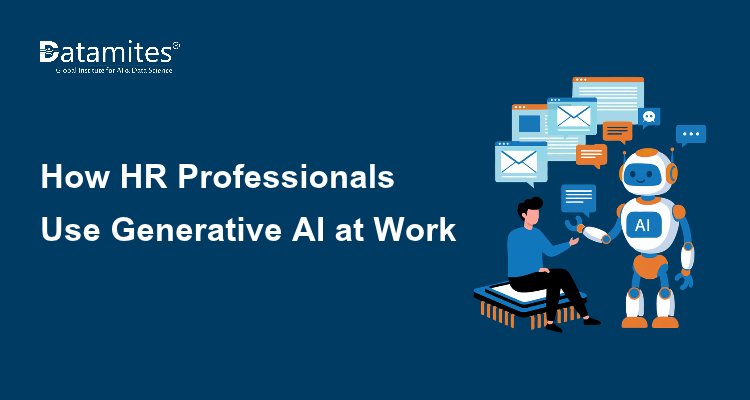
Generative AI in HR is changing how human resource teams handle everyday tasks, from recruitment and employee communication to training and workforce reporting. It uses artificial intelligence to create text, summarize information, generate ideas, and assist with routine work based on user instructions.
For HR professionals, these capabilities can simplify repetitive tasks and free up time for employee engagement, talent development, and strategic planning. According to SHRM's State of AI in HR 2026 report, based on 1,908 HR professionals, 39% of organizations had implemented AI in their HR functions. The report also found that recruiting was the leading HR application.
Understanding how to use AI effectively can help HR teams improve their workflows without losing the human judgment essential to people management.
What Is Generative AI in HR?
Generative AI in HR refers to using AI systems to create or refine job descriptions, draft employee emails, prepare training materials, summarize feedback, and support other human resource activities.
Traditional HR automation typically follows predefined rules, such as sending interview reminders or processing leave requests. Generative AI can handle more flexible tasks, such as drafting a personalized onboarding email or converting a lengthy policy into a simple explanation.
However, AI-generated content can contain mistakes or miss important context. HR professionals must review its output and remain responsible for decisions involving employees and candidates.
Practical Ways HR Professionals Can Use Generative AI
Generative AI helps HR professionals manage daily tasks more efficiently. Here are some practical ways to use generative AI in HR.
1. Recruitment and Job Description Creation
Generative AI can help recruiters draft job descriptions, develop interview questions, and prepare candidate communication. For example, a recruiter can provide the required skills, responsibilities, and experience level to generate a structured job description for a data analyst.
AI can also suggest role-specific interview questions and draft interview invitations. Recruiters should check job requirements for accuracy, remove biased language, and assess candidates using consistent, job-related criteria rather than relying solely on AI recommendations.
2. Employee Communication and HR Documentation
HR teams regularly prepare onboarding emails, policy updates, employee announcements, and internal notices. AI tools can create initial drafts, simplify complex policy language, and adjust the tone for different audiences.
For instance, an HR manager can ask AI to turn a lengthy leave policy into a short employee-friendly explanation. The HR team should verify the details against the official policy before sharing the final version.
3. Learning and Development
Generative AI can support employee training by creating learning outlines, practice exercises, quizzes, and role-specific scenarios. An HR learning specialist could use it to develop a communication-skills workshop for new managers.
AI can also help adapt learning materials for different experience levels. Trainers should check the accuracy of the content and ensure that it reflects organizational policies and employees' actual learning needs.
4. Employee Engagement and HR Support
AI can help HR teams draft employee surveys, organize feedback themes, and prepare responses to common questions about onboarding, benefits, and workplace policies.
For example, HR professionals can use an approved AI tool to group anonymized survey comments into themes such as communication, workload, and career development. This makes feedback easier to review, but human interpretation is necessary to understand context and avoid overlooking minority concerns.
5. HR Reporting and Data Summarization
Generative AI can summarize workforce reports, explain trends in plain language, and prepare management presentation drafts. HR analysts might use it to summarize monthly recruitment activity or highlight changes in employee training participation.
AI should not be treated as a substitute for data analysis. HR professionals must validate figures, check calculations, and confirm that conclusions are supported by the underlying data.
Refer these artices:
- The Role of Generative AI in Modern Healthcare
- AI Product Innovation: Strategy, Process & Business Impact
- What are the ethical consideration in AI finance
Benefits of Generative AI for HR Professionals
The benefits of generative AI in HR extend beyond writing assistance. When used appropriately, it can help teams:
- Save time: Reduce repetitive drafting and summarization work.
- Prepare documents faster: Create initial versions of job descriptions, policies, and employee communications.
- Improve communication consistency: Use clear, standardized language across HR materials.
- Support employee development: Prepare training resources for different roles and skill levels.
- Focus on strategic work: Spend more time on workforce planning, employee relationships, and talent development.
SHRM's 2026 research found that 87% of HR professionals reported improved efficiency from AI use, while 75% reported improved work quality. These are reported experiences, not guaranteed outcomes for every organization.
How HR Professionals Can Get Started With Generative AI
HR teams can begin with simple, low-risk tasks before introducing AI into more sensitive workflows.
- Identify repetitive tasks: Start with job description drafts, training outlines, and general employee announcements.
- Learn prompt writing: Clearly specify the task, audience, context, tone, and expected format.
- Choose approved AI tools: Check organizational privacy and security requirements before using any tool.
- Review every output: Verify accuracy, fairness, relevance, and consistency with company policies.
- Set clear guidelines: Define what information employees can share with AI and which decisions require human review.
- Measure results: Track time saved, document quality, error rates, and employee feedback to understand whether the tool adds value.
Generative AI in HR offers practical ways to simplify recruitment, employee communication, learning and development, and workforce reporting. By reducing repetitive work, AI can give HR professionals more time to focus on employee needs and organizational goals.
Refer these artices:
- Supervised vs. Unsupervised Learning: What’s the Difference?
- Generative AI and Predictive AI: Key Differences Explained
- Guide to Artificial Intelligence Career
Challenges and Responsible Use of Generative AI in HR
AI in human resources must be implemented carefully because HR teams handle sensitive employee information and decisions that affect people's careers.
- Data privacy: Avoid entering employee records, salary details, medical information, or identifiable candidate data into unapproved AI tools.
- Bias and fairness: Review recruitment content and recommendations for discriminatory assumptions. AI-generated suggestions should not determine hiring outcomes independently.
- Accuracy: Verify facts, policy references, calculations, and generated summaries before using them.
- Confidentiality: Follow organizational security policies and use approved tools with appropriate access controls.
- Human accountability: Keep qualified HR professionals responsible for decisions involving hiring, promotions, performance, and employee relations.
The National Institute of Standards and Technology (NIST) published its Generative AI Profile in July 2024, updated in April 2026. It provides guidance for identifying and managing generative AI risks, including inaccurate outputs, bias, and privacy concerns.
However, successful adoption depends on more than choosing the right tools. HR teams must protect confidential information, verify AI-generated content, and maintain human oversight of important employment decisions. Combining HR expertise with responsible AI use can improve everyday workflows while keeping people at the center of human resource management.
DataMites Institute offers an industry-focused AI for HR and People Analytics course that helps HR professionals apply artificial intelligence to workforce planning and data-driven decision-making. The program covers AI fundamentals, people analytics, talent acquisition, employee engagement, performance management, and workforce planning. Explore the AI for HR training offered by DataMites, along with specialized AI training programs in healthcare, finance, marketing, and product management.
Learners can choose from flexible learning options, including online classes, classroom training, and project-based internships. Certification options include IABAC-accredited certification and the Certified AI Professional in People Analytics certification. With 50+ offline centres across India, including Bangalore, Chennai, Hyderabad, Pune, Mumbai, Ahmedabad, Coimbatore, and Delhi, DataMites offers accessible learning opportunities for professionals looking to develop their AI and people analytics skills.