How AI Is Improving Early Disease Detection and Diagnosis
Discover how AI is improving early disease detection and diagnosis by analyzing medical images, patient records, and health data to identify potential conditions earlier, support accurate diagnoses, and improve patient care.
 Prerana B A
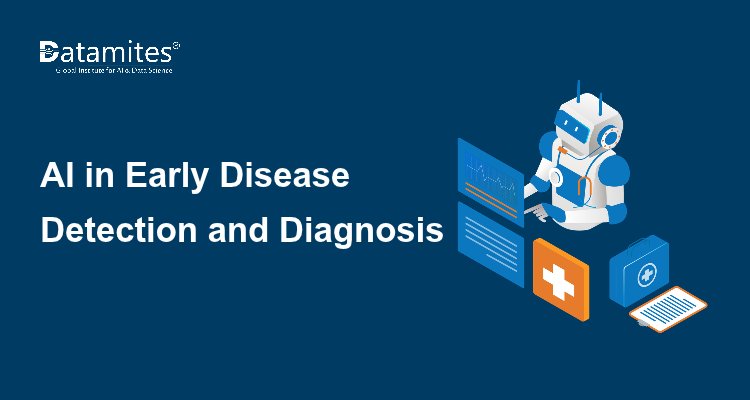
Early disease detection is essential for improving patient outcomes, reducing complications and supporting timely treatment. However, identifying medical conditions at an early stage can be challenging because symptoms are sometimes difficult to recognize, medical records are complex, and healthcare professionals manage increasing volumes of patient data.
AI in disease detection is transforming how healthcare professionals identify potential health conditions by analyzing medical images, laboratory results, electronic health records and other clinical information. Through Machine Learning (ML), deep learning and predictive analytics, Artificial Intelligence can recognize patterns that may be difficult to identify through traditional methods alone.
From detecting suspicious findings in mammograms to identifying potential cardiovascular risks, AI is becoming a valuable tool for supporting medical diagnosis and improving clinical decision-making.
What Is the Role of AI in Disease Detection?
Artificial Intelligence refers to computer systems designed to perform tasks that typically require human intelligence, including analyzing information, recognizing patterns and making predictions.
In healthcare, Machine Learning enables algorithms to learn from medical datasets and identify relationships between different clinical indicators.
AI systems can analyze:
- Medical images: X-rays, CT scans, MRIs and mammograms.
- Patient records: Medical histories, symptoms and electronic health records.
- Laboratory results: Blood glucose, cholesterol and kidney function measurements.
- Clinical information: ECG readings, vital signs and patient risk factors.
For example, an AI-powered imaging system can highlight a suspicious lung nodule on a CT scan, allowing a radiologist to examine the finding more closely.
Similarly, predictive analytics can identify patients with combinations of risk factors who may benefit from additional medical evaluation.
Importantly, AI-assisted detection is not the same as a confirmed diagnosis. AI supports healthcare professionals by identifying potential abnormalities, while qualified clinicians interpret the results and decide on appropriate treatment.
Refer to these articles:
- How HR Professionals Can Use Generative AI at Work
- The Role of Generative AI in Modern Healthcare
- What are the ethical consideration in AI finance
How AI Is Improving Disease Diagnosis
AI healthcare applications are expanding across several areas of medical screening, diagnosis and patient monitoring.
AI in Medical Imaging
Medical imaging is one of the most established applications of AI in healthcare.
Deep learning algorithms can analyze X-rays, CT scans, MRIs and mammograms to identify abnormalities such as tumors, fractures, lung nodules and tissue changes.
For example, AI-assisted mammography systems can highlight suspicious breast tissue, helping radiologists prioritize examinations and investigate potential signs of breast cancer.
Predictive Analytics for Disease Detection
Predictive analytics in healthcare uses patient information to estimate the likelihood of developing certain medical conditions or experiencing health complications.
AI models can examine factors such as age, blood pressure, medical history, laboratory results and other relevant health indicators.
For instance, hospitals may use predictive models to identify patients at increased risk of clinical deterioration, allowing healthcare teams to review their conditions and consider timely intervention.
These predictions indicate potential risks rather than confirming that a disease will develop.
Early Cancer Detection
AI-powered disease detection is particularly promising in cancer screening.
Machine Learning algorithms can examine mammograms, pathology images and radiological scans to identify suspicious patterns associated with breast, lung and other cancers.
A notable example is the Swedish MASAI randomized clinical trial, published in The Lancet Digital Health in March 2025. The study included more than 105,000 women undergoing breast cancer screening.
Researchers reported that AI-supported screening increased cancer detection by 29% compared with standard screening. It also reduced the screen-reading workload by 44.2%.
These findings demonstrate the potential of AI-assisted cancer screening, although further research is needed to understand its long-term effects on patient outcomes.
AI in Cardiovascular Disease Detection
AI can support cardiovascular screening by analyzing electrocardiograms (ECGs), heart rhythm patterns and other clinical measurements.
Certain algorithms can identify patterns associated with abnormal heart rhythms and potential cardiovascular conditions.
For example, AI-assisted ECG analysis may flag unusual electrical activity, allowing healthcare professionals to recommend further cardiac evaluation when appropriate.
AI in Diabetes and Chronic Disease Detection
AI can also support the identification and monitoring of chronic conditions such as diabetes and kidney disease.
By analyzing blood glucose measurements, HbA1c results, kidney function tests and patient risk factors, AI models can help healthcare professionals identify individuals who may require additional assessment.
These applications support preventive healthcare, ongoing monitoring and more personalized patient care.
Benefits of AI in Disease Detection
The adoption of Artificial Intelligence in healthcare offers several potential benefits:
- Faster data analysis: AI can process large medical datasets and support the review of complex clinical information.
- Earlier identification: Pattern recognition can help flag suspicious findings before symptoms become more noticeable.
- Improved consistency: Standardized image analysis may reduce variation in certain screening workflows.
- Clinical decision support: AI can provide additional information to help medical professionals make informed decisions.
- Better risk assessment: Predictive models can identify patients who may need closer monitoring.
- Personalized healthcare: Combining individual health information can support more tailored clinical assessments.
However, these benefits depend on data quality, clinical validation and appropriate implementation. AI does not guarantee accurate diagnoses or eliminate medical errors.
Challenges of Using AI in Healthcare Diagnosis
Despite its potential, AI adoption in healthcare involves several important challenges.
- Patient data privacy: Medical records contain sensitive information that must be protected through appropriate security measures and data governance.
- Algorithmic bias: AI models trained on limited or unrepresentative datasets may perform differently across demographic groups and populations.
- Accuracy and reliability: AI systems must be tested using representative clinical data and evaluated in real healthcare environments.
- Regulatory and ethical considerations: Medical AI applications require appropriate regulatory oversight, transparency and accountability.
- Human supervision: Healthcare professionals must review AI-generated findings, consider individual patient circumstances and retain responsibility for clinical decisions.
Refer to these articles:
- What Is Agentic AI Architecture?
- How Does an AI Image Generator Work?
- AI Agents vs AI Assistants: What's the Real Difference?
Future of AI in Early Disease Detection
The future of AI in early disease detection is moving toward more integrated, predictive and personalized healthcare systems.
Some important developments include:
- Multimodal AI: Combining medical images, laboratory results, clinical notes and patient histories to provide a broader understanding of health.
- Advanced medical imaging: Developing more sophisticated algorithms to identify abnormalities and support radiology workflows.
- Predictive healthcare systems: Identifying potential health risks and supporting preventive interventions.
- Electronic health record integration: Connecting AI tools with clinical systems to provide relevant information during patient care.
- Personalized medicine: Using individual health information to support tailored risk assessments and treatment decisions.
Recent developments also highlight the importance of responsible implementation. The World Health Organization published its 2026 report, Artificial Intelligence-Related Health Research: Ethics Review and Oversight, addressing privacy, fairness, human rights, and responsible oversight.
These developments suggest that future AI healthcare applications will need to balance technological innovation with patient safety, clinical evidence and ethical responsibility.
AI in disease detection is changing how healthcare professionals analyze medical information, identify potential abnormalities, and support clinical decision-making.
From medical imaging and cancer screening to cardiovascular risk assessment and chronic disease monitoring, AI offers valuable opportunities to improve diagnostic workflows and support earlier medical evaluation.
However, successful implementation requires reliable clinical evidence, secure patient data, unbiased algorithms, and appropriate medical supervision.
Ultimately, artificial intelligence is most valuable when combined with medical expertise. Rather than replacing healthcare professionals, AI can help them make faster, more informed, and evidence-based decisions that support better patient care.
DataMites Institute offers an industry-oriented AI healthcare training courses that introduces healthcare professionals to AI fundamentals and their practical applications in patient care, hospital management, and medical research. The institute also provides specialized AI training programs in HR and People Analytics, Finance, Marketing, and Business Management.
Participants can select from online training, classroom sessions, and project-based internships to develop practical knowledge and relevant skills. The program offers IABAC-aligned certification leading to the Certified AI Professional in Healthcare & Clinical Operations credential. With 50+ offline centres across India, including Bangalore, Chennai, Hyderabad, Pune, Mumbai, Ahmedabad, Coimbatore, and Delhi, DataMites provides accessible learning opportunities for healthcare professionals and aspiring AI learners.