How Data Analytics Skills Open Opportunities Across Multiple Industries
Discover how data analytics skills unlock diverse data analytics career opportunities across finance, healthcare, retail, and manufacturing. Explore in-demand data analytics jobs, industry trends, salary prospects, and the future of data-driven careers in a rapidly evolving business landscape.
 Kriti Maurya
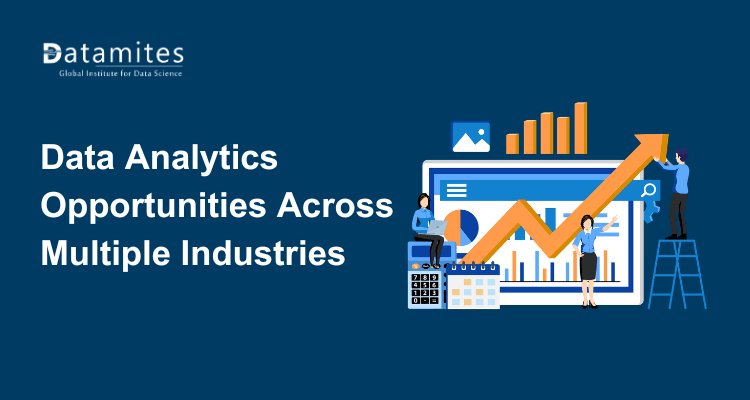
The ability to transform AI generated information into actionable insights has become a competitive advantage, making data analytics skills one of the most sought-after competencies across the global job market. From healthcare providers improving patient outcomes to financial institutions managing risk and retailers enhancing customer experiences, businesses rely on data-driven insights to make informed decisions.
Demand for professionals with advanced analytics expertise continues to rise across industries. Beyond traditional tech roles, data analytics jobs offer diverse career paths. Understanding emerging data analytics career opportunities helps professionals build future-ready skills and succeed in a rapidly evolving, data-driven business environment.
According to Gartner forecasts, more than 85% of business applications are expected to rely on real-time data processing, positioning database optimization as a critical requirement for enhancing performance, scalability, and business agility.
Why Data Analytics Skills Are in High Demand
The growing importance of digital transformation has significantly increased the need for professionals with strong data analytics skills. Organizations are no longer relying solely on intuition when making business decisions. Instead, they use data to identify trends, predict outcomes, improve efficiency, and enhance customer experiences.
Several factors contribute to this rising demand:
- Increased Data Generation: Businesses generate vast amounts of data through websites, mobile apps, social media, IoT devices, and transactions, creating a growing need for professionals who can analyze and interpret information effectively.
- Rise of Data-Driven Decision Making: Organizations rely on analytics to make informed decisions, forecast trends, improve operations, and reduce business risks through actionable insights.
- Competitive Business Environment: Companies use analytics to enhance customer experiences, improve efficiency, reduce costs, and gain a competitive edge. The global High-Performance Data Analytics (HPDA) market was valued at US$108.66 billion in 2024 and is projected to reach US$351.87 billion by 2030. By leveraging powerful computing infrastructure and sophisticated analytical methods, organizations can generate faster insights, improve decision-making, optimize business operations, and accelerate innovation across various industries.(Source: Research and Markets)
- Expansion of Analytics Technologies: Advances in AI, machine learning, cloud computing, and business intelligence tools continue to increase demand for skilled analytics professionals.
This widespread demand has led to substantial growth in data analytics careers, making analytics one of the most promising professional fields globally.
Refer to the articles below:
- Why Data Analytics Matters in Every Career
- How Data Analysts Solve The Complex Business Challenges
- Best Programming Languages for Data Analysts
How Data Analytics Creates Opportunities in Multiple Industries
One of the strongest advantages of pursuing a career in analytics is its versatility. Unlike many specialized professions, analytics skills can be applied across virtually every industry. This flexibility creates extensive data analytics career opportunities for professionals with the right expertise.
Data Analytics in Finance Industry
The financial sector has long been a major adopter of analytics technologies. Today, data analytics in finance plays a crucial role in risk management, fraud detection, investment analysis, regulatory compliance, and customer segmentation.
Financial institutions leverage predictive models to assess creditworthiness, identify suspicious transactions, and forecast market movements. Analytics professionals working in finance often collaborate with business leaders to improve profitability and minimize financial risks.
As fintech innovation continues to accelerate, demand for analytics experts in banking, insurance, and investment management remains exceptionally strong.
Real-World Case Study: J.P. Morgan AI-Powered Fraud Detection
J.P. Morgan uses artificial intelligence and machine learning to analyze payment activity and identify unusual patterns that may indicate fraud. Its fraud-detection systems analyze large volumes of transaction data and generate risk scores that help teams identify payments requiring additional review. The organization also uses techniques such as graph analysis and transformer models to identify relationships and patterns that traditional detection methods may overlook.
- Business Problem: The scale and complexity of modern payment activity makes it difficult to identify sophisticated fraudulent transactions using traditional rules alone.
- Analytics Approach: J.P. Morgan combines machine-learning models with transaction data to identify anomalies and suspicious patterns. Newer AI techniques can analyze large volumes of data and uncover relationships between transactions, accounts, and other entities.
- Business Impact: The approach helps fraud teams identify potentially fraudulent payments more efficiently while supporting risk management and reducing the limitations of traditional detection methods. J.P. Morgan is also exploring federated learning, allowing financial institutions to improve fraud-detection models collaboratively without sharing raw transaction data.
Data Analytics in Healthcare Sector
Healthcare organizations generate enormous amounts of patient and operational data. Through data analytics in healthcare, providers can improve treatment outcomes, optimize resource allocation, and enhance patient experiences.
Analytics professionals help healthcare organizations identify disease patterns, predict patient risks, monitor population health trends, and streamline administrative processes. Additionally, healthcare analytics supports clinical research and evidence-based medicine.
Real-World Case Study: Apollo Hospitals and Real-Time Healthcare Analytics
Apollo Hospitals implemented Microsoft Fabric to connect clinical and operational data across its healthcare network. The organization uses Fabric Real-Time Intelligence to create a live operational view covering areas such as admissions, diagnostics, bed availability, and other hospital operations. Data is streamed from regional databases, while real-time dashboards and alerts help teams respond to operational requirements more quickly.
- Business Problem: Apollo's healthcare systems generated large volumes of data across different hospitals and operational areas, but fragmented systems created delays and made it difficult to maintain a unified view of activity.
- Analytics Approach: Apollo uses streaming data, cloud analytics, Microsoft Fabric Real-Time Intelligence, and Power BI to combine historical, batch, and real-time information. Its operational dashboard provides updated information to clinical and business teams and supports event-driven alerts.
- Business Impact: Microsoft reports that Apollo reduced data latency from hours to seconds, achieved a 25% reduction in manual work, and increased order conversions by 60%. The platform also consolidated data across the hospital network and supports near-real-time information for 75 hospitals.
Data Analytics in Manufacturing
The manufacturing sector increasingly relies on analytics to improve productivity and operational efficiency. Data analytics in manufacturing enables organizations to monitor equipment performance, predict maintenance requirements, optimize supply chains, and reduce production costs.
Manufacturers use real-time analytics to identify bottlenecks, improve quality control, and maximize operational output. Analytics professionals contribute to smart manufacturing initiatives by helping organizations transform operational data into strategic insights.
Real-World Case Study: BlueScope Predictive Maintenance
BlueScope, a global steel manufacturer, uses Siemens Senseye Predictive Maintenance to monitor equipment and identify early signs of potential failures. The system combines real-time machine data with AI-driven analytics to help maintenance teams move from reactive maintenance toward a more proactive approach.
- Business Problem: Unplanned equipment failures can interrupt continuous manufacturing operations, resulting in production delays, additional maintenance work, and wasted resources.
- Analytics Approach: Sensors collect machine-condition data, while Senseye analyzes the information to identify abnormal patterns and provide early warnings. In one documented example, the system detected a gradual pressure drop caused by a hydraulic leak on a metal coating line, allowing BlueScope to address the problem during a scheduled maintenance window.
- Business Impact: Siemens reports that BlueScope avoided approximately 1,950 hours of machine downtime and 53 process interruptions across its facilities. In the hydraulic-leak example, early detection helped avoid at least 24 hours of unplanned downtime.
Data Analytics in Retail Industry
Retailers operate in highly competitive environments where customer preferences constantly evolve. Through data analytics in retail, organizations gain deeper insights into consumer behavior, purchasing patterns, inventory management, and marketing effectiveness.
Retail analytics can combine sales, inventory, pricing, promotions, and seasonal data to identify demand patterns and recurring stock-out risks. Advanced analytics and machine-learning models can then support more precise forecasting and replenishment decisions, helping retailers balance product availability with inventory levels.Real-World Case Study: Walmart's AI-Driven Demand Forecasting
Real-World Case Study: Walmart's AI-Driven Demand Forecasting
Walmart uses machine learning, artificial intelligence, and real-time data to improve demand forecasting and inventory management across its large retail network. Its technology systems analyze demand signals and help determine where inventory should be positioned to meet customer needs. Walmart has also described supply-chain systems that use real-time AI and automation to predict demand, reroute inventory, and optimize fulfillment.
- Business Problem: Managing inventory across stores, fulfillment centers, and online channels requires accurate forecasts because customer demand changes by location, product, season, and other factors.
- Analytics Approach: Walmart uses machine-learning forecasting technologies to predict demand at a granular geographic level and position inventory accordingly. Its newer supply-chain systems combine real-time signals, AI, automation, and inventory data to support faster operational decisions.
- Business Impact: These analytics capabilities help Walmart improve inventory placement, support replenishment decisions, reduce operational delays, and respond more quickly to changes in demand. Walmart reports that its real-time AI and automation systems are already operating across multiple international markets.
Analytics professionals help retailers personalize customer experiences, optimize pricing strategies, forecast demand, and improve supply chain performance. By leveraging customer data effectively, retailers can increase customer satisfaction and drive revenue growth.
Refer to the articles below:
- Data Analyst Course Fee in Hyderabad
- How to Choose Best Institute for Data Analytics in Hyderabad
- How to Become a Data Analyst in Hyderabad
Top Career Opportunities in Data Analytics across Industries
The growing demand for data-driven decision-making has created numerous career opportunities for professionals with strong data analytics skills. Salary figures here are indicative ranges based on publicly available salary information. Compensation varies by experience, location, employer, industry, and role.
Here are popular job roles along with salaries taken from Glassdoor in India:
- Data Analyst – Analyzes business data, identifies trends, and delivers actionable insights to support strategic decisions. Average Salary of Data Analyst: ₹6–12 LPA.
- Business Analyst – Uses data to evaluate business performance, optimize processes, and recommend operational improvements. Average Salary of Business Analyst: ₹8–12 LPA.
- Business Intelligence (BI) Analyst – Designs dashboards and reports that help organizations monitor performance and make informed decisions. Average Salary of BI Analyst: ₹5–10 LPA.
- Financial Analyst – Leverages data analytics in finance to assess risks, forecast trends, and support investment and budgeting decisions. Average Salary of Financial Analyst: ₹4–12 LPA.
- Marketing Analyst – Examines customer behavior, campaign performance, and market trends to improve marketing effectiveness and ROI. Average Salary of Marketing Analyst: ₹5–8 LPA.
This broad applicability makes data analytics jobs particularly attractive for professionals seeking career flexibility and long-term growth and want to become data analyst in India.
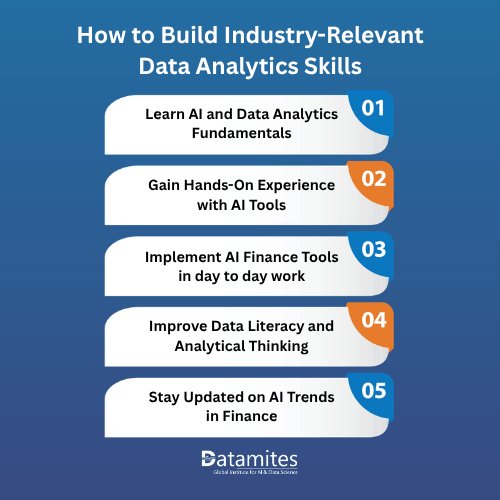
How to Build Industry-Relevant Data Analytics Skills
While demand for analytics professionals continues to rise, success requires developing a combination of technical, analytical, and business-focused competencies. Building industry-relevant data analytics skills can significantly improve career prospects and open doors to specialized roles.
1. Strengthen Statistical and Analytical Foundations
A strong foundation in statistics, probability, quantitative analysis, and data interpretation helps professionals understand patterns, evaluate relationships, and make evidence-based conclusions. These concepts are applied in tasks such as hypothesis testing, correlation analysis, regression, forecasting, and measuring business performance.
2. Develop Practical Skills With Data Analytics Tools
Professionals should understand how commonly used tools fit into an end-to-end analytics workflow. SQL can be used to query and transform data from relational databases, while Python and libraries such as Pandas support data cleaning, exploration, and analysis. R can be useful for statistical computing, while Excel supports spreadsheet-based analysis. Tools such as Power BI and Tableau help convert analytical findings into interactive dashboards and reports, while Google Analytics can be used to examine website and digital performance data.
For example, an analyst working on customer churn could use SQL to extract customer transaction records, Pandas to clean and prepare the dataset, and Scikit-Learn to develop and evaluate a predictive model.
3. Strengthen Data Visualization and Communication
Data visualization helps analysts communicate complex findings to business stakeholders. Professionals should learn to select appropriate charts, build interactive dashboards, identify meaningful trends, and present key metrics clearly.
Tools such as Power BI and Tableau can be used to develop dashboards that track sales, customer behavior, marketing performance, operational metrics, or financial indicators. The objective is not simply to create attractive visualizations but to communicate insights that support specific business decisions.
4. Understand Industry-Specific Analytics Applications
Data analytics workflows and requirements vary by industry. In finance, analytics can support fraud detection, credit-risk assessment, forecasting, and regulatory reporting. Financial organizations may also need to consider frameworks such as Basel III and applicable data-protection requirements.
In healthcare, analytics can support patient outcomes, resource planning, clinical research, and operational analysis, with regulatory requirements such as HIPAA relevant to organizations handling protected health information in the United States. In retail analytics, analysts may work on customer segmentation, demand forecasting, pricing, and inventory optimization, while manufacturing applications can include predictive maintenance, quality monitoring, and supply-chain analysis.
Where organizations process personal information across applicable jurisdictions, professionals may also need awareness of regulations such as GDPR and related data-governance requirements.
5. Develop Business Acumen Alongside Technical Skills
Technical analysis becomes more valuable when it is connected to business objectives. Analysts should understand the problem they are solving, identify relevant metrics, interpret results in context, and communicate recommendations to decision-makers.
Strong problem-solving, communication, critical thinking, and stakeholder-management skills help professionals translate analytical findings into practical business actions rather than simply reporting numbers.
6. Continue Learning as Analytics Evolves
Data analytics continues to evolve alongside artificial intelligence, machine learning, cloud platforms, automation, and real-time analytics. Professionals can maintain relevant skills through certifications, practical projects, industry case studies, professional development, and continued experimentation with emerging technologies.
Hands-on experience is particularly valuable because it helps professionals understand how newer technologies fit into established analytics workflows rather than treating them as standalone tools.
Future Scope of Data Analytics Careers Across Industries
The role of data analytics continues to expand as organizations use information to improve operations, understand customers, manage risk, forecast demand, and support strategic decisions. Analytics professionals are increasingly working alongside AI and machine learning systems, cloud data platforms, and real-time data infrastructure.
Several developments are expected to influence data analyst careers:
- Integration of AI into Analytics: AI and machine learning can assist with pattern detection, predictive modelling, automation, and insight generation, while professionals remain responsible for interpreting results and connecting them to business context.
- Growth of Real-Time Analytics: Businesses increasingly need timely information from transactions, applications, connected devices, and operational systems to monitor performance and respond to changing conditions.
- Greater Focus on Data Governance: As organizations collect and process larger volumes of data, knowledge of data quality, privacy, security, access controls, and regulatory requirements is becoming increasingly relevant.
- Expansion Across Business Functions: Analytics is no longer limited to dedicated data teams. Finance, marketing, healthcare, operations, retail, manufacturing, and product teams increasingly use analytical methods to support their decisions.
Refer to the articles below:
- How Students & Professionals Boost Mumbai’s Economy
- Top Tips for Selecting the Best Data Analytics Institute in Mumbai
- The Future of Data Analytics in Mumbai: Trends and Opportunities
DataMites Institute specializes in delivering industry-focused training programs that help learners develop in-demand analytical and technical expertise. Its comprehensive offerings include Data Analytics course in Hyderabad, Data Science, Artificial Intelligence, and Machine Learning courses, supported by globally recognized certifications from organizations such as IABAC and NASSCOM FutureSkills. Through hands-on projects, internships, and dedicated placement support, DataMites ensures practical, career-oriented learning through both online and classroom training formats.
With a strong presence across major Indian cities, including data analyst courses in Mumbai, Delhi, Hyderabad, Bangalore, Chennai, Pune, Kolkata, Coimbatore, Ahmedabad, and Chandigarh, DataMites makes high-quality technology education accessible to aspiring professionals nationwide.