Why Data Analytics Matters in Every Career
Discover why data analytics matters across careers, from improving decision-making and problem-solving to building practical skills for changing workplace demands.
 Kriti Maurya
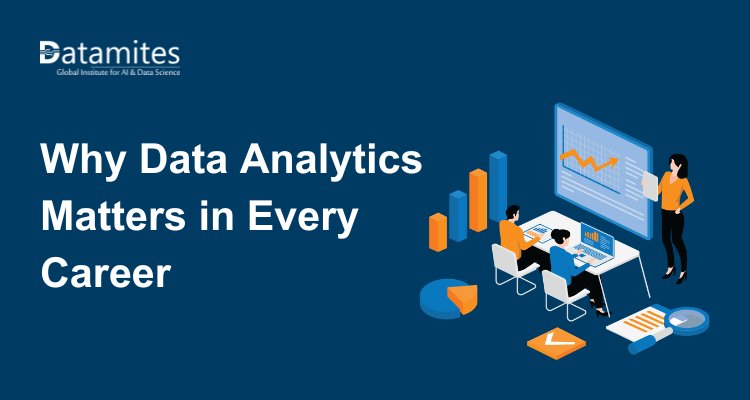
Data is now part of everyday work across technology, finance, healthcare, marketing, retail, and many other fields. Organizations use data to understand performance, identify trends, improve processes, and make informed decisions. As a result, understanding how to work with data is becoming useful for people in both technical and non-technical roles.
The Importance of Data Analytics goes beyond the traditional Data Analyst role. Students can use data to strengthen their analytical thinking, freshers can develop practical skills for the workplace, and experienced professionals can use insights to improve decisions and performance. Understanding these applications can help people prepare for a changing job market and the Future of data analytics.
Why Does Data Analytics Matter in Every Career in 2026?
In 2026, businesses across technology, finance, healthcare, retail, and marketing use data from transactions, applications, websites, and customer interactions. Understanding this information helps professionals identify patterns, evaluate performance, and make informed decisions. As organizations increasingly depend on data, analytical thinking is becoming valuable across many career roles and industries.
Data analytics helps professionals replace assumptions with evidence when addressing workplace questions. Employees can examine trends, compare results, identify problems, and communicate findings more effectively. This supports Data-Driven Decision Making and enables teams to respond to customer needs, operational changes, and business opportunities with greater clarity.
The market is also expanding as organizations adopt artificial intelligence, automation, and cloud technologies. According to Grand View Research, the global data analytics market is estimated to reach USD 107.0 billion in 2026 and is projected to reach USD 738.6 billion by 2033, growing at a 31.8% CAGR.
Refer to these articles:
- Best Programming Languages for Data Analysts
- Top 10 Tools Every Data Analyst Should Learn
- How Data Analysts Solve The Complex Business Challenges
How Data Analytics Supports Freshers and Students
Data analytics helps students and freshers build practical skills for education and early careers. Working with data develops analytical thinking, problem-solving, and informed decision-making. For Data Analytics for Freshers, practical exposure can help beginners understand how analytical methods are applied to real workplace situations.
Building Data Literacy and Career Readiness
Students and freshers can benefit from learning how to collect, organize, interpret, and communicate information. Basic data literacy helps them understand numbers, identify patterns, evaluate information, and ask better questions. These abilities can be useful even when the job itself does not have “data” in its title.
Practical learning can also improve career readiness. Learning spreadsheets, databases, visualization, and basic analytical methods gives beginners a foundation for handling workplace information. When exploring data analytics course fees, learners can also consider factors such as practical projects, learning resources, certifications, and career support.
Using Data Analytics in Academic and Personal Projects
Academic projects provide an opportunity for students to apply analytical thinking outside the classroom. They can analyse survey responses, research findings, public datasets, or project results to identify patterns and present conclusions. This makes learning more practical while developing confidence in working with information.
Personal projects can provide another way to demonstrate analytical ability. A student might examine sales trends, customer reviews, sports statistics, or publicly available economic data. Such projects can show how a person approaches a question, prepares data, identifies insights, and communicates the outcome.
How Data Analytics Helps Working Professionals
Data analytics helps working professionals understand performance, solve workplace challenges, and make informed decisions. These capabilities are increasingly valuable for Data Analytics for Working Professionals across different industries and roles. data analytics Skills can help professionals handle workplace data effectively.
Supporting Better Workplace Decisions
Professionals across departments regularly make decisions based on business information. Sales teams may examine customer activity, marketing teams may monitor campaign results, finance teams may analyse financial performance, and operations teams may review productivity or resource usage.
Using analytics allows professionals to compare actual results with targets, identify changes, and understand the factors affecting performance. This supports Data Analytics in Business by helping teams use relevant evidence when planning activities and solving workplace problems.
Improving Productivity and Career Growth
Data can also help professionals understand how efficiently their teams and processes are performing. By examining workloads, turnaround times, costs, customer feedback, or other relevant measures, employees can identify areas that may need improvement.
Developing analytical capabilities can also support data analytics career. Professionals who understand data can contribute to reporting, performance analysis, process improvement, and strategic discussions. Combining analytical knowledge with communication and business understanding can make these capabilities useful across different career stages.
Refer to these articles:
- Common Challenges Freshers Face in Data Analyst Jobs in Hyderabad
- Why Data Analytics Career in Hyderabad
- In-Demand Tech Skills Hyderabad companies hiring Students
Why Data Analytics Is Important Across Industries
Data analytics is not limited to technology companies. Industries use data on customers, operations, finances, products, and market conditions to understand performance and support better decisions.
Data Analytics in Technology
- Monitor application and system performance.
- Understand user behaviour and product usage.
- Identify popular features and areas for improvement.
- Analyse customer feedback and usage patterns.
- Support software development and digital product decisions.
Data Analytics in Finance
- Analyse transactions, customer data, and financial performance.
- Identify unusual patterns and support risk-related decisions.
- Monitor revenue, expenses, investments, and other financial indicators.
- Understand customer behaviour and financial trends.
- Support banking, insurance, accounting, and investment operations.
Data Analytics in Healthcare
- Analyse patient records and healthcare service data.
- Examine patient trends and service usage.
- Monitor operational performance and resource requirements.
- Support healthcare planning and operational decisions.
- Help researchers and administrators identify important patterns.
Data Analytics in Marketing and Advertising
- Understand audience behaviour and customer engagement.
- Measure campaign performance and conversion patterns.
- Compare marketing campaigns and identify stronger results.
- Track measurable performance indicators.
- Improve future marketing strategies using data insights.
Data Analytics in Retail
- Analyse sales and customer purchasing patterns.
- Monitor inventory and store performance.
- Examine pricing, promotions, and product performance.
- Understand customer interactions and buying behaviour.
- Support stock planning and retail decisions.
Data Analytics in E-commerce
- Analyse searches, product views, purchases, and reviews.
- Understand online customer behaviour and buying patterns.
- Identify opportunities to improve the customer journey.
- Monitor conversion rates and customer retention.
- Support product recommendations, pricing, and marketing decisions.
How Data Analytics Can Be a Lever Across Different Career Roles
Data analytics extends beyond dedicated analytical roles. Professionals can use data to understand performance, identify trends, solve workplace problems, and support informed decisions across different career paths.
- Business Analysts: Analyse business data to identify trends, performance gaps, and opportunities.
- Data Analysts: Apply analytical skills to prepare data, identify insights, create reports, and support data-driven decision-making.
- Managers: Track business goals, performance indicators, and operational results to support planning and decision-making.
- Marketing Professionals: Examine campaign results, customer behaviour, and engagement data to improve marketing activities.
- Risk Professionals: Analyse data patterns to identify potential risks, assess business exposure, and support informed decisions.
- Operations Professionals: Use data to monitor processes, productivity, costs, and operational performance.
- Finance Professionals: Analyse financial information, transactions, and performance indicators to support business decisions.
Overall, analytical capabilities can complement existing professional expertise without requiring a complete career change. As organizations increasingly rely on data, professionals who can interpret information, identify meaningful patterns, and communicate insights can apply these abilities across different roles and support continued professional development.
Refer to these articles:
- Freshers vs Professionals: Guide to Data Analyst Career in Mumbai
- Why Mumbai Students Prefer Specialized Data Analyst Training
- How Students & Professionals Boost Mumbai’s Economy
DataMites Institute is a leading training provider offering programs in Power BI, Data Science, Artificial Intelligence, Machine Learning, data analyst course in Mumbai, and Python. With IABAC and NASSCOM FutureSkills certifications, the training focuses on practical learning through projects and hands-on assignments. DataMites has also received the Best Skill Development EdTech award for its contribution to skill development and career-focused learning. Learners also receive internship opportunities and career support to build job-ready skills.
DataMites Hyderabad also maintains classroom training centers across major Indian cities, including Bangalore, Mumbai, Pune, Chennai, Delhi, Kolkata, Coimbatore, Ahmedabad, Chandigarh, Mangalore and several other locations, making quality professional training accessible to learners across the country.