AI in Everyday Life: How You’re Already Using Artificial Intelligence
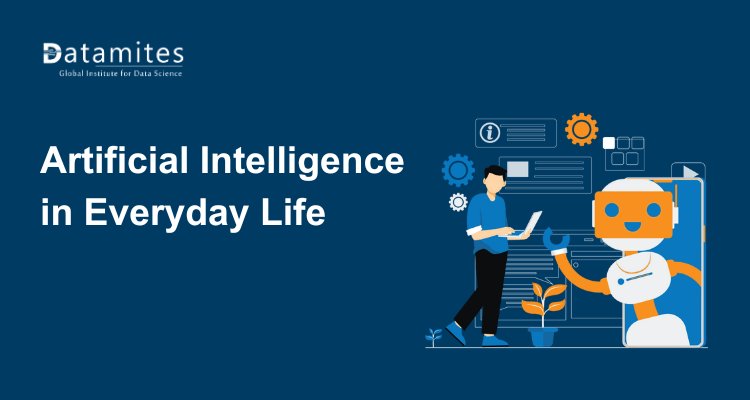
Artificial Intelligence is already part of everyday life, powering tools for communication, entertainment, shopping, and navigation. From voice assistants to personalized recommendations, AI is making daily tasks smarter and more convenient.
 Farheen Sabha
Imagine waking up to your phone gently nudging you with the perfect alarm time, scrolling through a social media feed tailored just for you, or asking Alexa to play your favorite playlist while you make coffee. Sounds like convenience, right? What if we told you that behind all of this is artificial intelligence quietly working its magic?
You don’t need a robot butler or a self-driving car to experience AI it’s already woven into your daily routine in ways you might not even realize. In this blog, we’ll uncover how AI is seamlessly integrated into your everyday life, changing how you live, work, and interact often without you even noticing.
At its essence, Artificial Intelligence refers to computer systems designed to perform tasks that typically require human intelligence, such as recognizing speech, identifying patterns, making predictions, understanding language, and solving problems. Many modern AI systems learn patterns from data during training and use those patterns to generate predictions, recommendations, or responses. This capability allows AI to support a wide range of applications across industries and everyday routines.
How Artificial Intelligence is Integrated into Everyday Activities
Artificial Intelligence now supports many everyday digital experiences, often working behind the scenes to personalize services, automate routine tasks, and help users make decisions. From voice assistants and content recommendations to navigation, online shopping, and email filtering, AI is increasingly embedded in the technologies people use every day. Let’s explore some of the most common ways Artificial Intelligence is being used in daily activities:
1. Personal Assistants and Smart Devices
Virtual assistants such as Siri, Alexa+, and Google Gemini help users perform tasks, find information, and interact with digital services through voice commands, answer questions, and control smart home devices. These assistants learn from user interactions to provide more accurate and personalized responses over time. Smart thermostats, lighting systems, and security cameras also employ AI to adapt to user preferences and enhance home automation.
2. Social Media and Content Recommendations
Platforms such as Facebook, Instagram, and Twitter use AI algorithms to curate news feeds, suggest friends, and display targeted advertisements. Streaming services like Netflix and Spotify analyze viewing and listening habits to recommend movies, shows, and songs tailored to individual tastes. This personalization enhances user engagement and satisfaction.
3. E-Commerce and Online Shopping
Online retailers leverage AI to provide personalized shopping experiences. For instance, Amazon’s AI shopping assistant, Alexa for Shopping, helps customers discover products, compare options, and receive personalized recommendations while shopping online.
4. Healthcare Applications
AI is revolutionizing healthcare by assisting in diagnostics, treatment planning, and patient monitoring. Wearable devices equipped with AI analyze health data in real-time, alerting users to potential health issues. Apple is integrating Apple Intelligence into its Health app to provide personalized health and fitness insights and guidance based on user data.
5. Navigation and Travel
Navigation apps like Google Maps and Waze use AI to analyze traffic patterns and provide real-time route suggestions. Ride-sharing services such as Uber and Lyft employ AI to match drivers with passengers efficiently and predict demand to optimize pricing and availability.
6. Financial Services
Banks and financial institutions utilize AI for fraud detection, credit scoring, and personalized banking services. AI algorithms analyze transaction patterns to identify unusual activities, enhancing security. Chatbots powered by AI provide customer support, answering queries and assisting with transactions.
7. Customer Service
Many companies deploy AI-powered chatbots on their websites to handle customer inquiries, book appointments, and provide product information. These virtual assistants improve response times and are available 24/7, enhancing customer satisfaction.
8. AI-Powered Health Insights and Prevention
Artificial Intelligence is also being used to turn health and fitness data into personalized insights, helping users better understand patterns in areas such as activity, sleep, heart health, and overall wellness. These tools can support preventive health awareness while complementing, rather than replacing, professional medical advice.
Refer to these articles:
- Understanding Machine Learning: Basics for Beginners
- Top 10 Real-World Applications of Artificial Intelligence
- How Does AI Work? A Simple Explanation for Beginners
Importance of Understanding Artificial Intelligence’s Role in Daily Life
As Artificial Intelligence becomes more deeply embedded in our everyday routines, understanding how it works and how it influences our decisions is more important than ever. While AI often operates silently in the background recommending what to watch, helping us navigate traffic, or even detecting fraud in our bank transactions, its impact is far-reaching. Here's why gaining awareness of AI’s role in daily life is essential:
1. Informed Decision-Making
From personalized ads to curated news feeds, AI algorithms play a major role in shaping the information we consume. Being aware of this influence empowers us to make more conscious and informed choices, rather than being unknowingly guided by automated suggestions. Understanding AI helps us question: Why am I seeing this? What data is being used to make this recommendation? And should I rely on it without checking other sources?
2. Digital Literacy in a Tech-Driven World
In today’s digital landscape, AI literacy is becoming just as essential as reading and writing. Knowing how AI works even at a basic level can help individuals interact more effectively with technology, be it through voice assistants, online learning platforms, or AI-powered customer service tools. As AI continues to evolve, this digital awareness will be critical for personal and professional growth.
3. Privacy and Data Awareness
AI thrives on data, and much of that data comes from user behavior. Understanding AI’s dependence on personal data makes users more conscious of their digital footprint. This awareness can lead to better privacy practices such as reviewing app permissions, managing cookies, or adjusting algorithmic preferences on social media platforms.
4. Adapting to a Changing Job Market
AI is reshaping the world of work. From automating repetitive tasks to enabling smarter decision-making, it's influencing roles across industries. By understanding AI’s capabilities and limitations, individuals can better prepare for the future whether that means acquiring new skills, shifting careers, or working alongside AI systems more effectively.
5. Empowering Ethical Use of Technology
As AI grows more powerful, ethical considerations become increasingly important. Understanding how AI systems are trained, how biases can be introduced, and how decisions are made helps individuals and organizations hold AI technologies accountable. This ensures that AI is used responsibly, fairly, and for the greater good.
Understanding AI isn’t just for tech experts, it’s for everyone. As AI continues to influence how we communicate, shop, learn, and work, being aware of its role helps us stay in control of our choices, safeguard our privacy, and navigate the digital world with confidence. According to Statista, The global Artificial Intelligence market is projected to reach US$617.62 billion in 2026 and US$1.42 trillion by 2032, driven by rising investments and rapid technological advancement worldwide. With such widespread adoption, having even a basic understanding of how AI operates can empower individuals to engage with technology more thoughtfully and responsibly.
Upcoming Artificial Intelligence Advancements in Various Industries
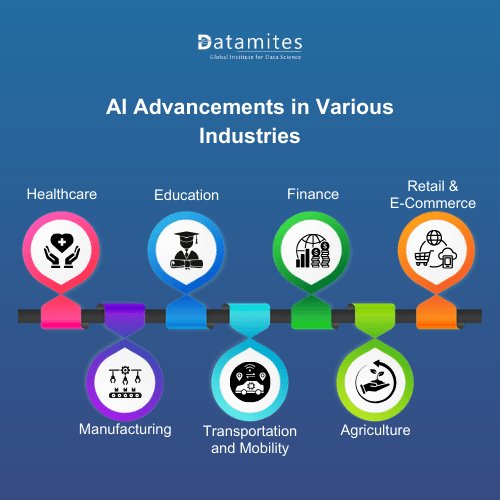
Artificial Intelligence is no longer a futuristic concept, it’s a driving force behind innovation in nearly every industry. As AI technologies continue to evolve, they’re set to revolutionize the way businesses operate, deliver services, and interact with customers. Here’s a closer look at some of the most promising upcoming AI advancements across various sectors:
1. Healthcare
AI is transforming healthcare with unprecedented speed. Future advancements include enhanced diagnostics through AI-powered imaging analysis, real-time disease prediction using wearable data, and personalized treatment plans based on genetic profiles. According to Forbes, the AI healthcare market is expected to reach $188 billion by 2030, as machine learning becomes integral in drug discovery, robotic surgery, and virtual health assistants.
2. Education
In education, AI will soon enable fully adaptive learning platforms that cater to individual student needs, learning styles, and pace. Intelligent tutoring systems will provide real-time feedback, while AI chatbots will offer instant academic support. Additionally, predictive analytics will help educators identify students at risk and intervene earlier. This personalization is expected to significantly improve learning outcomes worldwide.
3. Finance
The finance industry is set to witness more sophisticated AI integration, particularly in fraud detection, credit scoring, algorithmic trading, and asset management. AI can strengthen risk management while enabling more personalized financial planning as financial institutions expand their use of intelligent systems.
4. Retail and E-Commerce
Retailers are using AI to deliver highly personalized shopping experiences whether it’s through virtual try-on tools, AI-driven chat support, or demand forecasting systems. Future innovations will focus on real-time customer emotion recognition and dynamic pricing strategies, helping brands anticipate customer needs and stay ahead in competitive markets.
5. Manufacturing
In manufacturing, AI is laying the groundwork for the next wave of industrial automation Industry 5.0. Predictive maintenance, AI-enabled quality control, and smart robotics are improving productivity and minimizing downtime. With advancements in computer vision and real-time monitoring, factories are becoming more responsive and self-optimizing.
6. Transportation and Mobility
Autonomous vehicles are the most talked-about AI development in transportation, but the impact goes deeper. AI will improve traffic management systems, optimize public transport routes, and enable smarter logistics solutions. The global autonomous vehicle market is expected to grow to $2.3 trillion by 2030, driven largely by AI innovation.
7. Agriculture
AI is set to play a major role in sustainable agriculture. Smart farming tools powered by AI can monitor crop health, predict yields, and manage resources like water and fertilizer with pinpoint accuracy. This not only improves productivity but also supports environmental conservation efforts.
The U.S. Bureau of Labor Statistics reports that market research analysts earned a median annual wage of $78,760 in May 2025. Employment is projected to grow 7% from 2025 to 2035, with about 952,700 jobs in 2025. The continued use of data and market research across industries is expected to support demand for market research analysts in the coming years.
How Artificial Intelligence Will Further Integrate into Daily Activities
Artificial Intelligence is no longer a concept of the future it's actively reshaping our lives. From voice assistants to smart recommendations, we already experience AI daily, often without realizing it. But as technology advances, its presence in our day-to-day activities is only going to deepen and diversify. Here’s how AI is expected to further integrate into everyday life:
1. Smarter Homes
AI will enhance home automation beyond simple voice commands. Smart thermostats will learn and adjust based on your habits, fridges will suggest grocery lists or order food before you run out, and AI-powered cameras will improve home security by recognizing familiar faces or unusual activity in real-time.
2. Personal Assistants that Truly Understand You
Virtual assistants such as Siri, Alexa+, and Google Gemini are evolving toward more personalized assistants that can help manage everyday tasks. They’ll not only set reminders or play music but also anticipate your needs, suggesting health tips, managing your schedule proactively, and even handling emails or to-do lists autonomously.
3. Healthcare and Wellness
AI will play a key role in health monitoring and medical advice. Wearable devices will go beyond fitness tracking to detect early signs of illness. AI-powered apps may provide mental health support, recommend dietary changes, or connect users with professionals automatically based on behavioral patterns.
4. Transportation and Navigation
AI will continue to revolutionize how we travel. From smart traffic management and real-time navigation updates to the advancement of self-driving cars, AI will make transportation safer, more efficient, and eco-friendly. Ride-sharing apps may start using AI to predict demand and optimize routes dynamically.
5. Personalized Shopping Experiences
E-commerce will become even more intuitive with AI curating personalized shopping feeds based on browsing history, style preferences, and even your mood. In-store, AI will enhance experiences through virtual try-ons, smart mirrors, and robotic assistants.
6. Smarter Homes
Conversational and agentic AI is making smart homes more interactive by allowing users to control connected devices and manage household routines through natural language. Instead of relying only on individual voice commands, newer AI assistants can coordinate multiple devices, respond to follow-up requests, and help manage tasks such as home security, schedules, and daily routines.
7. Personalized Shopping Experiences
AI shopping assistants are also becoming more capable, helping users discover products through conversational searches, compare different options, receive personalized recommendations, and complete purchases through voice or text-based interactions. These developments are moving online shopping beyond simple recommendations toward more interactive and personalized shopping journeys.
Refer to these articles:
Artificial Intelligence is no longer a distant, futuristic concept it’s already woven into the fabric of our everyday lives, often operating quietly behind the scenes. From the way we shop, communicate, travel, and even manage our health, AI is enhancing convenience, personalization, and efficiency in ways we might take for granted.
DataMites offers one of the most comprehensive and industry-recognized Artificial Intelligence courses in India, designed to equip learners with the skills required to excel in the fast-evolving AI landscape. Whether you're a beginner or a working professional, the Artificial Intelligence Course in Bangalore course by DataMites provides a strong foundation in core concepts such as machine learning, deep learning, natural language processing, computer vision, and neural networks.
The Artificial Intelligence Training in Hyderabad offered by DataMites is a comprehensive training program designed to equip learners with the essential skills and knowledge needed to thrive in the rapidly expanding AI industry. The course is structured to cater to both beginners and experienced professionals, providing flexible learning options that include online classes, offline sessions, and self-learning modules. Accredited by globally recognized bodies such as IABAC and NASSCOM FutureSkills, the certification adds significant value to the learner's professional credentials, enhancing career prospects in the field of Artificial Intelligence.
DataMites has trained 200,000+ learners through its diverse programs and operates 50+ offline centers across India, with locations in major cities such as Bangalore, Chennai, Pune, Hyderabad, Mumbai, Delhi, Coimbatore, and Ahmedabad, along with several other cities. Through the DataMites artificial intelligence Course, learners gain practical knowledge, expert mentorship, placement support, mock interview preparation, resume building, career guidance, and hands-on project experience to develop industry-relevant skills for Artificial Intelligence career opportunities.