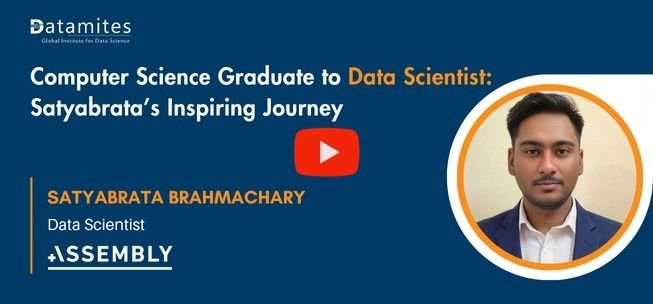
Computer Science Graduate to Data Scientist: Satyabrata’s Inspiring Journey
See how Satyabrata Brahmachary transitioned from a Computer Science graduate to a Data Scientist through structured learning, hands-on projects, and real-world problem-solving experience.
 Prerana B A
Satyabrata Brahmachary’s journey is a strong example of how consistent learning, hands-on practice, and persistence can help fresh graduates build successful careers in data science. Coming from Odisha with a Computer Science background, he moved to Bangalore to pursue specialized training in data science. Through structured learning, internship experience, real-time projects, daily coding practice, and continuous interview preparation, he successfully secured a role at Assembly Global.
What truly set Satyabrata apart was his focus on continuous improvement and practical learning. Rather than shortcuts, he built strong fundamentals through regular practice, real-world projects, and consistent upskilling. This journey reflects how discipline, hands-on learning, and persistence can gradually transform a student into a confident data science professional. His inspiring journey stands as a true DataMites success story, showcasing how structured learning, practical exposure, and consistent mentorship can help shape skilled and confident data science professionals.
How Satyabrata Brahmachary Became a Data Scientist After B.Tech
Find out how Satyabrata Brahmachary successfully transitioned into data analytics through structured learning, hands-on projects, and real-world problem solving at DataMites.
Q1. Please introduce yourself.
My name is Satyabrata Brahmachary, and I am from Odisha. I completed my Bachelor of Technology in Computer Science and Engineering from GEC. During my academic journey, I developed a strong interest in data, analytics, and problem-solving.
Q2. How did your journey into data analytics begin?
After completing my graduation, I moved to Bangalore and joined a Data Science and Data Analytics training program at DataMites. I joined the December batch and began learning core concepts required to build a career in the data domain.
Q3. What skills did you learn during your training?
During the course, I learned Python, SQL, NumPy, Pandas, Machine Learning, Deep Learning, Statistics, Power BI, Tableau, AWS, and AI concepts like RAG, LLMs, and LangChain. I also completed an internship at Rubixe, where I worked on real-time datasets and gained practical industry experience.
Q4. Did you have any programming background before Python?
Yes, during my engineering, I learned Java as part of my curriculum. This helped me understand programming logic, which made learning Python easier later.
Q5. Was Python difficult to learn?
No, Python was easier to understand due to its simple syntax and high-level structure. The trainers also guided me whenever I faced difficulties.
Q6. How important was trainer support in your learning journey?
The trainers were very supportive. Whenever I got stuck in coding or concepts, they helped me understand the solutions clearly.
Q7. How did you approach Machine Learning and Deep Learning?
I attended every class without missing any sessions. Consistent learning helped me understand Machine Learning and Deep Learning concepts in depth.
Q8. How much time did you spend practicing daily?
Apart from 2 hours of daily classes, I spent additional time practicing at home. I also used Kaggle datasets to implement concepts in different ways.
Q9. Did practical practice help you?
Yes, working with real datasets helped me strengthen my understanding of Machine Learning and Deep Learning concepts and improved my confidence.
Q10. Did you work on internships or projects?
Yes, I worked as a Data Scientist Consultant Intern at Rubixe, where I completed multiple projects including CNN-based models, regression, classification, and deployment using Flask. Along with this, I also worked on client projects and an IABAC project, which gave me strong hands-on experience with real-world data and business problems.
Q11. What practical experience did you gain from projects?
I worked on model creation, dashboard development, and deployment tasks. These projects helped me understand real-time business problems and improve my technical skills.
Q12. How did coding practice help in interviews?
Daily practice on platforms like HackerRank, LeetCode, and CodeChef helped me improve my SQL skills, which played a key role in clearing interviews.
Q13. What was the interview process at Assembly Global?
The interview process included four rounds:
- SQL coding and MCQ assessment
- Technical interview
- Managerial round
- HR round
Q14. What technical topics were asked?
The interview covered Python, SQL, Machine Learning, Deep Learning, Statistics, Pandas, and visualization tools. SQL coding questions, especially advanced queries and window functions, were heavily asked.
Q15. Which skill was most important for selection?
SQL was the most important skill for the role. Strong understanding of relational databases and advanced SQL concepts helped me succeed.
Q16. How important are projects in interviews?
Projects are very important because interviewers ask questions directly based on them. If you mention a project, you should be able to explain it clearly in detail.
Q17. Did mock interviews help you?
Yes, mock interviews helped me identify my weak areas and improve step by step in both technical knowledge and communication skills.
Q18. Did you attend other interviews before selection?
Yes, I attended multiple interviews earlier. Each rejection helped me learn and improve for the next opportunity.
Q19. How did resume preparation help you?
Resume preparation was very important. I created an ATS-friendly resume and also refined it with support from the placement team, which improved its quality significantly.
Q20. What advice would you give to aspiring data professionals?
For Data Analysts, focus strongly on SQL and relational databases. For Data Scientists, build strong skills in Python, Machine Learning, Deep Learning, and AI tools like LLMs and LangChain. Continuous practice and consistency are the key to success.
Refer to these articles:
- Silpa’s Journey from Data Science Expertise to Leadership
- Career Growth in Data Science: Som Kumar’s Journey
- From Fresher to Data Scientist: Akshay's Inspiring Journey
What We Can Learn from Satyabrata’s Data Science Journey
Satyabrata Brahmachary’s journey shows that consistency, strong fundamentals, and hands-on practice are key to building a successful data analytics career. Continuous learning and real-world project experience played a major role in his growth and success.
- Consistency Builds Confidence: Daily practice and regular revision helped strengthen his technical understanding and problem-solving ability.
- Strong Fundamentals Matter: Building a clear foundation in Python, SQL, and statistics made advanced topics easier to learn.
- Hands-On Projects are Crucial: Real-time, client, and academic projects significantly improved practical knowledge.
- SQL is Highly Important: Advanced SQL concepts, especially window functions and queries, played a key role in interviews.
- Mock Interviews Improve Performance: Regular mock interviews helped enhance communication skills and technical readiness.
- Trainer Support Enhances Learning: Guidance from trainers helped resolve doubts and strengthen core concepts.
- Projects Add Strong Resume Value: Well-explained projects helped demonstrate real-world problem-solving skills to interviewers.
- Continuous Coding Practice is Essential: Platforms like HackerRank, LeetCode, and CodeChef improved coding speed and accuracy.
- Multiple Interview Attempts Build Confidence: Attending several interviews helped reduce fear and improve performance over time.
- AI and Modern Tools Add Advantage: Knowledge of LLMs, LangChain, AWS, and other AI tools strengthened his technical profile.
- Persistence Leads to Success: Consistent effort and determination ultimately helped him secure a Data Analyst role at Assembly Global.
- Real-World Exposure Makes a Difference: Working on deployment, dashboards, and datasets helped bridge the gap between theory and industry expectations.
Read these articles:
- How Non-Tech Professionals in India Are Switching to Data Science
- Top 7 Data Science Job Roles in 2026 You Should Know
- How Generative AI is Changing the Role of Data Scientists
Satyabrata Brahmachary's journey demonstrates that a successful career in data analytics does not depend on prior technical background or years of experience. What truly makes the difference is discipline, consistent effort, guided learning, and a strong focus on developing practical, job-ready skills.
For individuals starting their journey in data analytics or planning a career transition, his experience highlights the importance of mastering fundamentals, practicing regularly, and gaining exposure to real-world problem-solving. With data becoming one of the fastest-growing domains globally, organizations across industries are increasingly relying on skilled professionals to interpret and utilize data effectively. This growing demand has made data analytics one of the most sought-after IT courses in demand today, attracting learners from diverse backgrounds.
His career growth was shaped through structured learning, continuous practice, and hands-on exposure to real projects. Coming from a Computer Science background, he strengthened his knowledge in Python, SQL, statistics, and machine learning concepts. He pursued industry-focused training through DataMites Bangalore, gaining practical exposure through internships, client projects, mock interviews, and consistent coding practice, which helped him secure a Data Scientist role at Assembly Global.
His journey reflects how focused learning, real-world project experience, and continuous upskilling can help aspiring professionals transition successfully into data analytics and build a strong industry-ready career. DataMites Delhi Institute further demonstrates how structured, mentor-led programs are helping learners across India bridge the gap between academic knowledge and industry expectations.