Data Analyst vs Data Scientist in South Africa: Which Career Has Better Opportunities?
Compare Data Analyst and Data Scientist careers in South Africa, including skills, tools, salaries, job opportunities, career paths, and future outlook.
 Swagatam Sinha
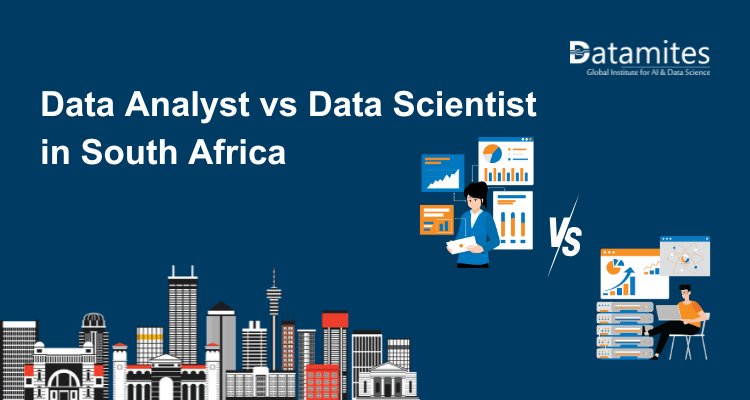
Choosing between data analytics and data science can be difficult for graduates, freshers, working professionals, and career switchers. Both careers involve working with data, but they differ in technical depth, responsibilities, tools, and career progression.
In South Africa, data skills are becoming increasingly relevant across banking, financial services, retail, telecommunications, healthcare, mining, consulting, and technology. The World Bank's 2026 report, From Demand to Delivery: Strengthening South Africa's Digital Skills Pipeline, highlights a gap between employer requirements and available labour-market skills. It identifies data analytics, cybersecurity, cloud computing, and software engineering among areas where graduate supply does not fully match demand.
For learners considering a career in data, understanding these differences can help them choose a path that matches their interests, existing skills, and long-term goals.
Data Analyst vs Data Scientist: Key Differences
A data analyst primarily works with existing data to understand business performance, identify trends, answer questions, and support decision-making. Common responsibilities include data preparation, SQL queries, reporting, dashboards, and data visualisation.
A data scientist works on more advanced analytical problems and may develop statistical and machine learning models to make predictions or solve complex business problems.
| Area | Data Analyst | Data Scientist |
| Main focus | Business analysis and reporting | Advanced analysis and prediction |
| Common tools | Excel, SQL, Power BI, Tableau | Python, SQL, statistics, machine learning |
| Statistics | Basic to intermediate | Intermediate to advanced |
| Programming | Useful | Usually important |
| Typical output | Reports, dashboards, insights | Predictive and analytical models |
| Career direction | Analytics, BI, management | Data science, ML, advanced analytics |
There is also considerable overlap. Experienced analysts may use Python and statistical methods, while data scientists can spend substantial time cleaning data, exploring datasets, and creating visualisations.
Read these articles:
- How LLMs Are Transforming Data Science Careers
- Exploring the Role of Quantum Computing in Data Science
- The Ultimate Guide to Data Science Models
What Does a Data Analyst Do in South Africa?
A data analyst helps organisations understand what has happened in their business and why. The role commonly involves collecting, cleaning, analysing, and presenting structured data.
Typical responsibilities include:
- Cleaning and preparing datasets
- Writing SQL queries
- Analysing business performance
- Creating reports and dashboards
- Tracking key performance indicators
- Identifying trends and unusual patterns
- Presenting findings to stakeholders
- Supporting business decisions
For example, a South African retailer may use an analyst to examine customer purchases and identify differences in demand across regions. A bank may use analysts to monitor transactions, customer behaviour, financial performance, and operational metrics.
The role commonly relies on Excel, SQL, statistics, data visualisation, and business intelligence platforms such as Power BI or Tableau. Python can be useful for automation and more advanced analysis.
What Does a Data Scientist Do in South Africa?
A data scientist works on analytical problems that require stronger statistical and computational methods. The role can involve understanding past patterns as well as predicting future outcomes.
Responsibilities may include exploratory data analysis, statistical modeling, machine learning, predictive modeling, model evaluation, and working with structured and unstructured data.
For example, a telecommunications company could analyse customer data to identify subscribers who may leave. A data scientist could develop and evaluate a churn prediction model and provide insights that support customer retention strategies.
Data scientists generally work with Python, SQL, statistics, machine learning, data preparation, and model evaluation. Depending on the position, they may also use deep learning, natural language processing, cloud platforms, and big-data technologies.
Refer to these articles:
- Binomial Distribution: A Beginner’s Guide for Data Science
- What Is Correlation in Data Science? Importance and Real-World Examples
- Histogram in Data Science: A Quick Guide with Examples
Skills and Tools for Data Analysts and Data Scientists
Both careers require analytical thinking, but the technical depth and application of these skills differ. The responsibilities discussed above show how the skills are applied in real work, while the following comparison highlights the main tools and capabilities.
Data Analyst Skills and Tools
- Excel: Used for data cleaning, calculations, pivot tables, and reporting.
- SQL: Used to query, filter, join, and manage data in databases.
- Statistics: Supports basic analysis, including averages, percentages, correlation, and trends.
- Data Visualization: Power BI, Tableau, and Excel help create dashboards and reports.
- Business and Communication Skills: Help analysts understand requirements and explain findings to stakeholders.
For learners who prefer a structured introduction to analytics, an online data analyst course in South Africa can provide a way to study these foundations alongside other professional or academic commitments.
Data Scientist Skills and Tools
- Python: Used for data preparation, statistical analysis, machine learning, and automation.
- SQL: Helps retrieve and prepare structured data from databases.
- Statistics and Mathematics: Support statistical modeling, probability, and advanced analysis.
- Machine Learning: Includes regression, classification, clustering, feature engineering, and model evaluation.
- Machine Learning Libraries: Scikit-learn, TensorFlow and PyTorch are commonly used for developing models.
- Big Data Technologies: Tools such as PySpark and Hadoop can support analysis of large datasets.
For learners building broader technical skills, an online data science course in South Africa can provide structured learning in areas such as Python, statistics, machine learning, data preparation, and analytical methods.
Both roles require problem-solving, analytical thinking, attention to detail, and communication skills. The main difference is the level and type of technical work involved.
How South Africa's Data and AI Market is Changing
South Africa's data market is developing as organizations increase their use of advanced analytics, cloud platforms, machine learning, artificial intelligence, and business intelligence.
The MICT SETA Sector Skills Plan identifies data scientist as a priority occupation and highlights AI, cloud computing, big data analytics, and the Internet of Things as important technology drivers.
The MarketsandMarkets South Africa Advanced Analytics Market 2026–2031 report estimates that the market was valued at approximately US$1.02 billion in 2026 and could reach US$2.21 billion by 2031, representing a projected 16.7% CAGR.
The MarketsandMarkets South Africa Artificial Intelligence Market 2026–2031 report projects growth from approximately US$1.34 billion in 2026 to US$6.77 billion by 2031, at a projected 26.1% CAGR.
These developments are relevant to both career paths. Data analysts can contribute through reporting, dashboards, business intelligence, and advanced analytics, while data scientists can work on predictive modelling, machine learning, and more complex analytical applications.
Refer to these articles:
- Data Science Job Roles, Salary Structure and Course Fees in South Africa
- Is Data Science & Artificial Intelligence in Demand in South Africa?
- How to Become a Data Scientist in South Africa
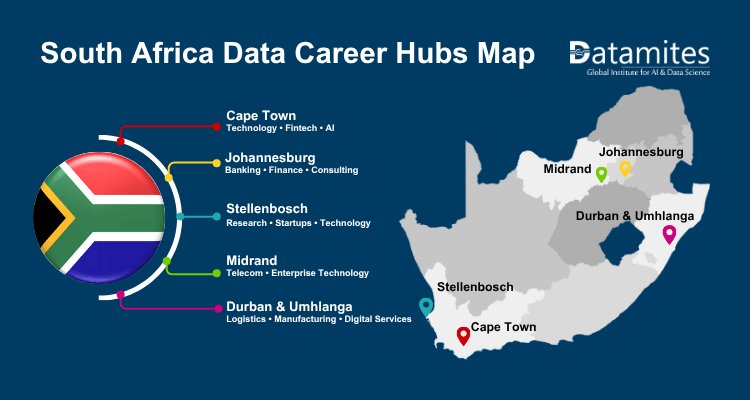
Data Analyst and Data Scientist Opportunities Across South Africa's IT Hubs
South Africa's data and technology opportunities are concentrated in major economic centres, particularly Gauteng, the Western Cape and KwaZulu-Natal. MICT SETA reports that Gauteng accounted for approximately 74% of MICT sector employment in 2025, followed by the Western Cape and KwaZulu-Natal. These regions provide opportunities across finance, technology, retail, telecommunications, logistics and other data-intensive industries.
Data Analyst and Data Scientist Jobs in Cape Town
Cape Town is a major technology and innovation centre, with activity across fintech, software development, artificial intelligence, cybersecurity and digital services. The Cape Technology and Innovation Ecosystem Report 2025 highlights the city's startup, technology and talent ecosystem.
For learners considering flexible study options alongside work or other commitments, an online data science course in Cape Town can cover areas such as Python, statistics, machine learning, and data preparation. Similarly, an online data analyst course in Cape Town can focus more closely on SQL, Excel, business intelligence, reporting, and data visualisation.
Data analysts can find opportunities in business intelligence, reporting, customer analytics and financial analysis, while data scientists can work in predictive modelling, machine learning and fintech. According to Glassdoor, the current median total pay for a data scientist in Cape Town is approximately R48,000 per month, equivalent to about R576,000 per year. For data analysts, Glassdoor reports median total pay of around R32,000 per month, or approximately R384,000 per year. These figures represent total pay and can vary according to experience, employer and specialisation.
Data Analyst and Data Scientist Jobs in Johannesburg
Johannesburg is a major corporate and financial centre, supporting data careers across banking, insurance, consulting, telecommunications, retail and enterprise technology. Data analyst roles commonly involve reporting, financial analytics, risk analysis and business intelligence, while data scientists may work on machine learning, predictive analytics and customer modelling.
Learners based in the city may also consider an online data science course in Johannesburg when they want to develop technical skills through a flexible learning format. An online data analyst course in Johannesburg can similarly provide structured learning around data analysis, SQL, visualisation, reporting, and business intelligence.
Glassdoor currently reports median total pay of approximately R650,000 per year for data scientists in Johannesburg, while data analysts have median total pay of around R29,000 per month, equivalent to approximately R348,000 per year. The data scientist figure is based on the city's reported salary range of approximately R490,000 to R830,000 annually.
Data Careers and Jobs in Stellenbosch
Stellenbosch is an important part of the Western Cape technology ecosystem, supported by Stellenbosch University, research institutions, startups and technology businesses. The Western Cape Technology Sector Market Intelligence Report 2025 identifies Stellenbosch as an important technology and entrepreneurship location.
Salary data for the city varies considerably because of the smaller number of reported salaries. Glassdoor reports median total pay of approximately R53,000 per month for data scientists, equivalent to about R636,000 per year. For data analysts, recent salary submissions on Glassdoor include figures around R30,000 to R33,000 per month, while Indeed reports an average base salary of approximately R50,662 per month, based on only two reported salaries.
Because the available Stellenbosch datasets have relatively small samples, these figures should be treated as indicative rather than representative of the entire local job market.
Data Analyst and Data Scientist Jobs in Midrand
Midrand forms part of Gauteng's wider business and technology corridor, including areas such as Waterfall and Allandale. Its location between Johannesburg and Pretoria connects it to the province's broader corporate technology market.
Data analysts can work in reporting, telecommunications, business intelligence, and operations analytics, while data scientists may work with enterprise data, customer analytics and machine learning. Glassdoor reports median total pay of approximately R590,000 per year for data scientists in Midrand, while its current data on data analysts shows median total pay of around R31,000 per month, or approximately R372,000 per year.
The data scientist figure is based on a relatively small dataset, so salary levels can differ substantially between employers and experience levels.
Data Careers in Durban and Umhlanga
Durban and Umhlanga are developing technology opportunities across logistics, manufacturing, digital businesses and technology-enabled services. In 2026, eThekwini Municipality reported that its SmartXchange programme had supported 273 enterprises and contributed to 1,390 permanent jobs, highlighting the region's growing technology entrepreneurship ecosystem.
Data analysts can work in logistics analytics, reporting, customer insights and operations, while data scientists can apply predictive analytics and modelling to business and technology problems. Glassdoor reports an average base salary of approximately R37,000 per month for data scientists in Durban, equivalent to about R444,000 per year. For data analysts, Glassdoor's latest available data reports an average base pay of around R35,000 per month, or approximately R420,000 per year.
Indeed provides a more recent but smaller-sample figure for Data Analysts in Durban of approximately R27,464 per month, based on four reported salaries updated in August 2026. This difference demonstrates why city-level salary figures should be viewed as indicative rather than fixed market rates.
Overall, these cities offer different data career environments. Cape Town and Stellenbosch have strong technology and innovation ecosystems, Johannesburg and Midrand provide access to Gauteng's large corporate market, while Durban and Umhlanga offer opportunities connected to logistics, digital businesses and technology services. Salary levels vary by experience, employer, industry, technical specialization, and the methodology used by each salary platform.
Refer to these articles:
- What are the top IT companies in South Africa
- How much is the Certified Data Analyst course fee in South Africa
- How to Become a Data Analyst in South Africa
Data Analyst vs Data Scientist: Salary and Job Opportunities in South Africa
Salary figures vary by experience, location, industry, employer, and source methodology, so the figures below should be treated as market indicators rather than guaranteed earnings.
Prosfy's September 2026 data, based on 19 data analyst salaries from job postings, reports a median annual salary of approximately R374,792 for data analysts. RandTools' 2026 salary data reports a median of approximately R28,000 per month for data analysts, equivalent to about R336,000 per year when annualised. Its data scientist data reports a median of approximately R42,000 per month, equivalent to about R504,000 per year.
Data analyst opportunities are available across banking, insurance, retail, telecommunications, logistics, healthcare, consulting, and government. Common job titles include data analyst, reporting analyst, business intelligence analyst, business analyst, and analytics specialist.
Data science positions are generally more specialized and commonly require programming, statistics, machine learning, and experience working with real datasets. Salary levels can vary considerably based on technical skills, experience, industry, and location.
The city-level figures discussed above come from different salary sources and may represent median total pay, average base pay, or individual salary submissions. Stellenbosch figures, for example, are individual salary submissions rather than city-wide averages.
The wider employment environment is also relevant. Statistics South Africa's Q2 2026 Quarterly Labour Force Survey recorded an official unemployment rate of 33.6%, with 16.7 million employed and 8.5 million unemployed people. For people entering data careers, practical projects, technical knowledge, communication skills, and the ability to apply data to business problems can help demonstrate workplace readiness.
Which Career Should You Choose: Data Analyst or Data Scientist?
Choosing between a data analyst and data scientist depends on your interests, existing skills, and long-term career objectives.
A data analyst role may suit learners who enjoy understanding business performance, working with reports and dashboards, analysing trends, and communicating insights to support decisions. It can be a practical starting point for graduates, business professionals, and career switchers who want to build experience working with business data.
A data scientist role may suit learners who are interested in solving complex analytical problems, developing predictive models, working with statistical methods, and exploring machine learning applications. People with backgrounds in mathematics, statistics, engineering, computer science, or IT may already have some relevant foundations.
Learning difficulty also varies by background. A finance professional may already understand financial reporting and business metrics, while someone from an IT or engineering background may have greater exposure to programming and technical concepts.
The two paths are not completely separate. SQL, statistics, data preparation, data visualization, and analytical thinking provide useful foundations for both careers. Someone can begin with analytics and later develop Python, machine learning, and model evaluation skills if their career goals move toward data science.
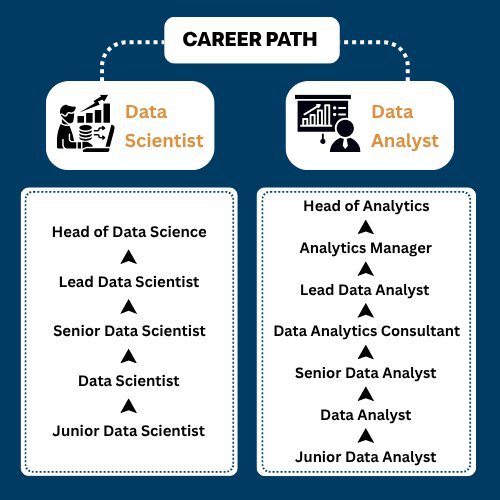
Career progression can also develop in different directions. Data analysts may progress from Junior Data Analyst → Data Analyst → Senior Data Analyst → Analytics Specialist or Analytics Manager. Data scientists may progress from Junior or Associate Data Scientist → Data Scientist → Senior Data Scientist → Lead or Principal Data Scientist.
Read these articles:
- Data Science Jobs, Salaries, and Course fees in Cape Town
- Data Science and Artificial Intelligence in Demand in Johannesburg
- Data Science and Artificial Intelligence Demand in Cape Town
Data Analyst vs Data Scientist: Career Outlook in South Africa
The future of both careers will require continuous skill development. The South African National Skills Fund Strategic Plan 2025-2030, drawing on employer research and World Economic Forum analysis, identifies Big Data Specialists, AI and Machine Learning Specialists, and software-related roles among technology-driven areas expected to experience strong growth toward 2030. It also reports that employers expect around 36% of workers core skills in South Africa to change by 2030.
The World Bank Digital and AI Implementation Plan FY26-30 also places digital skills and technology adoption within a longer-term development agenda. As the market develops, data analysts may increasingly work with advanced analytics, automation, business intelligence, and predictive techniques, while data scientists may need stronger capabilities in machine learning, model deployment, data engineering, governance, and business applications.
For learners and career switchers, the distinction between the two careers will continue to depend on the type of work they want to perform. Data analytics focuses more on business insights, reporting, visualization, and decision-making, while data science extends into statistical modelling, machine learning, predictive analysis, and more technically complex problems.
Rather than choosing a career based only on salary or job title, learners can review current job descriptions, compare the responsibilities they prefer, assess their existing background, and gain practical experience before deciding which direction fits their objectives.
At DataMites, we are a global institute focused on data science education, with more than 12 years of trust and experience in professional technology training. Over the years, DataMites has reached more than 150,000 learners globally, with learning programs covering data science and related technology fields. Along with data science courses, DataMites also provides Artificial Intelligence, Data Analyst, and Data Engineer courses, reflecting the range of skills used across modern data and technology careers.