 4.9 (19,300) reviews
 110,000
55,451*
NO COST EMI : 9,242 p.m for 6 Months
*Offer valid till 5th April 2026
Instructor Led Live Online
Self Learning + Live Mentoring
In - Person Classroom Training



MODULE 1: DATA ANALYSIS FOUNDATION
• Data Analysis Introduction
• Data Preparation for Analysis
• Common Data Problems
• Various Tools for Data Analysis
• Evolution of Analytics domain
MODULE 2: CLASSIFICATION OF ANALYTICS
• Four types of the Analytics
• Descriptive Analytics
• Diagnostics Analytics
• Predictive Analytics
• Prescriptive Analytics
• Human Input in Various type of Analytics
MODULE 3: CRIP-DM Model
• Introduction to CRIP-DM Model
• Business Understanding
• Data Understanding
• Data Preparation
• Modeling, Evaluation, Deploying,Monitoring
MODULE 4: UNIVARIATE DATA ANALYSIS
• Summary statistics -Determines the value’s center and spread.
• Measure of Central Tendencies: Mean, Median and Mode
• Measures of Variability: Range, Interquartile range, Variance and Standard Deviation
• Frequency table -This shows how frequently various values occur.
• Charts -A visual representation of the distribution of values.
MODULE 5: DATA ANALYSIS WITH VISUAL CHARTS
• Line Chart
• Column/Bar Chart
• Waterfall Chart
• Tree Map Chart
• Box Plot
MODULE 6: BI-VARIATE DATA ANALYSIS
• Scatter Plots
• Regression Analysis
• Correlation Coefficients
MODULE 1: PYTHON BASICS
• Introduction of python
• Installation of Python and IDE
• Python Variables
• Python basic data types
• Number & Booleans, strings
• Arithmetic Operators
• Comparison Operators
• Assignment Operators
MODULE 2: PYTHON CONTROL STATEMENTS
• IF Conditional statement
• IF-ELSE
• NESTED IF
• Python Loops basics
• WHILE Statement
• FOR statements
• BREAK and CONTINUE statements
MODULE 3: PYTHON DATA STRUCTURES
• Basic data structure in python
• Basics of List
• List: Object, methods
• Tuple: Object, methods
• Sets: Object, methods
• Dictionary: Object, methods
MODULE 4: PYTHON FUNCTIONS
• Functions basics
• Function Parameter passing
• Lambda functions
• Map, reduce, filter functions
MODULE 1 : OVERVIEW OF STATISTICS
MODULE 2 : HARNESSING DATA
MODULE 3 : EXPLORATORY DATA ANALYSIS
MODULE 4 : HYPOTHESIS TESTING
MODULE 1: COMPARISION AND CORRELATION ANALYSIS
• Data comparison Introduction,
• Performing Comparison Analysis on Data
• Concept of Correlation
• Calculating Correlation with Excel
• Comparison vs Correlation
• Hands-on case study : Comparison Analysis
• Hands-on case study Correlation Analysis
MODULE 2: VARIANCE AND FREQUENCY ANALYSIS
• Variance Analysis Introduction
• Data Preparation for Variance Analysis
• Performing Variance and Frequency Analysis
• Business use cases for Variance Analysis
• Business use cases for Frequency Analysis
MODULE 3: RANKING ANALYSIS
• Introduction to Ranking Analysis
• Data Preparation for Ranking Analysis
• Performing Ranking Analysis with Excel
• Insights for Ranking Analysis
• Hands-on Case Study: Ranking Analysis
MODULE 4: BREAK EVEN ANALYSIS
• Concept of Breakeven Analysis
• Make or Buy Decision with Break Even
• Preparing Data for Breakeven Analysis
• Hands-on Case Study: Manufacturing
MODULE 5: PARETO (80/20 RULE) ANALSYSIS
• Pareto rule Introduction
• Preparation Data for Pareto Analysis,
• Performing Pareto Analysis on Data
• Insights on Optimizing Operations with Pareto Analysis
• Hands-on case study: Pareto Analysis
MODULE 6: Time Series and Trend Analysis
• Introduction to Time Series Data
• Preparing data for Time Series Analysis
• Types of Trends
• Trend Analysis of the Data with Excel
• Insights from Trend Analysis
MODULE 7: DATA ANALYSIS BUSINESS REPORTING
• Management Information System Introduction
• Various Data Reporting formats
• Creating Data Analysis reports as per the requirements
MODULE 1: DATA ANALYTICS FOUNDATION
• Business Analytics Overview
• Application of Business Analytics
• Benefits of Business Analytics
• Challenges
• Data Sources
• Data Reliability and Validity
MODULE 2: OPTIMIZATION MODELS
• Predictive Analytics with Low Uncertainty;Case Study
• Mathematical Modeling and Decision Modeling
• Product Pricing with Prescriptive Modeling
• Assignment 1 : KERC Inc, Optimum Manufacturing Quantity
MODULE 3: PREDICTIVE ANALYTICS WITH REGRESSION
• Mathematics behind Linear Regression
• Case Study : Sales Promotion Decision with Regression Analysis
• Hands on Regression Modeling in Excel
MODULE 4: DECISION MODELING
• Predictive Analytics with High Uncertainty
• Case Study-Monte Carlo Simulation
• Comparing Decisions in Uncertain Settings
• Trees for Decision Modeling
• Case Study : Supplier Decision Modeling - Kickathlon Sports Retailer
MODULE 1: MACHINE LEARNING INTRODUCTION
• What Is ML? ML Vs AI
• ML Workflow, Popular ML Algorithms
• Clustering, Classification And Regression
• Supervised Vs Unsupervised
MODULE 2: ML ALGO: LINEAR REGRESSSION
• Introduction to Linear Regression
• How it works: Regression and Best Fit Line
• Hands-on Linear Regression with ML Tool
MODULE 3: ML ALGO: LOGISTIC REGRESSION
• Introduction to Logistic Regression;
• Classification & Sigmoid Curve
• Hands-on Logistics Regression with ML Tool
MODULE 4: ML ALGO: KNN
• Introduction to KNN; Nearest Neighbor
• Regression with KNN
• Hands-on: KNN with ML Tool
MODULE 5: ML ALGO: K MEANS CLUSTERING
• Understanding Clustering (Unsupervised)
• Introduction to KMeans and How it works
• Hands-on: K Means Clustering
MODULE 6: ML ALGO: DECISION TREE
• Decision Tree and How it works
• Hands-on: Decision Tree with ML Tool
MODULE 7: ML ALGO: SUPPORT VECTOR MACHINE (SVM)
• Introduction to SVM
• How It Works: SVM Concept, Kernel Trick
• Hands-on: SVM with ML Tool
MODULE 8: ARTIFICIAL NEURAL NETWORK (ANN)
• Introduction to ANN, How It Works
• Back propagation, Gradient Descent
• Hands-on: ANN with ML Tool
MODULE 1: DATABASE INTRODUCTION
• DATABASE Overview
• Key concepts of database management
• CRUD Operations
• Relational Database Management System
• RDBMS vs No-SQL (Document DB)
MODULE 2: SQL BASICS
• Introduction to Databases
• Introduction to SQL
• SQL Commands
• MY SQL workbench installation
MODULE 3: DATA TYPES AND CONSTRAINTS
• Numeric, Character, date time data type
• Primary key, Foreign key, Not null
• Unique, Check, default, Auto increment
MODULE 4: DATABASES AND TABLES (MySQL)
• Create database
• Delete database
• Show and use databases
• Create table, Rename table
• Delete table, Delete table records
• Create new table from existing data types
• Insert into, Update records
• Alter table
MODULE 5: SQL JOINS
• Inner join, Outer Join
• Left join, Right Join
• Self Join, Cross join
• Windows Functions: Over, Partition, Rank
MODULE 6: SQL COMMANDS AND CLAUSES
• Select, Select distinct
• Aliases, Where clause
• Relational operators, Logical
• Between, Order by, In
• Like, Limit, null/not null, group by
• Having, Sub queries
MODULE 7: DOCUMENT DB/NO-SQL DB
• Introduction of Document DB
• Document DB vs SQL DB
• Popular Document DBs
• MongoDB basics
• Data format and Key methods
• MongoDB data management
MODULE 1: BIG DATA INTRODUCTION
• Big Data Overview
• Five Vs of Big Data
• What is Big Data and Hadoop
• Introduction to Hadoop
• Components of Hadoop Ecosystem
• Big Data Analytics Introduction
MODULE 2: HDFS AND MAP REDUCE
• HDFS – Big Data Storage
• Distributed Processing with Map Reduce
• Mapping and reducing stages concepts
• Key Terms: Output Format, Partitioners, Combiners, Shuffle, and Sort
MODULE 3: PYSPARK FOUNDATION
• PySpark Introduction
• Spark Configuration
• Resilient distributed datasets (RDD)
• Working with RDDs in PySpark
• Aggregating Data with Pair RDDs
MODULE 4: SPARK SQL and HADOOP HIVE
• Introducing Spark SQL
• Spark SQL vs Hadoop Hive
MODULE 1: TABLEAU FUNDAMENTALS
• Introduction to Business Intelligence & Introduction to Tableau
• Interface Tour, Data visualization: Pie chart, Column chart, Bar chart.
• Bar chart, Tree Map, Line Chart
• Area chart, Combination Charts, Map
• Dashboards creation, Quick Filters
• Create Table Calculations
• Create Calculated Fields
• Create Custom Hierarchies
MODULE 2: POWER-BI BASICS
• Power BI Introduction
• Basics Visualizations
• Dashboard Creation
• Basic Data Cleaning
• Basic DAX FUNCTION
MODULE 3: DATA TRANSFORMATION TECHNIQUES
• Exploring Query Editor
• Data Cleansing and Manipulation:
• Creating Our Initial Project File
• Connecting to Our Data Source
• Editing Rows
• Changing Data Types
• Replacing Values
MODULE 4: CONNECTING TO VARIOUS DATA SOURCES
• Connecting to a CSV File
• Connecting to a Webpage
• Extracting Characters
• Splitting and Merging Columns
• Creating Conditional Columns
• Creating Columns from Examples
• Create Data Model
I joined DataMites for the Certified Data Scientist online course, and it was a great experience! The real-time projects helped me apply my learning practically, and the placement support added real value to my career restart after 8 years. DataMites is the perfect platform to learn, grow, and begin your data science journey.
I joined DataMites for the Data Science course and learned Python, SQL, Machine Learning, and Deep Learning through hands-on projects. The trainers are excellent at explaining concepts clearly. The placement team is very supportive and provides great opportunities thanks to DataMites for helping me start my data science journey.
I joined DataMites after my B.Tech when I developed an interest in Data Science and Machine Learning. The training was well-structured, and I even got an internship opportunity that helped me gain real experience. The placement team was super supportive and guided me through every step. Thanks to DataMites, I’m now placed at Horizon Broadband Pvt. Ltd.
I joined DataMites after completing my BCA, and it was the best decision for my data science career! I learned Python, SQL, Machine Learning, Deep Learning, and NLP, and worked on several capstone and client projects that gave me real-world experience. The trainers and team were always friendly and supportive, patiently clearing all my doubts. Thanks to DataMites, I’m confident and job-ready in data science
I started my data science journey with DataMites, and it’s been an amazing experience! The Certified Data Scientist Program helped me learn everything from scratch through hands-on projects and an internship. The placement team was incredibly supportive, always ready to clarify my doubts. Thanks to their guidance, I successfully got placed. Highly recommend DataMites to anyone starting their data science career
Enrolling at DataMites was one of the best decisions I made for my career. Coming from a freelance writing background with no prior technical experience, I was initially unsure about stepping into the field of data analytics. But DataMites made the transition smooth and achievable. I’d highly recommend them to anyone looking for a guided, industry-ready data analytics course. A true DataMites success story!
After completing a Data Analytics Course, learners can pursue roles such as Data Analyst, Business Analyst, BI Analyst, MIS Analyst, Operations Analyst, Marketing Analyst, and Junior Data Scientist. These roles are available across IT, healthcare, BFSI, retail, e-commerce, and manufacturing sectors with strong career growth.
Choosing a Data Analytics Course in Kannur offers quality education at affordable costs, growing IT awareness, and access to industry-relevant analytics training. With increasing demand for data-driven roles and lower living expenses, Kannur is ideal for students and professionals starting analytics careers.
The course duration for Data Analytics Course in Kannur typically ranges from 6 to 8 months. It includes training in Excel, SQL, Python, statistics, Power BI or Tableau, real-time projects, internships, and placement preparation, suitable for both freshers and working professionals.
The fees of Data Analytics Course in Kannur generally range between INR 30,000 and INR 1,00,000. The cost depends on training mode, curriculum depth, certifications, projects, internships, and placement support, making it accessible for students and professionals with different budgets.
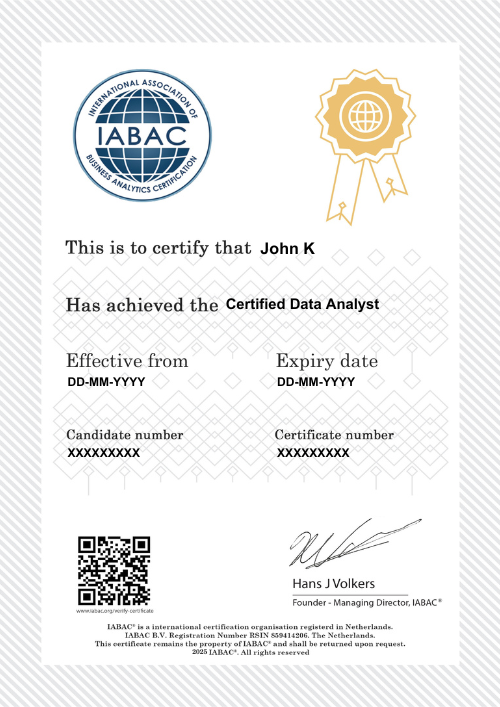
To find the best institute for Data Analytics Course in Kannur, look for industry-aligned syllabus, certified trainers, hands-on projects, internship opportunities, placement assistance, flexible learning options, and globally recognized certifications like IABAC® or NASSCOM.
The demand for Data Analytics Course in Kannur is steadily rising as businesses adopt data-driven decision-making. Industries such as IT services, healthcare, finance, retail, logistics, and startups increasingly seek skilled data analysts, creating strong local and national job opportunities.
The average salary range for Data Analysts in India starts at INR 4–6 LPA for freshers, INR 6–12 LPA for mid-level professionals, and can go up to INR 15–20 LPA for experienced analysts, depending on skills, tools, domain expertise, and project experience.
Essential tools used by Data Analyst include Excel for data handling, SQL for database querying, Python for analysis, Power BI or Tableau for visualization, and statistical tools. These tools help in data cleaning, analysis, reporting, and delivering actionable business insights.
Top job roles after pursuing data analytics course include Data Analyst, Business Analyst, BI Analyst, MIS Analyst, Marketing Analyst, Product Analyst, Operations Analyst, and Junior Data Scientist. These roles are in high demand across technology, finance, healthcare, and retail sectors.
Yes, Data Analytics Course is helpful for students from non-technical backgrounds. Courses start with fundamentals and teach tools like Excel, SQL, and Python from scratch. Strong analytical thinking, business understanding, and visualization skills enable non-technical learners to succeed.
SQL is important for a Data Analyst as it enables efficient data extraction, filtering, and manipulation from databases. Analysts use SQL to handle large datasets, generate reports, perform joins, and answer business questions, making it a core skill in analytics roles.
A Data Analytics course trains learners to collect, clean, analyze, and visualize data using tools like Excel, SQL, Python, and BI platforms. The course focuses on transforming raw data into meaningful insights to support data-driven business decisions and strategies.
The scope of a Data Analytics career in India is strong across IT, BFSI, healthcare, e-commerce, manufacturing, and government sectors. With rapid digital transformation and data adoption, analytics professionals enjoy high demand, job stability, and long-term career growth.
Data Analysts work on projects such as sales forecasting, customer segmentation, churn analysis, marketing performance dashboards, financial reporting, supply chain optimization, and business intelligence dashboards, using real-world datasets to solve practical business problems.
Yes, Excel is still important for Data Analysts. It is widely used for data cleaning, pivot tables, formulas, and quick analysis. Excel remains a foundational tool for reporting and analysis, especially in business environments alongside advanced analytics tools.
Programming knowledge is helpful but not mandatory to start a career as a Data Analyst. Most courses teach Python and SQL from the basics. Logical thinking, data interpretation, and visualization skills are more important initially, with coding skills developed gradually.
Data Analytics focuses on analyzing historical data to generate insights and support decision-making, while Data Science involves advanced machine learning, AI, predictive modeling, and algorithm development. Data Science roles usually require deeper programming and mathematical expertise.
A data Analytics course is highly relevant to current job market trends as organizations rely on data for strategy and growth. Analytics skills support automation, digital transformation, AI adoption, and business optimization, making data analysts essential across industries.
Yes, you can pursue a Data Analytics course on a part-time basis. Many institutes in Kannur offer flexible schedules, weekend batches, online or blended learning modes, allowing students and working professionals to learn analytics without affecting current commitments.
The best companies hiring Data Analytics in Kerala include TCS, Infosys, Wipro, UST Global, EY, Deloitte, Accenture, IBM, startups, healthcare firms, fintech companies, and analytics consultancies, offering roles across data analysis, BI, and business analytics.
DataMites is a preferred institute for Data Analytics Course in Kannur due to its industry-aligned curriculum, certified trainers, hands-on projects, internships, placement support, and globally recognized certifications, ensuring learners gain practical, job-ready skills for analytics roles in diverse sectors.
Yes, DataMites provides a Data Analytics Course in Kannur with internship opportunities. Learners get real-world experience through live projects, exposure to industry practices, and mentorship from professionals, helping them build a strong portfolio and prepare effectively for analytics job roles in top companies.
DataMites offers flexible EMI options for its Data Analytics Course in Kannur, making it affordable for students and working professionals. Learners can choose convenient monthly payment plans without financial strain, ensuring uninterrupted access to quality training, projects, and placement assistance for career growth.
DataMites follows a transparent refund policy for its Data Analytics Course. Refund eligibility depends on the cancellation timeline and the course start date. Learners can refer to the institute’s official terms and conditions to understand the process and claim refunds in case of withdrawal before the commencement of training.
The fees for Data Analytics Course at DataMites Kannur vary based on the learning mode. Online training is priced affordably, classroom programs offer hands-on experience, and blended learning provides flexibility. Fees cover comprehensive modules, projects, certifications, and internship support, ensuring value for investment.
Yes, DataMites offers Data Analytics Course in Kannur with placement support. Learners benefit from resume building, mock interviews, job alerts, and access to industry hiring partners. The program ensures candidates are job-ready with practical skills, making them highly employable in analytics roles across sectors.
DataMites provides comprehensive learning materials for Data Analytics Course in Kannur, including study manuals, video lectures, project datasets, case studies, and practice exercises. These resources enable learners to understand concepts thoroughly, practice real-world scenarios, and build analytical expertise for career advancement.
The instructors for Data Analytics Course at DataMites Kannur are industry experts with certifications in analytics and business intelligence. They have extensive real-world experience, guiding learners through hands-on projects, case studies, and advanced analytics tools to ensure practical knowledge and career readiness.
Yes, the Data Analytics Course at DataMites Kannur includes live projects and capstone assignments. Learners apply analytical tools to real business datasets, gain practical problem-solving skills, and develop a portfolio that showcases their ability to handle data analytics challenges in professional environments.
The Certified Data Analytics Course at DataMites generally spans 6–8 months. It includes structured training sessions, hands-on projects, internships, and placement preparation. The program is designed for students and working professionals seeking in-depth knowledge, practical skills, and industry exposure in data analytics.
Yes, DataMites allows learners to make up missed classes in their Data Analytics Course. Students can attend recorded sessions, join other batches, or access live online classes. This flexible approach ensures uninterrupted learning and mastery of concepts without losing valuable training hours or project guidance.
Yes, DataMites offers demo classes for its Data Analytics Course in Kannur. Prospective learners can experience teaching methods, curriculum coverage, and instructor expertise before enrollment. This helps students make informed decisions about joining the program while understanding the course structure and practical approach.
DataMites accepts multiple payment methods for its Data Analytics Course in Kannur, including debit/credit cards, net banking, UPI, and EMI plans. These flexible payment options ensure convenience for learners from different backgrounds, enabling them to enroll in the course without financial constraints.
Yes, DataMites allows learners to switch between offline and online modes of the Data Analytics Course in Kannur. This flexibility helps accommodate changes in schedule, location, or personal commitments while ensuring access to the same curriculum, projects, and placement support as in the original mode.
The DataMites Flexi Pass allows learners of the Data Analytics Course in Kannur to attend multiple batches, access recorded sessions, and revise topics for up to one year. This ensures flexibility in learning, enabling students to strengthen their skills, revisit complex concepts, and stay updated with course materials anytime.
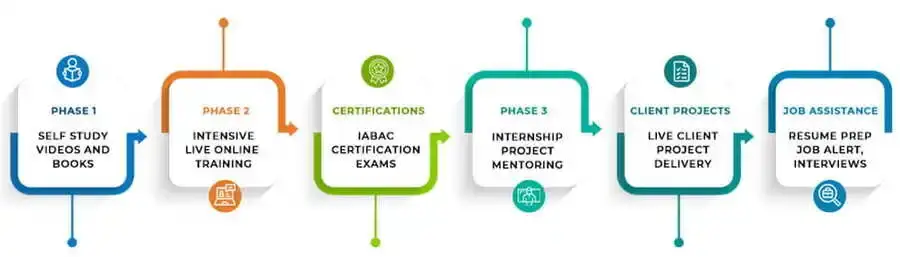
The DataMites Placement Assistance Team(PAT) facilitates the aspirants in taking all the necessary steps in starting their career in Data Science. Some of the services provided by PAT are: -
The DataMites Placement Assistance Team(PAT) conducts sessions on career mentoring for the aspirants with a view of helping them realize the purpose they have to serve when they step into the corporate world. The students are guided by industry experts about the various possibilities in the Data Science career, this will help the aspirants to draw a clear picture of the career options available. Also, they will be made knowledgeable about the various obstacles they are likely to face as a fresher in the field, and how they can tackle.
No, PAT does not promise a job, but it helps the aspirants to build the required potential needed in landing a career. The aspirants can capitalize on the acquired skills, in the long run, to a successful career in Data Science.
 Refer & Earn
 +1-628-228-6062