

DataMites® Awards & Recognitions

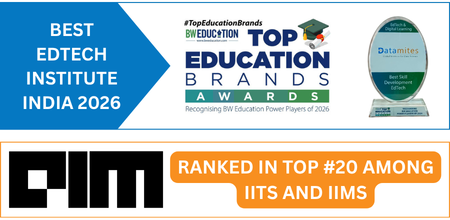
Best EdTech Institute India 2026 - DataMites ranked in top 20 among IITs and IIMs
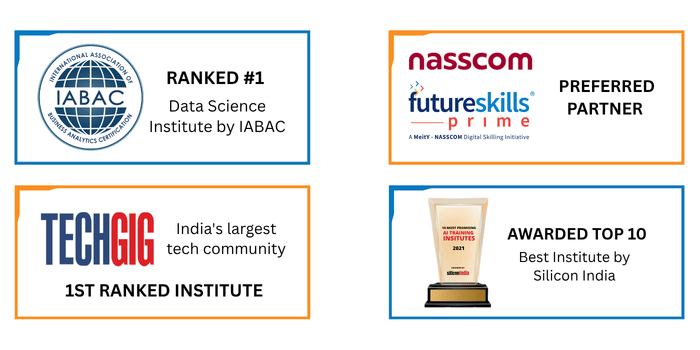
DataMites accolades - IABAC, NASSCOM, TechGig and Silicon India awards

CERTIFIED AI ARCHITECT CERTIFICATION AUTHORITIES

ARTIFICIAL INTELLIGENCE LEAD MENTORS

CERTIFIED AI ARCHITECT COURSE FEE

Corporate Training

Customize Your Training


  • Instructor-Led & Self-Paced training
  • Customized Learning Options
  • Industry Expert Trainers
  • Case Study Approach
  • Enterprise Grade Learning
  • 24*7 Cloud Lab

ARE YOU LOOKING TO UPSKILL YOUR TEAM ?

Enquire Now

SEARCH FOR TOP COURSES


WHY DATAMITES INSTITUTE FOR AI ARCHITECT COURSE

Why DataMites Infographic

SYLLABUS OF CERTIFIED AI ARCHITECT COURSE

SESSION 1

Business discovery & architecture practice

  • Predictive, generative, multimodal and agentic workloads; when conventional software is sufficient
  • Requirements, stakeholders, constraints, acceptance criteria and nonfunctional requirements
  • Context/container diagrams, data flows and architecture decision records (ADRs)

SESSION 2

Data & predictive AI architecture

  • Classification, forecasting and anomaly detection; batch versus online serving
  • Data contracts, lineage, train/test separation, feature freshness and leakage
  • Model registries, drift, retraining, training-serving skew and rollback

SESSION 3 · LAB

Guided design & serving lab

  • Use a supplied model endpoint; inspect input/output validation and versioning
  • Compare predictive ML, an LLM and a rules-based design for one use case
  • Define capstone requirements, initial diagram, threat boundary and first ADR

SESSION 4

Model selection & deployment choices

  • Tokens, context limits, modalities, quality and task fit
  • Hosted APIs versus open-weight/self-hosted options; licensing and data requirements
  • Prompting, RAG and fine-tuning: selection criteria and tradeoffs

SESSION 5

Reliable application interfaces

  • Context construction, structured outputs and schema validation
  • Tool contracts, streaming, timeouts, retries and rate limits
  • Model routing, fallback and abstention/escalation

SESSION 6 · LAB

Comparative model lab

  • Integrate a selected model through a supplied API scaffold
  • Compare two model options using a small held-out test set
  • Record quality, latency, token usage and estimated cost

SESSION 7

Knowledge & ingestion design

  • Document parsing, OCR awareness, chunking, metadata and embeddings
  • Vector indexes, provenance, refresh, retention and deletion propagation
  • Data ownership, source permissions and tenant boundaries

SESSION 8

Retrieval & evaluation design

  • Keyword, vector and hybrid search, reranking and query rewriting
  • Authorization before context assembly; citations and insufficient evidence
  • Retrieval metrics versus response quality; test-query design

SESSION 9 · LAB

Guided RAG lab

  • Assemble one small-corpus retrieval flow from a scaffold
  • Compare retrieval settings; test unsupported questions and access boundaries
  • Document full-build requirements for the project phase

SESSION 10

Agents, workflows & state

  • Fixed workflows, dynamic tool choice, planning and termination
  • Context, memory boundaries, persistence and checkpoints
  • Single-agent and multi-agent selection criteria

SESSION 11

Action controls & failure handling

  • Validated tool parameters, least privilege and scoped identity
  • Application-enforced human approval, read/write separation and action budgets
  • Idempotency, duplicate execution, retries and recovery

SESSION 12 · LAB

Guided agent lab

  • Implement one constrained read tool and a simulated action
  • Pause for approval, resume and inspect execution traces
  • Compare workflow and agent alternatives; review a bounded multi-agent pattern

SESSION 13

Enterprise integration

  • CRM/ERP/service-desk APIs, webhooks, queues and event-driven patterns
  • Asynchronous processing, consistency, deduplication and compensation
  • User/workload identity, delegated permissions and auditability

SESSION 14

Interoperability & orchestration

  • MCP clients/servers, tool contracts, authorization boundaries and versioning
  • Sequential, parallel, supervisor and review/critique patterns
  • A2A awareness and inter-agent trust: avoiding unnecessary coordination complexity

SESSION 15 · LAB

Integration demo & design studio

  • Connect a constrained MCP tool to a mock business API
  • Review document extraction and validation using an approved model/OCR service
  • Specify draft versus committed actions, approvals and failure behavior

SESSION 16

Deployment patterns

  • Managed inference, containers, serverless and self-hosting tradeoffs
  • Networking, gateways, secrets, identity and storage boundaries
  • GPU memory/utilization and quantization awareness

SESSION 17

Repeatable delivery & operations

  • Supplied infrastructure-as-code templates: dev/test/prod configuration
  • Versioning code, prompts, models and indexes; CI/CD and rollback
  • Logging, tracing, sensitive-data redaction and resource cleanup

SESSION 18 · LAB

Primary-cloud deployment lab

  • Deploy the small reference application through a supplied template
  • Review access policies and quotas; inspect a run trace
  • Map equivalent functions across AWS, Azure and Google Cloud

SESSION 19

AI threat modeling & controls

  • Prompt injection, poisoned knowledge, data exfiltration and unsafe output use
  • Excessive authority, tool supply-chain exposure and tenant leakage
  • Isolation, validation, approval gates and least privilege

SESSION 20

Evaluation & governance

  • Held-out datasets, retrieval quality, groundedness and task/action correctness
  • Deterministic checks, human review and calibrated model-based grading
  • NIST Govern / Map / Measure / Manage; ownership, audit evidence and incident escalation

SESSION 21 · LAB

Evaluation & defensive lab

  • Run instructor-provided negative tests in an isolated sandbox
  • Inspect a regression gate and diagnose its failure
  • Create capstone threat model, metrics and acceptance criteria

SESSION 22

Reliability & performance

  • Service objectives, p50/p95 latency, queues and error budgets
  • Timeouts, bounded retries, circuit breakers and graceful degradation
  • Backup/restore, replay safety, cache isolation and invalidation

SESSION 23

AI economics & optimization

  • Cost per successful task, token/context budgets, routing and caching
  • Managed versus self-hosted cost drivers and demand sensitivity
  • Capacity assumptions, quotas, budgets and operational ownership

SESSION 24 · REVIEW

Project readiness review

  • Review proposed architecture, ADRs, scope and constraints
  • Set milestones, test evidence, implementation backlog and cost budget
  • Approve a feasible project baseline for Weeks 9–16

OFFERED ARTIFICIAL INTELLIGENCE COURSES

CERTIFIED AI ARCHITECT COURSE COURSE REVIEWS

ABOUT CERTIFIED AI ARCHITECT TRAINING COURSE

DataMites Institute offers the Certified AI Architect program to equip experienced technology professionals with the expertise needed to create, develop, assess, and deploy dependable AI systems for enterprise applications. With organizations increasingly adopting predictive AI, generative AI, and agentic AI technologies, the demand is growing for professionals who can convert business needs into secure, scalable, and cost-efficient AI architectures. AI architecture is essential for connecting AI models, handling enterprise data, developing intelligent workflows, and maintaining the performance, reliability, and security of AI-driven systems.

The Certified AI Architect Course at DataMites™ is a 16-week professional program structured into two phases. It combines live instructor-led architecture sessions, guided labs, mentored hands-on projects, and an enterprise capstone. Learners receive 48 hours of live training, 16 hours of mentor reviews, and 80 hours of independent learning and project implementation, adding up to 144 planned learning hours. The program covers AI architecture, predictive machine learning, foundation models, enterprise RAG, AI agents, MCP and integration, cloud deployment, security, governance, evaluation, reliability, and AI economics.

The Certified AI Architect training emphasizes building AI systems that address practical business needs, security standards, performance expectations, and cost considerations. Learners gain exposure to technologies and tools such as Python, SQL, FastAPI, PostgreSQL, LangGraph, MCP, Docker, GitHub Actions, and cloud platforms such as AWS and Azure, along with Google Cloud architecture mapping. Through guided labs and a mentored enterprise capstone, participants develop hands-on experience in creating AI architectures, connecting business applications, applying security measures, assessing AI performance, and preparing solutions for dependable deployment. The program also features an individual evaluation and architecture defense as part of the requirements for the assessed Certified AI Architect award.

Why Choose DataMites for Certified AI Architect Training?

DataMites™ Institute offers a professional AI Architect program designed to help experienced technology professionals develop the skills required to design, implement, evaluate, and deploy enterprise AI systems. The Certified AI Architect program combines live instructor-led sessions, guided practical labs, mentored projects, and an enterprise capstone. Here are some reasons to consider this AI Architect training:

1. Industry-Relevant AI Architecture Curriculum: Learn essential concepts in predictive machine learning, foundation models, enterprise RAG, AI agents, MCP, cloud deployment, security, governance, evaluation, reliability, and AI economics. The curriculum focuses on practical architecture decisions and enterprise AI requirements.

2. Instructor-Led Learning and Mentored Projects: Participate in 24 live instructor-led sessions across eight weeks, followed by eight weeks of mentored project implementation. The program includes structured mentor reviews to support project development and technical problem-solving.

3. Hands-on Tools and Technologies: Work with technologies such as Python, SQL, FastAPI, PostgreSQL, pgvector, LangGraph or equivalent, MCP, Docker, GitHub Actions, and infrastructure-as-code templates. Learn cloud architecture through a primary AWS route, an Azure-first cohort option, and Google Cloud mapping.

4. Research-Backed Curriculum: Explore AI architecture patterns informed by published architect role descriptions, cloud AI competency guides, and leading architecture and security frameworks. The curriculum also references OWASP Agentic Top 10 and NIST AI RMF.

5. Mentored Enterprise Capstone Project: Develop an Enterprise Service Resolution Platform that combines predictive AI, retrieval-augmented generation, and agentic workflows. Practise retrieving approved knowledge, classifying requests, drafting responses, and proposing actions through controlled business-system integrations.

6. Security and Governance Training: Learn to identify AI security risks, implement access controls, manage permissions, conduct threat modeling, and perform adversarial testing. Understand how to design AI systems with human approval processes and accountable operations.

7. Assessed Certification: Earn the Certified AI Architect award by meeting the prescribed assessment requirements. The evaluation includes guided labs and architecture decisions, an individual scenario-based assessment, capstone implementation, and an individual architecture defense. A separate Program Completion Certificate is provided for program participation and completion.

8. Cloud Deployment and Practical Labs: Gain practical exposure to AI deployment patterns, cloud infrastructure, CI/CD, monitoring, logging, tracing, and rollback strategies. Guided labs help learners understand how to implement and operate AI applications in a structured environment.

9. Reusable Architect Templates: Develop practical architecture documents, including discovery briefs, architecture decision records, threat models, evaluation plans, cost estimates, and operations handover documents. These resources can support future enterprise AI architecture projects.

10. Reliability and AI Cost Engineering: Learn to evaluate system performance, manage failures, establish service objectives, optimize model usage, and estimate the cost of successful AI tasks. These skills help professionals design AI systems that meet business, operational, and financial requirements.

Skills You Will Gain from the Certified AI Architect Course

The Certified AI Architect training is designed to help experienced technology professionals develop the technical and practical skills required to design, build, evaluate, and deploy enterprise AI systems.

1. AI Architecture and Predictive AI: Learn to translate business requirements into AI architecture designs, define system requirements, and understand predictive machine learning applications such as classification, forecasting, and anomaly detection.

2. Foundation Models and Inference: Understand model selection, prompting, context management, structured outputs, model deployment choices, and inference architecture for reliable AI applications.

3. Enterprise RAG Architecture: Develop skills in document processing, embeddings, vector search, hybrid retrieval, reranking, retrieval evaluation, and permission-aware knowledge access.

4. AI Agent Architecture: Learn to design AI agents, manage workflows and state, define tool permissions, implement human approval processes, and handle failures and duplicate actions.

5. Enterprise Integration and MCP: Gain practical knowledge of integrating AI applications with CRM, ERP, service desk APIs, webhooks, event-driven systems, and MCP clients and servers.

6. Cloud Deployment and AI Platform Architecture: Understand managed inference, containers, serverless deployment, networking, identity management, CI/CD, infrastructure templates, monitoring, and rollback strategies.

7. AI Security, Governance and Evaluation: Learn AI threat modelling, prompt injection prevention, access controls, adversarial testing, retrieval quality assessment, model evaluation, governance, and auditability.

8. Reliability and AI Cost Engineering: Develop the ability to evaluate system performance, manage latency and failures, establish service objectives, optimize token usage, estimate costs, and plan operational recovery.

9. Architecture Documentation and Decision-Making: Learn to prepare architecture decision records, threat models, evaluation plans, cost estimates, deployment diagrams, and operations handover documents.

10. Enterprise AI Project Implementation: Apply your learning through a mentored enterprise capstone project. Build an Enterprise Service Resolution Platform that combines predictive AI, RAG, AI agents, controlled business-system integration, security testing, and cloud deployment.

By developing these skills, learners can strengthen their capabilities in enterprise AI architecture and prepare for technical responsibilities involving AI system design, solution architecture, AI engineering, and enterprise AI implementation.

Syllabus for DataMites Certified AI Architect Course

The DataMites Certified AI Architect Course is a 16-week professional program designed to help experienced technology professionals develop the skills required to design, build, evaluate, and deploy enterprise-ready AI systems. The curriculum is divided into two phases, covering eight key areas of AI architecture through live instructor-led sessions, guided labs, mentored projects, and an enterprise capstone.

WEEK 1: AI Architecture, Discovery & Predictive AI

Introduces AI architecture principles, business requirement discovery, and predictive AI. Learners explore how to translate business needs into AI solutions and understand the role of machine learning in enterprise applications.

WEEK 2: Foundation Models & Inference Architecture

Covers foundation models, model selection, inference patterns, and deployment considerations. Learners understand how to evaluate and integrate foundation models based on business requirements, performance, and cost.

WEEK 3: Enterprise Knowledge & RAG Architecture

Explores enterprise knowledge systems, retrieval-augmented generation (RAG), data preparation, retrieval strategies, and access control. Learners understand how to design AI solutions that use enterprise information to generate relevant and context-aware responses.

WEEK 4: Agent Architecture & Reliable Tool Use

Focuses on AI agent architecture, tool integration, workflow design, and controlled agent actions. Learners explore how to design reliable agent workflows with appropriate permissions, approval mechanisms, and safeguards.

WEEK 5: Enterprise Integration, MCP & Multimodal Patterns

Covers enterprise application integration, Model Context Protocol (MCP), and multimodal AI patterns. Learners understand how AI systems can connect with business applications, services, and different data formats.

WEEK 6: Cloud Deployment & AI Platform Architecture

Introduces cloud-based AI deployment and platform architecture. Learners explore deployment patterns, application infrastructure, containers, and the components required to operate AI solutions in cloud environments.

WEEK 7: Security, Governance & Evaluation Architecture

Covers AI security, governance, evaluation methods, and risk management. Learners explore security controls, responsible AI practices, evaluation approaches, and frameworks such as OWASP Agentic Top 10 and NIST AI RMF.

WEEK 8: Reliability, Economics & Project Design Review

Focuses on AI system reliability, performance, operational considerations, and cost management. Learners understand how to assess system requirements, estimate AI costs, identify potential failures, and review architecture decisions.

WEEKS 9–16: Enterprise Capstone Implementation

During the second phase, learners apply their architecture knowledge through a mentored enterprise capstone project: the Enterprise Service Resolution Platform. The project brings together predictive AI, RAG, LLM-based drafting, and bounded agent workflows.

Learners work on integrating enterprise applications, implementing identity and permission controls, configuring approval gates, and applying evaluation and tracing practices. They also explore cost budgets, deployment approaches, and operational requirements. The phase includes guided implementation work, mentor reviews, and an individual architecture defense.

Who Can Enroll in the DataMites Certified AI Architect Course?

The DataMites Certified AI Architect Course is designed for experienced technology professionals with a background in software, cloud, data, integration, or architecture. At least three years of relevant professional experience is recommended for applicants.

Key eligibility requirements:

  1. Work Experience: Recommended experience of at least 3 years in relevant technical roles.
  2. Programming Knowledge: Foundational knowledge of Python.
  3. API Knowledge: Familiarity with REST APIs and JSON.
  4. Database Knowledge: Basic understanding of SQL and databases.
  5. Development Tools: Familiarity with Git and containers.
  6. Cloud Knowledge: Understanding of cloud fundamentals.
  7. Technical Readiness: An entry diagnostic is used to assess foundational knowledge.

The program is suitable for professionals with relevant technical experience who want to strengthen their capabilities in enterprise AI architecture.

By the end of the program, participants will have developed practical skills in AI architecture, foundation models, enterprise RAG, agent workflows, cloud deployment, security, governance, evaluation, and reliability. They will also gain experience in designing and presenting an enterprise AI solution based on business and technical requirements.

DataMites™ offers the Certified AI Architect Course as a 16-week professional program that combines live instructor-led architecture sessions, guided labs, mentored project implementation, and an enterprise capstone. The program is structured to help experienced technology professionals develop practical skills in designing, building, evaluating, and deploying secure, scalable, and reliable AI solutions. It includes 8 weeks of live architecture learning followed by 8 weeks of mentored hands-on project work.

The Certified AI Architect program is designed for professionals who want to strengthen their expertise in enterprise AI architecture, foundation models, RAG, AI agents, cloud deployment, security, and governance. Through guided learning and an enterprise capstone project, participants gain practical exposure to designing AI solutions that address real-world business requirements. Along with this program, DataMites™ offers a range of professional training options, including Artificial Intelligence Courses, Data Science, data analytics, data engineering, Python programming, and machine learning courses, helping learners develop industry-relevant skills across different technology domains. 

ABOUT DATAMITES CERTIFIED AI ARCHITECT COURSE

AI architecture is the structured design of AI systems that collect and process data, train machine learning models, and deliver intelligent solutions. It works through data collection, processing, model development, deployment, and continuous monitoring to build efficient and scalable AI applications.

To become a Certified AI Architect, learn Python, machine learning, cloud computing, AI frameworks, and system design. Gain hands-on experience building AI solutions, deploying models, and designing scalable architectures. Enrolling in a professional AI Architect certification course can validate your skills and improve career opportunities.

Yes, becoming a certified AI architect can be a good career choice as businesses adopt AI to improve operations and develop smarter solutions. This role offers opportunities in AI development, system design, cloud computing, and automation. Building practical skills and earning relevant certifications can help professionals prepare for emerging career opportunities.

The Certified AI Architect course fee ranges from INR 75,000 to INR 150,000, depending on the training mode and program options. The fee covers structured training, practical learning, and hands-on project experience to help learners develop AI architecture skills.

A Certified AI Architect Course may cover tools and platforms such as Python, TensorFlow, PyTorch, LangChain, Hugging Face, OpenAI APIs, Docker, Kubernetes, and cloud platforms like AWS, Azure, and Google Cloud. These tools help learners build, integrate, deploy, and manage scalable AI applications.

After becoming a Certified AI Architect, professionals can pursue roles such as AI Architect, AI Engineer, Generative AI Engineer, Machine Learning Engineer, and AI Solutions Architect. These roles involve designing AI systems, developing intelligent applications, and implementing automation across industries like IT, healthcare, finance, and manufacturing.

AI architecture is important because businesses need secure, scalable, and efficient AI solutions. It helps organisations integrate AI models, automate workflows, manage data, and improve decision-making. Learning AI architecture prepares professionals to build reliable applications and meet the growing demand for AI-driven technologies.

According to Glassdoor, the average base salary of an AI architect in India is approximately INR 31.5 LPA, with a typical base salary range of INR 19.3 LPA to INR 42.8 LPA. Actual earnings vary depending on experience, technical skills, location, and employer.

The Certified AI Architect Course is primarily designed for professionals with at least 3 years of relevant experience in software, cloud, data, integration, or architecture, along with foundational knowledge of Python, SQL, REST APIs, Git, and containers.

Many institutes offer Certified AI Architect training, but DataMites is a recognized choice for its industry-focused curriculum, experienced trainers, practical assignments, certification, and career support. Comparing course topics, hands-on projects, and learner reviews can help you select the right institute for your AI career.

FAQ’S OF CERTIFIED AI ARCHITECT TRAINING COURSE

The DataMites Certified AI Architect Course is designed for technology professionals with at least 3 years of relevant experience in software, cloud, data, or system integration. It is suitable for software leads, solution architects, cloud engineers, senior data engineers, and technical consultants. Learners should have basic knowledge of Python, SQL, REST APIs, Git, and cloud fundamentals.

The DataMites Certified AI Architect course fee varies based on the selected training mode. Classroom training is available at INR 81,399, online training at INR 75,099, and blended training at INR 41,999 after discounts. Contact the DataMites team for the latest offers, payment options, and enrollment details.

DataMites offers a 16-week Certified AI Architect program with live training, hands-on labs, and mentored enterprise projects. The curriculum covers AI architecture, RAG, AI agents, cloud deployment, security, and governance. Learners also complete a practical capstone project to develop the skills needed to design and implement enterprise AI solutions.

To enroll in the DataMites Certified AI Architect Course, visit the DataMites website and submit the course enquiry form. The admissions team will guide you through the eligibility assessment, program details, fee structure, and enrollment process. You can also contact a course advisor for assistance with registration. 

The DataMites Certified AI Architect Program has a duration of 16 weeks (4 months). It includes 8 weeks of live architecture training followed by 8 weeks of mentored, hands-on project implementation. The program combines 48 live training hours, 16 mentor-review hours, and 80 hours of independent practical work.

DataMites has experienced trainers and subject matter experts with expertise in AI, software, and related technologies. The Certified AI Architect program includes live instructor-led sessions and mentor reviews to support learners in practical implementation and enterprise-level projects.

Yes, DataMites offers a free demo class to help learners understand the training approach, course structure, and key topics before enrolling in the Certified AI Architect program.

DataMites supports multiple payment methods for learner convenience. Payments can typically be made through online transfers, debit cards, credit cards, UPI, and other digital payment options. Contact the support team for available payment details.

Yes, learners receive a Program Completion Certificate after completing the DataMites Certified AI Architect program. Those who meet the assessment requirements, including the capstone project and architecture defense, are eligible for the Certified AI Architect award.

Yes, the DataMites Certified AI Architect Course includes hands-on labs, practical assignments, and mentored enterprise projects. Learners also complete a capstone project that involves designing and implementing an enterprise-level AI solution.

The DataMites Placement Assistance Team(PAT) facilitates the aspirants in taking all the necessary steps in starting their career in Data Science. Some of the services provided by PAT are: -

  • 1. Job connect
  • 2. Resume Building
  • 3. Mock interview with industry experts
  • 4. Interview questions

The DataMites Placement Assistance Team(PAT) conducts sessions on career mentoring for the aspirants with a view of helping them realize the purpose they have to serve when they step into the corporate world. The students are guided by industry experts about the various possibilities in the Data Science career, this will help the aspirants to draw a clear picture of the career options available. Also, they will be made knowledgeable about the various obstacles they are likely to face as a fresher in the field, and how they can tackle.

No, PAT does not promise a job, but it helps the aspirants to build the required potential needed in landing a career. The aspirants can capitalize on the acquired skills, in the long run, to a successful career in Data Science.

View more

CERTIFIED AI ARCHITECT TRAINING PROJECTS

CERTIFIED AI ARCHITECT JOB INTERVIEW QUESTIONS

OTHER ARTIFICIAL INTELLIGENCE TRAINING CITIES

Global Certified AI Architect course Countries

popular career ORIENTED COURSES

DATAMITES POPULAR COURSES


HELPFUL RESOURCES - DataMites Official Blog