 4.9 (15,700) reviews

Instructor Led Live Online
Self Learning + Live Mentoring
Customize Your Training
Module 1: Data Analysis Foundation
Module 2: Classification of Analytics
Module 3: CRISP-DM and the Analytical Workflow
Module 4: Univariate Data Analysis
Module 1: Comparison and Correlation Analysis
Module 2: Variance and Frequency Analysis
Module 3: Ranking Analysis
Module 4: Break-even Analysis and Unit Economics
Module 5: Pareto Analysis
Module 6: Time Series and Trend Analysis
Module 7: Data Analysis Business Reporting
Module 1: Descriptive Statistics and Data Behaviour
Module 2: Probability and Sampling
Module 3: Statistical Inference and Experiments
Module 4: Essential Mathematics for ML
Module 1: Business Analytics and Data Reliability
Module 2: Optimization Models
Module 3: Predictive Analytics with Regression
Module 4: Decision Modeling
Module 5: Spreadsheet Applications and Repeatable Analysis
Module 1: Machine Learning Introduction
Module 2: Linear Regression
Module 3: Logistic Regression
Module 4: Data Preparation and Model Validation
Module 5: K-means Clustering
Module 6: Decision Trees and Ensemble Awareness
Module 7: Model Evaluation and Explainability
Module 8: Business Application and Analytical Handover
Module 1: Relational Databases and SQL Basics
Module 2: Analytical SQL
Module 3: MongoDB and Document Data
Module 4: Database Integration for AI
Module 1: Scalable Data Foundations
Module 2: Practical AI Data Pipelines
Module 3: Spark DataFrames and Spark SQL
Module 4: Data Pipelines for AI Applications
Module 1: Repositories and Reproducibility
Module 2: Branching and Collaboration
Module 3: Safe Change Management
Module 4: Automated Quality Checks
Module 1: Business Metrics and Data Preparation
Module 2: Data Modelling and Calculations
Module 3: Dashboard Design and Interpretation
Module 4: Measuring AI and Business Outcomes
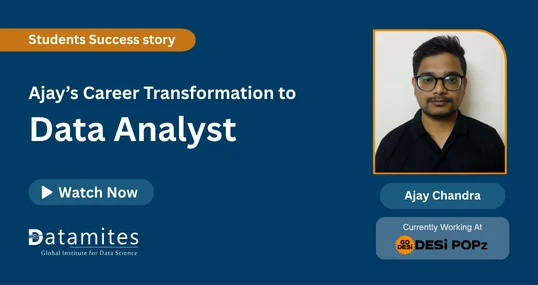
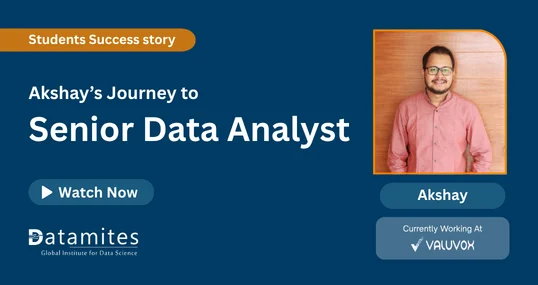
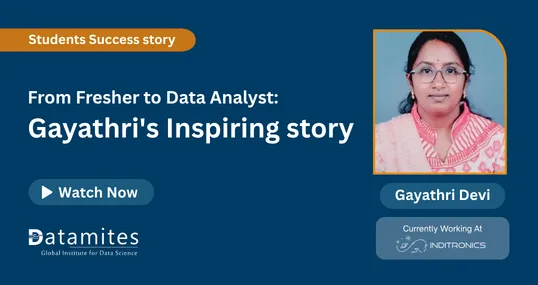
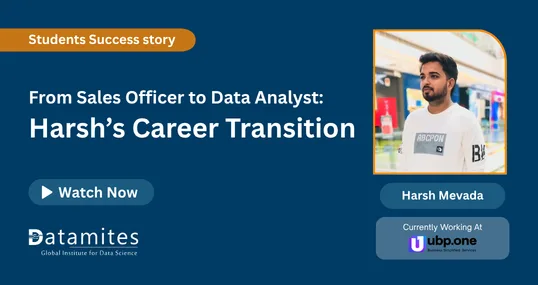
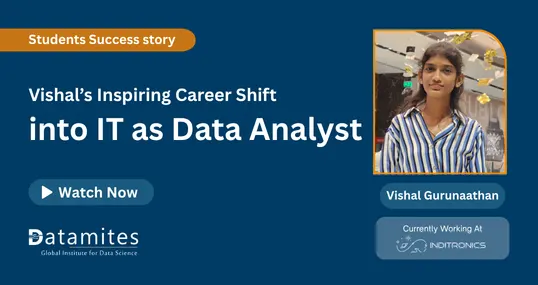
AI is the future, and DataMites helped me step into it! The online Data Science course was easy to follow, and the tutors explained everything clearly. Even after completing my course, the team supported me with placements and I successfully cracked a job! Grateful to DataMites for shaping my career.
I joined DataMites to learn Data Science and gained strong skills in ML, DL, and Statistics. Through my internship at Rubixe AI Solutions, I worked on real-world projects, which helped me land job interviews and an offer. The trainers were very supportive and explained every concept clearly. Thanks to DataMites, my data science journey was smooth and successful.
My mentor, a DataMites alumnus, suggested I join the Data Science course, and it was one of my best decisions! The offline classes were interactive and full of guidance, and I got the chance to intern at Rubixe AI Solutions. The placement team was very supportive and helped me perfect my resume. Truly thankful to DataMites for this amazing learning journey.
I joined DataMites after completing my engineering in Computer Science and became a Certified Data Scientist. With their support, I completed an internship at Rubix AI Solutions and now work as an AI intern at Inventor Hub. DataMites made learning statistics and data science easy with clear guidance and great materials. I’m truly thankful for their support.
I joined DataMites for the Certified Data Scientist online course, and it was a great experience! The real-time projects helped me apply my learning practically, and the placement support added real value to my career restart after 8 years. DataMites is the perfect platform to learn, grow, and begin your data science journey.
I joined DataMites for the Data Science course and learned Python, SQL, Machine Learning, and Deep Learning through hands-on projects. The trainers are excellent at explaining concepts clearly. The placement team is very supportive and provides great opportunities thanks to DataMites for helping me start my data science journey.
I joined DataMites after my B.Tech when I developed an interest in Data Science and Machine Learning. The training was well-structured, and I even got an internship opportunity that helped me gain real experience. The placement team was super supportive and guided me through every step. Thanks to DataMites, I’m now placed at Horizon Broadband Pvt. Ltd.
I joined DataMites after completing my BCA, and it was the best decision for my data science career! I learned Python, SQL, Machine Learning, Deep Learning, and NLP, and worked on several capstone and client projects that gave me real-world experience. The trainers and team were always friendly and supportive, patiently clearing all my doubts. Thanks to DataMites, I’m confident and job-ready in data science
I started my data science journey with DataMites, and it’s been an amazing experience! The Certified Data Scientist Program helped me learn everything from scratch through hands-on projects and an internship. The placement team was incredibly supportive, always ready to clarify my doubts. Thanks to their guidance, I successfully got placed. Highly recommend DataMites to anyone starting their data science career
Enrolling at DataMites was one of the best decisions I made for my career. Coming from a freelance writing background with no prior technical experience, I was initially unsure about stepping into the field of data analytics. But DataMites made the transition smooth and achievable. I’d highly recommend them to anyone looking for a guided, industry-ready data analytics course. A true DataMites success story!
Data analytics involves scrutinizing and interpreting raw data to extract meaningful insights, patterns, and trends. It employs various statistical and computational techniques to transform data into valuable information for decision-making.
Key skills for data analytics include proficiency in programming languages (such as Python or R), statistical analysis, data visualization, database management, and critical thinking. Strong communication skills are also vital for effectively conveying findings to non-technical stakeholders.
The role of a data analyst encompasses collecting, processing, and analyzing data to assist organizations in making informed decisions. Utilizing statistical methods, programming languages, and data visualization tools, they interpret complex datasets to generate actionable insights.
Typically, a bachelor's degree in a related field such as statistics, mathematics, computer science, or business is the minimum qualification for a data analyst course. However, some courses may accept candidates with relevant work experience or equivalent certifications.
To excel in data analytics, it's crucial to familiarize yourself with tools like Python or R for programming, SQL for database management, and data visualization tools like Tableau or Power BI.
As reported by Glassdoor, the average monthly Data Analyst Salary in Algiers is DZD 74,300. This information from a reputable source provides valuable insights into the prevailing compensation for Data Analysts in Algiers, aiding individuals in understanding the salary landscape in the local job market.
DataMites is recognized for offering high-quality data analytics courses in Algiers. Their programs provide comprehensive training, covering essential tools, techniques, and real-world applications. With a focus on hands-on learning and industry relevance, DataMites ensures participants gain the skills needed to excel in the dynamic field of data analytics.
The future of data analysis holds promise, driven by an increasing reliance on data-driven decision-making across various industries. Anticipated advancements in artificial intelligence, machine learning, and big data technologies are set to enhance the capabilities of data analytics, creating expanded opportunities for professionals in the field.
Pursuing data analytics can be demanding due to its multidisciplinary nature, requiring proficiency in statistics, programming, and business acumen. However, the challenges contribute to a comprehensive skill set.
Internships are crucial in data analytics as they provide real-world exposure, allowing learners to apply theoretical knowledge to practical scenarios. This hands-on experience enhances problem-solving skills, teamwork, and industry relevance.
Key positions in data analytics include Data Analyst, Business Intelligence Analyst, Data Scientist, Database Administrator, and Machine Learning Engineer. Each role entails specific responsibilities within the broader scope of data analytics.
Yes, data analytics often involves coding. Proficiency in programming languages like Python or R is beneficial for tasks such as data cleaning, statistical analysis, and creating algorithms. However, the level of coding expertise required may vary depending on the specific role and industry.
While achieving complete mastery in data analytics within six months is ambitious, individuals can gain a solid foundation and practical skills through intensive study, hands-on projects, and focused learning.
Projects in data analytics provide hands-on experience, reinforcing theoretical concepts. They enhance problem-solving skills, boost confidence, and allow learners to apply analytics techniques to real-world scenarios, preparing them for professional challenges.
Data analytics plays a pivotal role in enhancing healthcare outcomes in Algiers. It contributes to optimizing operations, creating personalized treatment plans, and conducting predictive analysis for disease prevention. This ultimately improves the efficiency and effectiveness of healthcare services.
Indeed, data analytics is considered challenging, demanding proficiency in statistics, programming, and business acumen. The complexity arises from the necessity to extract meaningful insights from vast and diverse datasets.
Yes, bootcamps in Algiers provide intensive and focused training in data analytics. These programs are designed to impart practical skills in a short duration, catering to individuals seeking a fast-track learning experience.
While data science involves broader tasks such as developing algorithms and predictive models, data analytics focuses on interpreting and analyzing historical data to derive insights for decision-making.
The data analytics job market in Algiers is witnessing growth, marked by an increasing demand for professionals skilled in big data analytics, machine learning, and business intelligence. Industries like finance, e-commerce, and healthcare are actively recruiting.
Yes, Python is often considered essential for data analysts due to its versatility in data manipulation, analysis, and visualization, making it a valuable tool in the field.
The Certified Data Analyst Course in Algiers at DataMites promises an unparalleled educational journey. Boasting a flexible learning environment, a curriculum tailored for industry relevance, distinguished instructors, and an exclusive practice lab, participants thrive within a vibrant learning community.
The program guarantees lifelong access, promoting continuous development, and offers boundless opportunities for practical projects. Additionally, with committed placement support, DataMites empowers learners to smoothly transition into the professional landscape of data analytics.
DataMites' Data Analytics Course in Algiers is priced between DZD 57,754 and DZD 177,591, providing participants with a range of options to fit their budget while ensuring access to quality data analytics training.
The DataMites Data Analyst Training in Algiers has a duration of 6 months, requiring a commitment of 20 hours per week. With over 200 learning hours, this program offers participants a comprehensive understanding of essential concepts and skills in data analytics, fostering a well-paced and immersive learning experience.
Participants in DataMites' certified data analyst training in Algiers explore an extensive toolkit, featuring Advanced Excel, MySQL, MongoDB, Git, GitHub, Atlassian BitBucket, Hadoop, Apache Pyspark, Anaconda, Google Collab, Numpy, Pandas, Tableau, and Power BI. This varied selection ensures learners gain essential skills for success in data analysis and visualization.
DataMites' Certified Data Analyst Course in Algiers stands out by presenting a specialized Course Bundle concentrating on advanced analytics and business insights. Positioned as a No-Code program, it facilitates entry into advanced analytics for data analytics professionals and managers, eliminating the need for programming expertise. The course, optionally incorporating Python, undergoes continuous updates to stay in sync with industry requirements, ensuring a well-structured and streamlined learning experience suitable for lean learning.
Indeed, DataMites in Algiers is dedicated to offering support, aiding participants in grasping data analytics course topics effectively. This proactive assistance ensures a solid understanding of the curriculum.
Participants in the Certified Data Analyst Course in Algiers explore a wide-ranging curriculum covering Data Analysis Foundation, Statistics Essentials, Data Analysis Associate, Advanced Data Analytics, Predictive Analytics with Machine Learning, Database: SQL and MongoDB, Version Control with Git, Big Data Foundation, Python Foundation, and the Certified Business Intelligence (BI) Analyst module. This comprehensive approach ensures a deep understanding of fundamental concepts vital for success in data analytics.
Participants enrolling in DataMites' Certified Data Analytics Course in Algiers benefit from diverse payment methods, including cash, debit card, credit card (Visa, Mastercard, American Express), check, EMI, PayPal, and net banking. This flexibility ensures a convenient and smooth payment experience for hassle-free course enrollment.
DataMites' Certified Data Analyst Course in Algiers is guided by Ashol Veda, a highly respected Data Science coach and AI expert. The team consists of elite mentors and faculty members with practical experience from renowned companies and prestigious institutions like IIMs, ensuring participants receive top-tier mentorship and guidance during their learning journey.
DataMites' Certified Data Analyst Course in Algiers is open for beginners and intermediate learners in the field of data analytics. With a primary emphasis on career-driven development, the program is crafted to establish a strong foundation in data analysis, data science, statistics, visual analytics, data modeling, and predictive modeling.
With DataMites' Flexi Pass for the Data Analytics Course in Algiers, participants can opt for batches that suit their schedule, granting flexibility in training. This adaptable feature allows learners to synchronize the course with their availability, ensuring optimal convenience and accessibility.
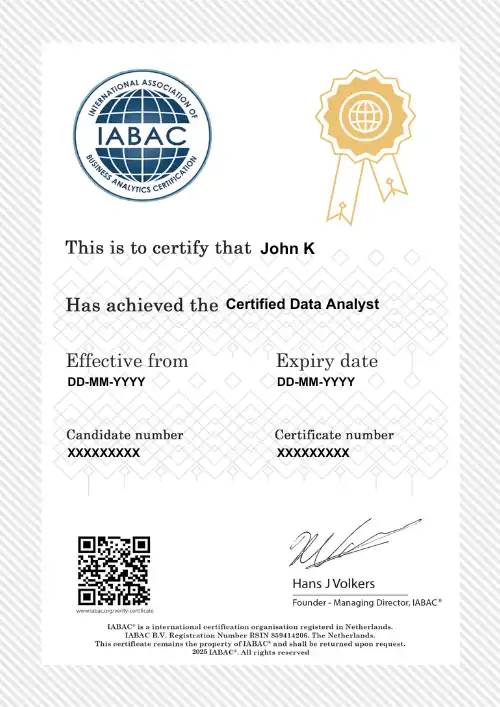
Graduates of the Certified Data Analyst Course at DataMites in Algiers receive the esteemed IABAC Certification upon successful completion. This well-regarded certification authenticates their proficiency in data analytics, elevating their credibility within the industry. Participants can showcase this accomplishment with pride, signaling their readiness for influential roles.
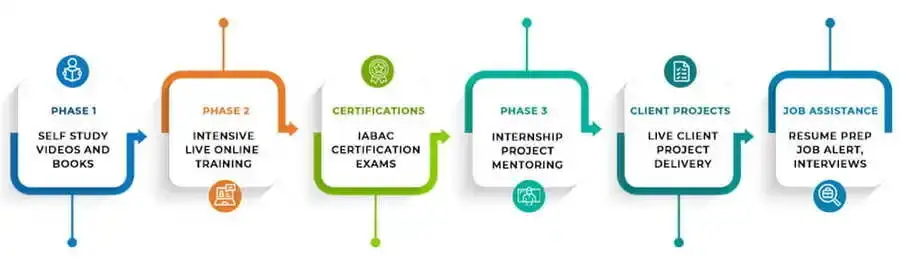
Participants in DataMites' data analytics courses in Algiers can enjoy flexibility through either Online Data Analytics Training in Algiers or Self-Paced Training. The choice is theirs, aligning with individual learning preferences and schedules. Whether selecting instructor-led online sessions or self-paced learning, both methods ensure a well-rounded and easily accessible educational experience, customized to meet individual needs.
Missing a data analytics session in Algiers is manageable with DataMites. Recorded sessions are provided, allowing participants to catch up at their convenience. This flexibility ensures continuous learning, minimizing the impact of occasional absence.
Participants joining DataMites' data analytics training sessions in Algiers should have a valid photo ID, like a national ID card or driver's license. This is vital for receiving the participation certificate and arranging any applicable certification exams.
Career mentoring sessions by DataMites in Algiers are meticulously designed to offer personalized guidance in the data analytics realm. Accomplished mentors share invaluable industry insights, guide participants in crafting standout resumes, and provide expert interview preparation assistance.
DataMites' Certified Data Analyst Course in Algiers follows a result-oriented strategy, incorporating hands-on sessions, real-world case studies, and industry projects. This ensures participants understand theoretical concepts and develop practical skills, effectively preparing them for the dynamic field of data analytics.
Certainly, DataMites in Algiers ensures an internship opportunity alongside the Certified Data Analyst Course. Through exclusive partnerships with leading Data Science Companies, learners apply their knowledge to develop real-world data models, creating tangible value for businesses. Expert guidance from DataMites ensures a meaningful and practical internship experience.
Without a doubt, DataMites in Algiers incorporates live projects into its data analyst course, featuring 5+ Capstone Projects and 1 Client/Live Project. This hands-on engagement is fundamental, empowering participants to apply their skills in real-world scenarios, advancing practical proficiency and industry preparedness.
Absolutely, DataMites' Certified Data Analyst Course is of great value in Algiers. Recognized as the most comprehensive non-coding program, it facilitates entry for those without technical backgrounds into the data analytics field. The course includes a distinctive 3-month internship in an AI company, an experience certificate, and expert-led training, leading to the prestigious IABAC Certification.
The DataMites Placement Assistance Team(PAT) facilitates the aspirants in taking all the necessary steps in starting their career in Data Science. Some of the services provided by PAT are: -
The DataMites Placement Assistance Team(PAT) conducts sessions on career mentoring for the aspirants with a view of helping them realize the purpose they have to serve when they step into the corporate world. The students are guided by industry experts about the various possibilities in the Data Science career, this will help the aspirants to draw a clear picture of the career options available. Also, they will be made knowledgeable about the various obstacles they are likely to face as a fresher in the field, and how they can tackle.
No, PAT does not promise a job, but it helps the aspirants to build the required potential needed in landing a career. The aspirants can capitalize on the acquired skills, in the long run, to a successful career in Data Science.
 Refer & Earn
 +1-628-228-6062