 4.9 (15,400) reviews

Instructor Led Live Online
Self Learning + Live Mentoring
Customize Your Training
Module 1: Data Analysis Foundation
Module 2: Classification of Analytics
Module 3: CRISP-DM and the Analytical Workflow
Module 4: Univariate Data Analysis
Module 1: Comparison and Correlation Analysis
Module 2: Variance and Frequency Analysis
Module 3: Ranking Analysis
Module 4: Break-even Analysis and Unit Economics
Module 5: Pareto Analysis
Module 6: Time Series and Trend Analysis
Module 7: Data Analysis Business Reporting
Module 1: Descriptive Statistics and Data Behaviour
Module 2: Probability and Sampling
Module 3: Statistical Inference and Experiments
Module 4: Essential Mathematics for ML
Module 1: Business Analytics and Data Reliability
Module 2: Optimization Models
Module 3: Predictive Analytics with Regression
Module 4: Decision Modeling
Module 5: Spreadsheet Applications and Repeatable Analysis
Module 1: Machine Learning Introduction
Module 2: Linear Regression
Module 3: Logistic Regression
Module 4: Data Preparation and Model Validation
Module 5: K-means Clustering
Module 6: Decision Trees and Ensemble Awareness
Module 7: Model Evaluation and Explainability
Module 8: Business Application and Analytical Handover
Module 1: Relational Databases and SQL Basics
Module 2: Analytical SQL
Module 3: MongoDB and Document Data
Module 4: Database Integration for AI
Module 1: Scalable Data Foundations
Module 2: Practical AI Data Pipelines
Module 3: Spark DataFrames and Spark SQL
Module 4: Data Pipelines for AI Applications
Module 1: Repositories and Reproducibility
Module 2: Branching and Collaboration
Module 3: Safe Change Management
Module 4: Automated Quality Checks
Module 1: Business Metrics and Data Preparation
Module 2: Data Modelling and Calculations
Module 3: Dashboard Design and Interpretation
Module 4: Measuring AI and Business Outcomes
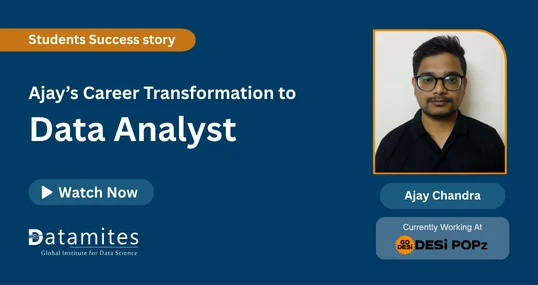
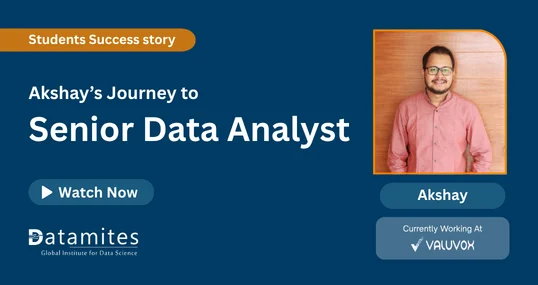
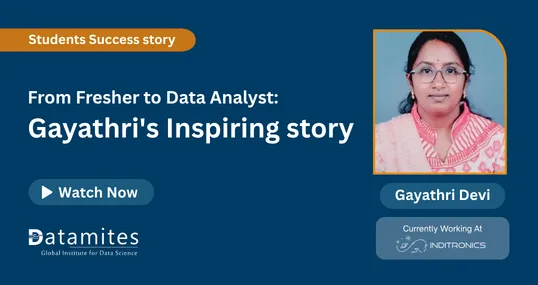
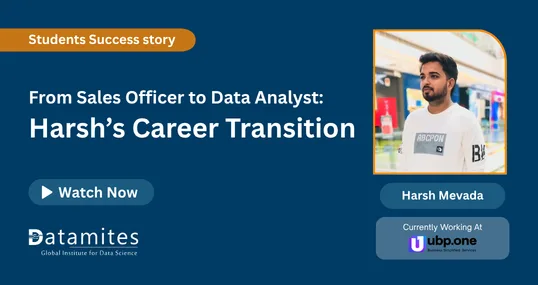
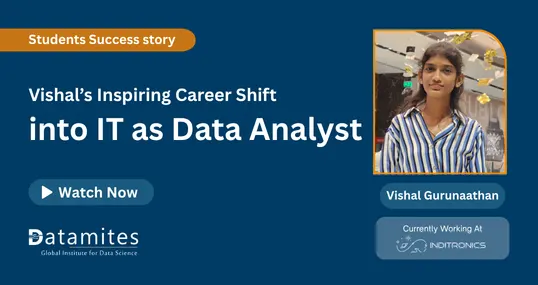
AI is the future, and DataMites helped me step into it! The online Data Science course was easy to follow, and the tutors explained everything clearly. Even after completing my course, the team supported me with placements and I successfully cracked a job! Grateful to DataMites for shaping my career.
I joined DataMites to learn Data Science and gained strong skills in ML, DL, and Statistics. Through my internship at Rubixe AI Solutions, I worked on real-world projects, which helped me land job interviews and an offer. The trainers were very supportive and explained every concept clearly. Thanks to DataMites, my data science journey was smooth and successful.
My mentor, a DataMites alumnus, suggested I join the Data Science course, and it was one of my best decisions! The offline classes were interactive and full of guidance, and I got the chance to intern at Rubixe AI Solutions. The placement team was very supportive and helped me perfect my resume. Truly thankful to DataMites for this amazing learning journey.
I joined DataMites after completing my engineering in Computer Science and became a Certified Data Scientist. With their support, I completed an internship at Rubix AI Solutions and now work as an AI intern at Inventor Hub. DataMites made learning statistics and data science easy with clear guidance and great materials. I’m truly thankful for their support.
I joined DataMites for the Certified Data Scientist online course, and it was a great experience! The real-time projects helped me apply my learning practically, and the placement support added real value to my career restart after 8 years. DataMites is the perfect platform to learn, grow, and begin your data science journey.
I joined DataMites for the Data Science course and learned Python, SQL, Machine Learning, and Deep Learning through hands-on projects. The trainers are excellent at explaining concepts clearly. The placement team is very supportive and provides great opportunities thanks to DataMites for helping me start my data science journey.
I joined DataMites after my B.Tech when I developed an interest in Data Science and Machine Learning. The training was well-structured, and I even got an internship opportunity that helped me gain real experience. The placement team was super supportive and guided me through every step. Thanks to DataMites, I’m now placed at Horizon Broadband Pvt. Ltd.
I joined DataMites after completing my BCA, and it was the best decision for my data science career! I learned Python, SQL, Machine Learning, Deep Learning, and NLP, and worked on several capstone and client projects that gave me real-world experience. The trainers and team were always friendly and supportive, patiently clearing all my doubts. Thanks to DataMites, I’m confident and job-ready in data science
I started my data science journey with DataMites, and it’s been an amazing experience! The Certified Data Scientist Program helped me learn everything from scratch through hands-on projects and an internship. The placement team was incredibly supportive, always ready to clarify my doubts. Thanks to their guidance, I successfully got placed. Highly recommend DataMites to anyone starting their data science career
Enrolling at DataMites was one of the best decisions I made for my career. Coming from a freelance writing background with no prior technical experience, I was initially unsure about stepping into the field of data analytics. But DataMites made the transition smooth and achievable. I’d highly recommend them to anyone looking for a guided, industry-ready data analytics course. A true DataMites success story!
Data analytics involves the examination and interpretation of raw data to extract meaningful insights, patterns, and trends. It employs various statistical and computational techniques to transform data into valuable information for decision-making.
Essential skills for data analytics include proficiency in programming languages (such as Python or R), statistical analysis, data visualization, database management, and critical thinking. Strong communication skills are also vital for conveying findings to non-technical stakeholders.
Key job roles in data analytics include Data Analyst, Business Intelligence Analyst, Data Scientist, Database Administrator, and Machine Learning Engineer. Each role has specific responsibilities within the broader field of data analytics.
A data analyst is responsible for collecting, processing, and analyzing data to help organizations make informed decisions. They use statistical methods, programming languages, and data visualization tools to interpret complex datasets and generate actionable insights.
The future of data analysis is promising, with increasing reliance on data-driven decision-making across industries. Advancements in artificial intelligence, machine learning, and big data technologies are expected to further enhance the capabilities of data analytics, creating more opportunities for professionals in the field.
To excel in data analytics, it's crucial to familiarize yourself with tools like Python or R for programming, SQL for database management, and data visualization tools like Tableau or Power BI.
The average data analyst salary in Egypt, reported by Payscale, stands at £98,618. This competitive compensation reflects the increasing demand for skilled data analysts in the country. The lucrative pay is driven by the pivotal role data analysts play in deriving actionable insights crucial for informed decision-making across various industries in Egypt.
Pursuing data analytics can be demanding due to its multidisciplinary nature, requiring proficiency in statistics, programming, and business acumen. However, the challenges contribute to a comprehensive skill set.
Typically, a bachelor's degree in a related field such as statistics, mathematics, computer science, or business is the minimum qualification for a data analyst course. However, some courses may accept candidates with relevant work experience or equivalent certifications.
While achieving complete mastery in data analytics within six months is ambitious, individuals can gain a solid foundation and practical skills through intensive study, hands-on projects, and focused learning.
Yes, data analytics often involves coding. Proficiency in programming languages like Python or R is beneficial for tasks such as data cleaning, statistical analysis, and creating algorithms. However, the level of coding expertise required may vary depending on the specific role and industry.
DataMites is recognized for offering high-quality data analytics courses in Egypt. Their programs provide comprehensive training, covering essential tools, techniques, and real-world applications. With a focus on hands-on learning and industry relevance, DataMites ensures participants gain the skills needed to excel in the dynamic field of data analytics.
Projects in data analytics provide hands-on experience, reinforcing theoretical concepts. They enhance problem-solving skills, boost confidence, and allow learners to apply analytics techniques to real-world scenarios, preparing them for professional challenges.
Internships are crucial in data analytics as they provide real-world exposure, allowing learners to apply theoretical knowledge to practical scenarios. This hands-on experience enhances problem-solving skills, teamwork, and industry relevance.
Data analytics is indeed challenging, requiring proficiency in statistics, programming, and business acumen. The complexity arises from the need to extract meaningful insights from vast and diverse datasets.
Yes, there are bootcamps available in Egypt, offering intensive and focused training in data analytics. These programs are designed to provide practical skills in a short duration, catering to individuals seeking a fast-track learning experience.
Data science involves broader tasks like developing algorithms and predictive models, while data analytics focuses on interpreting and analyzing historical data to derive insights for decision-making.
The data analytics job market in Egypt is experiencing growth, with increasing demand for professionals skilled in big data analytics, machine learning, and business intelligence. Industries like finance, e-commerce, and healthcare are actively hiring.
Data analytics plays a crucial role in improving healthcare outcomes in Egypt. It aids in optimizing operations, personalized treatment plans, and predictive analysis for disease prevention, ultimately enhancing the efficiency and effectiveness of healthcare services.
Yes, Python is often considered essential for data analysts due to its versatility in data manipulation, analysis, and visualization, making it a valuable tool in the field.
The Certified Data Analyst Course in Egypt by DataMites welcomes enrollment from beginners and intermediate learners in the data analytics field. Tailored for career-oriented growth, the program focuses on building a robust foundation in data analysis, data science, statistics, visual analytics, data modeling, and predictive modeling. It is designed to equip participants with essential skills, making it an ideal choice for those aspiring to establish or advance their careers in the dynamic realm of data analytics.
The Data Analyst Course in Egypt by DataMites spans a duration of 6 months. With a commitment of 20 hours of learning per week, the program comprises a comprehensive 200+ learning hours. This structured timeframe ensures participants acquire a thorough understanding of key concepts and skills in data analytics within a well-paced and immersive learning experience.
DataMites' data analytics training in Egypt comprehensively covers a range of tools, including Advanced Excel, MySQL, MongoDB, Git, GitHub, Atlassian BitBucket, Hadoop, Apache Pyspark, Anaconda, Google Collab, Numpy, Pandas, Tableau, and Power BI. This diverse toolkit equips participants with essential skills to excel in various aspects of data analysis and visualization.
Selecting DataMites for the Certified Data Analyst Course in Egypt offers an unparalleled experience. With a flexible learning environment, job-centric curriculum, esteemed instructors, and an exclusive practice lab, participants benefit from a robust learning community. The program ensures lifetime access, enabling continuous growth, and provides opportunities for unlimited hands-on projects. Furthermore, with dedicated placement assistance, DataMites empowers learners to seamlessly transition into the professional realm of data analytics, making it a comprehensive and advantageous choice for aspiring data analysts.
DataMites' Certified Data Analyst Course in Egypt stands out by offering a specialized Course Bundle focused on advanced analytics and business insights. Distinguishing itself as a No-Code Program, it allows data analytics and managers to delve into advanced analytics without requiring a programming background. The course, optionally incorporating Python, is consistently updated to align with industry demands, ensuring a structured and streamlined learning experience for lean learning.
Absolutely, DataMites in Egypt offers extensive support to help you comprehend data analytics course topics. The dedicated assistance ensures a clear understanding of the curriculum, fostering a conducive learning environment.
The Certified Data Analyst Course in Egypt covers a comprehensive array of topics, including Data Analysis Foundation, Statistics Essentials, Data Analysis Associate, Advanced Data Analytics, Predictive Analytics with Machine Learning, Database: SQL and MongoDB, Version Control with Git, Big Data Foundation, Python Foundation, and concludes with the Certified Business Intelligence (BI) Analyst module. This well-structured curriculum ensures a thorough understanding of key concepts essential for a successful career in data analytics.
DataMites in Egypt accepts various payment methods for the Certified Data Analytics Course, including cash, debit card, credit card (Visa, Mastercard, American Express), check, EMI, PayPal, and net banking. This flexibility ensures convenient options for participants to facilitate their course enrollment and payment process.
The Certified Data Analyst Course at DataMites in Egypt is led by Ashol Veda, a highly respected Data Science coach and AI expert. The team includes elite mentors and faculty members with real-time experience from renowned companies and esteemed institutes like IIMs. This ensures participants receive top-notch mentorship and guidance throughout their learning journey.
The Data Analytics Course in Egypt Flexi Pass at DataMites empowers participants to select batches that suit their schedule, offering flexibility in training. This adaptable option ensures learners align the course with their availability, enhancing convenience and accessibility.
DataMites' Data Analytics Course fee in Egypt ranges from EGP 13,299 to EGP 40,894. This inclusive fee structure covers the comprehensive program, ensuring participants receive high-quality training in data analytics at varying price points.
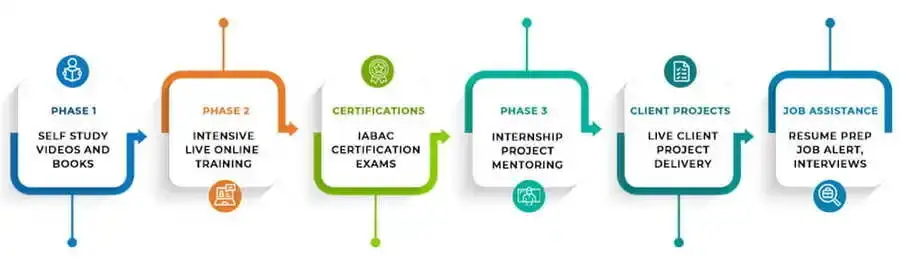
DataMites employs a result-oriented methodology for the Certified Data Analyst Course in Egypt. The curriculum integrates hands-on practical sessions, real-world case studies, and industry-relevant projects. This immersive approach ensures participants not only grasp theoretical concepts but also gain practical skills, preparing them effectively for the dynamic field of data analytics.
DataMites' data analytics courses in Egypt offer flexibility through Online Data Analytics Training in Egypt or Self-Paced Training. Participants can choose the mode that aligns with their learning preferences and schedule. Whether opting for instructor-led online sessions or self-paced learning, both methods provide a comprehensive and accessible educational experience tailored to individual needs.
In the event of missing a data analytics session in Egypt, DataMites offers recorded sessions, ensuring participants can catch up on the missed content at their convenience. This flexibility allows continuous learning and minimizes the impact of occasional absence.
Participants attending DataMites' data analytics training sessions in Egypt must bring a valid photo ID, such as a national ID card or driver's license. This is essential for obtaining the participation certificate and scheduling any relevant certification exams.
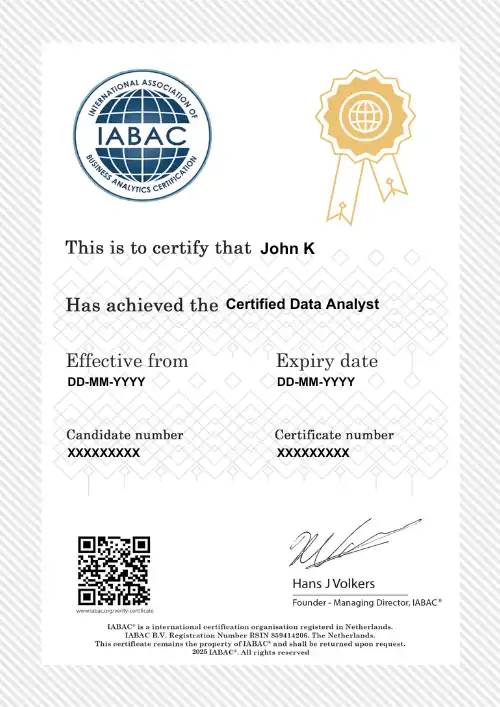
Certainly, upon completing the Certified Data Analyst Course in Egypt at DataMites, aspirants receive the prestigious IABAC Certification. This recognized certification validates their proficiency in data analytics, enhancing their credibility in the industry. Participants can proudly showcase their achievement.
Absolutely, the Certified Data Analyst Course by DataMites holds immense value in Egypt. It is the most comprehensive non-coding course in the market, making it accessible for those from non-technical backgrounds. The program offers a unique blend of internship experience in an AI company for 3 months, an experience certificate, and training by expert faculty, culminating in the prestigious IABAC Certification.
Certainly, DataMites in Egypt offers an internship along with the Certified Data Analyst Course through exclusive partnerships with leading Data Science companies. This unique opportunity allows learners to apply their acquired knowledge in developing real-world data models that add substantial value to businesses. Expert guidance from DataMites ensures a meaningful and practical internship experience.
Absolutely, DataMites in Egypt includes live projects as part of the data analyst course, featuring 5+ Capstone Projects and 1 Client/Live Project. This hands-on experience ensures participants apply their skills in real-world scenarios, enhancing practical proficiency and industry readiness.
DataMites structures data analytics career mentoring sessions in Egypt to provide personalized guidance. Experienced mentors offer insights into industry trends, resume building, and interview preparation. Interactive sessions focus on individual career goals, ensuring participants receive tailored advice to navigate the dynamic landscape of data analytics successfully.
The DataMites Placement Assistance Team(PAT) facilitates the aspirants in taking all the necessary steps in starting their career in Data Science. Some of the services provided by PAT are: -
The DataMites Placement Assistance Team(PAT) conducts sessions on career mentoring for the aspirants with a view of helping them realize the purpose they have to serve when they step into the corporate world. The students are guided by industry experts about the various possibilities in the Data Science career, this will help the aspirants to draw a clear picture of the career options available. Also, they will be made knowledgeable about the various obstacles they are likely to face as a fresher in the field, and how they can tackle.
No, PAT does not promise a job, but it helps the aspirants to build the required potential needed in landing a career. The aspirants can capitalize on the acquired skills, in the long run, to a successful career in Data Science.
 Refer & Earn
 +1-628-228-6062