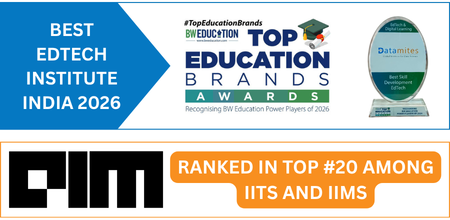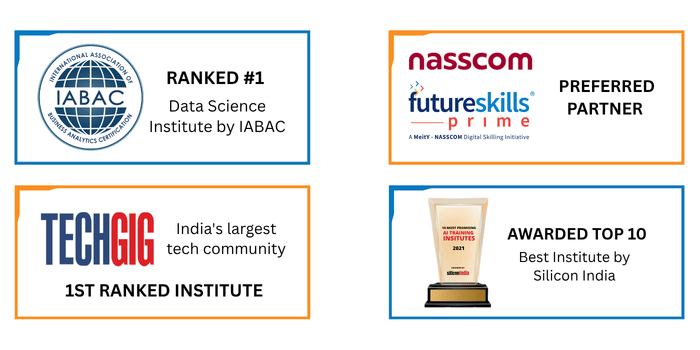

DataMites® Awards & Recognitions

Best EdTech Institute India 2026 - DataMites ranked in top 20 among IITs and IIMs
DataMites accolades - IABAC, NASSCOM, TechGig and Silicon India awards

DATAMITES RATINGS & REAL TIME SUCCESS STORIES

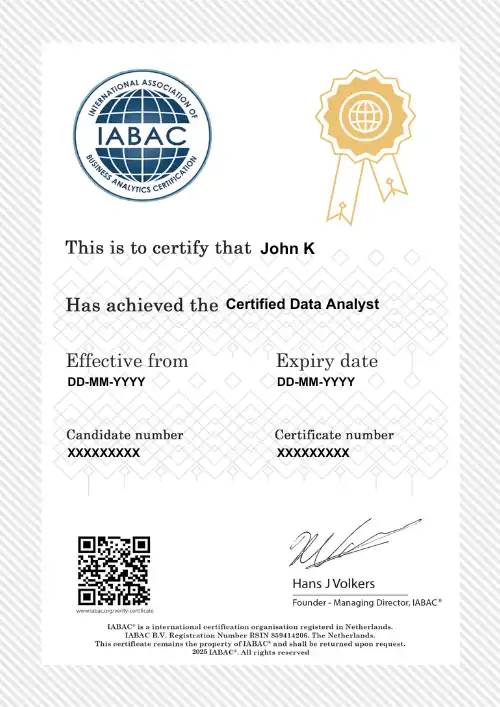
DATA ANALYST CERTIFICATION AUTHORITIES

COURSE FEATURES

DATA ANALYST LEAD MENTORS

DATA ANALYST COURSE FEE IN VADODARA

Live Virtual

Instructor Led Live Online

110,000
64,191

  • IABAC® Certification
  • 5-Month Program
  • 20 HOURS LEARNING A WEEK
  • 10 Capstone & 1 Client Project
  • 365 Days Flexi Pass + Cloud Lab
  • Internship + Job Assistance

Blended Learning

Self Learning + Live Mentoring

55,000
40,401

  • Self Learning + Live Mentoring
  • IABAC® Certification
  • 1 Year Access To Elearning
  • 10 Capstone & 1 Client Project
  • Job Assistance
  • 24*7 Learner assistance and support

Classroom

In - Person Classroom Training

110,000
69,980

  • IABAC® Certification
  • 5-Month Program
  • 20 HOURS LEARNING A WEEK
  • 10 Capstone & 1 Client Project
  • Cloud Lab Access
  • Internship +Job Assistance

Financing Options

We are dedicated to making our programs accessible. We are committed to helping you find a way to budget for this program and offer a variety of financing options to make it more economical.
Pay In Installments, as low as
We have partnered with the following financing companies to provide competitive finance options at as low as
0% interest rates with no hidden cost.
shopse techfino Bajaj-Finserv
Admission Closes On : 29th November 2026

ARE YOU LOOKING TO UPSKILL YOUR TEAM ?

Enquire Now

SEARCH FOR TOP COURSES


BEST CERTIFIED DATA ANALYST CERTIFICATIONS

images not display

WHY DATAMITES INSTITUTE FOR DATA ANALYST COURSE

Why DataMites Infographic

SYLLABUS OF DATA ANALYST CERTIFICATION IN VADODARA

Module 1: Data Analysis Foundation

  • Role and responsibilities of a data analyst
  • Translating business questions into analytical questions
  • Understanding rows, columns, data types, and dataset grain
  • Dimensions, measures, and units of analysis
  • Identifying missing values, duplicates, inconsistent formats, and invalid records
  • Overview of Excel, SQL, BI tools, and optional Python in an analyst workflow

Module 2: Classification of Analytics

  • Descriptive analytics: Understanding what happened
  • Diagnostic analytics: Investigating why it happened
  • Predictive analytics: Estimating likely outcomes
  • Prescriptive analytics: Comparing actions and decisions
  • Matching analytical methods to business questions
  • Defining KPIs, baselines, targets, and success criteria

Module 3: CRISP-DM and the Analytical Workflow

  • Business understanding and stakeholder requirements
  • Data understanding and source assessment
  • Data preparation and validation checkpoints
  • Analysis, modeling, and evaluation
  • Communicating findings and handing over analytical outputs
  • Documenting assumptions, metric definitions, and limitations

Module 4: Univariate Data Analysis

  • Mean, median, and mode
  • Minimum, maximum, range, quartiles, and percentiles
  • Variance, standard deviation, and interquartile range
  • Frequency tables and distribution interpretation
  • Missing-value and outlier assessment
  • Distinguishing data errors from valid unusual observations

Module 1: Comparison and Correlation Analysis

  • Comparing products, regions, channels, and customer segments
  • Absolute changes, percentage changes, and percentage-point differences
  • Weighted versus unweighted averages
  • Normalizing comparisons using rates and per-unit measures
  • Applying correlation to a business question
  • Identifying misleading comparisons and alternative explanations

Module 2: Variance and Frequency Analysis

  • Actual versus budget, target, and prior-period performance
  • Absolute and percentage variance
  • Segment contribution to overall variance
  • Frequency distributions and exception patterns
  • Root-cause investigation through segment breakdowns
  • Defining practical exception thresholds

Module 3: Ranking Analysis

  • Ranking products, branches, customers, and teams
  • Top-N and bottom-N analysis
  • Ranking within categories and handling ties
  • Contribution percentages and cumulative contribution
  • Percentile interpretation
  • Communicating ranking limitations and small-sample effects

Module 4: Break-even Analysis and Unit Economics

  • Fixed costs, variable costs, revenue, and contribution margin
  • Break-even quantity and break-even revenue
  • Make-or-buy decision analysis
  • Pricing and cost sensitivity
  • Comparing business scenarios
  • Hands-on profitability and break-even case study

Module 5: Pareto Analysis

  • Pareto principle and observed concentration
  • Preparing and sorting contribution data
  • Cumulative contribution calculations
  • Creating and interpreting a Pareto chart
  • Prioritizing defects, delays, products, or customers
  • Turning findings into operational actions

Module 6: Time Series and Trend Analysis

  • Preparing dates and selecting a consistent reporting frequency
  • Month-on-month and year-on-year growth
  • Rolling averages and trend smoothing
  • Trend, seasonality, and unusual fluctuations
  • Comparing complete and incomplete reporting periods
  • Communicating trend-based insights and limitations

Module 7: Data Analysis Business Reporting

  • Gathering reporting requirements and identifying the audience
  • KPI definitions, calculation rules, and metric ownership
  • Designing recurring management reports and scorecards
  • Writing a clear executive summary
  • Connecting evidence to recommendations and next actions
  • Presenting assumptions, caveats, and unanswered questions

Module 1: Descriptive Statistics and Data Behaviour

  • Data types, central tendency, dispersion, percentiles, and outliers
  • Distribution shape, normal distribution, and visual interpretation
  • Correlation, covariance, and correlation versus causation

Module 2: Probability and Sampling

  • Probability, conditional probability, and Bayes' theorem
  • Random variables and common distributions
  • Representative sampling, sampling bias, and uncertainty

Module 3: Statistical Inference and Experiments

  • Confidence intervals, effect size, and hypothesis testing
  • P-values, Type I/II errors, and basic test selection
  • A/B test interpretation and common mistakes

Module 4: Essential Mathematics for ML

  • Vectors, matrices, dot products, distances, and similarity
  • Derivatives and gradient descent through visual examples
  • Applying statistical interpretation to a small business dataset

Module 1: Business Analytics and Data Reliability

  • Structuring an analysis around a business decision
  • KPI trees and drivers of performance
  • Defining dataset grain and consistent calculation rules
  • Assessing source reliability, validity, and coverage
  • Checking completeness, uniqueness, and consistency
  • Reconciling totals across source data and reports
  • Maintaining a concise data dictionary and issue log

Module 2: Optimization Models

  • Objectives, decision variables, and constraints
  • Building a practical spreadsheet optimization model
  • Introduction to Excel Solver
  • Resource allocation and production planning
  • Pricing and contribution-based decisions
  • Sensitivity to assumptions and constraints
  • Interpreting and communicating an optimization recommendation

Module 3: Predictive Analytics with Regression

  • Business use cases for regression
  • Preparing data for Excel regression analysis
  • Interpreting coefficients and model fit
  • Residuals and introductory assumption checks
  • Identifying unreliable predictions and extrapolation
  • Distinguishing prediction from causal explanation
  • Sales promotion or demand-related case study

Module 4: Decision Modeling

  • Comparing decisions under uncertainty
  • Best-case, base-case, and worst-case scenarios
  • One-variable and two-variable sensitivity tables
  • Expected value and simple decision trees
  • Introductory Monte Carlo simulation through a guided example
  • Documenting assumptions and uncertainty
  • Presenting a decision recommendation and its limitations

Module 5: Spreadsheet Applications and Repeatable Analysis

  • Structured tables and reliable formula references
  • XLOOKUP and practical INDEX-MATCH compatibility awareness
  • SUMIFS, COUNTIFS, IF, and IFERROR
  • Date and text functions for analytical preparation
  • FILTER, SORT, and UNIQUE in supported Excel versions
  • PivotTables, grouping, slicers, and calculated summaries
  • Power Query profiling, data types, missing values, and duplicates
  • Merging, appending, pivoting, and unpivoting data
  • Combining recurring files and refreshing analytical outputs

Module 1: Machine Learning Introduction

  • ML, AI, and the analyst's role
  • Regression, classification, and clustering
  • Supervised versus unsupervised learning
  • Defining the business problem, target, and unit of prediction
  • Establishing a simple baseline
  • Recognizing when rules or descriptive analysis are sufficient

Module 2: Linear Regression

  • Features, target variables, and regression predictions
  • Building and interpreting a regression model
  • Comparing predictions against a baseline
  • MAE, RMSE, and model fit at an applied level
  • Inspecting prediction errors
  • Communicating forecast limitations and uncertainty

Module 3: Logistic Regression

  • Classification and predicted probabilities
  • Building a logistic regression model
  • Probability thresholds and business trade-offs
  • Confusion matrix, precision, and recall
  • Accuracy limitations with imbalanced classes
  • Lead conversion or churn-related case study

Module 4: Data Preparation and Model Validation

  • Separating training and test data
  • Time-aware splitting for time-dependent data
  • Handling missing values and categorical features
  • Feature scaling where required
  • Overfitting, underfitting, and cross-validation concepts
  • Target leakage and inappropriate future information
  • Applying preprocessing without contaminating the test set

Module 5: K-means Clustering

  • Business segmentation and unsupervised learning
  • Selecting suitable features and scaling inputs
  • Building a K-means clustering model
  • Introductory selection of cluster count
  • Profiling clusters using business characteristics
  • Evaluating usefulness and stability of segments

Module 6: Decision Trees and Ensemble Awareness

  • How decision trees split data
  • Building a classification or regression tree
  • Tree depth, complexity, and overfitting
  • Interpreting rules and feature importance
  • Brief demonstration of a tree ensemble
  • Comparing a tree-based result with a simple baseline

Module 7: Model Evaluation and Explainability

  • Selecting metrics that match business costs
  • Comparing models on the same evaluation data
  • Class imbalance and false-positive/false-negative trade-offs
  • Explaining model drivers at an introductory level
  • Recognizing that importance does not establish causality
  • Checking performance across relevant segments
  • Documenting evaluation findings and limitations

Module 8: Business Application and Analytical Handover

  • Turning model output into an actionable report
  • Combining predictions with business rules and human review
  • Cost-benefit interpretation of a proposed action
  • Documenting inputs, assumptions, and intended use
  • Monitoring input quality and predictive performance
  • Preparing a concise model summary and handover
  • Presenting a recommendation to a non-technical audience

Module 1: Relational Databases and SQL Basics

  • Tables, types, keys, constraints, and relationships
  • SELECT, filtering, ordering, aggregation, GROUP BY, and HAVING
  • PostgreSQL as the primary relational teaching environment

Module 2: Analytical SQL

  • Joins, subqueries, and common table expressions
  • Window functions for ranking, running totals, and grouped comparisons
  • Query correctness and introductory index/performance concepts

Module 3: MongoDB and Document Data

  • Relational versus document storage and appropriate use cases
  • MongoDB documents, collections, CRUD, filtering, and aggregation basics
  • JSON structures and metadata for AI applications

Module 4: Database Integration for AI

  • Guided demonstration of reading and writing data with Python and parameterised queries
  • Data validation, credentials, permissions, and access boundaries
  • Vector storage and similarity-search concepts

Module 1: Scalable Data Foundations

  • Data volume, velocity, variety, and quality considerations
  • Batch versus streaming and single-machine versus distributed processing
  • Object storage, partitioning, and columnar formats such as Parquet

Module 2: Practical AI Data Pipelines

  • Ingestion from files, APIs, and databases
  • Schema checks, duplicates, missing data, and reproducible transformations
  • Incremental updates and pipeline failure handling

Module 3: Spark DataFrames and Spark SQL

  • Local PySpark setup or a supplied training environment
  • DataFrames, filtering, joins, aggregation, and Spark SQL
  • Partitioning and execution concepts through a guided example

Module 4: Data Pipelines for AI Applications

  • Document ingestion, metadata, and dataset lineage
  • Data access controls and sensitive-information handling
  • Preparing governed datasets for ML and retrieval applications

Module 1: Repositories and Reproducibility

  • Git concepts, local/remote repositories, clone, init, and status
  • Staging, commits, history, and useful commit messages
  • .gitignore, dependency files, and keeping secrets/data out of repositories

Module 2: Branching and Collaboration

  • Branches, merges, pull requests, and code review
  • Push, pull, fetch, and resolving conflicts
  • Issues and team task tracking in GitHub

Module 3: Safe Change Management

  • Revert versus reset and safe handling of shared history
  • Tags, releases, and documenting experiments
  • Reviewing AI-generated code before committing

Module 4: Automated Quality Checks

  • Basic Python tests and linting
  • A small GitHub Actions workflow to run checks
  • README structure, reproducible setup, and release handover

Module 1: Business Metrics and Data Preparation

  • Business questions, KPI definitions, and consistent metric calculation
  • Power Query transformations and combining sources
  • Data quality and misleading comparisons

Module 2: Data Modelling and Calculations

  • Relationships, star-schema intuition, and date dimensions
  • Measures versus calculated columns and essential DAX
  • Connecting to prepared SQL/CSV data

Module 3: Dashboard Design and Interpretation

  • Appropriate charts, filters, drill-down, and accessible presentation
  • Dashboard storytelling and interpreting uncertainty
  • Power BI as the primary hands-on tool; Tableau comparison only

Module 4: Measuring AI and Business Outcomes
  • Model/AI-service quality, adoption, latency, and cost metrics
  • Relating technical metrics to business outcomes
  • A guided dashboard, access considerations, and stakeholder presentation

DATA ANALYST SUCCESS STORIES

Video thumbnail
Video thumbnail
Video thumbnail
Video thumbnail
Video thumbnail
Video thumbnail

DATA ANALYST TRAINING REVIEWS

ABOUT DATA ANALYST TRAINING IN VADODARA

DataMites Institute, a leading provider of Data Analytics training, offers a comprehensive Data Analyst course in Vadodara, known as the "Garden City." As Vadodara's IT sector expands and data-driven decision-making gains prominence, the city represents an ideal location for aspiring data analysts to embark on their professional journey. DataMites is at the forefront of delivering high-quality training to meet the growing demand for skilled data professionals.

With Vadodara emerging as a significant player in the tech industry, DataMites provides an extensive Data Analyst course covering essential topics such as data analysis techniques, machine learning applications, and visualization tools. This 5-month program, featuring over 260 learning hours, is designed to address the region's increasing need for data expertise. Graduates receive globally recognized certifications from IABAC® and NASSCOM FutureSkills, which are highly esteemed by employers worldwide.

Vadodara's rise as a prominent hub for data analytics careers makes it an excellent place for aspiring analysts. DataMites offers a Certified Data Analyst course that provides hands-on experience with critical tools like Excel, SQL, Tableau, Power BI, Python, and R. With a reduced fee of 42,000 INR, the course offers exceptional value and certifications from IABAC® and  NASSCOM FutureSkills, making it a top choice for students in Vadodara.

The demand for data analytics professionals in Vadodara is growing, with competitive salaries reflecting this trend. According to Glassdoor reports, data analysts in Vadodara earn an average annual salary of approximately 3,00,000 INR. Given the sector's continuous expansion, advancing your skills through DataMites training can be a valuable step toward a successful career in data analytics.

Data Analyst Training in Vadodara

Vadodara is quickly becoming a key center for aspiring data analysts due to the rapid growth of data-driven industries. DataMites Institute’s Data Analyst training in Vadodara provides students with a comprehensive skill set, ranging from foundational concepts to advanced techniques. Emphasizing practical, hands-on learning, DataMites offers flexible course formats—online, blended, and offline—to accommodate recent graduates, professionals, and career changers alike.

Why Choose DataMites for Data Analyst Training in Vadodara?

DataMites Institute stands out as a premier training provider for data analytics in Vadodara. Here’s why DataMites is the top choice for aspiring data analysts:

  1. Online Classes in Vadodara: DataMites offers flexible online learning options in Vadodara, featuring a structured virtual classroom experience with interactive sessions, ideal for those who prefer remote training.
  2. Experienced Faculty: Courses are led by industry experts, including Ashok Veda, DataMites' lead mentor with over 19 years of experience in data analytics. His guidance ensures students acquire valuable, industry-relevant skills.
  3. Comprehensive Curriculum: The 5-month course covers essential tools such as Excel, SQL, Tableau, Power BI, Python, and R, providing over 260 hours of in-depth instruction in data analysis and machine learning techniques.
  4. Global Certifications: Graduates earn internationally recognized certifications from IABAC® and NASSCOM FutureSkills, enhancing their employability in global job markets.
  5. Hands-On Projects: The course includes 10 capstone projects and one client project, offering practical experience with real-world data to ensure job readiness.
  6. Internships & Job Support: DataMites provides internship opportunities and job placement assistance, leveraging industry connections to help students secure relevant positions.
  7. Exclusive Learning Community: DataMites fosters a collaborative online environment where students can network, exchange ideas, and stay informed about industry trends.
  8. Affordable Pricing & Scholarships: With a reduced fee of 42,000 INR (down from 55,000 INR) and available scholarships, the course offers excellent value for aspiring data analysts in Vadodara.

Data Analyst Course Offerings at DataMites in Vadodara

DataMites Institute offers a diverse range of Data Analyst courses in Vadodara, tailored to meet various skill levels and career objectives. These programs are carefully designed to provide thorough training in data analysis, equipping students with the expertise needed to excel in the competitive data analytics field.

  1. Certified Data Analyst Course
  2. Data Analyst Foundation Course
  3. Data Analytics for Managers Course
  4. Certified HR Analytics Professional
  5. Certified Finance Analytics Professional
  6. Certified Healthcare Analytics Professional

Eligibility for a Certified Data Analyst Course in Vadodara

The DataMites Certified Data Analyst Course in Vadodara is open to fresh graduates, working professionals, and career aspirants interested in developing analytical skills. Its AI-powered learning approach helps learners become familiar with modern data analytics practices without requiring previous experience in coding, IT, or other technical fields.

Educational Background: No particular academic stream is specified as a prerequisite for learning data analytics.

Technical Experience: Previous experience in IT or computer-related fields is not compulsory.

Programming Skills: Beginners without coding knowledge can start with the course fundamentals.

Logical Thinking: An ability to approach problems logically and an interest in analysing information can be useful.

Three-Phase Learning Methodology at DataMites

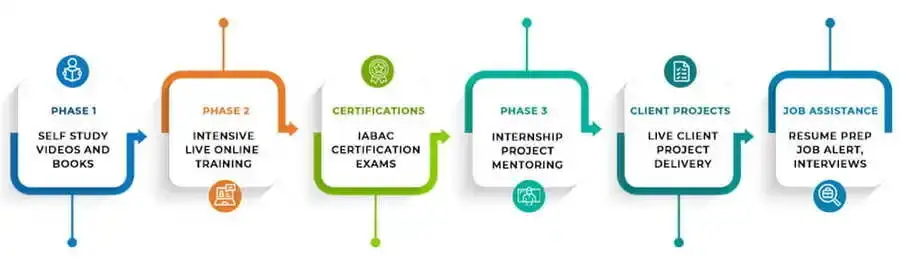
The DataMites Certified Data Analyst Course in Vadodara features an AI-powered learning approach that introduces learners to current data analytics practices and helps them develop practical skills for professional opportunities. The programme is divided into three distinct phases, covering preparation, live instruction, and applied learning.

Phase 1: Pre-Course Study (2 Weeks): Prepare for the main training sessions through high-quality recorded videos and independent study resources that explain the fundamentals of data analytics at your own pace.

Phase 2: Live Training (3 Months): Gain in-depth knowledge through 20 hours of live instruction every week. This phase covers a comprehensive syllabus, practical assignments, and hands-on projects with mentorship from experienced trainers.

Phase 3: Internship and Projects (2 Months): Enhance your practical capabilities through five mandatory portfolio projects, real-time project assignments, dedicated project mentoring, and internship experience.

DataMites Data Analyst Offline Center in Vadodara

The offline DataMites Institute center in Vadodara is located at Kplex, 1st Floor, Vadodara Hyper Complex, Rhino Circle, Dr. Vikram Sarabhai Marg, Alkapuri, Vadodara, Gujarat 390007. The center offers Data Analyst courses in Vadodara for fresh graduates, working professionals, and career changers seeking to build expertise in data analytics, data visualization, statistics, and business intelligence. With a strong focus on hands-on training, real-world projects, and practical learning experiences, the program helps learners develop industry-relevant analytical skills aligned with current market demands and emerging business trends.

Learners from several major residential and commercial localities across Vadodara can conveniently access the center, including Alkapuri (390007), Akota (390020), Karelibaug (390018), Gotri (390021), Manjalpur (390011), Fatehgunj (390002), Sayajigunj (390005), Vasna Road (390015), Harni (390022), and Subhanpura (390023). Located in the prominent Alkapuri business district on Dr. Vikram Sarabhai Marg, the center offers excellent connectivity across the city, making it easily accessible for learners from different parts of Vadodara to attend training programs and pursue rewarding career opportunities in the rapidly growing technology and analytics sector.

DataMites Data Analyst Course Tools

The Data Analyst courses at DataMites in Vadodara cover a comprehensive range of essential tools and technologies, including Anaconda, Atlassian BitBucket, MySQL, MongoDB, Hadoop, Apache PySpark, GitHub, Tableau, Power BI, TensorFlow, Google BERT, Advanced Excel, Numpy, Pandas, and Google Colab.

The Importance of Data Analyst Courses with Internship Opportunities in Vadodara

Internships are crucial for aspiring data analysts, providing hands-on experience and industry exposure. In Vadodara's expanding IT sector, they help students apply theoretical knowledge to real projects and build valuable industry connections. DataMites integrates internships into its Data Analyst courses, ensuring students gain practical experience and are well-prepared for the competitive data analytics field.

The Value of Data Analytics Courses with Job Placement Support in Vadodara

Data analytics courses with job placement support in Vadodara are essential for bridging the gap between academic learning and industry demands. DataMites offers a thorough program that includes both technical and soft skills training, preparing students for roles such as Data Analysts, Business Intelligence Analysts, and Data Scientists. With a focus on Vadodara’s growing data analytics sector, DataMites also offers additional courses in Data Science, Tableau, Python, MLOps, Machine Learning, Deep Learning, and Data Mining, Artificial Intelligence. Enroll with DataMites to launch your career and thrive in the dynamic field of data analytics.

For more details about Datamites Data Analyst Courses in Vadodara call +91 63644 66077

ABOUT DATA ANALYST COURSE IN VADODARA

Anyone with a basic understanding of mathematics and statistics can enroll in a data analyst course. Professionals looking to upskill or shift careers are also welcome. No prior experience is typically required, making it accessible to various backgrounds.

Key skills include a strong foundation in statistics, proficiency in Excel, and a basic understanding of databases. Analytical thinking and problem-solving abilities are also essential. Familiarity with data visualization tools can be advantageous.

A data analyst course typically covers data cleaning, data visualization, statistical analysis, and data interpretation. It also includes training in tools like SQL, Excel, and Tableau. Real-world projects and case studies are often part of the curriculum.

A data analyst collects, processes, and analyzes data to help organizations make informed decisions. They identify trends, create reports, and visualize data for better understanding. Their insights drive strategic business initiatives.

No, coding is not required to start a career in data analytics, especially for entry-level roles. Many tools and platforms offer no-code or low-code solutions for data analysis. However, learning coding can enhance your skills and open up advanced opportunities in the field.

Yes, individuals from non-engineering backgrounds can successfully transition into data analyst roles. Skills like analytical thinking and a willingness to learn are crucial. Many courses are designed to accommodate diverse educational backgrounds.

In Vadodara, trends include increased adoption of AI and machine learning in analytics. Companies are focusing on real-time data processing and predictive analytics. There’s also a growing demand for data-driven decision-making across industries.

The average salary for data analysts in Vadodara typically ranges from ₹3L to ₹6L per year, according to Glassdoor. This figure varies depending on experience, skills, and the specific company.

Data analyst courses in Vadodara typically take 4 to 12 months to complete. The duration may vary based on the course format, such as full-time or part-time options. Some institutes also offer flexible learning paths.

Leading data analyst courses in Vadodara include programs offered by institutions like DataMites and other local training centers. These courses are designed to cover essential analytics skills and provide hands-on experience.

The career outlook for data analysts in Vadodara is positive, with increasing demand across various sectors. Companies are recognizing the importance of data-driven decision-making, leading to more job opportunities in the field.

The best approach includes enrolling in structured courses, practicing with real-world datasets, and participating in projects. Networking with professionals and attending workshops can also enhance learning. Online resources are valuable for self-study.

Yes, data analytics is a high-demand field, with organizations increasingly relying on data for decision-making. This trend is expected to continue, leading to sustained job opportunities for skilled data analysts.

Reputable institutes offering data analyst training in Vadodara include DataMites and other well-known training centers. These institutes provide comprehensive courses with practical training and industry-relevant skills.

Yes, working as a data analyst is generally classified as an IT job, as it involves using technology and data tools to analyze information. Many data analysts work within IT departments or in analytics-focused roles.

Entry requirements for data analyst courses in Vadodara typically include a high school diploma or equivalent. Some courses may require a basic understanding of mathematics or statistics but generally welcome all interested candidates.

Studying data analytics in Vadodara is highly valuable due to the growing importance of data in business. It opens up numerous career opportunities and equips individuals with in-demand skills. The investment in education can lead to strong job prospects.

Data analysts focus on interpreting existing data to inform business decisions, while data scientists build predictive models and conduct advanced analytics. Data scientists typically require more advanced programming and statistical skills than data analysts.

Yes, individuals with no prior experience can join data analyst courses in Vadodara. These courses often cater to beginners and provide foundational knowledge to prepare students for the field.

Job opportunities for data analysts in Vadodara are expanding across various industries, including finance, healthcare, and retail. Companies are looking for analysts to help drive business strategies through data insights, creating a favorable job market.

View more

FAQ’S OF DATA ANALYST TRAINING IN VADODARA

To sign up for the DataMites Certified Data Analyst course in Vadodara, visit the DataMites website and select the course. You can register online by filling out the required details and making the payment. For further assistance, contact our support team.

The DataMites Data Analyst course curriculum includes modules on data science basics, statistics, data visualization, Python, SQL, Excel, and machine learning fundamentals. It is designed to cover all essential skills for data analysis.

Yes, DataMites provides job placement assistance as part of our Data Analyst course in Vadodara. We will offer career guidance, resume building, and interview preparation support to help students secure relevant roles.

A Flexi Pass at DataMites provides flexible access to learning resources and sessions for a duration of three months. It allows learners to attend various batches or revisit training sessions within this period. This option is ideal for those seeking flexibility in their study schedule.

DataMites provides a money-back guarantee if you request a refund within one week of the course start date, as long as you have attended at least two sessions during that first week. Refunds are not available after six months or if more than 30% of the course content has been accessed. To request a refund, you must email care@datamites.com from your registered email address.

The instructors at DataMites include experienced professionals, with Ashok Veda, the CEO of Rubixe, serving as the lead mentor. All trainers bring valuable expertise to ensure high-quality education. DataMites focuses on delivering comprehensive training in data analytics and related fields.

The DataMites Data Analyst course covers key topics like data handling with Excel, Python programming, statistics, data visualization, SQL, and basic machine learning. These topics are crucial for becoming a proficient data analyst.

Yes, DataMites offers demo classes for the Data Analyst course in Vadodara. You can attend a demo to get an overview of the course structure, teaching style, and instructors before making a commitment.

Yes, at DataMites, you can attend missed sessions by accessing recorded classes. Additionally, you may be able to join future sessions on the same topic, ensuring you stay on track with the course. Contact support for detailed assistance.

When you enroll in the Data Analyst course at DataMites, you will receive study materials, access to recorded sessions, assignments, and project work. These resources are designed to enhance your learning experience.

Yes, DataMites includes live projects in our Data Analyst course. These projects give you hands-on experience working with real-world data, allowing you to apply the skills learned during the course.

Yes, DataMites offers EMI options for our Data Analyst course in Vadodara. Flexible payment plans are available to help students manage course fees more easily. Contact DataMites directly for detailed information on EMI options.

Upon completing DataMites' Data Analyst course in Vadodara, you will receive an IABAC® certification, globally recognized for analytics expertise. Additionally, you may also gain a NASSCOM® certification, further enhancing your professional credentials.

The cost of the DataMites Data Analyst course in Vadodara ranges from ?25,000 to ?1,00,000.  depending on the level of training, certifications, and additional features such as internships and live projects. Discounts are often available, and courses are designed to cater to different experience levels, from beginners to advanced professionals?

Yes, DataMites offers internship opportunities as part of our Data Analyst course in Vadodara. The internship provides practical industry experience, helping students apply their skills in real-world projects.

You can contact DataMites Institute in Vadodara at +91 63644 66077 to get details about courses, fees, certification and admissions.

The DataMites Vadodara offline training center is located at Kplex, 1st Floor, Vadodara Hyper Complex, Rhino Circle, Dr. Vikram Sarabhai Marg, Alkapuri, Vadodara, Gujarat 390007. The center provides hands-on Data Analytics training, real-world projects, and industry-oriented learning.

The DataMites Placement Assistance Team(PAT) facilitates the aspirants in taking all the necessary steps in starting their career in Data Science. Some of the services provided by PAT are: -

  • 1. Job connect
  • 2. Resume Building
  • 3. Mock interview with industry experts
  • 4. Interview questions

The DataMites Placement Assistance Team(PAT) conducts sessions on career mentoring for the aspirants with a view of helping them realize the purpose they have to serve when they step into the corporate world. The students are guided by industry experts about the various possibilities in the Data Science career, this will help the aspirants to draw a clear picture of the career options available. Also, they will be made knowledgeable about the various obstacles they are likely to face as a fresher in the field, and how they can tackle.

No, PAT does not promise a job, but it helps the aspirants to build the required potential needed in landing a career. The aspirants can capitalize on the acquired skills, in the long run, to a successful career in Data Science.

View more

OTHER DATA ANALYST TRAINING CITIES IN INDIA

Global CERTIFIED DATA ANALYST COURSE Countries

popular career ORIENTED COURSES

DATAMITES POPULAR COURSES


HELPFUL RESOURCES - DataMites Official Blog